How and When to Repot Houseplants
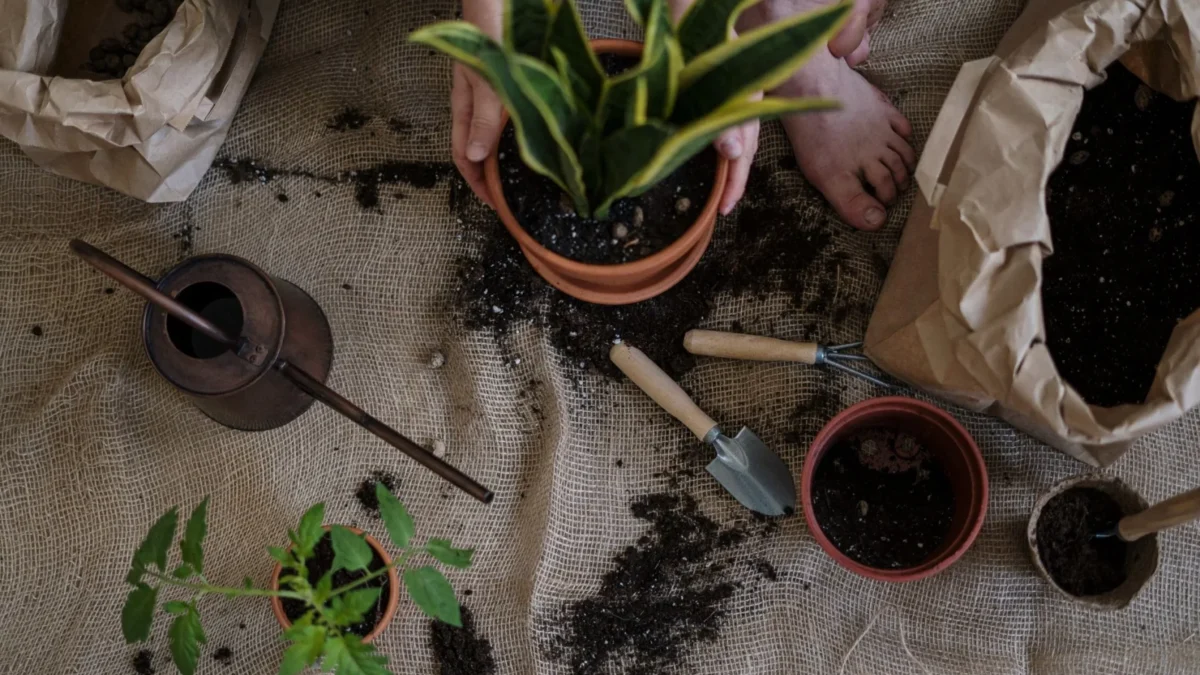
Quick answer: Most houseplants need repotting every 12 to 18 months to give roots room to grow and refresh depleted soil. The best time to repot is spring, from late March through May, when plants are actively growing. Always choose a pot only 1–2 inches larger in diameter than the current root ball.
Signs Your Houseplant Needs Repotting
Check for these clear signals:
- Roots are growing out of the drainage holes
- The soil is so packed with roots you can’t push your fingers into it
- The potting mix dries out faster than usual
- The plant has stopped growing or looks unhealthy for no obvious reason
- The plant’s root mass exceeds the 2/3 plant to 1/3 pot ratio
Note: A single fine root poking through a drainage hole is normal and doesn’t mean repotting is needed.
Best Season for Repotting
Spring is ideal because plants enter their active growing season with rising temperatures and increasing light. This gives maximum time for recovery before dormancy arrives.
Avoid repotting from late fall through February or March. Plants are dormant and their reduced metabolic rate means slow recovery and risk of root rot.
Step-by-Step Repotting Technique
-
Water your plant a few hours before repotting (24 hours for large plants) to loosen the soil.
-
Remove the plant by holding the pot upside-down and tapping the rim on a table edge with your hand over the soil—don’t pull the stem.
-
Inspect the roots. Healthy roots are white and firm; cut away any black, mushy roots.
-
If roots are tightly bound, gently tease them apart with your fingers, or score them lightly with a sharp knife if necessary.
-
Choose a pot only 1–2 inches larger in diameter (½–1 inch for succulents and cacti). It must have a drainage hole.
-
Fill the bottom third of the new pot with fresh potting soil. Place the plant so the base of the stem sits ¼–½ inch below the pot rim.
-
Add fresh potting mix around the sides, gently tapping the pot to settle soil around the roots. Water thoroughly.
-
Don’t fertilize for 4 to 6 weeks—fresh potting soil already contains the nutrients your plant needs.
Repotting Frequency by Plant Type
- Most houseplants: Every 12 to 18 months
- Fast growers (Pothos, Philodendron, Monstera): Annually or every 12 months
- African violets: Every 6 months if you want continuous flowering
- Succulents, cacti, and snake plants: Every 2 to 3 years
- Slow growers (ZZ plants, snake plants): Every 4 to 5 years
Common Repotting Mistakes to Avoid
The three biggest errors are repotting during dormancy, using oversized pots, and unnecessarily disturbing healthy root balls. Dormant-season repotting reduces survival rates dramatically.
Oversizing containers is particularly dangerous: excess soil retains too much moisture and drowns roots. Always use fresh potting soil or compost, never garden soil—it spreads fungal and bacterial growth.
Remember: yellow leaves, drooping, and stunted growth often stem from watering, light, pests, or nutrient issues, not pot size. Repot only when the plant actually needs room to grow.
FAQ
Can I reuse the same pot if I refresh the soil?
Yes, if it has good drainage. Clean it thoroughly with a 20% bleach solution, then rinse well with plain water.
Do orchids and cacti need special repotting soil?
Yes—use a mix specifically designed for those types of plants.
Sources
- Repotting Houseplants: How to Repot a Houseplant for Beginners
- 1316 houseplants repotting
- When Is the Best Time to Repot My Houseplant?
Photo: cottonbro studio / Pexels, Pexels