How to Propagate Indoor Plants: Methods, Timing, and Plant-by-Plant Guide
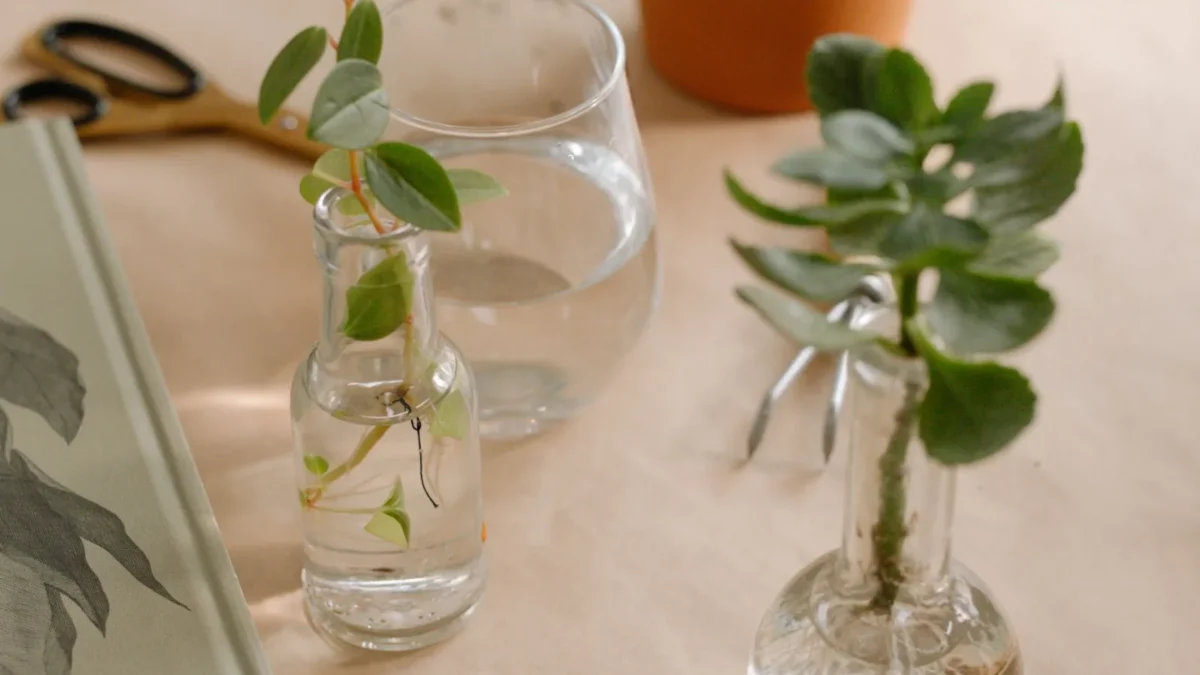
Quick answer: Indoor plant propagation means taking cuttings or leaves from a healthy parent plant and growing new plants from them. The main methods are water propagation, soil propagation, leaf cuttings, and seeds—each with different timings and success rates depending on the plant you’re working with.
Why propagate indoor plants
Propagation expands your collection, creates gifts, and improves plant appearance by taming leggy, abundant, misshapen, lopsided, or unruly growth.
Best timing for propagation
The best time to propagate is during the active growing season, typically from early spring through early fall. Cuttings taken during this period root two to three times faster than those taken during dormancy, and plants recover more easily.
Always start with healthy, vigorously growing plants. Do not propagate from houseplants that have disease or insect pest problems, show signs of viruses such as mottled leaves and weak growth, or lack vigorous growth.
Water propagation
Water propagation is the most visual method—you simply take a cutting, place the cut end in water, and watch roots develop week by week in a glass on your windowsill.
Cuttings should be about 4 inches in length to ensure viability. With vining plants, cut right below the node. Remove any leaves that would be submerged; they will rot and contaminate the water.
Change the water every 3–5 days with fresh room temperature water. Root development takes weeks to months depending on the plant. Once roots reach approximately 3″–5″, transfer the cutting to soil. Note that the longer cuttings sit in water, the harder the transition to soil becomes.
The success rate for suitable species is remarkably high.
Soil propagation
Soil propagation sticks a healthy stem cutting with at least one node into moist, well-draining mix. Most houseplant stem cuttings form roots in 3 to 6 weeks.
To increase your chances of success, use a rooting powder containing growth hormones. Cover the cuttings with a clear plastic bag so they won’t wilt. Soil-propagated cuttings have a 23% higher survival rate after potting because they skip the water-root-to-soil-root conversion shock. Once rooting occurs, you simply grow the plant on without the extra transplanting step.
Leaf cuttings
Leaf cuttings work almost exclusively for plants with soft, fleshy foliage like African violet, snake plant, peperomia, and succulents. Leaves of most other plants either produce roots but no plant, or decay.
Leave 1 to 1½ inches of the leaf stem (petiole) attached to the leaf blade. Insert the petiole into rooting medium at a 45-degree angle. Plantlets should be noticeable above the soil surface in approximately 12 weeks.
Snake plant is propagated differently—cut one long leaf crosswise into segments and insert each into moist vermiculite or other rooting medium.
For cacti or succulent cuttings, allow them to dry out a few hours to a day before planting to seal the raw cut and reduce rot.
Seed propagation
Seeds are normally the cheapest method for obtaining new houseplants. However, only a few indoor plants produce viable seeds for home propagation.
Plant-by-plant propagation guide
Pothos and heartleaf philodendron: Root in water within 1–2 weeks with almost 100% success rate. Both are very easy via water or soil, taking 1–3 weeks to root.
Tradescantia: Propagates in water and roots in 7–10 days—practically guaranteed.
Monstera: Easy via water or soil, taking 3–6 weeks.
Snake plant: Moderate via water or leaf cutting, taking 4–8 weeks. Soil propagation is more reliable than water propagation for leaf cuttings.
ZZ plant: Slow via stem or leaf cutting, taking 8–16 weeks.
Spider plants: Among the easiest because they produce baby plants (‘pups’) with roots already attached on runners—just snap off and pot up.
Many other favorites including monstera, hoya, syngonium, rubber tree, ficus, and fiddle leaf fig can be propagated using one or more of these methods.
After potting propagations
Give the young plant 6+ weeks to settle into its new home before fertilizing.
Sources
- How to Propagate House plants
- Propagating Houseplants
- How to Propagate Houseplants: Easy Tips for Beginners| Almanac.com
Photo: cottonbro studio / Pexels, Pexels