Root Rot in Water: What Causes It, How to Prevent It, and How to Save Your Plant
Quick answer
Quick answer: Plant root rot in water is caused by water molds like Pythium and fungi such as Rhizoctonia and Fusarium that thrive when oxygen runs out and bacteria build up. It happens because water stagnates between changes, warm temperatures accelerate the problem, and leaves touching the water introduce decay. You prevent it by changing water weekly, keeping temperature between 65–68°F, removing leaves from the waterline, and adding an air pump for long-term propagation. If caught early, trim infected roots with sterile scissors and treat with hydrogen peroxide; if the entire root system is mushy, the plant cannot be saved.
Why root rot develops in water
Water-rooted plants are uniquely vulnerable because their environment can degrade quickly. The main culprit is lack of oxygen. When you don’t change the water or aerate it, oxygen depletes as your plant uses it up. Bacteria and fungi then overwhelm the system.
Temperature accelerates this dramatically. Warm water creates a breeding ground for bacteria and causes Pythium activity to increase sharply above 68°F (20°C)—and the problem compounds because warm water holds less oxygen, stressing roots and making them more susceptible. In hydroponic systems, Pythium can affect entire operations within two to four days.
Leaves touching the water introduce organic matter that feeds pathogens. Light reaching the water encourages algae, which also provides organic material that helps pathogens establish.
Signs your plant has root rot
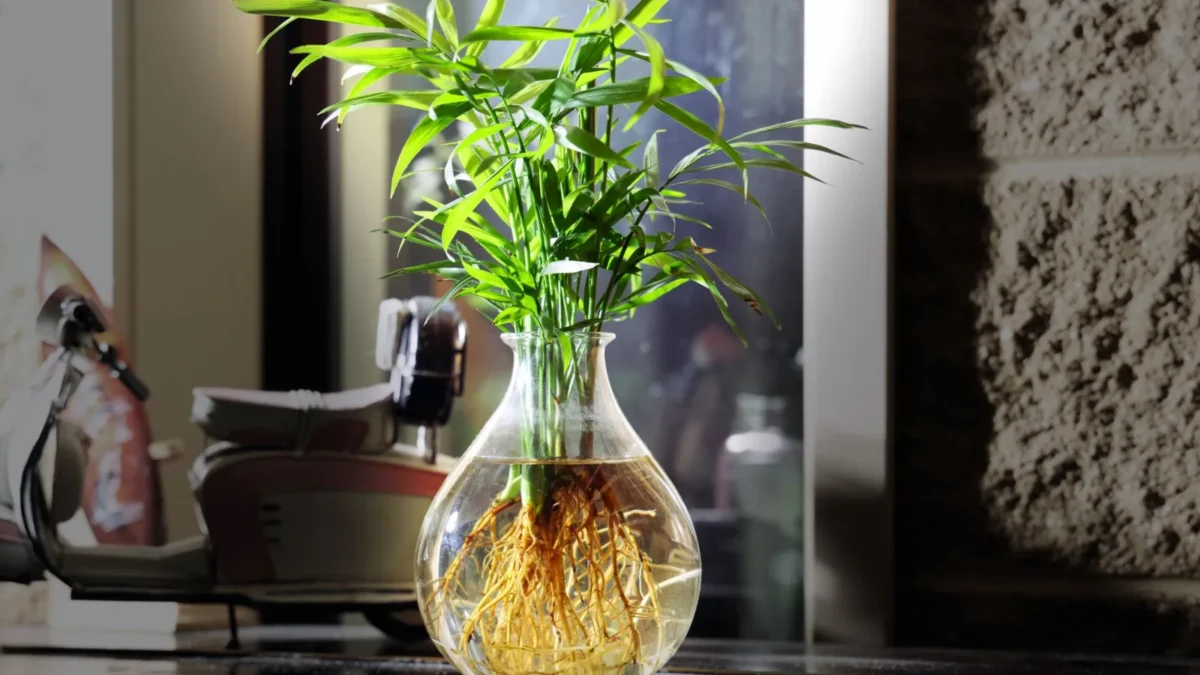
Check roots directly rather than waiting for above-water symptoms—this is the most reliable early detection. Healthy water roots are white or pale tan and firm to the touch. Rotting roots are soft, dark, slimy, and discolored, with a sour or musty smell.
Above the water, you may notice wilting despite adequate water, yellowing lower leaves, and stalled growth—though by the time these appear, root damage is often already underway. Soft, yellow, or black stems are a sign of advanced rot.
How to prevent root rot in water
Follow these steps to keep your water-propagated plants healthy:
- Change the water at least once per week to introduce fresh oxygen.
- Keep water temperature between 65–68°F to virtually eliminate the conditions that cause rot.
- Ensure no leaves touch the water.
- Use clean tools and containers.
- For long-term water growing, add an air pump and bubble stone to maintain constant oxygen.
- Keep the reservoir clean of decaying plant debris and use light-blocking covers to prevent algae.
How to save a plant with root rot
If caught early, you can often save the plant. Immediately lower the water temperature, increase aeration, and trim away visibly infected roots with sterilized scissors. Treat with hydrogen peroxide followed by a beneficial bacteria inoculant after the H2O2 breaks down.
For cuttings showing rot, rinse the roots under running water to remove dead material and debris, then snip off rotten sections with clean scissors and place in fresh water.
If the entire root system is brown and mushy, the plant cannot be saved. The damage has gone too far for recovery to be possible.
Sources
- How to Avoid Root Rot When Water Propagating
- Why do roots rot in wet soil but not in water? Water roots vs. soil ro
- Hydroponic Root Rot: How to Prevent and Treat It (2026)
Photo: Yetkin Ağaç / Pexels, Pexels