Cast Iron Plant Aspidistra elatior
Cast Iron Plant Care: The Complete Guide
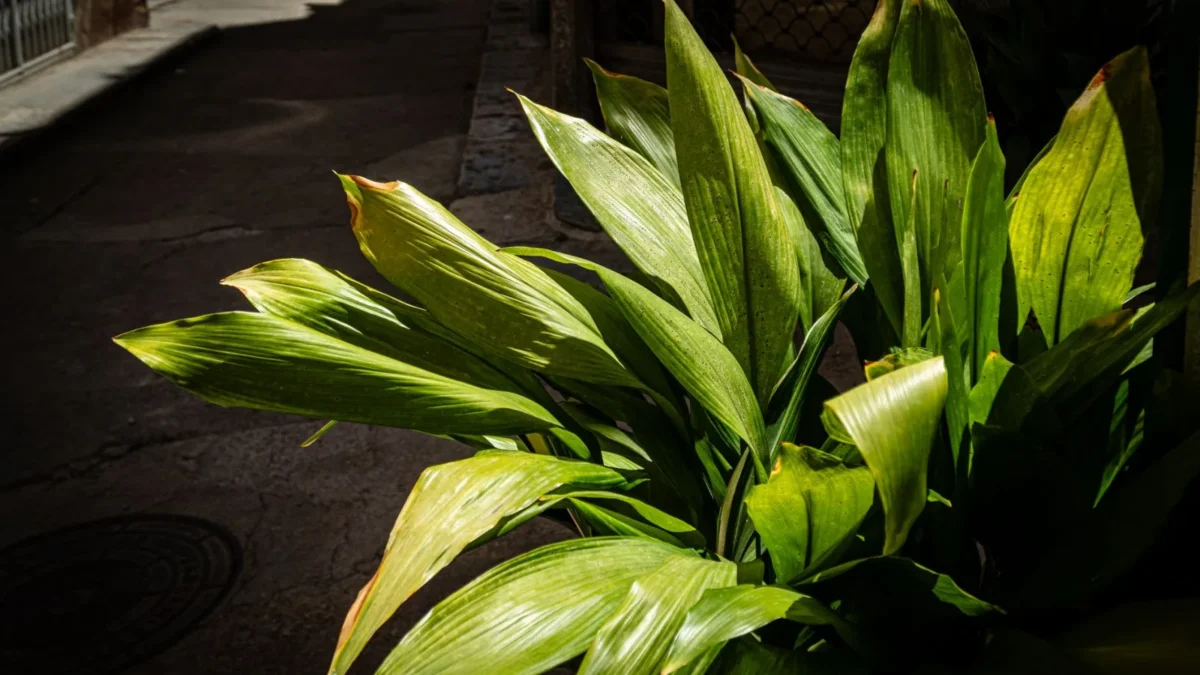
Cast iron plant care is straightforward because this forgiving houseplant tolerates neglect, low light, and irregular watering better than almost any other indoor plant. In this guide, you’ll find everything needed to keep your Aspidistra elatior healthy, from daily watering schedules to troubleshooting common problems.
| Botanical name | Aspidistra elatior |
|---|---|
| Light | Bright indirect light; tolerates full shade; avoid direct sun |
| Watering | Water when top 6 cm of soil feels dry; every 10-14 days spring/summer; every 3-4 weeks fall/winter |
| Humidity | Not important; tolerates dry or moist air; average household humidity adequate |
| Temperature | 60-75°F (15-24°C); tolerates dips to 45°F (5°C) |
| Soil | Well-drained, peaty potting mixture; 50:50 peat-free loam and peat-free compost |
| Feeding | Balanced liquid fertilizer at half strength once or twice in spring/summer; monthly during growing season |
| Size | 60-90 cm tall with 60-90 cm spread; typically 3 feet tall |
| Difficulty | easy |
| Cats | ✓ non-toxic |
| Dogs | ✓ non-toxic |
Key points
- Water when the top 6 cm of soil feels dry; every 10–14 days in spring/summer, every 3–4 weeks in fall/winter
- Prefers bright indirect light but thrives in full shade; avoid direct sun
- Tolerates average household humidity with no special care needed
- Slow-growing plant requiring minimal feeding—once or twice in spring/summer only
- Non-toxic to dogs and cats, making it safe for all homes with pets
- Mature size is 60–90 cm tall with 60–90 cm spread
Light Requirements for Cast Iron Plants
Cast iron plant care indoors begins with understanding its light preferences. The plant grows best in bright indirect light, but this flexibility is one of its greatest strengths—it tolerates full shade better than most houseplants.
Where you place your plant matters most in avoiding direct sun. Direct sunlight will scorch the leaves, causing brown patches, brown tips, or entirely brown leaves. A spot near an east-facing window with a sheer curtain, or a few feet back from a bright south-facing window, works well. North-facing corners and interior rooms away from windows are also suitable.
Dust build-up blocks light and causes problems over time. Wash leaves every six months to keep them looking at their best.
Watering Your Cast Iron Plant
Proper watering is essential for cast iron plant care and maintenance. The approach is simple: water when the top 6 cm of soil feels dry to the touch. This is more reliable than following a fixed schedule, as indoor conditions vary.
Seasonal watering rhythm
Growth slows dramatically in fall and winter, which changes water needs significantly.
- Spring and summer: Every 10–14 days is typical
- Fall and winter: Every 3–4 weeks or more
The cast iron plant can handle underwatering—even neglect stretching to a month—without serious damage. Overwatering is the real risk. The plant stores water in its rhizome, so it’s far more forgiving of drought than saturation.
Humidity and Temperature Preferences
Unlike most tropical houseplants, humidity levels are not important for this species. Average household air—including dry, heated winter interiors and air-conditioned summer spaces—is entirely adequate. You do not need a humidifier, pebble tray, misting, or to group plants together for moisture.
Temperature tolerance is also impressive. The comfortable range is 60–75°F (15–24°C), and the plant tolerates brief dips as low as 45°F (5°C) without serious harm. Avoid cold draughts and rapid temperature swings, but otherwise this plant adapts well to most indoor environments.
Soil and Repotting Needs
Cast iron plant care indoors requires well-draining soil to prevent the root rot that develops when soil stays soggy. Use a 50:50 mix of peat-free loam-based compost and peat-free multi-purpose compost.
Repotting frequency depends on how slowly this plant grows. If you’re repotting more than once every three years, it’s too frequent. Many gardeners repot only every 5–7 years or when roots push through the drainage hole. A slightly snug pot is fine—the cast iron plant doesn’t need excess space.
When you do repot, refresh the soil completely to avoid cumulative salt buildup and ensure good drainage for the next several years.
Feeding and Fertilizing
The cast iron plant is a very slow grower from a nutrient-poor forest floor environment, requiring far less feeding than most indoor plants. This is actually crucial: over-fertilizing is a common cause of brown, crispy leaf tips.
Feed with a balanced liquid fertilizer at half strength once or twice in spring and summer. During the growing season, monthly feeding is adequate. Reduce feeding in fall and winter to allow the plant to rest.
If you forget to fertilize for months, the plant will survive without issue. If you over-fertilize, flush the soil thoroughly with distilled water to remove excess salts.
Pruning and Maintenance
Cast iron plant care and maintenance includes minimal pruning. The plant does not regrow from a cut leaf. Instead, new leaves emerge exclusively from the rhizome.
Remove individual damaged or yellowed leaves with clean scissors at the soil line. There is no need to top or shape the plant in any way.
Wipe the leaves occasionally to keep them dust-free and able to absorb maximum amounts of light. Every six months is a good rhythm for this gentle maintenance task.
Propagation Methods
Rhizome division is the only reliable propagation method for cast iron plants. Leaf cuttings do not work.
To propagate by division:
- In spring, tip a mature plant out and gently work the rhizome apart with your hands.
- The rhizome usually has natural growing tips that separate cleanly.
- Each division should have at least 2–3 leaves and a section of healthy rhizome with feeder roots.
- Pot each division in fresh well-draining mix and water sparingly for the first month.
- The plant will pause growth for several months after division but recovers reliably.
Fall is also a suitable time for division, though spring is more common.
Common Problems and Solutions
Root rot
Waterlogged soil causes root rot, the most serious threat to cast iron plants. Lower leaves turn yellow first, then develop brown tips and brown patches; the plant may wilt despite wet soil. If a healthy section of rhizome remains, cut off all rotten tissue with a sterile blade, dust the cuts with cinnamon (a mild antifungal), let air-dry for 24 hours, and repot in fresh dry well-draining mix. Do not water for two weeks.
Brown leaf tips
Brown, crispy tips with yellow haloes often point to one of three causes. Over-fertilizing causes brown leaf edges and tips due to excess fertilizer salts accumulating in leaves—flush the soil with distilled water. Mineral buildup from tap water (fluoride and chlorine) concentrates at leaf tips; switch to filtered, distilled, or rainwater, or let tap water sit uncovered for 24 hours so chlorine evaporates. Letting the soil dry out completely also causes slow browning; recovery is reliable after one good soak.
Yellow leaves
Dust buildup blocks light and causes chlorosis and yellowing. Wash leaves every six months to restore their ability to photosynthesize.
Leaf scorch from direct sun
Direct sunlight burns leaves, causing brown patches or entirely brown leaves. Move the plant away from direct rays, or filter harsh midday sun with a sheer curtain.
Spider mites and scale
The species is not seriously troubled by insects, but mites and scale may cause occasional problems. Isolate affected plants and treat with neem oil or horticultural soap according to product instructions.
Pet Safety: Is Cast Iron Plant Toxic?
The cast iron plant is completely safe around pets. It is non-toxic to dogs, cats, and horses, making it an excellent choice for households with curious animals.
That said, consuming any plant material may cause mild vomiting and gastrointestinal upset in dogs and cats. Discourage pets from chewing leaves, but accidental nibbling poses no toxicity risk.
FAQ
How often should I water a cast iron plant?
Water when the top 6 cm of soil feels dry. In spring and summer, this typically means every 10–14 days; in fall and winter, extend the interval to every 3–4 weeks or more. Always check soil moisture rather than follow a strict schedule.
Can a cast iron plant survive in low light?
Yes, it tolerates full shade and low light better than most houseplants. Bright indirect light is ideal, but north-facing windows and interior rooms work fine.
How big does a cast iron plant get?
Indoors, mature plants typically reach 60–90 cm tall with a 60–90 cm spread. Growth is very slow, so it takes years to reach full size.
Why does my cast iron plant have brown leaf tips?
Brown tips usually come from one of three causes: over-fertilizing (flush the soil), mineral buildup in tap water (switch to filtered water), or soil drying out too much (soak the plant).
How do I propagate a cast iron plant?
Divide the rhizome in spring by gently separating natural growing points. Each division needs 2–3 leaves and healthy roots. Pot in fresh soil and water sparingly for the first month.
Is cast iron plant safe for dogs and cats?
Yes, it is completely non-toxic to both dogs and cats. Chewing the leaves may cause mild stomach upset, but the plant poses no poisoning risk.
More about Cast Iron Plant
Sources
- Cast Iron Plant (Aspidistra elatior): Complete Care & ID Guide
- How to Care for Your Aspidistra elatior (Cast Iron Plant)
- Aspidistra elatior – Plant Finder
Photo: Jose Rodriguez Ortega / Pexels, Pexels