Kalanchoe Kalanchoe blossfeldiana
Kalanchoe Care: The Complete Guide to Growing Healthy Indoor Plants
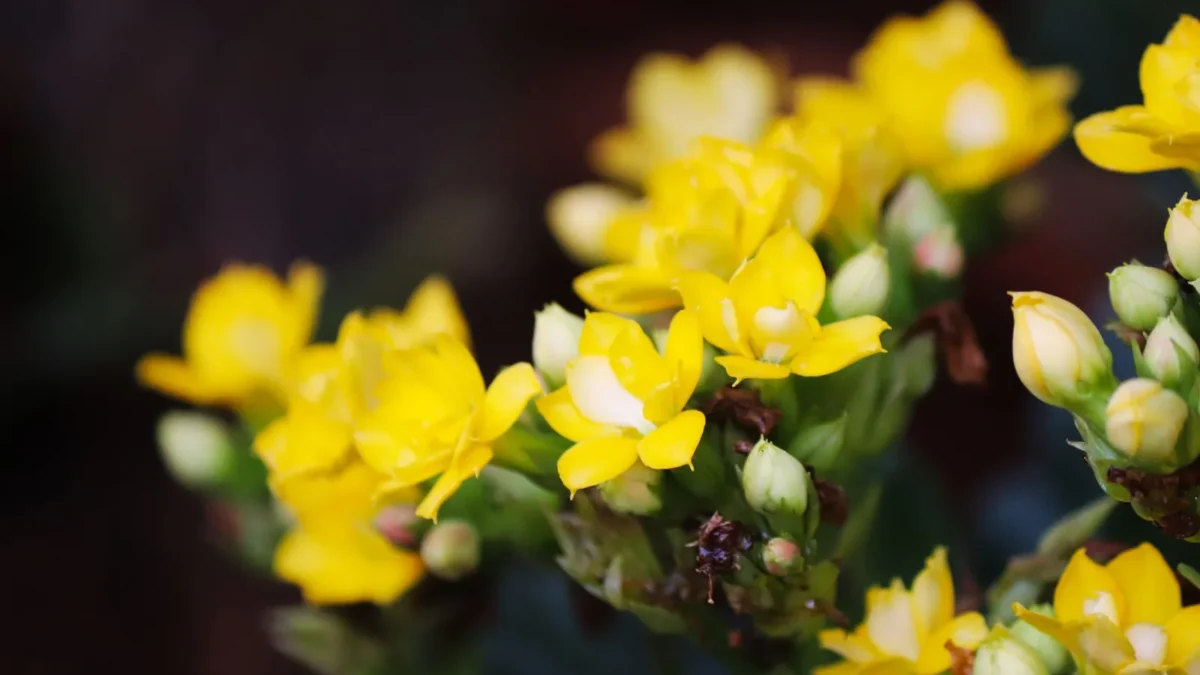
Kalanchoe care comes down to a few basics that make it an excellent houseplant for both beginners and experienced growers. This compact succulent thrives indoors with minimal fuss when you understand its core needs: bright filtered light, careful watering, and well-draining soil. Learn how to keep your kalanchoe healthy year-round, encourage abundant flowers, and troubleshoot common problems.
| Botanical name | Kalanchoe blossfeldiana |
|---|---|
| Light | Bright filtered light; avoid bright direct sunlight year-round |
| Watering | Water when soil is dry; every 10-14 days during growth, every 3-4 weeks in winter |
| Humidity | Low humidity; does not require misting; avoid humidity above 90% |
| Temperature | 55°F to 80°F; keep above 40°F; reduce by 5°C in winter |
| Soil | Fast-draining cactus mix or peat-free loam-based compost with added grit |
| Feeding | Balanced liquid fertilizer 2-3 times during growing season at half strength |
| Size | Bushy evergreen succulent to 40cm tall |
| Difficulty | easy |
| Cats | ⚠️ toxic — Bufodienolides cause vomiting, diarrhea, abnormal heart rhythm |
| Dogs | ⚠️ toxic — Bufodienolides cause vomiting, diarrhea, abnormal heart rhythm |
Key points
- Water only when soil is completely dry—every 10–14 days during growth, every 3–4 weeks in winter
- Provide bright filtered light and avoid direct sunlight year-round to prevent flowering failure
- Use fast-draining cactus mix or loam-based compost with added grit to prevent root rot
- Keep temperatures between 55°F and 80°F; never allow them to drop below 40°F
- Kalanchoe is toxic to cats and dogs; contact a vet or poison control immediately if ingestion occurs
- Six weeks of 12–14 hours of daily darkness is essential to trigger flowering
Light Requirements for Indoor and Outdoor Kalanchoe
Kalanchoe grows best indoors in bright filtered light. Avoid the common mistake of providing bright direct sunlight year-round—this is the primary reason kalanchoe fails to bloom again after its first flowering season. The plant needs protection from intense afternoon sun, which can scorch leaves and cause severe dehydration.
Position your kalanchoe in a bright location with little to no direct sunlight. Winter rays are generally gentler and less likely to damage the plant, though you should still ensure the soil doesn’t dry out excessively.
If lower leaves begin to drop while others turn yellow, your plant isn’t receiving enough light. In this case, move it to a brighter spot away from direct sun.
Watering Schedule: Finding the Right Balance
Overwatering is the leading cause of death in kalanchoe plants. The key is watering thoroughly but infrequently, allowing the soil to dry completely between waterings.
During Growing Season (Spring and Summer)
Water kalanchoe when the soil is dry, typically every 10–14 days. Soak the soil fully, then leave it alone until the soil is dry all the way down. Wait until the top 2 inches feel completely dry before watering again.
More precisely, water every 7–10 days during spring and summer to account for faster evaporation and growth.
During Dormancy (Fall and Winter)
In winter, reduce watering frequency to once every 3 or 4 weeks. The plant’s metabolism slows significantly due to shorter days and less intense sun, so it requires far less water.
Signs of Overwatering
Yellow leaves are the first warning sign of overwatering. Squishy, yellowed leaves that eventually fall off indicate the soil has stayed too wet. Soft or mushy leaves, a blackened stem base, and soil that stays wet for days are the clearest signs you’re watering too much.
Overwatering causes leaves to fall off and prevents your kalanchoe from flowering, even if all other conditions are correct.
Humidity, Temperature, and Growing Conditions
Humidity
Kalanchoe does not require regular misting. As a succulent adapted to arid conditions, the humidity in most homes will suit it naturally.
Moderate to high humidity between 75 and 85 percent is acceptable for kalanchoe, but avoid “swampy” conditions. Prolonged excessive humidity above 90 percent can lead to leaf spot, leaf drop, or damage to flowering structures.
Temperature
Kalanchoe thrives best in temperatures ranging from 55°F to 80°F with low humidity. Temperatures lower than 40°F can damage or kill the plant.
To encourage flowering and maintain plant vigor, reduce the temperature by around 5°C (9°F) during winter, or place the plant in a room between 14–17°C (57–62°F). The plant responds best when there are daily temperature fluctuations of about 7°C; keeping temperatures constant year-round significantly reduces flowering.
Kalanchoe’s leaves change color from green to bronze when temperatures drop below 32°F, but leaves don’t begin falling off until temperatures reach 10°F.
Soil and Repotting Your Kalanchoe
Proper soil is critical to kalanchoe’s survival. Succulent roots that sit in overly damp soil become rotten and diseased, leading to limp growth, soggy stems, and eventual death.
Grow kalanchoe indoors in peat-free, loam-based potting compost with added extra grit. Alternatively, use a fast-draining potting mix for cacti—a combination of cactus mix, potting soil, and perlite is ideal.
Repot only when the plant becomes root-bound or if soil has compacted over time, typically every 2 years. Use a container with drainage holes and fresh cactus mix. The best time to repot is early spring.
Feeding and Fertilizing for Healthy Growth
Apply a balanced liquid fertilizer 2 or 3 times during the growing season. Feed once a month during spring and summer with a balanced liquid fertilizer (20-20-20) diluted to half strength, then stop feeding entirely from November through February.
Over-fertilizing causes soft, weak growth and reduces flowering, so stick to half-strength applications and never feed during winter dormancy.
Pruning and Shaping Your Plant
Kalanchoe naturally grows as a compact, bushy plant. The species reaches approximately 40 cm (16 inches) tall at maturity.
Prune in early spring to maintain shape and encourage bushier growth. Remove the top 1–2 inches of stems just above a leaf node. This encourages branching and creates a fuller plant. Remove any dead, diseased, or crossing stems throughout the year. Pruned stems can be saved and propagated as cuttings.
Propagating Kalanchoe from Leaves and Cuttings
Kalanchoe propagates easily from leaf or stem cuttings, making it an ideal plant for sharing with friends.
- Take 2–3 inch stem cuttings or individual leaves from healthy growth in spring or summer.
- Let the cutting callus on the counter for a few days, then insert the cut end into a peat/perlite mixture that’s been premoistened.
- Place the container in a plastic bag to maintain high humidity.
- Remove the bag once per day to let excess condensation evaporate.
- Expect roots in 10–14 days.
- Once rooted, move to bright filtered light and water sparingly until the plant is established.
Common Problems: Yellow Leaves, Root Rot, and Pests
Yellow Leaves
Yellow leaves most commonly result from overwatering or insufficient light. Check soil moisture first—if it’s damp, reduce watering frequency. If soil is dry and leaves are yellowing, move the plant to a brighter location with more indirect light.
Root Rot
Root rot develops in specimens sitting in too-dark environments with prolonged soil moisture. Symptoms include rapidly yellowing leaves, mouldy soil, stunted growth, and a rotten brown base. Prevention is far easier than treatment: always use fast-draining soil, water only when soil is dry, and ensure adequate bright light. If caught early, repot into fresh dry soil and adjust watering practices.
Pests and Diseases
Kalanchoe plants are resistant to pests and diseases; although they have no major enemies, weak or stressed plants may be susceptible to stem rot disease, mealybugs, mites, or scale insect infestations. These problems are mostly eliminated by providing proper light and watering conditions. Fungal and bacterial diseases, such as Botrytis petal blight or powdery mildew, will engulf the flowers if excess moisture settles in their cubbyholes. Immediately remove affected areas and place the plant in a warmer room until moisture has evaporated.
Why Your Kalanchoe Won’t Flower and How to Fix It
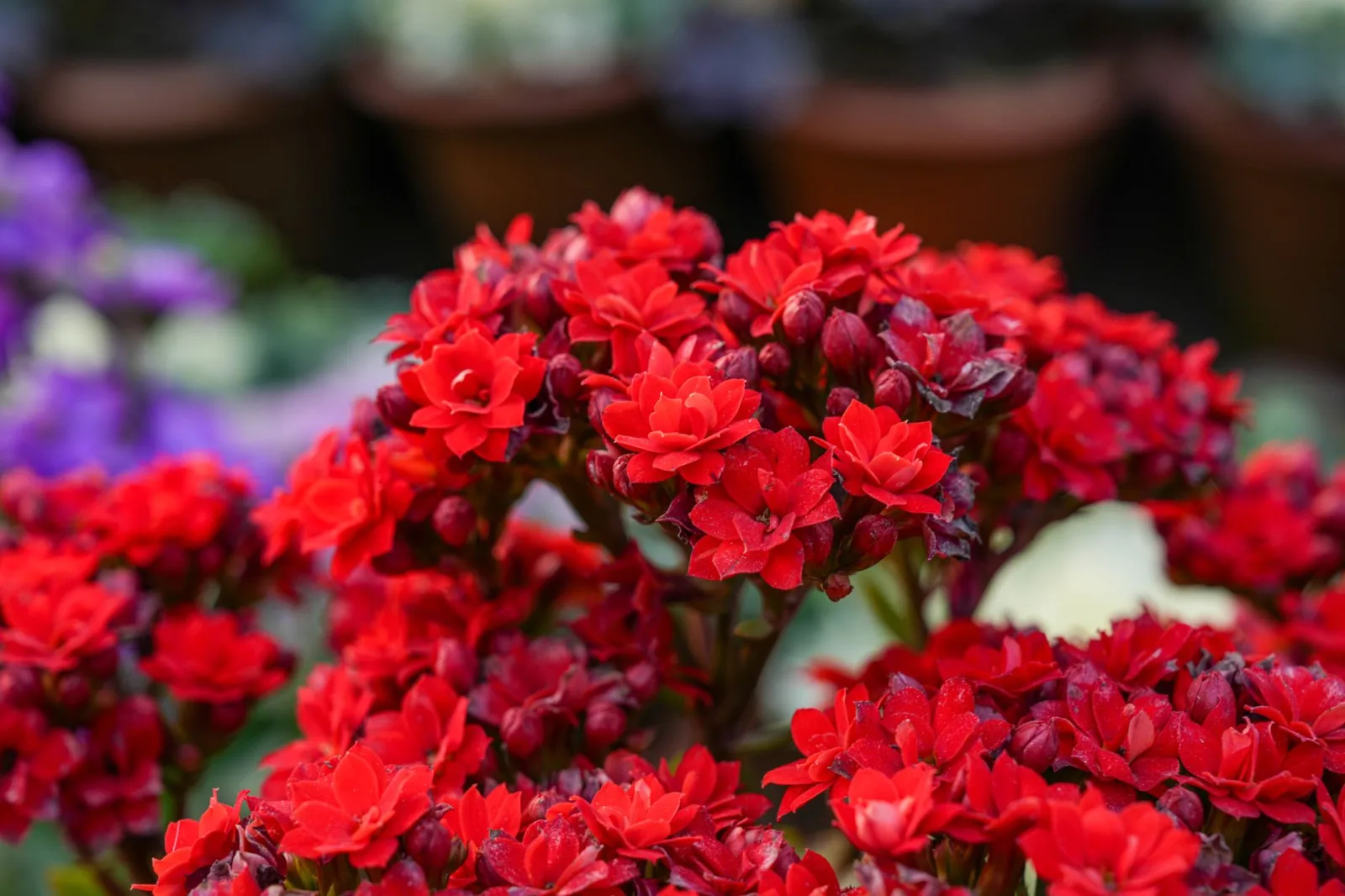
Kalanchoe’s spectacular clustered flowers are its main attraction, but many indoor growers struggle to get their plants to bloom again after the first season. The solution requires understanding the plant’s photoperiod requirement.
Kalanchoe plants are photoperiodic, meaning they flower depending on the length of day. They need long periods of darkness daily with minimal watering to produce flower buds. Kalanchoes often fail to bloom due to a lack of winter darkness—a six-week period of 14 hours of nighttime darkness each day is essential. Without this reset period, the plant fails to re-bloom.
The plant needs six weeks of 12 to 14 hours of darkness to form spectacular new flowers. The best temperatures for flower formation are 40–45°F (4–7°C) at night and 60°F (16°C) during the day. Kalanchoe initiates and develops flowers under short day/long night conditions or during late autumn, winter, and early spring.
To trigger blooming:
- From mid-September through October, move your plant to a location where it receives 12–14 hours of uninterrupted darkness each night. A dark room or covered area works well.
- Continue this darkness period for 6 weeks while reducing watering to every 3–4 weeks.
- Keep nighttime temperatures between 40–45°F if possible.
- After 6 weeks, return the plant to normal light and warmer daytime temperatures.
- Flower buds should begin forming within 4–6 weeks.
Avoid the mistake of providing bright direct sunlight year-round; this prevents re-blooming even when all other conditions are met.
Is Kalanchoe Safe for Cats, Dogs, and Humans?
Toxicity to Pets
Kalanchoe is toxic to dogs and cats. The toxicity comes from bufadienolides, which is a cardiac toxin. The most common signs if a cat or dog nibbles on the plant are gastrointestinal, including vomiting and diarrhea. Ingesting large amounts could cause an abnormal heart rhythm or rate, although this side effect is rare.
Kalanchoe is also harmful if eaten by rabbits, rodents, and caged birds.
If Ingestion Occurs
Call a vet or poison-control line at (888) 426-4435 in the US, or Animal PoisonLine on 01202 509 000 in the UK. Have the plant or a photo of it available to confirm identification.
Keep kalanchoe out of reach of curious pets and small children. Place it on a high shelf, hanging planter, or locked room where pets cannot access it.
FAQ
How often should I water my kalanchoe?
Water kalanchoe when the soil is dry, every 10–14 days during growth. In winter, reduce watering to once every 3 or 4 weeks.
Can kalanchoe survive in low light?
No. If lower leaves are falling off while others turn yellow, your kalanchoe needs more light. Move it to a brighter location with indirect light.
Why is my kalanchoe not blooming?
Kalanchoes often fail to bloom due to lack of winter darkness. They need six weeks of 12 to 14 hours of darkness daily to form flowers. Also avoid bright direct sunlight year-round, as this prevents re-blooming.
Is kalanchoe toxic to pets?
Yes, kalanchoe is toxic to dogs and cats. Common signs of ingestion are vomiting and diarrhea. Contact a vet or poison-control line immediately: (888) 426-4435 in the US or 01202 509 000 in the UK.
What temperature does kalanchoe need?
Kalanchoe thrives in temperatures between 55°F and 80°F. Never let temperatures drop below 40°F, as this can damage or kill the plant.
What soil should I use for kalanchoe?
Use a fast-draining potting mix for cacti—a combination of cactus mix, potting soil, and perlite is ideal. Alternatively, use peat-free, loam-based potting compost with added extra grit.
More about Kalanchoe
Sources
- Kalanchoe blossfeldiana
- Kalanchoe Blossfeldiana Plant – How to Grow Flowering Kalanchoe
- Master Easy Kalanchoe Plant Care for a Blaze of Colorful Blooms Year After Year
Photo: Sharath G. / Pexels, Pexels