Monstera Monstera deliciosa
Monstera Varieties: Types and How to Identify Them
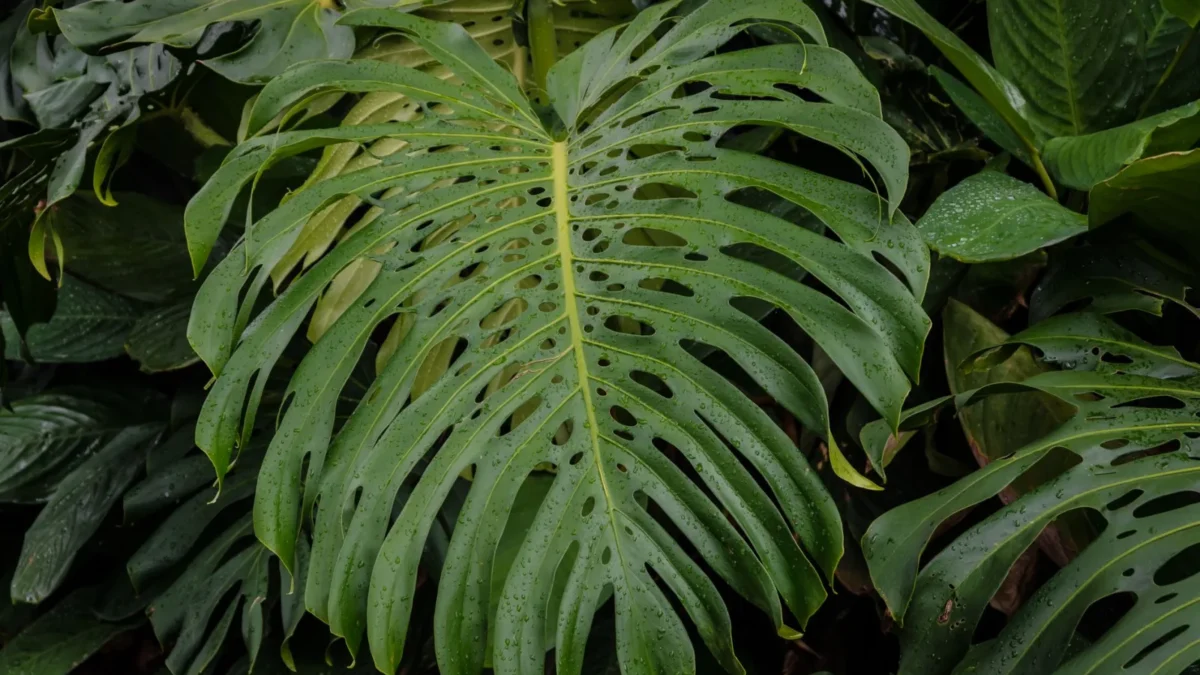
Quick answer: The most common Monstera varieties grown indoors are Monstera deliciosa (the classic split-leaf type), Monstera Adansonii (smaller with heart-shaped leaves), Monstera Thai Constellation (variegated with white patches), and Monstera Albo (white and green variegated). Each has distinct leaf shapes, variegation patterns, and growth habits that make identification straightforward once you know what to look for.
| Botanical name | Monstera deliciosa |
|---|---|
| Light | 6-8 hours bright indirect light daily; tolerates low light but grows faster in bright indirect conditions; avoid direct |
| Watering | Water when top 2-3 inches of soil are dry; every 1-2 weeks typically; summer 7-10 days, winter 2-4 weeks |
| Humidity | Above 50%; ideally 60% or higher; use pebble tray or humidifier; avoid misting |
| Temperature | 65-85°F (18-29°C); avoid temperatures below 55°F (13°C) and cold drafts |
| Soil | Well-draining, chunky mix with perlite and orchid bark; neutral to slightly acidic pH 5.5-7 |
| Feeding | Balanced water-soluble fertilizer every 2-4 weeks during spring and summer growing season |
| Size | Up to 8-10 feet tall indoors; leaves up to 2 feet wide |
| Difficulty | easy |
| Cats | ⚠️ toxic — Calcium oxalate crystals cause mouth irritation, drooling, vomiting |
| Dogs | ⚠️ toxic — Calcium oxalate crystals cause mouth irritation, drooling, vomiting |
Key differences between popular Monstera varieties
All Monsteras belong to the Araceae family, but the varieties you’ll find in plant shops differ significantly in appearance and growth pattern.
Monstera deliciosa is the original and most vigorous grower. Its leaves can reach two feet wide and develop characteristic holes (fenestrations) as they mature. It’s the easiest large tropical houseplant to grow well, and under good conditions can reach 8 feet indoors. The leaves are deep green with no variegation.
Monstera Adansonii is the compact alternative. It has smaller, heart-shaped leaves that rarely exceed 6 inches, and fenestrations develop earlier and more frequently than on deliciosa. The growth habit is trailing rather than climbing, making it perfect for hanging baskets or shelves. Leaves are solid green with no variegation.
Monstera Thai Constellation features the variegation that many plant collectors seek—creamy white or pale yellow patches scattered across deep green leaves. The variegation pattern is random and unique on each leaf. This variety grows at a moderate pace, slower than deliciosa but faster than a struggling Albo.
Monstera Albo (or Monstera deliciosa var. borsigiana albo) has striking white and green variegation, often with half-white leaves or large white sections on otherwise green foliage. The variegation is typically bolder and more dramatic than Thai Constellation, but Albo grows more slowly and needs consistent bright, indirect light to maintain variegation. Without enough light, new growth may emerge entirely green.
Identifying each variety at a glance
Leaf size and shape: Deliciosa produces the largest leaves of all varieties. Adansonii stays noticeably smaller with a heart shape. Thai Constellation and Albo have intermediate-sized leaves but their variegation makes them unmistakable once you’ve seen it.
Variegation pattern: If the plant has white or cream patches, it’s either Thai Constellation or Albo. Thai has softer, more scattered variegation; Albo has bolder, more concentrated patches or half-white leaves. Neither deliciosa nor Adansonii is variegated.
Growth habit: Deliciosa climbs vigorously and needs support. Adansonii trails naturally. Thai Constellation and Albo also climb or trail depending on support, but they grow more slowly than deliciosa.
Fenestration development: Deliciosa needs consistent bright indirect light—roughly 6 to 8 hours daily—to develop fenestrations reliably. Adansonii develops fenestrations much earlier and more readily. Thai Constellation and Albo may fenestrate, but variegation, not fenestration, is their signature feature.
FAQ
Which Monstera variety is easiest for beginners?
Monstera deliciosa is the most forgiving overall. Monstera Adansonii is equally hardy and grows in smaller spaces, making it ideal if you have limited room. Both tolerate low light, though they grow much faster with bright indirect conditions.
Does variegation stay the same on Thai Constellation and Albo?
No. Both variegated Monsteras can produce solid green leaves, especially in lower light. Without sufficient bright, indirect light, new growth on Albo in particular may lose its white coloring entirely. This is not a problem with the plant—simply move it closer to a window.
Can I grow Monstera Adansonii vertically like deliciosa?
Yes. While Adansonii naturally trails, you can use a moss pole or stake to train it upward just as you would deliciosa. It simply doesn’t climb as aggressively and stays more compact overall, making it adaptable to your space.
The same problem in other plants
Sources
- Toxic and Non-toxic Plants: Swiss Cheese Plant
- How Often to Water a Monstera (Research-Backed 2026)
- How Much Light a Monstera Deliciosa Needs
Photo: MESSALA CIULLA / Pexels, Pexels