Pothos Epipremnum aureum
Pothos Varieties: Types and How to Identify Them
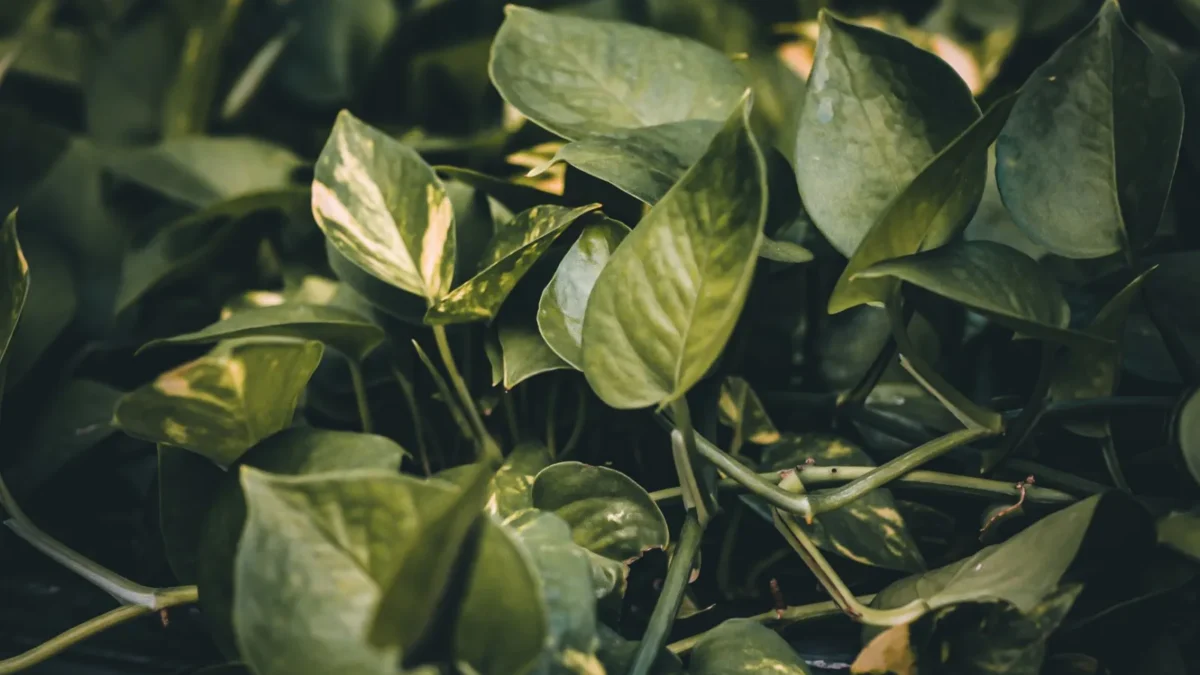
Quick answer: The most common pothos varieties are Golden Pothos (the classic green-and-gold type), Marble Queen (white and green variegation), Neon Pothos (lime-yellow leaves), Jade Pothos (solid green), and Satin Pothos (silvery sheen). Each has distinct leaf color and patterns that make identification straightforward once you know what to look for.
| Botanical name | Epipremnum aureum |
|---|---|
| Light | Bright indirect light; tolerates low light but variegation fades and growth slows |
| Watering | Water when top 1-2 inches of soil feels dry; every 7-14 days average |
| Humidity | Moderate to high humidity, above 40%; mist leaves or use humidifier if dry |
| Temperature | 60-85°F (15-29°C) |
| Soil | Well-draining mix: orchid bark, perlite, peat, or coco coir; moist but not soggy |
| Feeding | Balanced water-soluble fertilizer every 2-3 months during spring and summer |
| Size | Trailing vine; mature leaves to 30 inches long with deep lobes |
| Difficulty | easy |
| Cats | ⚠️ toxic — Insoluble calcium oxalates cause oral irritation, burning, drooling, vomiting |
| Dogs | ⚠️ toxic — Insoluble calcium oxalates cause oral irritation, burning, drooling, vomiting |
Most Popular Pothos Varieties
Pothos varieties differ mainly in their leaf color and variegation patterns, while their care needs remain nearly identical. All belong to the same species (Epipremnum aureum) and thrive in bright, indirect light but can tolerate low-light conditions, though variegation fades and growth slows dramatically in dim corners. They all prefer temperatures between 60°F and 85°F and moderate to high humidity, generally above 40 percent.
Golden Pothos is the most common variety you’ll find in garden centers. It has heart-shaped leaves splashed with yellow or cream against dark green, creating the classic variegation that makes this plant so recognizable. This is the type most beginners start with because it’s widely available and forgiving.
Marble Queen features white and cream variegation mixed with green, often in larger patches than Golden Pothos. The white areas can dominate the leaf, giving it an almost silvery appearance. Marble Queen tends to be slightly slower-growing because the white sections contain less chlorophyll.
Neon Pothos has lime-yellow or chartreuse leaves instead of the typical green base. The color is brightest on new growth and can fade slightly as leaves mature. It’s eye-catching in low-light corners because the yellow tones catch your attention even when variegated varieties lose their patterns.
Jade Pothos is solid dark green with no variegation—the least decorative in terms of color but the most vigorous grower. Some people prefer its clean, uniform appearance for certain spaces.
Satin Pothos has a velvety, silvery sheen across deep green leaves and is sometimes confused with Jade Pothos until you see them side by side. The sheen is its defining feature.
How Leaf Size Tells You About Your Plant’s Age
One detail that surprises new growers: mature pothos vines develop leaves to 30 inches long with deep lobes, completely different from the small, heart-shaped leaves you buy in a 6-inch pot. Vines grown on moss poles or allowed to climb naturally in your home will show this transformation as they mature. The color and variegation remain consistent, but the leaf shape becomes more deeply cut and dramatic. If your pothos isn’t yet showing these larger leaves, your plant is still young.
Light and Variegation
The variety you choose should suit the light in your space. Variegation fades and growth slows dramatically in 500 lux (a dim office corner). This matters most for Marble Queen and Golden Pothos—both lose their distinctive white or yellow patches when kept too far from a window. Neon and Jade Pothos handle low light better because solid or bold colors remain visible. For bright, indirect light, all varieties will thrive and maintain their fullest color.
Choosing a Variety for Your Home
If your space has good natural light from a window (but no direct sun scorching the leaves), any variety works beautifully. Golden Pothos and Marble Queen show off their variegation best here. For darker corners or desks away from windows, Neon or Jade Pothos will look fresher because their solid or bold colors don’t fade. Satin Pothos works well in mid-range light where you want something sophisticated but reliable.
All pothos varieties require the same watering routine: water when the top 1 to 2 inches of soil feels dry to the touch. They all need well-draining soil such as orchid bark, perlite, peat, or coco coir to prevent root rot. Fertilize any variety every 2 to 3 months with a balanced, water-soluble fertilizer during spring and summer, then reduce feeding in fall and winter.
The variety you pick comes down to aesthetics and your light conditions. Once you have one, the care is straightforward for both novices and seasoned growers.
The same problem in other plants
Sources
- Epipremnum aureum (Golden Pothos) – Plant Care 101
- Pothos (Epipremnum aureum): Care, Varieties & Toxicity Guide
- How Often Should I Water A Pothos Plant? – Indoor Plants For Beginners
Photo: Afif Ramdhasuma / Pexels, Pexels