Spider Plant Chlorophytum comosum
Why Are My Spider Plant Leaves Turning Brown?
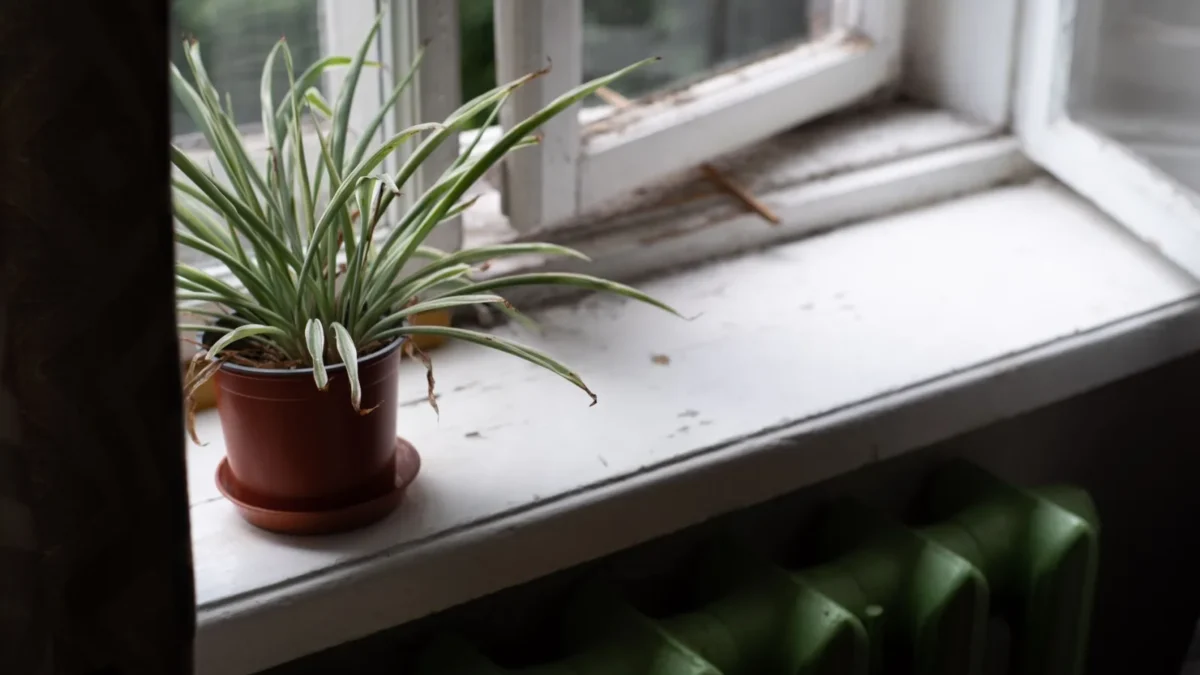
Quick answer: Spider plant leaves turning brown is usually caused by low humidity, underwatering, over-fertilizing, or fluoridated tap water. Once the tips brown, they won’t turn green again, but you can trim them off and prevent new browning by adjusting watering, humidity, and fertilizer.
| Botanical name | Chlorophytum comosum |
|---|---|
| Light | 6-8 hours bright indirect light daily; avoid direct sunlight |
| Watering | Every 7-14 days; allow top 1-2 inches soil to dry first |
| Humidity | 40-60% relative humidity; prefers moderate to high humidity |
| Temperature | 18-24°C (65-75°F); avoid temperatures below 10°C |
| Soil | 2 parts potting soil + 1 part perlite; well-draining mix |
| Feeding | Balanced liquid fertilizer (10-10-10 or 20-20-20) at half strength every 2 weeks spring-summer |
| Size | 20-60 cm tall; 1-2 feet height and spread |
| Difficulty | easy |
| Cats | ✓ non-toxic |
| Dogs | ✓ non-toxic |
| What you see | Likely cause | What to do |
|---|---|---|
| Brown tips; soil feels dry | Underwatering | Water more frequently; let top 1–2 inches of soil dry first, then water thoroughly until it drains |
| Brown tips in winter or near heating | Low humidity | Increase humidity to 40–60%; mist leaves or move away from heat sources |
| Brown tips; white crust on soil | Over-fertilizing or salt buildup | Cut fertilizer by half; flush the pot with water to leach salts |
| Brown tips despite regular watering | Fluoridated or chlorinated water | Switch to rainwater or distilled water, or let tap water sit 24 hours before use |
| Wilted leaves and brown tips | Soil too dry | Check soil moisture; water every 7–14 days depending on conditions |
Why do spider plant leaves turn brown?
Brown leaf tips on your spider plant usually point to one of four problems. The most common is dry air: spider plants grow best in 40–60% relative humidity, and in winter heating or dry homes, the air drops well below this, causing brown tips. The second is underwatering—when soil dries out completely, leaves wilt and tips brown. Once the tips brown, they stay brown; you won’t be able to turn them green again.
The third cause is over-fertilizing. Too much fertilizer or fertilizer salt burns the leaf tips, and even a standard feeding can trigger browning if your plant is sensitive. Finally, fluoridated or chlorinated tap water is a hidden culprit: spider plants are exceptionally sensitive to fluoride and chlorine, which accumulate in the leaf tips and cause severe stress.
How to fix brown tips on spider plants
Start by trimming off the brown parts with clean scissors—they won’t recover. Then address the root cause.
For dry air: Increase humidity around your plant. Move it away from radiators and air conditioners, or place it on a pebble tray filled with water. Humidity of 40–60% is ideal.
For underwatering: Water your spider plant every 7–14 days, allowing the top 1–2 inches of soil to dry between waterings,. Water thoroughly until water drains from the bottom. Spider plants have thick, fleshy roots that store water, so they handle drought well but rot if kept constantly wet.
For over-fertilizing: Cut your fertilizer dose in half. A balanced liquid fertilizer at half strength every 2 weeks during spring and summer is plenty—spider plants are light feeders. If you see a white crust on the soil, flush the pot with plenty of water to leach out excess salt.
For fluoridated water: Switch to rainwater or distilled water. If you use tap water, let it sit for 24 hours before watering; this allows chlorine to escape.
FAQ
Can I prevent brown tips on spider plants?
Yes. Keep humidity around 40–60%, water when the top 1–2 inches of soil dry out, use rainwater or distilled water, and fertilize sparingly at half strength every 2 weeks in growing season. Avoid placing your plant near heat sources or drafts.
Is my spider plant dying if the leaves turn brown?
No. Brown tips are common and rarely signal a dying plant. Spider plants are one of the easiest houseplants to grow. Trim the brown parts and fix the watering or humidity, and new growth will be healthy.
Are spider plants toxic if my cat eats them?
Spider plants are non-toxic to cats, but cats are attracted to their long, moveable leaves and may chew on them. Chewing plant material can cause mild stomach upset from the fiber alone, though there’s no poisoning risk.
Read the full guide: Spider Plant Care: The Complete Guide
The same problem in other plants
Sources
- Spider Plant Care: Light, Water, Brown Tips, and Babies
- Spider Plant Care – Light, Water & Propagation
- How Often to Water Spider Plants (Without Overwatering) – Celebrated Nest
Photo: Elmārs Toms / Pexels, Pexels