String of Pearls Curio rowleyanus
String of Pearls Care: The Complete Growing Guide
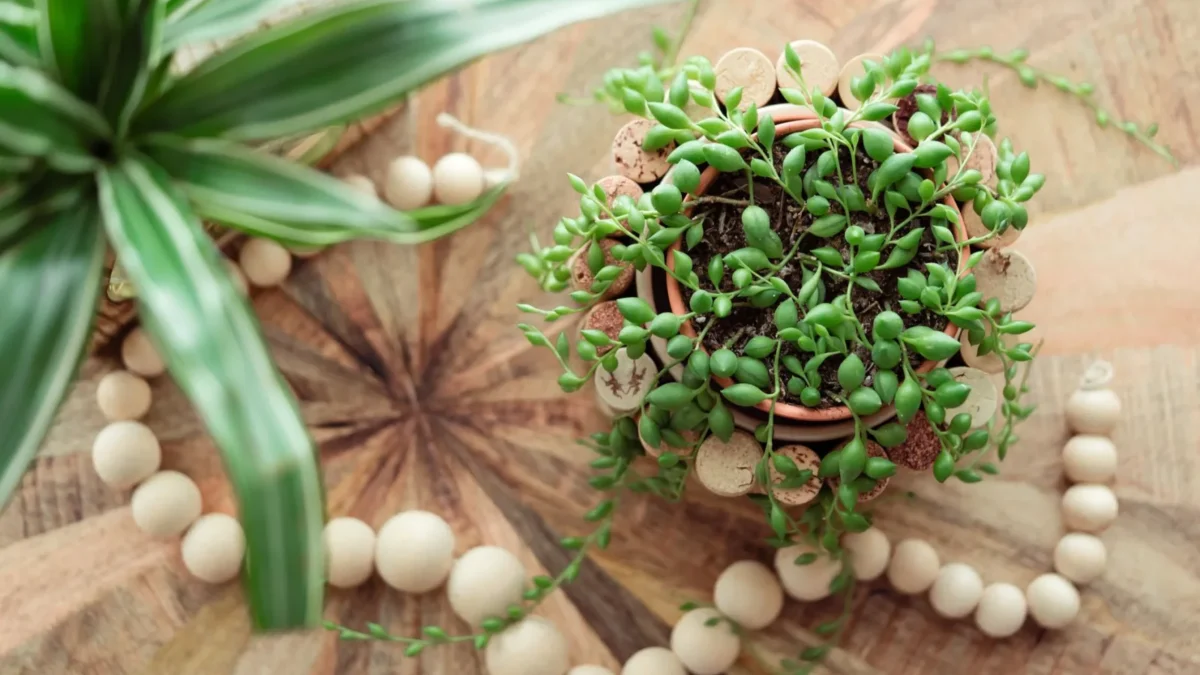
String of pearls care is straightforward once you understand this succulent’s core needs: bright indirect light, infrequent watering, and well-draining soil. This trailing houseplant, belonging to the Asteraceae family, produces delicate bead-like leaves on long stems that can stretch up to 90cm (3 feet) long, making it ideal for hanging planters. With the right conditions, even beginners can grow this easy-to-maintain plant successfully.
| Botanical name | Curio rowleyanus |
|---|---|
| Light | Bright indirect light; tolerates some direct morning sun; avoid harsh afternoon sun |
| Watering | Water every 7-14 days in spring/summer when soil completely dry; every 3-4 weeks in fall/winter |
| Humidity | Low humidity preferred; do not mist |
| Temperature | 70-80°F summer; 50-60°F winter; intolerant of frost |
| Soil | Well-draining cactus or succulent mix; sandy, dry soil |
| Feeding | Monthly in spring/summer with balanced fertilizer diluted to half strength; reduce or stop in fall/winter |
| Size | Trailing stems up to 90cm long; compact mounding base 4 inches tall |
| Difficulty | easy |
Key points
- Water every 7–14 days in spring/summer only when soil is completely dry; reduce to every 3–4 weeks in fall/winter
- Provide bright indirect light; a few hours of direct morning sun is fine, but avoid harsh afternoon sun
- Use well-draining cactus or succulent soil; overwatering is the #1 killer
- Keep temperatures between 70–80°F in summer and 50–60°F in winter; avoid frost
- Fertilize monthly in spring/summer with diluted balanced fertilizer; stop in fall/winter
- Keep away from pets—toxic to both cats and dogs
Light Requirements for String of Pearls
String of pearls needs bright light—this is non-negotiable. Best placement is a south- or east-facing window with bright indirect light for most of the day; a few hours of direct morning sun is actually fine and encourages compact growth.
Direct afternoon sun, however, can scorch the leaves and cause heat stress. If you notice leaves turning yellow or brown, the plant may be receiving too much intense sun.
Low light is one of the most common problems with indoor string of pearls. In insufficient light, the pearls shrink and spread apart as the plant stretches, and that stretched look never reverses. If stems stretch and the pearls become smaller with wider gaps, improve light before adding fertilizer; weak light also slows soil dry-down, which makes overwatering easier.
Watering Your String of Pearls
Correct watering is critical to keeping your string of pearls healthy. The key rule: allow roots to dry out between waterings.
Spring and Summer Watering
Water thoroughly every 7–14 days in spring and summer when soil is completely dry. To check if watering is needed, insert your finger 1 inch deep into the soil; water only if completely dry. Beads that look flat are a sign that the soil is too dry.
Bottom watering works best: soak the pot in water for 45 minutes, then remove and drain; never top water as moisture on leaves causes rotting and fungal issues.
Fall and Winter Watering
Reduce watering dramatically to every 3–4 weeks during fall and winter dormancy. Cut back on water in winter, watering just enough to prevent the soil from drying out completely.
Overwatering: The #1 Killer
Overwatering is the #1 killer of String of Pearls; waterlogged soil suffocates roots and triggers rot within days, and the beads turn translucent and soft as the plant collapses. Root rot is the silent killer of the String of Pearls; overwatering creates a soggy grave, suffocating roots and leading to leaf drop.
Humidity and Temperature Needs
Humidity
String of pearls doesn’t require high humidity—in fact, the opposite is true. The plant is unaffected by high humidity, and these plants don’t like high humidity and they shouldn’t be misted. Do not mist string of pearls to “add humidity”—misting leaves and stems without improving root-zone drainage can encourage rot. The plant is comfortable with normal humidity levels and does not require extra moisture, misting, or a humidifier; the plant is one of the easiest to care for because it requires minimal attention to humidity levels.
Temperature
Best growth occurs in 70–80°F temperatures in summer and 50–60°F temperatures in winter. The plant is intolerant of frost; in climates with cold winters, plants must be brought indoors prior to first fall frost date.
Drooping or limp strands can be caused by temperature stress below 50°F; move away from cold drafts and keep above 50°F. For best results, give your string of pearls a cool (55–60°F) rest in winter; these cool, dry conditions may promote blooming in spring.
Soil and Repotting Guide
Choosing the Right Soil
String of pearls is best grown in a dry, sandy, well-drained, cactus-type potting mix. The plant likes well-draining soil that is rich in organic matter; you can use a cactus or succulent mix, or make your own by mixing equal parts of potting soil, sand, and perlite.
To prevent drainage issues, choose a very fast draining succulent or cactus soil blend; amend regular potting soil with added perlite or sand; use pots with drainage holes. String of pearls has small surface roots, so a shallow draining pot is safer than a deep wet one.
Use a pot with ample drainage holes, or you can use terra cotta or clay pots to remove extra moisture from the soil.
When to Repot
Consider repotting this plant every spring. Repotting frequency is every 2–3 years or when the plant outgrows its current pot.
Feeding and Fertilizing
String of pearls are very light feeders; in their natural habitat, they grow in poor, sandy soils, so they don’t need much extra nutrition to stay healthy.
During the growing season (spring and summer), fertilize monthly with a balanced, water-soluble fertilizer diluted to half strength. Use a balanced (10–10–10 or 20–20–20) liquid fertilizer diluted to half the recommended strength.
Feeding once every 4–6 weeks is usually enough to support steady growth without risking root burn or weak, leggy stems.
Fall and winter: Reduce or stop fertilizing as the plant enters semi-dormancy. Signs of over-fertilization include burnt or crispy leaf tips, excessive leggy growth, and salt build-up on soil surface.
Pruning and Maintenance
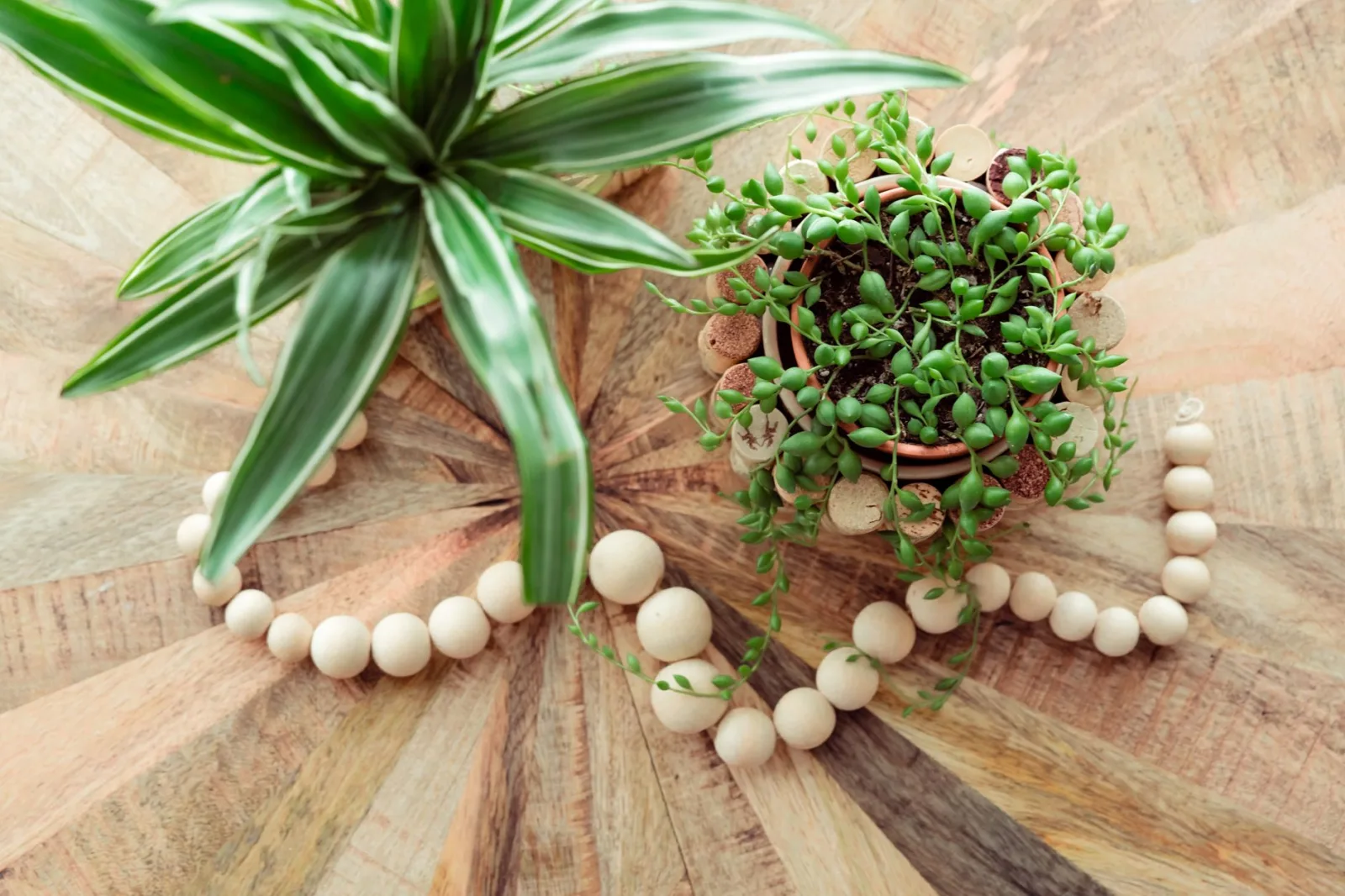
Pruning or trimming your string of pearls plant is a great way to keep it looking healthy and happy; although frequent pruning isn’t necessary, most plants enjoy a little extra TLC in the form of a haircut every now and then.
Throughout the year, prune away damaged, discolored, or sparse stems with sterilized pruners and trim overgrown stems, if needed, to keep your plants more compact. Plants begin to die back after several years at which point it may be best to take cuttings and start over rather than try to revive the established plant.
Propagating String of Pearls
Rooting healthy stem cuttings of your string of pearls in well-draining soil or water are the two best propagating methods. While division and leaf propagation are also options, they are generally less effective.
Soil Propagation
Collect a few healthy stem cuttings from your string of pearls plant, ensuring each is at least 6 inches long. Make your cuts at a leaf node, carefully remove the lower leaves on the stem cuttings, and allow the cuttings to dry for 1 to 2 days.
Plant the cut stem ends about 1 inch deep in pots filled with damp, well-draining potting mix, keeping the leaves above the soil line. Move your cuttings into bright, indirect light and wait a few days to start watering; water your cuttings just enough to keep the soil damp, but not soggy, and they should root in about 3 to 4 weeks.
The cuttings should develop roots in three to four weeks.
Water Propagation
Take healthy cuttings from the parent plant, 4–6 inches long, and remove the pearls from the lower portion of the stem. Unlike soil propagation, there’s no need to let the cuttings callous over; they can be placed in water immediately.
Place the cut end of the stem into the water, ensuring at least one node is submerged. Change the water every 2–3 days to prevent algae growth and keep the water fresh.
Within a few weeks, you should see roots developing from the nodes submerged in water. After two to three weeks, roots should begin to appear; once the roots are at least 1–2 inches long, carefully transfer the cuttings to soil, handling the delicate roots gently to avoid damage.
Propagating Individual Pearls
Gently twist the pearl from the main plant, then nestle the pearls with the growth point side down into well-draining soil; don’t bury them, just keep them on the surface with the growth point making contact. Keep it in a warm, bright spot but out of direct sunlight, keep the soil moist but not waterlogged, and the pearl will soon establish roots and begin to grow.
Common Problems and Solutions
Root rot occurs when the soil stays wet too long, suffocating roots and causing leaf drop with limp, discolored leaves and a musty smell. Prevent this by letting the soil dry out between waterings and ensuring your pot has drainage holes. If your string of pearls develops root rot due to overwatering or poor drainage, act promptly to save your plant; carefully remove it from the pot and inspect the roots, trim away any soft, mushy, or discolored roots, and repot the plant in well-draining soil.
Underwatering turns your string of pearls into a string of pebbles; leaves drop as the plant cries out for hydration. Shriveled pearls can be caused by underwatering or environmental stress from heat, low humidity, or excessive direct sun. Water thoroughly when soil is completely dry; move to slightly shadier spot in summer heat; provide bright light but avoid intense afternoon sun.
Leaf drop has multiple causes: insufficient light is a common cause of leaf drop in string of pearls; ensure the plant receives adequate light to prevent leaf loss. Nutrient deficiencies can also lead to dropping leaves; use a balanced fertilizer to provide the necessary nutrients.
Yellowing leaves can be caused by overwatering, poor drainage, nutrient deficiency, or root rot developing in waterlogged soil. Reduce watering immediately and let soil dry completely; repot into fresh, well-draining succulent soil; check for root rot and trim rotted roots; fertilize monthly spring–summer with diluted succulent fertilizer.
Mushy texture in string of pearls is often a sign of advanced root rot; at this stage, the disease may be too severe to save the entire plant. Salvage healthy cuttings and propagate them to grow new plants.
Stretching and sparse pearls occur when light is inadequate. If stems stretch and the pearls become smaller with wider gaps, improve light before adding fertilizer.
Is String of Pearls Toxic to Pets?
Toxicity to Cats
String of pearls is toxic to cats per the ASPCA. The plant contains pyrrolizidine alkaloids; if your cat chews or ingests any part of the plant, contact your vet or the ASPCA Animal Poison Control Center right away. Symptoms can include vomiting, diarrhea, and lethargy. The leaves also contain a sap that can irritate the skin of pets and humans.
Toxicity to Dogs
String of pearls is toxic to dogs. Ingesting the leaves or stems can cause lethargy and vomiting. In cats and dogs, eating it can cause vomiting, diarrhea, lethargy, and central nervous system depression.
What to Do If Your Pet Ingests String of Pearls
Remove the plant from the pet’s reach; call your vet or an emergency animal clinic immediately. Do not induce vomiting unless a vet specifically instructs you to, as it can make some poisonings worse.
FAQ
How often should I water my string of pearls?
Water every 7–14 days in spring and summer when soil is completely dry, and every 3–4 weeks in fall and winter. Always check that the soil is completely dry before watering by inserting your finger 1 inch deep into it.
Can string of pearls survive in low light?
No—string of pearls needs bright indirect light. In low light, the pearls shrink and spread apart, and this stretched look never reverses. If possible, place your plant near a south- or east-facing window.
Why are my string of pearls turning yellow?
Yellowing leaves are usually caused by overwatering, poor drainage, nutrient deficiency, or root rot. Reduce watering immediately, repot into fresh well-draining soil, and check for soft or discolored roots to remove.
Can I propagate string of pearls in water?
Yes, water propagation works well. Take 4–6 inch cuttings, remove the lower leaves, place them in water with at least one node submerged, and change the water every 2–3 days. Roots should appear in 2–3 weeks.
Is string of pearls safe for cats and dogs?
No, string of pearls is toxic to both cats and dogs and contains pyrrolizidine alkaloids. If your pet ingests any part of the plant, contact your vet or an emergency animal clinic immediately.
Why are my string of pearls stems so stretchy and thin?
Stretching occurs when light is too low. Move the plant to brighter indirect light—this is more important than fertilizing, as weak light also slows soil drying and makes overwatering more likely.