String of Pearls Curio rowleyanus
Why Is My String of Pearls Dropping Leaves?
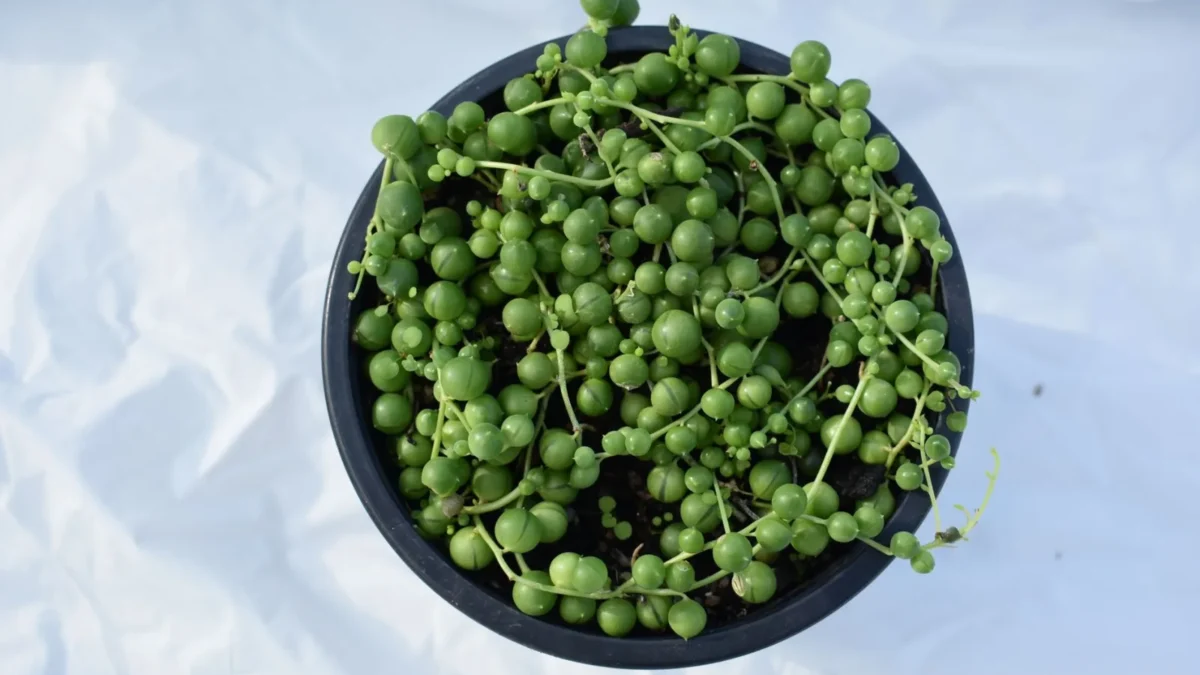
Quick answer: Your String of Pearls is dropping leaves because of overwatering and root rot, insufficient watering, cold temperatures below 50°F, or inadequate light. Each problem shows different signs and needs a different fix.
| Botanical name | Curio rowleyanus |
|---|---|
| Light | Bright indirect light; tolerates some direct morning sun; avoid harsh afternoon sun |
| Watering | Water every 7-14 days in spring/summer when soil completely dry; every 3-4 weeks in fall/winter |
| Humidity | Low humidity preferred; do not mist |
| Temperature | 70-80°F summer; 50-60°F winter; intolerant of frost |
| Soil | Well-draining cactus or succulent mix; sandy, dry soil |
| Feeding | Monthly in spring/summer with balanced fertilizer diluted to half strength; reduce or stop in fall/winter |
| Size | Trailing stems up to 90cm long; compact mounding base 4 inches tall |
| Difficulty | easy |
| What you see | Likely cause | What to do |
|---|---|---|
| Limp, discolored leaves; musty smell | Overwatering and root rot | Stop watering immediately; let soil dry completely; repot into fresh succulent soil; trim away soft, mushy roots |
| Shriveled, flat beads; dry soil | Underwatering | Water thoroughly when soil is completely dry; check soil 1 inch deep before watering |
| Drooping strands in cold window | Temperature stress | Move away from cold drafts and window; keep above 50°F |
| Smaller pearls with big gaps between them | Low light | Move to bright spot with indirect light; a south- or east-facing window works best |
| Yellow or brown leaves | Too much direct sun | Move to bright indirect light; accept a few hours of direct morning sun but avoid harsh afternoon rays |
Overwatering and Root Rot
Overwatering is the #1 killer of String of Pearls. The beads turn translucent and soft as the plant collapses, and your plant will drop leaves rapidly. Look out for limp, discolored leaves and a musty smell.
If root rot has already set in, act promptly. Carefully remove the plant from its pot and inspect the roots. Trim away any soft, mushy, or discolored roots and repot in well-draining soil. If the beads feel mushy, the disease may be too far gone to save the whole plant, but you can salvage healthy cuttings and propagate them to grow new plants.
To prevent this: water only when soil is completely dry. Check by inserting your finger 1 inch deep—if it feels dry, water. In spring and summer, that’s roughly every 7–14 days; in fall and winter, stretch it to every 3–4 weeks. Use a well-draining cactus or succulent mix, and use pots with drainage holes. String of Pearls has shallow surface roots, so a shallow pot is safer than a deep, wet one.
Bottom watering works best: soak the pot in water for 45 minutes, then remove and drain. Never top water, as moisture on leaves causes rotting and fungal issues.
Underwatering and Light Issues
Underwatering turns your String of Pearls into a string of pebbles; leaves drop as the plant cries out for hydration. Beads that look flat are a sign the soil is too dry. Water thoroughly, but only when the soil is completely dry.
Insufficient light is another common cause of leaf drop. String of Pearls needs bright light—this is non-negotiable. Best placement is a south- or east-facing window with bright indirect light for most of the day; a few hours of direct morning sun is actually fine and encourages compact growth. If stems stretch and the pearls become smaller with wider gaps, improve light.
Cold Stress
Your String of Pearls prefers summer temperatures of 70–80°F and winter temperatures of 50–60°F. Drooping or limp strands can be caused by temperature stress below 50°F. Move the plant away from cold drafts and keep it above 50°F. In climates with cold winters, bring plants indoors before the first fall frost.
FAQ
Can misting help prevent leaf drop?
No. Do not mist String of Pearls. Misting leaves and stems without improving root-zone drainage can encourage rot.
What if my leaves are yellowing?
Yellowing leaves are caused by overwatering, poor drainage, nutrient deficiency, or root rot. Reduce watering immediately and let soil dry completely; repot into fresh, well-draining succulent soil; check for root rot and trim rotted roots; fertilize monthly in spring and summer with diluted fertilizer.
How do I know if it’s a nutrient problem?
Nutrient deficiencies can lead to dropping leaves. During growing season, fertilize monthly with a balanced fertilizer diluted to half strength. Fall and winter, reduce or stop fertilizing as the plant enters semi-dormancy.
Read the full guide: String of Pearls Care: The Complete Growing Guide
More about String of Pearls
The same problem in other plants
- Why Is My String of Hearts Losing Leaves?
- Why Is My Croton Dropping Leaves? Complete Troubleshooting Guide
- Why Is My Christmas Cactus Dropping Leaves?
- Why Is My Boston Fern Losing Leaves?
Sources
- String of Pearls Care: Watering, Light & Problem Fixes
- Common Problems With String Of Pearls Plant: Comprehensive Guide And Solutions
- String of Pearls Care: Light, Water, Soil, and Propagation
Photo: Tatiana Pasechnik / Pexels, Pexels