Umbrella Plant Heptapleurum arboricola
Umbrella Plant Care: The Complete Guide
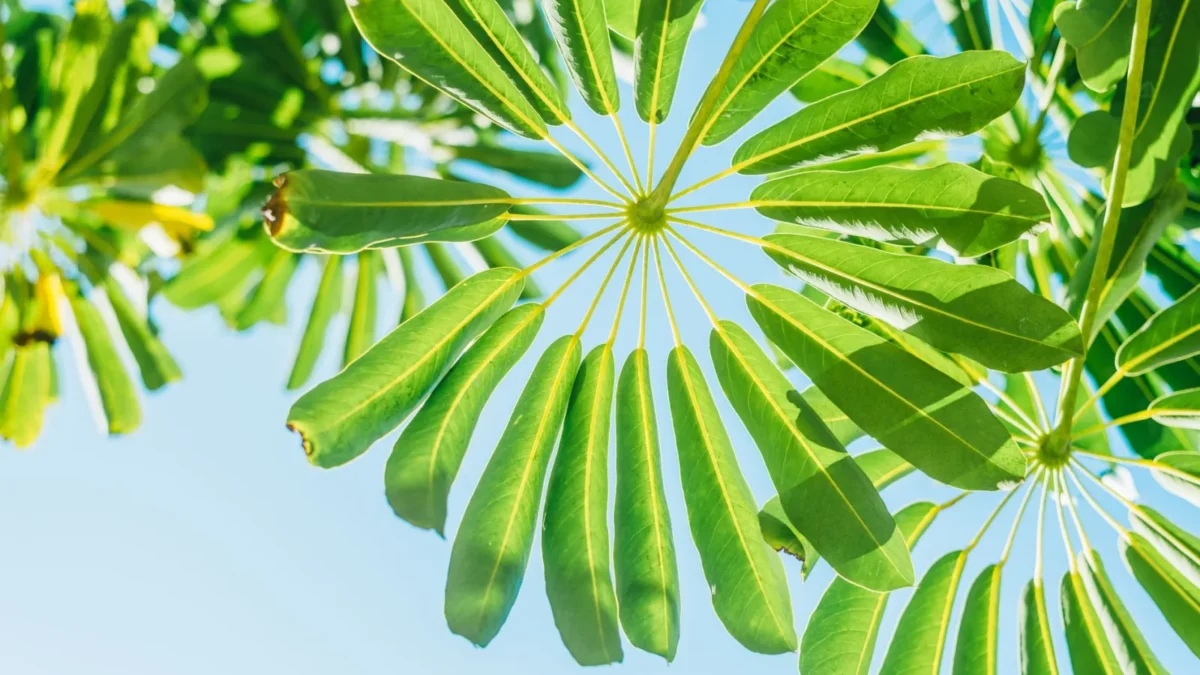
The umbrella plant is a forgiving houseplant that thrives indoors with basic care. This guide covers everything you need to know to grow a healthy umbrella plant, from light and watering to troubleshooting leaf drop and propagating new plants.
| Botanical name | Heptapleurum arboricola |
|---|---|
| Light | Bright indirect light; 3-4 hours curtain filtered sun; avoid direct sun |
| Watering | Water when top 1.5 inches feel dry; reduce watering fall to late winter |
| Humidity | Mist foliage or place on tray of wet pebbles |
| Temperature | Keep between 65°F–75°F; minimum 60°F in winter |
| Soil | Peaty well-drained soil mix; moist but well-drained |
| Feeding | Balanced liquid fertilizer monthly during growth |
| Size | 0.5–1 m height; 0.1–0.5 m spread indoors |
| Difficulty | easy |
| Cats | ⚠️ toxic — Calcium oxalate crystals; oral irritation, drooling, vomiting |
| Dogs | ⚠️ toxic — Calcium oxalate crystals; oral irritation, drooling, vomiting |
Key points
- Place your umbrella plant in bright indirect light with 3–4 hours of curtain-filtered sun daily, away from direct sun
- Water only when the top 1.5 inches of soil feel dry, then saturate until water drains freely; reduce watering from fall through late winter
- Keep temperatures between 65°F and 75°F for best growth; never let them drop below 60°F in winter
- Umbrella plants are toxic to both cats and dogs and can cause oral irritation, drooling, vomiting, and difficulty swallowing
- Leaf drop usually resolves within 10–14 days once you correct the cause, whether that’s light, watering, or temperature
Light Requirements for Umbrella Plants
Umbrella plants need bright, indirect light to thrive indoors. Place your plant at an east, west, or south-facing window where it receives about 3–4 hours of curtain-filtered sun each day. Direct sunlight will scorch the foliage and stress the plant, so always filter bright light with a sheer curtain or position it a few feet back from the window.
If your plant is in a dimly lit corner, you’ll notice leaf yellowing and drop as one of the first signs of insufficient light. Moving the plant to a brighter location will usually restore health within 10–14 days.
Watering Your Umbrella Plant
How to water
Water only when the top 1.5 inches of soil feel dry to the touch. Then water slowly and thoroughly until water runs freely from the drainage holes in the bottom of the pot. Discard any excess water sitting in the saucer within 15 minutes to prevent root rot.
Seasonal adjustments
During the growing season (spring and summer), water moderately when the soil begins to dry out. From fall through late winter, reduce watering frequency as the plant’s growth slows. Winter watering should be sparse, giving the soil more time to dry between waterings.
Checking soil moisture
If you’re unsure whether your plant needs water, use a simple test: insert a wooden chopstick or moisture meter probe 2 inches into the soil. If it emerges dark, wet, and smelling faintly sour, the soil is too wet. If it’s bone-dry and dusty, the plant needs water.
Both overwatering and underwatering cause rapid leaf yellowing and drop, often starting with the mature interior leaves. Overwatering suffocates roots and causes anaerobic decay, while underwatering leaves the plant parched. Getting the watering rhythm right is the single most important part of umbrella plant care.
Humidity and Temperature
Humidity
Umbrella plants appreciate moderate humidity. To increase humidity around your plant, mist the foliage with water regularly or place the pot on a tray of wet pebbles. As the water in the tray evaporates, it creates a humid microclimate around the leaves without waterlogging the soil.
Temperature
Keep your umbrella plant in temperatures between 65°F and 75°F for the best foliage growth. Never expose the plant to temperatures below 60°F in winter, as cold air causes leaf loss and stress. Avoid placing the plant near cold drafts, heating vents, or windows in winter—sudden temperature shifts can trigger leaf drop even if all other conditions are ideal.
Soil and Repotting
Umbrella plants must be grown in a peaty, well-drained soil mix that keeps moisture available without becoming waterlogged. The soil should remain moist but never soggy. If your current potting mix holds water too long or compacts easily, repot into a fresh mix to improve drainage.
Root confinement is a significant stressor that triggers leaf drop in many cases. If your plant is severely root-bound—with roots circling the bottom or poking through drainage holes—repot it into a container one size larger with fresh soil. Root-bound plants often recover fully within 10–14 days of repotting.
Feeding and Fertilizer
During the growing season, apply a balanced liquid fertilizer monthly to support new growth. This steady feeding schedule provides the nutrients needed for healthy, glossy foliage. In winter, hold back on fertilizing as the plant’s growth naturally slows.
Pruning and Shaping
You can prune your umbrella plant to control its size and encourage a bushier form. Simply cut back stems to your desired height—the plant will branch out at the cut points. Pruning also removes any leggy or damaged growth, keeping the plant looking full and attractive.
Propagation Methods
Umbrella plants propagate readily from stem cuttings or air layering.
Stem cuttings
Take a cutting 3–6 inches long with at least two nodes (the bumps where leaves emerge). Nodes are where new roots will form, so having at least two ensures success.
While cuttings can root in water, soil-based propagation is preferable. Soil rooting produces stronger, more robust roots; water-rooted cuttings often develop weak roots that cause problems when transplanted into soil later.
Plant your cutting in a well-draining medium such as perlite, sand, coarse sphagnum moss, vermiculite, peat moss, or standard potting soil. Keep the medium consistently moist but not waterlogged. Roots should develop within 3–6 weeks.
Once roots are about 1 inch long, pot the new plants into well-draining potting soil, water gently, and place them in bright, indirect light. Young plants are tender, so avoid direct sun and keep them out of drafts until they’re established.
Water rooting alternative
If you choose to root cuttings in water, expect longer-term adjustments during transplanting. Keep an eye on water levels as evaporation occurs, and change the water entirely every few days to prevent stagnation. Just be aware that water-rooted cuttings will likely need a slower transition period when you eventually move them to soil.
Common Problems and Solutions
Leaf drop
Leaf drop is the most common umbrella plant problem. Sudden light reduction and root confinement are the two primary triggers. The good news is that 92% of acute leaf drop cases resolve completely within 10–14 days once you address the underlying cause. Check that your plant has adequate bright indirect light, isn’t root-bound, and is receiving proper watering. Cold drafts and sudden relocations also cause leaf loss, so avoid moving the plant frequently.
Drooping
Drooping leaves signal multiple possible issues. In 63% of verified cases, overwatering and root rot cause drooping; look for soggy soil that stays wet longer than 5 days, yellowing before drooping, mushy stem bases, and foul odors from the pot. In 18% of cases, underwatering is the culprit; the soil becomes cracked and pulls from pot edges, leaves curl inward, and leaf edges turn papery brown. Underwatered plants recover in 2–3 days with slow, careful rehydration.
Drooping can also result from low light, temperature shock, pests, or sudden environmental shifts. Evaluate all factors: is the light adequate? Has the plant been moved recently? Are temperatures stable?
Root rot
Root rot develops from persistent overwatering. Stop watering immediately, remove the plant from its pot, rinse the roots thoroughly under lukewarm water, and prune away any rotted sections (they’ll be brown, black, or slimy). Repot into fresh, dry soil and resume watering only when the top 1.5 inches are dry.
For severe rot, submerge the entire pot in a bucket of room-temperature water for 30–45 minutes until bubbles stop rising, then drain completely. Do not let the pot sit in saucer water afterward. This aggressive rehydration can help salvage plants with severe dehydration alongside root rot.
Pests
Spider mites, aphids, mealybugs, scale insects, and glasshouse red spider mites can infest umbrella plants. These pests sap sap from leaves, causing wilting, drooping, and yellowing. Check the undersides of leaves regularly for fine webbing, sticky residue, or tiny moving insects. Treat infestations promptly with insecticidal soap or neem oil, following product directions.
FAQ
How big does an umbrella plant grow indoors?
Indoor umbrella plants reach a maximum height of 0.5–1 metre (roughly 1.5–3 feet) with a spread of 0.1–0.5 metres. You can control size by pruning, which also encourages bushier growth.
Is umbrella plant toxic to pets?
Yes, umbrella plants are toxic to both cats and dogs because they contain calcium oxalate crystals. Ingestion causes oral irritation, intense burning of the mouth, lips, and tongue, excessive drooling, vomiting, and difficulty swallowing. Keep the plant out of reach of pets, and contact a veterinarian if your pet has chewed on it.
Can I root umbrella plant cuttings in water?
You can root cuttings in water, but soil rooting is preferable. Water-rooted cuttings develop weak roots that often cause stress-related problems when you eventually transplant them into soil. If you do use water, change it entirely every few days to prevent stagnation.
What’s the best temperature for umbrella plants?
Keep temperatures between 65°F and 75°F for optimal foliage growth, with a minimum of 60°F in winter. Never expose the plant to temperatures below 50°F, as severe cold causes rapid leaf loss.
How often should I fertilize my umbrella plant?
Apply a balanced liquid fertilizer once a month during the growing season. Stop fertilizing in winter when growth naturally slows.
Why are my umbrella plant’s leaves yellowing?
Leaf yellowing stems from overwatering, underwatering, or insufficient light—the three most common problems. Check your watering schedule (soil should be moist but never soggy), ensure the plant receives 3–4 hours of bright indirect light daily, and move it if necessary. Most cases improve within 10–14 days of correcting the underlying cause.