ZZ Plant Zamioculcas zamiifolia
ZZ Plant Care: The Complete Growing Guide
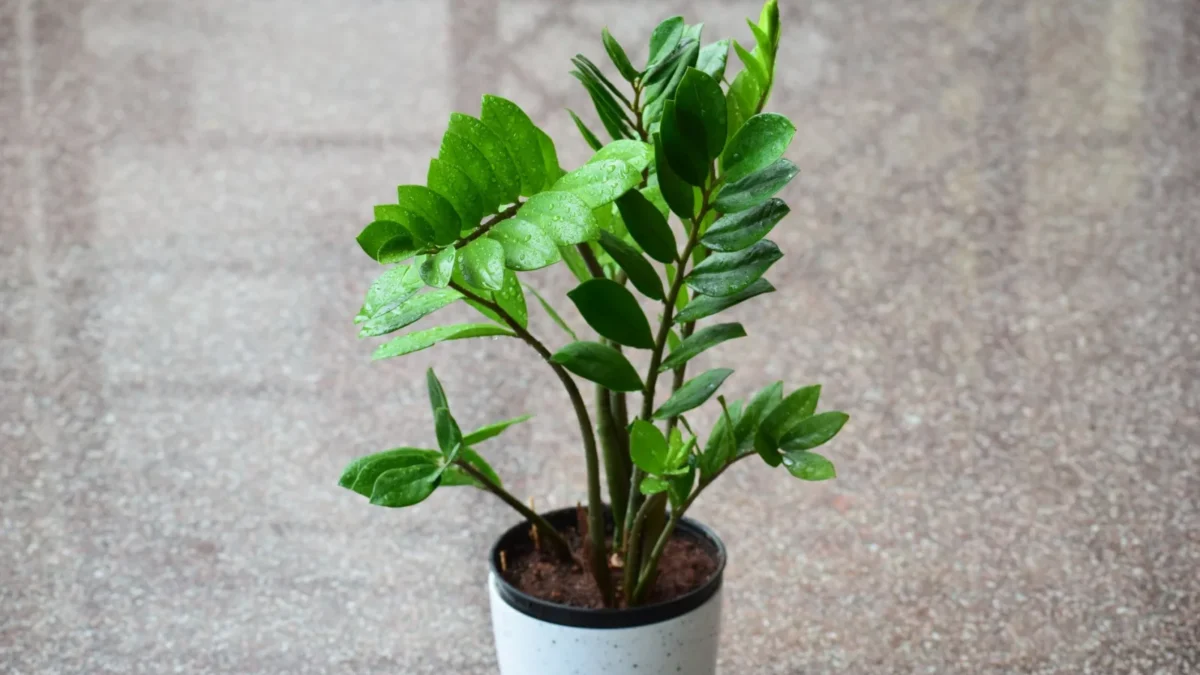
ZZ plant care is straightforward once you understand the basics—this tropical plant thrives on neglect and tolerates a range of indoor conditions. The ZZ plant (Zamioculcas zamiifolia) is an excellent choice for first-time plant owners and experienced growers alike, because it forgives inconsistency and rewards minimal effort. This guide covers everything you need to know to grow a healthy, attractive plant, from light and watering to propagation and solving common problems.
| Botanical name | Zamioculcas zamiifolia |
|---|---|
| Light | Bright indirect light; tolerates low light but becomes leggy without sufficient light |
| Watering | Every 2–3 weeks spring/summer, every 4–6 weeks fall/winter when soil completely dry |
| Humidity | Tolerates any humidity level from 40–50% average to desert-dry or bathroom-humid |
| Temperature | 65–85°F ideal; keep above 60°F; avoid below 45°F |
| Soil | Well-draining mix: 1/4 compost, 1/4 sand, 1/2 potting soil; pH 6–7 |
| Feeding | Optional; standard 20-20-20 once or twice yearly or monthly during growing season |
| Size | Stems grow up to 3 ft long indoors with glossy green foliage |
| Difficulty | easy |
Key points
– Grow your ZZ plant in bright, indirect light for 6–8 hours daily; it tolerates low light but becomes leggy without sufficient brightness
– Water every 2–3 weeks in spring and summer, every 4–6 weeks in fall and winter, only when soil is completely dry
– Use well-draining soil (1/4 compost, 1/4 sand, 1/2 potting soil) to prevent root rot
– Repot every 2–3 years or when the plant outgrows its pot
– Humidity between 40–50% is ideal, but the plant thrives at any level—no misting required
– Keep temperatures between 65–85°F and avoid anything below 45°F
Light Requirements for ZZ Plants
The ZZ plant grows best in bright, indirect light. Aim for 6 to 8 hours of indirect brightness per day. This might look like a north-facing window, morning sun with afternoon shade, or bright filtered light 5–8 feet from an east or west window. The plant will also flourish in offices under fluorescent lights, making it ideal for window-less bathrooms or commercial spaces.
While the ZZ plant tolerates low light conditions, this comes with a trade-off. Leggy stems with sparse foliage are the telltale sign that your plant isn’t getting enough brightness. Low light also halts rhizome development, so the plant stops growing rather than adapting.
Direct sunlight is equally problematic. Too much direct exposure causes leaf scorch, resulting in yellowing and browning that cannot be reversed. Position your plant where it receives indirect brightness rather than the harsh rays from a south-facing window.
Watering Your ZZ Plant
The most important rule for watering is this: let the soil dry out completely between waterings. The ZZ plant stores water in thick underground rhizomes, so it’s built to cope with drought and quickly resents wet compost.
Watering schedule by season
During the active growing season (spring and summer), water every 2–3 weeks. In fall and winter, reduce watering to every 4–6 weeks. Winter growth slows and daylight shortens, so the soil dries out more slowly as well.
How to check if your plant needs water
Stick your finger 3–4 inches into the soil. If the soil is dry to that depth, water thoroughly. If it still feels moist, wait. You can also use a water meter for precision. The exact interval varies based on pot size, light conditions, and humidity, so the soil test matters more than following a strict schedule.
Signs your plant needs water include dry, brown, or shriveled leaf tips, individually falling leaves, and wrinkled petioles (the stems that grow from the rhizome). If you notice these symptoms, water your plant thoroughly.
Overwatering is the main enemy
Overwatering causes more problems than underwatering. It’s better to underwater slightly than to keep the soil consistently moist. The number one cause of yellowing leaves is overwatering. If several leaves are yellowing at once and the soil feels damp, cut back on watering—this fix resolves the problem in most cases.
If multiple stems are yellowing simultaneously with wet soil and mushy stem bases, your plant has a serious problem that requires immediate action. This indicates root or rhizome rot, which is discussed in the problems section below.
Humidity and Temperature
The ZZ plant is perfectly content in average home humidity levels of 40–50%. More importantly, it’s happy at any humidity level—from desert-dry to bathroom-humid. You don’t need to mist your plant or add a humidifier unless you’re already managing humidity for other reasons.
Temperature tolerance is similarly forgiving. The ideal range is 65–85°F. Keep your home above 60°F to help your ZZ survive, and avoid temperatures below 45°F. Active growth will slow and leaf discoloration may occur if temperatures drop below 50°F.
Soil and Repotting
Soil composition
Use a well-draining potting mix. An ideal formula is 1/4 compost, 1/4 sand, and 1/2 standard potting soil. The soil should have a pH between 6 and 7. A succulent-specific potting mix works well too, or you can amend regular potting soil with perlite, sand, or lava rock to improve drainage.
Drainage is critical—poor drainage leads to root rot, the most common reason plants decline.
When and how to repot
Repot every 2–3 years or when the plant outgrows its pot. ZZ plants have slow-growing root systems, so they don’t need frequent repotting. Repot in spring or early summer, and don’t increase the pot size too much at once—a jump of just 1–2 inches in diameter is usually enough.
When repotting, handle the rhizomes gently as they can be brittle. Wear gloves because the sap can mildly irritate skin. Use fresh soil to promote healthy growth, water sparingly for the first week or two afterward, and allow disturbed roots time to settle.
Feeding and Fertilizer
Feeding is optional—your ZZ plant will grow perfectly well without fertilizer. However, feeding can encourage healthy, attractive growth if you choose to do it.
If you decide to fertilize, use a standard 20-20-20 mixture, which contains 20 percent nitrogen, 20 percent phosphate, and 20 percent soluble potash. During the growing season (spring and summer), you can feed once a month with a small amount. Alternatively, fertilize just once or twice yearly. The key is not to overdo it—light, occasional feeding is sufficient.
Pruning and Maintenance
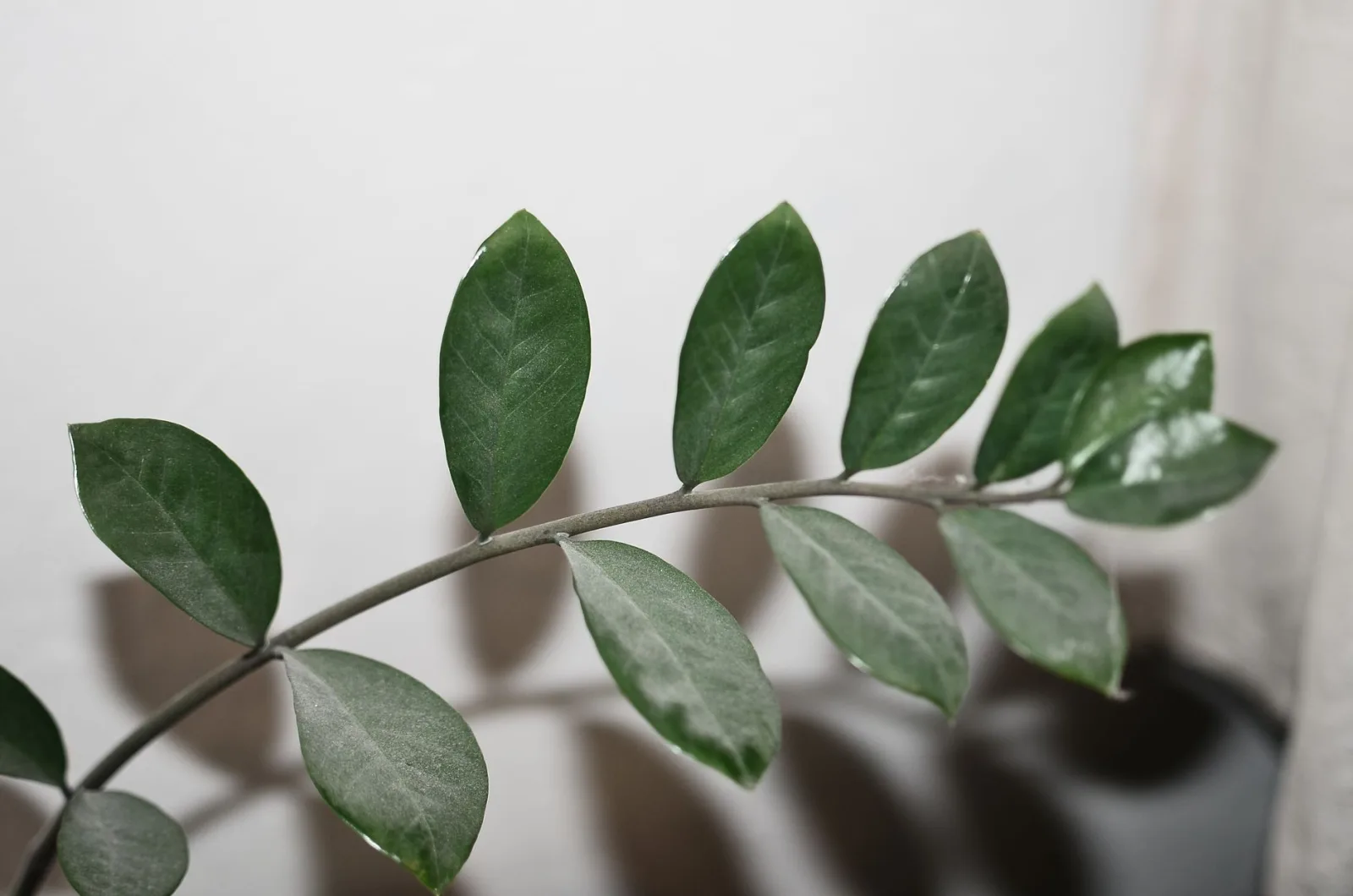
The ZZ plant doesn’t require pruning to thrive, but basic maintenance keeps it looking its best. Keep the leaves dust-free by wiping or dusting them once a month. This is especially important in winter, as dust buildup reduces the light the plant can absorb for photosynthesis.
It’s normal for the plant to naturally shed old leaflets as part of routine turnover. If only 1–2 of the lowest leaflets are yellowing while the plant otherwise looks healthy, no action is needed.
Propagation Methods
The ZZ plant can be propagated by division or leaf cuttings.
Division (easiest method)
Divide the plant when repotting by gently separating the rhizomes and repotting each section individually at the same depth. Handle rhizomes carefully to avoid damage to any growth points.
Leaf cuttings
The ZZ has a unique reproductive strategy: its fallen leaflets can take root. You can propagate from individual leaves by sticking just the end in water. Place the sample in a jar of water in indirect sunlight and change the water weekly to prevent bacterial growth as the stem develops.
Common Problems and Solutions
Yellow leaves
Yellowing is the most common problem, and overwatering is almost always the cause. If multiple leaves are yellowing and the soil is damp, reduce watering frequency. Underwatering, low light, and natural leaf shedding can also cause yellowing but are far less common. Underwatering typically appears with limp, wrinkled, or wilting stems.
Root rot
Root rot develops when soil stays wet for extended periods. Healthy roots are firm and white to light tan. Mushy, dark, or slimy roots with a foul smell indicate rot. If caught early, repot the plant in fresh soil, thoroughly wash the container, rinse the roots, and trim away any dead or unhealthy-looking tissue.
Brown leaf tips
Brown tips usually result from too much direct sunlight or low humidity. Increase humidity with a humidifier or pebble tray, or by grouping houseplants together. If direct sun is the cause, move the plant to a spot with bright indirect light instead.
Leaf scorch from excessive light
Direct sunlight exposure burns leaves, causing whitening and yellowing that cannot be reversed. Move the plant away from harsh afternoon sun into a location with bright, filtered light.
Pet Safety
The ZZ plant is toxic to both cats and dogs. The plant contains insoluble calcium oxalate crystals—microscopic needle-like structures called raphides—that cause immediate irritation when a pet chews on any part of the plant.
Symptoms in cats
In cats, symptoms typically appear within minutes of chewing and include drooling, pawing at the mouth, and retching, sometimes followed by vomiting. Most cats stop eating the plant immediately because of the pain, which is why serious poisoning is relatively rare.
Symptoms in dogs
The symptoms in dogs mirror the feline ones—the same crystals cause oral burning, drooling, and occasional vomiting. The plant can also cause irritation, stomachache, diarrhea, and vomiting if ingested.
What to do if your pet ingests the plant
Contact your vet or the ASPCA Animal Poison Control Center right away if your cat chews or ingests any part of the plant. For dogs, contact your vet immediately without waiting for symptoms to appear.
The toxicity is mild to moderate—unlike many other houseplants, ingestion is not normally fatal to humans, cats, or dogs. The reaction stays local and self-limiting rather than life-threatening. Still, prompt veterinary attention is the safest approach if exposure occurs.
FAQ
How often should I water my ZZ plant?
Water every 2–3 weeks in spring and summer, and every 4–6 weeks in fall and winter, but always wait until the soil is completely dry first.
Can I keep a ZZ plant in low light?
The ZZ plant tolerates low light but will become leggy quickly without sufficient brightness. It’s best to give it at least 6–8 hours of indirect light daily for healthy growth.
Do I need to mist my ZZ plant?
No. The ZZ plant is happy at any humidity level, from desert-dry to bathroom-humid, so misting is not necessary.
How often should I repot my ZZ plant?
Repot every 2–3 years or when the plant outgrows its pot. ZZ plants have slow-growing root systems, so they don’t need frequent repotting.
Is fertilizer necessary for ZZ plants?
Feeding is optional—your ZZ plant will do perfectly well without it. If you choose to fertilize, use a standard 20-20-20 mixture once or twice yearly, or monthly during the growing season.
What should I do if my ZZ plant has yellow leaves?
Yellowing is almost always caused by overwatering. If the soil is damp and multiple leaves are yellowing, cut back on your watering schedule.
More about ZZ Plant
Sources
- ZZ Plant Care
- ZZ Plant Care: How To Care for Zamioculcas Zamiifolia
- How Often to Water a ZZ Plant (Schedule + Signs 2026)
Photo: Lokesh Tiwari / Pexels, Pexels