Air Plant Tillandsia
Air Plant Care: The Complete Guide
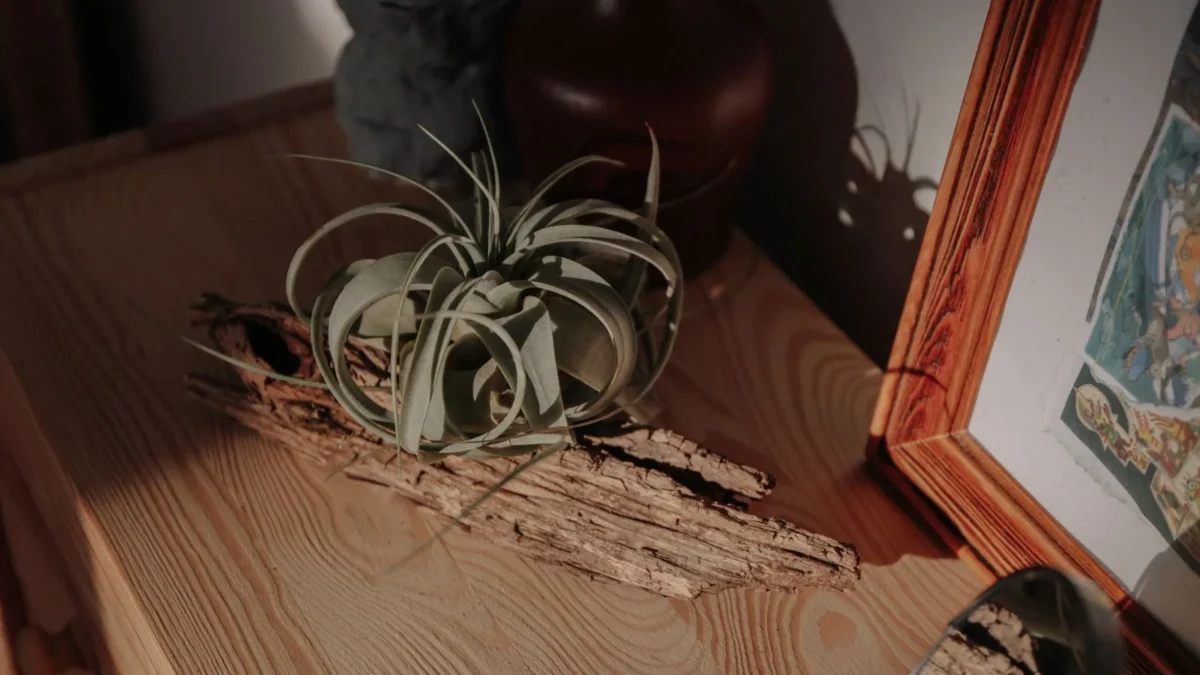
Air plant care requires understanding how these unique plants absorb water and nutrients differently from traditional houseplants. Unlike most plants, air plants belong to the genus Tillandsia in the family Bromeliaceae and draw moisture from the air rather than soil, making their care straightforward once you grasp the basics. This guide covers everything you need to keep your air plants healthy and thriving, from watering schedules to troubleshooting common issues.
| Botanical name | Tillandsia |
|---|---|
| Light | Bright indirect light; avoid direct sunlight which can burn leaves |
| Watering | Soak 2-3 times weekly spring-autumn in rainwater; weekly in winter; allow to dry within hours |
| Humidity | 50-70% |
| Temperature | 50-90°F (10-32°C); avoid prolonged exposure below 45°F |
| Soil | No soil; attach to wood, rocks, shells, or wire |
| Feeding | Balanced foliar feed monthly spring-late summer |
| Size | 0.1-0.5 m height; matures in 5-10 years |
| Difficulty | demanding |
Key points
- Soak air plants in rainwater 2-3 times weekly in spring and autumn; once weekly in winter, then allow them to dry completely within hours
- Provide bright indirect light, ideally near a south-facing window behind a net curtain, and avoid direct sunlight that can burn leaves
- Maintain humidity between 50-70% and temperatures of 50-90°F (10-32°C); avoid prolonged exposure below 45°F
- Mount air plants on wood, rocks, shells, or wire since they don’t need soil
- Apply balanced foliar feed monthly from late spring to late summer
- Separate pups (baby plants) once they reach one-third to half the size of the mother plant
How to Water Air Plants Indoors
Watering is the most critical aspect of air plant care. The common misconception that air plants need only occasional misting is incorrect—they require regular soaking to properly rehydrate. From spring until autumn, immerse your plants in rainwater on average two to three times a week, allowing them to dry off in between.
In winter, reduce watering to every 10 to 14 days since growth slows and humidity naturally increases indoors. After watering, ensure your air plants dry completely within a few hours to prevent rot.
Rainwater is essential for air plant health. Avoid using tap water, especially in hard water areas, as tap water contains dissolved sodium bicarbonate which can precipitate out on the trichomes—the specialized water-absorbent cells on air plant leaves—and block them, preventing the plant from absorbing moisture. If rainwater isn’t available, collect it when possible or use distilled water as an alternative.
Soaking vs. Misting
Misting sprays water directly onto the leaves for quick hydration, while soaking submerges the entire plant in water for 20 to 30 minutes for deeper moisture absorption. For most air plant species, misting alone is insufficient—they need a proper soak in a water bath. If you do mist as a supplement, allow the plant to dry thoroughly afterward to prevent rot.
Light Requirements for Air Plants
Tillandsia enjoy bright but diffused light, so provide light shade from direct sunshine, particularly under glass. A position in a south-facing window behind a net curtain is ideal. Too much direct sunlight can cause their leaves to burn, so avoid placing them in unfiltered, intense direct sun.
If your home lacks a suitable bright window, you can grow air plants with some direct sunlight depending on your location and season, but consistent bright indirect light is the safest approach for indoor care.
Temperature and Humidity
Temperature Range
Generally, air plants prefer temperatures between 50°F and 90°F (10°C to 32°C). Anything below 45°F is dangerously cold for air plants—they will most likely die if exposed to such low temperatures for a prolonged period. Avoid placing your plants near drafty windows, vents, and air returns, as sudden temperature fluctuations stress the plant.
Humidity Requirements
The perfect air plant humidity is between 50% and 70%. Air plants prefer warm and humid conditions. With the exception of some Xeric Air Plant species, they love higher humidity as it replicates the tropical environment they are used to in their native habitat. However, be cautious: if you add extra humidity through misting or humidifiers, ensure there isn’t stagnant water sitting on your air plant or poor air circulation, as this can lead to rot.
Allowing the air to become too saturated is not only uncomfortable for you, but it can also harm plants and cause rot. Strike a balance by ensuring good air circulation around your plants.
Soil, Mounting, and Display Options
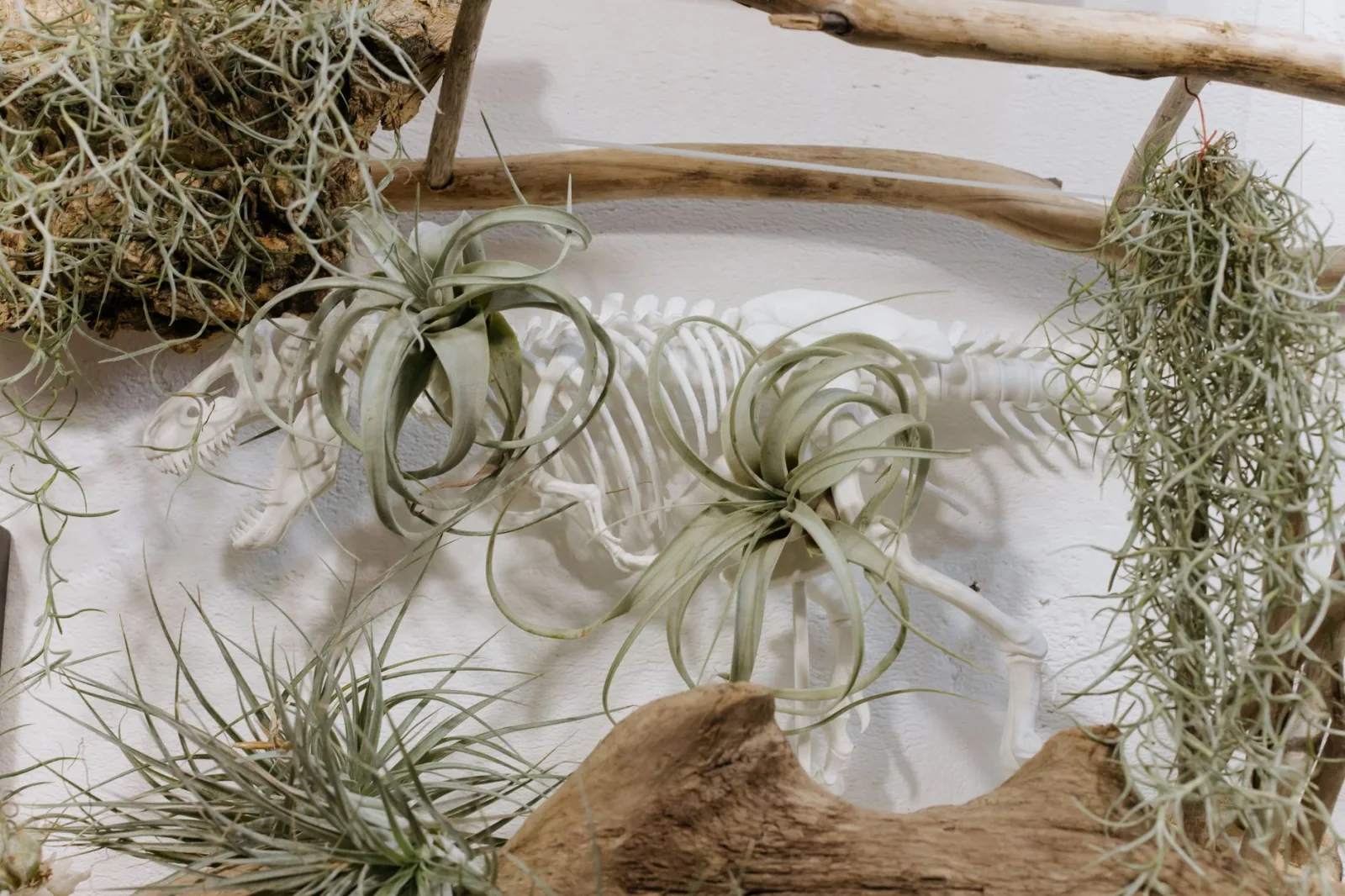
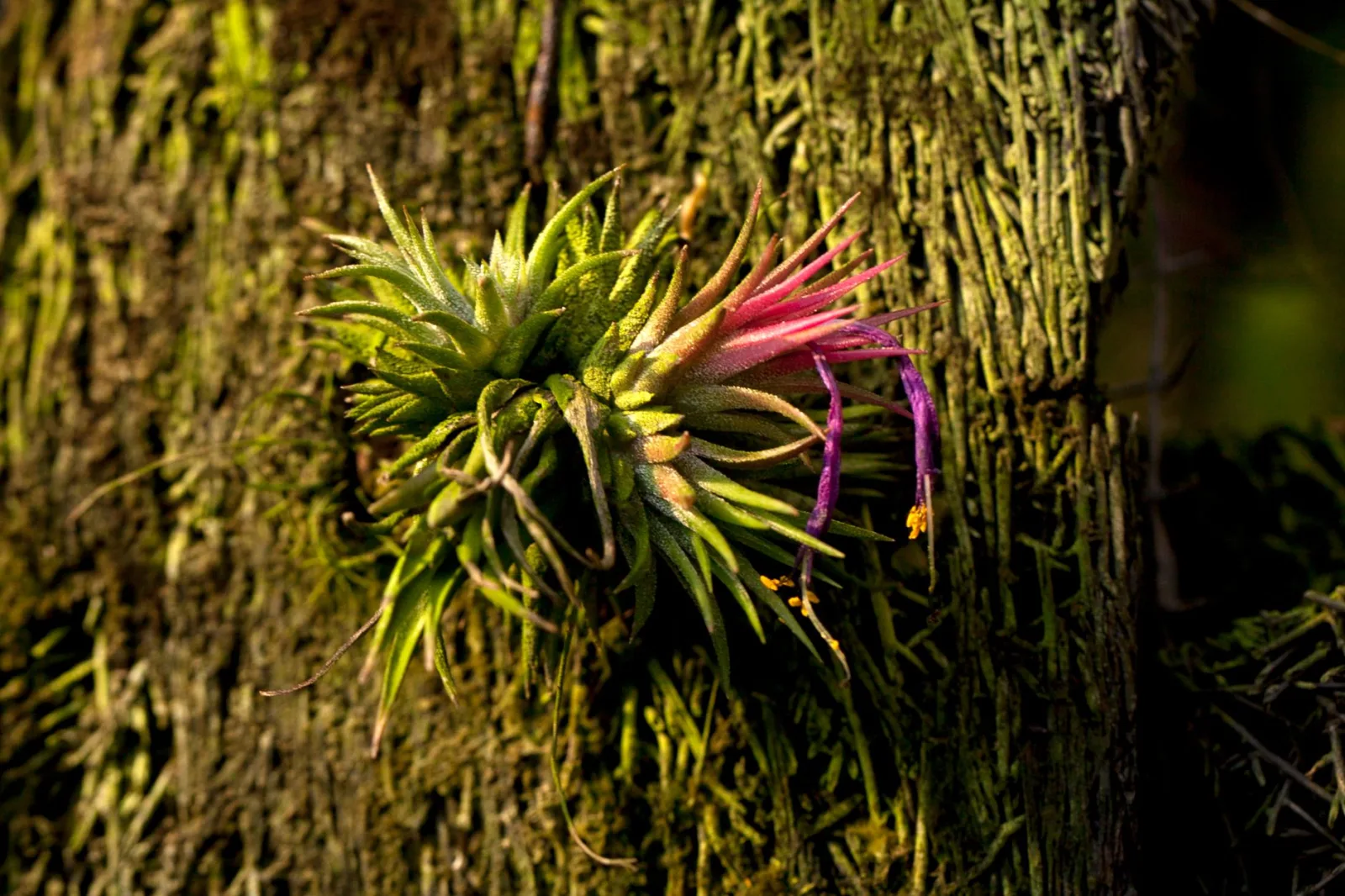
Air plants don’t grow in soil at all. Tillandsia use their short, wiry roots to attach themselves to branches, cliff-faces, even electricity and telephone lines, rather than rooting in soil. Roots on air plants don’t need water since their only purpose is to attach to a tree or object—once they stop growing they turn dry and brown, which is completely normal.
Airplants are often grown on gnarled wood, or shells and rocks to which they are tied, wired or glued for support. You can get creative with mounting: driftwood, cork bark, decorative stones, seashells, or even wire frames all work beautifully. The key is ensuring the base of the plant stays secure while air can circulate freely around it.
Do not place your plants in tightly closed or cramped containers. Air plants need fresh air to circulate to absorb nutrients as well as avoid rot from too much constant moisture.
Feeding and Fertilizing
From late spring to late summer water moderately and apply a balanced foliar feed monthly. Fertilizer helps air plants develop stronger growth and more vibrant blooms. Use a diluted liquid fertilizer designed for orchids or bromeliads, and apply it directly to the leaves during your regular watering routine.
Water sparingly in winter, and hold off on fertilizing during the colder months when growth naturally slows.
Propagating Air Plants
Most bromeliads including Tillandsia are monocarpic, meaning they grow to maturity, flower, set seed and then die, but not before producing offsets or young plants from the base. These plants will generally follow the same life cycle as houseplants: around the same time as blooming, the plant will produce between two to eight pups (baby plants).
When to Separate Pups
Once you see full-grown pups (around one-third to half the size of the mother plant) and see that the mother plant is withering, you can choose to propagate the pups or allow them to clump. Once they are a third the size of the original, they can be safely cut away and treated as any other Tillandsia.
How to Remove Pups
You can simply gently twist the pup from the mother plant’s base. If this doesn’t work, you can also use a knife and make a clean downward slice right at the bottom of the pup. Cut them away gently with a clean knife, and allow the wound to dry out and callus over before you water again.
There is no special treatment required for an air plant pup. As soon as they’re large enough to be removed from the parent plant they’ll start sharing the same requirements as mature plants: the same watering schedule, light conditions, humidity, and temperature ranges.
Clumping as an Alternative
You can also choose to let the pups clump, forming a larger plant. As the pups begin to grow, they too will flower and eventually produce pups. If left to grow naturally in this way, they will form a clump—a beautiful, dense display of multiple rosettes.
Why Not Seed Propagation?
Although Air Plants will flower, oftentimes they do not set seed when grown as houseplants. The asexual reproduction by offsets or “pups” is the most reliable way to propagate air plants, especially in a home or residential garden environment. Growing an air plant from seed can be a tedious and time-consuming task, and most air plant owners prefer to raise pups that grow and bloom much faster.
Common Problems and Solutions
Dehydration
Dehydrated plants can occur as a combination of infrequent watering, high temperatures and low relative humidity. Plants can sometimes be revived by soaking overnight, but in the long term an adjustment to more favourable watering and growing procedures is required. Extended use of hard water instead of rainwater can also cause dehydration, so switch to rainwater or distilled water for best results.
Rot
Rot can cause the centre of the plant or some of the leaves to turn brown or black. It most usually occurs from water collecting in the crown of the plant, in conjunction with poor air circulation. Ensure your plant dries quickly after watering and that air can move freely around it. If rot has already started, remove affected leaves and improve drainage conditions immediately.
Lower Leaf Loss
Loss of lower leaves is the result of stress such as from a change of conditions or water stress. Assess your care routine—have you recently moved the plant, changed watering frequency, or altered its environment? Return to consistent care and the plant should stabilize.
Curling Leaves and Dry Tips
Curling leaves and dry tips are signs that your air plants may need more winter moisture. Be sure to give their weekly water bath but you may need to supplement with an extra misting once a week during the colder months when indoor air becomes drier.
Are Air Plants Toxic to Pets?
If you have cats or dogs, air plants are a safe choice for your home. Air plant is listed as non-toxic to cats by the ASPCA. It is not known to cause poisoning. Air plant is non-toxic to dogs according to the ASPCA. It is not known to cause serious harm if nibbled. Any plant material can cause mild stomach upset if eaten in large quantities, so it’s still best to discourage chewing, but air plants present no serious toxicity risk to your pets.
FAQ
How often should I water my air plant?
From spring until autumn, immerse plants in rainwater on average two to three times a week, allowing them to dry off in between. In winter, reduce watering to every 10 to 14 days since growth slows and humidity naturally increases indoors.
Can I use tap water for air plants?
Avoid using tap water especially in hard water areas as the water contains dissolved sodium bicarbonate which can precipitate out on the trichomes and block them, preventing the Tillandsia from absorbing moisture. Rainwater or distilled water is best.
What is the ideal humidity level for air plants?
The perfect air plant humidity is between 50% and 70%. This range replicates their natural tropical habitat and supports healthy growth.
How do I know when to separate pups from the mother plant?
Once you see full-grown pups (around one-third to half the size of the mother plant) and see that the mother plant is withering, you can choose to propagate the pups or allow them to clump.
Can air plants grow in soil?
Tillandsia use their short, wiry roots to attach themselves to branches, cliff-faces, even electricity and telephone lines, rather than rooting in soil. They must be mounted on wood, rocks, shells, or wire instead.
How long do air plants take to mature?
Time to maturity is 5–10 years, with a maximum height of 0.1-0.5 metres. Patience is required, but the reward is a flowering plant capable of producing pups.
More about Air Plant
Sources
Photo: Valeria Palesska / Pexels, Pexels