Caladium Caladium bicolor
Caladium Care: The Complete Guide to Growing Colorful Caladiums Indoors
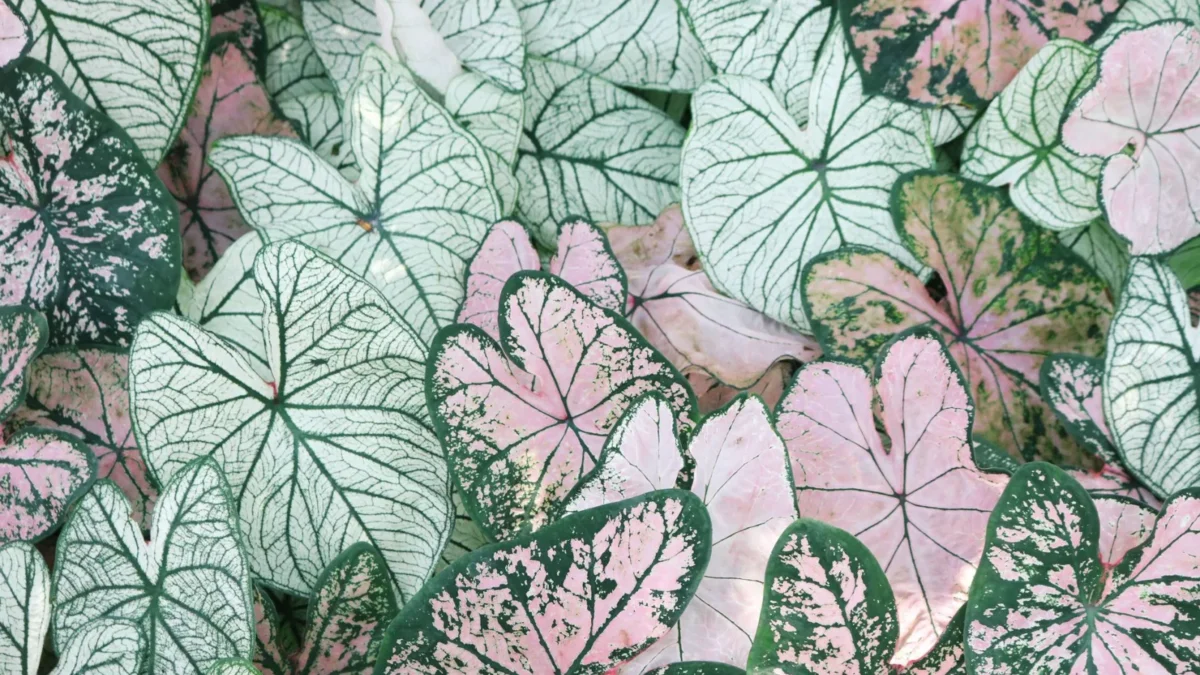
Caladium care indoors centers on providing bright, indirect light, consistent moisture, and high humidity—conditions that mimic the tropical environments these plants naturally call home. This guide covers everything you need to know to grow healthy, vibrant caladiums indoors year-round, from the moment you bring your plant home through winter dormancy and beyond.
| Botanical name | Caladium bicolor |
|---|---|
| Light | Part shade to full shade; bright indirect light; avoid direct sun to prevent leaf scorch |
| Watering | Water when top inch of soil feels dry; keep moist but never soggy; ensure drainage |
| Humidity | 50-75%; ideally 60-75%; mist regularly or use humidifier |
| Temperature | 70-85°F daytime; above 60°F nighttime; avoid temperatures below 65°F |
| Soil | Moist, fertile, humus-rich, acidic soil; peat/coco coir with perlite and compost or worm castings |
| Feeding | Balanced, dilute liquid fertilizer; half-strength dose every 3-4 weeks indoors during active growth |
| Size | 1-2.5 feet in height and spread |
| Difficulty | moderate |
| Cats | ⚠️ toxic — Insoluble calcium oxalates; oral irritation, drooling, vomiting, swallowing difficulty |
| Dogs | ⚠️ toxic — Insoluble calcium oxalates; oral irritation, drooling, vomiting, swallowing difficulty |
Key points
– Caladiums grow best in part shade to full shade and need bright indirect light; avoid direct sun, which causes leaf scorch
– Water when the top inch of soil feels dry; keep the soil moist but never waterlogged, and always ensure your pot has drainage
– Humidity between 60–75% is ideal, and temperatures should stay between 70–85°F during the day and above 60°F at night
– Use a loose, well-draining soil mix of peat or coco coir, perlite, and compost or worm castings
– These plants are toxic to cats and dogs; keep them out of reach of pets
– Even indoors, caladiums go dormant in fall—reduce watering as leaves die back and resume care in spring
Light Requirements for Caladiums
Caladiums do best in part shade to full shade and thrive in bright indirect light. Indoors, aim to provide at least 4 hours of filtered sunlight from a bright south, east, or west window. The key is positioning your plant where it receives bright light but no direct sun rays—a spot near a window with sheer curtains works beautifully, as does a few feet back from any sunny window.
Direct sun is the enemy. The thin, delicate leaves scorch easily, creating brown, papery patches that won’t recover. If your home is very dim, your caladium will tolerate it better than many houseplants, but growth slows considerably. In low light, the soil stays wetter longer, which increases the risk of overwatering problems. If your plant isn’t getting enough light, its leaves might yellow as a sign of stress.
Watering Your Caladium: How Often and How Much
Water your caladium when the top inch of soil feels dry to the touch. Indoors, this typically means watering every few days during the growing season, though it depends on your pot size, soil mix, humidity, and how warm your home is.
The goal is to keep the soil consistently moist without letting it become soggy or waterlogged. Always use a pot with drainage holes—excess water must be able to escape. Empty the saucer after watering so the roots never sit in standing water.
As fall arrives, your caladium will naturally begin to slow down, even indoors. When the leaves start to die back in autumn, reduce watering. This is the plant’s dormant period. Stop watering almost entirely until you see new growth returning in spring, then resume your normal watering schedule.
Humidity and Temperature: Creating the Ideal Environment
Humidity
Caladiums are tropical plants and crave humidity. Ideally, they grow best when humidity reaches 60–75%, though they can tolerate levels between 50% and 70%. In a typical home with air conditioning or heating, humidity often drops well below this range, which can stress your plant.
Increase humidity by misting the leaves regularly or using a humidifier. Grouping your caladium with other houseplants also helps, as plants release moisture into the air around them. A pebble tray—a shallow dish filled with water and pebbles where you sit the pot—is another effective method. The water evaporates around the base of the plant without waterlogging the roots.
Low humidity causes problems. In dry conditions, leaf edges turn brown and crispy, and leaves may droop or lose their characteristic perkiness.
Temperature
Caladiums flourish in warm air with soil temperatures between 70° to 85°F during the day and above 60°F at night. These are warm-loving plants. Temperatures below 65°F are problematic—the leaves will droop, growth stops, and the plant may collapse. Prolonged exposure to cool temperatures can cause drooping, stunted growth, and yellowing leaves.
Avoid cold drafts from windows, doors, and air conditioning vents. Keep your plant away from rooms that get chilly at night. If your home cools significantly after dark, move your caladium to a warmer spot during winter months.
Soil and Repotting Caladiums
Caladiums need rich, moist, fertile soil with plenty of organic matter. The best indoor soil mix is loose and airy: two parts high-quality peat or coco coir–based potting mix blended with one part perlite and a small amount of compost or worm castings. This mix retains enough moisture while allowing excellent drainage—the perlite prevents waterlogging, and the organic matter feeds the plant over time.
The ideal soil pH is slightly acidic. Most quality potting mixes are already formulated to this range, so you typically don’t need to adjust.
Repot your caladium when it outgrows its container or the soil becomes depleted. Spring, as new growth emerges, is the best time to repot. Choose a pot just slightly larger than the current one—caladiums aren’t heavy feeders and actually do better in snugly fitted pots. Refresh the soil each time you repot.
Feeding and Fertilizing Caladiums
Caladiums don’t need a lot of fertilizer, and too much can actually burn the leaves. During the active growing season, use a balanced, dilute liquid fertilizer. For indoor plants, a half-strength dose every 3–4 weeks is sufficient. Start feeding once you see new leaves emerge in spring and continue until the plant begins to slow down in late summer or early fall.
If your caladium hasn’t been repotted or fed in a year or more, older leaves can yellow uniformly while the newest growth stays green—a classic sign of nitrogen depletion. If you notice yellow leaves with green veins on new growth, the plant may be deficient in iron or manganese; a balanced, water-soluble fertilizer can address these nutrient issues,.
Stop fertilizing once you reduce watering in fall. Resume a light feeding schedule in spring as new growth appears.
Pruning and Maintaining Shape
Caladiums don’t require heavy pruning. Simply remove dead or damaged leaves at the base of the stem with clean scissors. If a leaf is partially brown or yellow, you can remove just that leaf rather than waiting for the whole plant to decline.
As your plant matures indoors, it will typically reach between 1 to 2.5 feet in height and spread. It naturally forms a compact, bushy shape. If you want a fuller plant, pinch back the growing tips in spring to encourage branching, though this isn’t essential.
Remove any leaves that touch the soil surface, as they’re more prone to rot. This also improves air circulation around the base of the plant.
Propagating Caladiums from Bulbs and Cuttings
Tuber Division
Caladium tubers can be divided in fall or spring, with spring being the best time for beginners. Carefully remove the parent plant from its pot and gently pull or cut it into two or more pieces, making sure each piece has healthy, leafy growth and a good share of well-formed roots. Repot each division into fresh soil mix and water lightly.
Leaf Cuttings
You can also propagate from leaf cuttings. Cut an entire leaf from the parent plant at the stem, keeping about 1½ inches of stem, and cut it diagonally. Allow the cut end to callus for a few hours before placing it into potting medium or water.
If rooting in water, place only the stem end in the water—never submerge the leaf itself. Change the water regularly and watch for rot. Once a decent root system develops, transfer the cutting into potting soil. Alternatively, place the callused cutting directly into moist potting medium, keep it warm and humid, and roots will develop within a few weeks.
Common Problems: Yellow Leaves, Brown Tips, and Drooping
Yellow Leaves
Yellow caladium leaves most often result from overwatering or poor drainage. Check the soil—if it’s soggy, hold back on water and ensure the pot has drainage holes. Yellow leaves can also signal insufficient light. If you’ve neglected to repot or feed the plant for over a year, yellowing older leaves while new growth stays green indicates nitrogen depletion. Feed with a balanced fertilizer and repot into fresh soil.
Yellow leaves with green veins on new growth point to iron or manganese deficiency. Use a balanced, water-soluble fertilizer to correct this.
Root rot can kill a caladium quickly and almost always stems from overwatering. When roots rot, leaves turn yellow and collapse because the roots can’t absorb nutrients or oxygen. If you suspect root rot, remove the plant from its pot, trim away any soft brown roots with clean scissors, repot into fresh, dry soil, and water sparingly until the plant shows signs of recovery.
Brown Tips and Edges
Brown, crispy leaf tips are typically caused by low humidity, insufficient moisture, too much direct sunlight, or over-fertilization. Check your watering schedule and ensure the soil stays evenly moist during growth. Increase humidity by misting regularly or using a humidifier. Move the plant away from direct sun if it’s getting any. If you’ve been fertilizing heavily, flush the soil with water and reduce feeding frequency.
Yellowing or browning leaf edges can also signal underwatering. If the soil is dry and leaves look limp, water thoroughly but don’t let the plant sit in water afterward.
Drooping Leaves
Dropping leaves result from several causes. Underwatering makes leaves droop; if the soil is dry and the plant’s leaves are limp, water thoroughly to ensure moisture reaches the roots, but don’t let the plant sit in standing water. Inconsistent watering—alternating between bone-dry and soggy—stresses the plant. Overwatering and poor drainage lead to root rot, which suffocates the roots and causes leaves to droop.
Cold drafts are another culprit. Temperatures below 65°F make leaves droop and cause the plant to collapse. Keep your caladium away from cold windows and air conditioning vents.
Low humidity causes drooping because the leaves lose turgidity. Tropical plants like caladiums adore humidity; if your home is too dry, leaves droop and weaken. Mist regularly or use a humidifier.
Other causes of drooping include excess direct sunlight, being pot-bound, and excess fertilizer salt buildup. Ensure the pot has drainage, repot if needed, and flush the soil with water if you’ve over-fertilized.
Pet Safety: Are Caladiums Toxic to Cats and Dogs?
Caladiums are toxic to both cats and dogs. The toxic compound is insoluble calcium oxalates. If a pet ingests any part of the plant, clinical signs include oral irritation, pain and swelling of the mouth, tongue and lips, excessive drooling, vomiting, and difficulty swallowing.
Keep your caladium out of reach on a high shelf or in a room your pets can’t access. If you suspect your pet has eaten any part of the plant, contact a local veterinarian or call the ASPCA’s 24-hour emergency poison hotline at (888) 426-4435.
Saving and Storing Caladium Bulbs for Winter
Even indoors, caladiums enter dormancy in fall. As the leaves naturally die back—usually in September or October—reduce watering and allow the soil to dry out. The plant is preparing for rest.
Once all the leaves have died back completely, you can leave the bulb in the pot in a cool, dry location, or carefully remove it and store it separately. Place dormant bulbs in a dry, well-ventilated area with temperatures between 60–70°F. The tubers need about 1–3 days to cure before storage. Store them in a paper bag or cardboard box in a dark closet or cool basement.
In spring, when you’re ready to bring your plant back to life, repot the bulb in fresh soil, water lightly, place it in a warm location, and apply a weak fertilizer. New leaves will emerge within a few weeks. Return to your normal caladium care routine as growth accelerates.
FAQ
How often should I water my caladium indoors?
Water when the top inch of soil feels dry to the touch. Indoors, this usually means every few days during the growing season, depending on your home’s temperature, humidity, and the size of your pot.
Can caladiums grow in low light?
Caladiums tolerate lower light than most houseplants, but in dim conditions they slow down, drop older leaves, and become more vulnerable to overwatering because the soil never dries. Provide at least some bright, indirect light for best results.
Why are my caladium leaves drooping?
Drooping can result from improper watering (either too much or too little), cold drafts, excess direct sunlight, low humidity, excess fertilizer salts, or a pot-bound condition. Check your watering, move the plant away from cold and sun, increase humidity, and repot if necessary.
What temperature does a caladium need?
Caladiums flourish between 70–85°F during the day and above 60°F at night. Avoid temperatures below 65°F, which cause drooping and stress.
Are caladiums toxic to pets?
Yes, caladiums are toxic to both cats and dogs. If your pet ingests any part of the plant, contact a veterinarian or the ASPCA poison hotline at (888) 426-4435.
Do caladiums go dormant indoors?
Yes, even indoors, caladiums enter dormancy in fall as the leaves die back naturally. Reduce watering and allow the soil to dry out. Resume watering and feeding in spring when new growth emerges.
More about Caladium
Sources
- Why is my caladium turning yellow? — causes + fix
- Caladium bicolor – Plant Finder
- How to Care for Caladiums – A Growing Guide
Photo: Madison Inouye / Pexels, Pexels