Caladium Caladium bicolor
Why Are My Caladium Leaves Turning Yellow? How to Diagnose and Fix It
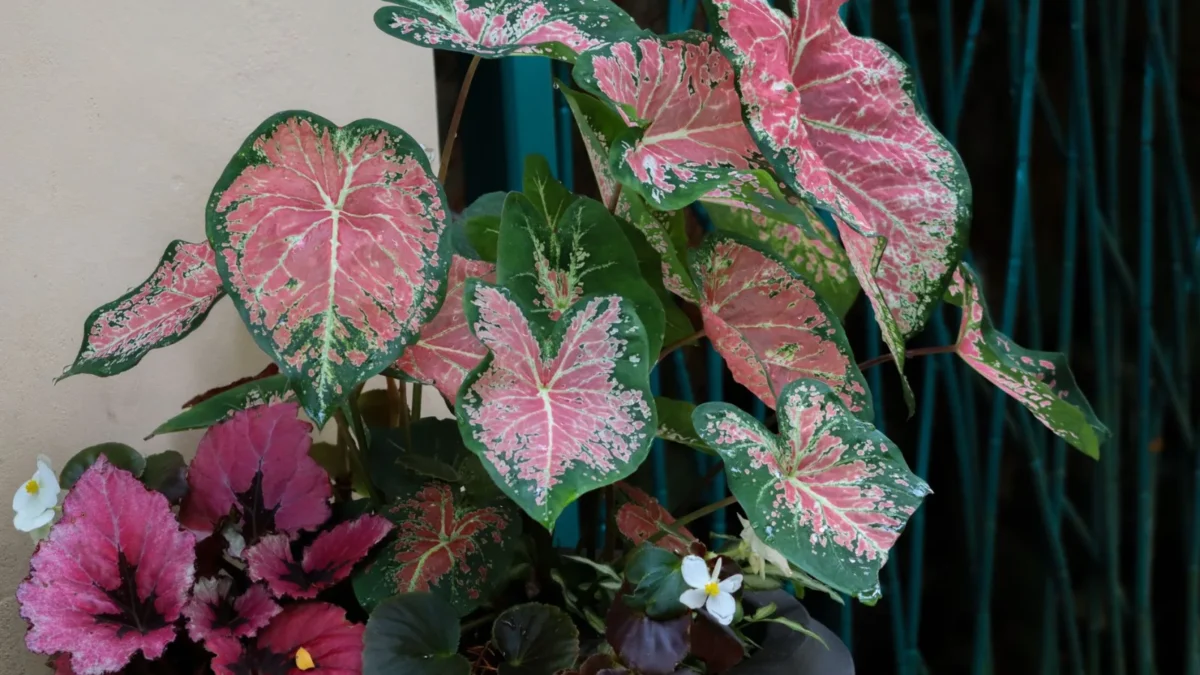
Quick answer: Yellow caladium leaves most often signal overwatering or poor drainage, which quickly leads to root rot. Less commonly, insufficient light or nutrient deficiency causes yellowing. The fix depends on the cause—check the table below to identify which one is affecting your plant.
| Botanical name | Caladium bicolor |
|---|---|
| Light | Part shade to full shade; bright indirect light; avoid direct sun to prevent leaf scorch |
| Watering | Water when top inch of soil feels dry; keep moist but never soggy; ensure drainage |
| Humidity | 50-75%; ideally 60-75%; mist regularly or use humidifier |
| Temperature | 70-85°F daytime; above 60°F nighttime; avoid temperatures below 65°F |
| Soil | Moist, fertile, humus-rich, acidic soil; peat/coco coir with perlite and compost or worm castings |
| Feeding | Balanced, dilute liquid fertilizer; half-strength dose every 3-4 weeks indoors during active growth |
| Size | 1-2.5 feet in height and spread |
| Difficulty | moderate |
| Cats | ⚠️ toxic — Insoluble calcium oxalates; oral irritation, drooling, vomiting, swallowing difficulty |
| Dogs | ⚠️ toxic — Insoluble calcium oxalates; oral irritation, drooling, vomiting, swallowing difficulty |
| What you see | Likely cause | What to do |
|---|---|---|
| Yellowing leaves throughout; soft brown roots; mushy stems | Overwatering or root rot | Stop watering immediately. Remove the plant from its pot, trim damaged roots with clean scissors, repot in fresh, well-draining soil. Ensure drainage holes exist. |
| Uniform yellowing of older leaves; newest growth stays green | Nutrient deficiency (nitrogen) | You haven’t repotted or fed in over a year. Apply a balanced, dilute liquid fertilizer at half-strength every 3–4 weeks. |
| Yellow leaves with green veins, especially on new growth | Iron or manganese deficiency | Fertilize with a balanced, water-soluble fertilizer. Check soil pH—caladiums prefer slightly acidic soil. |
| Yellowing in very dim conditions; slow growth | Low light stress | Your caladium tolerates shade but slows down in dim light and becomes vulnerable to overwatering because the soil never dries. Move it to bright, indirect light. |
| Yellow edges or brown leaf tips | Underwatering | Yellowing or browning edges are early signs of underwatering. Water when the top inch of soil feels dry, but keep it moist—not soggy. |
How to tell the causes apart and fix each one
The most common culprit is overwatering. Caladiums come from tropical environments where the soil never stays wet for long. If your pot lacks drainage or you water too often, roots rot, and leaves turn yellow and collapse. The soil will feel swampy, and you may notice a musty smell. Act fast—remove the plant, trim soft brown roots, and repot in fresh, well-draining soil made from peat or coco coir, perlite, and compost.
If overwatering isn’t the issue, check the light. Caladiums thrive in part shade but need some brightness to stay healthy. In low light, they slow down, drop older leaves, and their soil stays wet longer—creating a perfect storm for overwatering damage. If your caladium is in a dark corner, move it to a spot with bright, filtered sunlight. Indoors, a south, east, or west window works best. Avoid direct sun, which scorches the delicate leaves.
If your plant hasn’t been fed or repotted in a year or more, nitrogen deficiency is likely—older leaves yellow uniformly while new growth stays green. The fix is straightforward: use a balanced, dilute fertilizer at half-strength every 3–4 weeks during the growing season. If yellow appears on new leaves with green veins, the plant is short on iron or manganese; again, a balanced fertilizer addresses this.
Preventing caladium leaves from turning yellow
Water only when the top inch of soil feels dry to the touch. Keep humidity between 50–75%, ideally 60–75%, by misting regularly or using a humidifier. Maintain warm temperatures between 70–85°F during the day and above 60°F at night. Feed every 3–4 weeks with dilute, balanced fertilizer during active growth. Place your caladium in bright, indirect light away from direct sun. These simple steps will keep your plant vibrant and healthy.
Read the full guide: Caladium Care: The Complete Guide to Growing Colorful Caladiums Indoors
More about Caladium
The same problem in other plants
- Why Is My Bamboo Palm Turning Yellow?
- Why Is My Maidenhair Fern Turning Yellow?
- Why Are My Alocasia Frydek Leaves Turning Yellow?
- Why Are My Ti Plant Leaves Turning Yellow?