Caladium Caladium bicolor
Is Caladium Toxic to Cats and Dogs? Pet Safety Guide
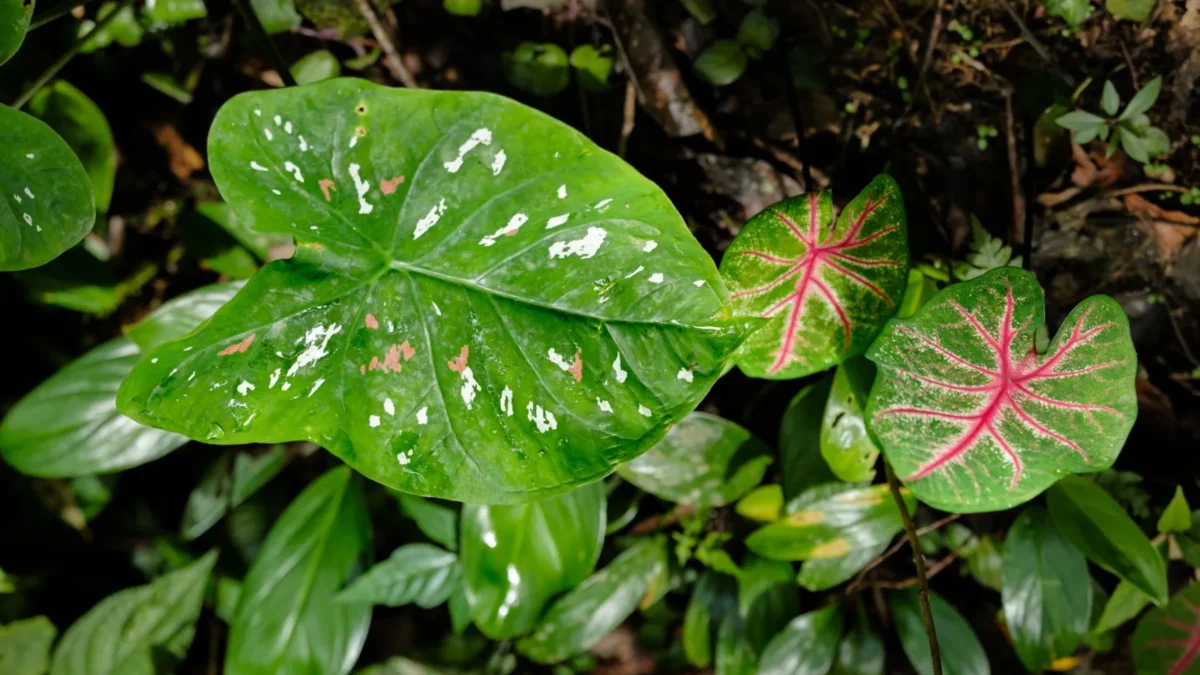
Quick answer: Yes, caladium is toxic to both cats and dogs. The plant contains insoluble calcium oxalates that cause oral irritation, swelling, excessive drooling, vomiting, and difficulty swallowing if ingested. Keep the plant out of reach of pets, and contact a veterinarian or the ASPCA poison hotline immediately if your pet chews on it.
| Botanical name | Caladium bicolor |
|---|---|
| Light | Part shade to full shade; bright indirect light; avoid direct sun to prevent leaf scorch |
| Watering | Water when top inch of soil feels dry; keep moist but never soggy; ensure drainage |
| Humidity | 50-75%; ideally 60-75%; mist regularly or use humidifier |
| Temperature | 70-85°F daytime; above 60°F nighttime; avoid temperatures below 65°F |
| Soil | Moist, fertile, humus-rich, acidic soil; peat/coco coir with perlite and compost or worm castings |
| Feeding | Balanced, dilute liquid fertilizer; half-strength dose every 3-4 weeks indoors during active growth |
| Size | 1-2.5 feet in height and spread |
| Difficulty | moderate |
| Cats | ⚠️ toxic — Insoluble calcium oxalates; oral irritation, drooling, vomiting, swallowing difficulty |
| Dogs | ⚠️ toxic — Insoluble calcium oxalates; oral irritation, drooling, vomiting, swallowing difficulty |
What Makes Caladium Toxic to Pets
Caladium plants contain insoluble calcium oxalates, the compound responsible for their toxicity. When cats or dogs chew on or ingest any part of the plant—leaves, stems, or tubers—these crystals cause immediate irritation to the mouth, tongue, and lips, leading to pain and swelling.
The problem worsens if the pet swallows plant material, as the irritation extends down the throat and digestive tract. Even small amounts can trigger symptoms, so any exposure should be taken seriously.
Signs Your Cat or Dog Has Eaten Caladium
Watch for these warning signs if you suspect your pet has chewed on a caladium:
- Oral irritation, pain, and swelling of the mouth, tongue, and lips
- Excessive drooling
- Vomiting
- Difficulty swallowing
Some pets may also show reluctance to eat or drink due to mouth pain. Symptoms typically appear quickly after ingestion.
What to Do if Your Pet Ingests Caladium
If you suspect your pet may have ingested caladium, contact a local veterinarian or call the ASPCA 24-hour emergency poison hotline at (888) 426-4435. Do not wait for symptoms to appear—early professional guidance can prevent complications.
How to Keep Your Pet Safe Around Caladium
The safest approach is to place your caladium where pets cannot reach it. Since caladiums grow 1 to 2.5 feet tall and spread similarly, position the plant on a high shelf, in a locked cabinet, or in a room where your cat or dog has no access. Remember that curious cats can jump to high places and dogs may knock over pots, so choose your location carefully.
If you have both caladiums and pets at home, consider whether keeping the plant is worth the risk. Many pet owners find it easier to choose non-toxic houseplants instead.
Read the full guide: Caladium Care: The Complete Guide to Growing Colorful Caladiums Indoors
More about Caladium
The same problem in other plants
- Is Monstera Siltepecana Toxic to Cats and Dogs?
- Is Alocasia Frydek Toxic to Dogs and Cats?
- Is Begonia Maculata Toxic to Cats and Dogs?
- Is Rabbit's Foot Fern Toxic to Cats and Dogs?
Sources
Photo: Fabricio Oliveira / Pexels, Pexels