Christmas Cactus Schlumbergera
Christmas Cactus Care: The Complete Guide
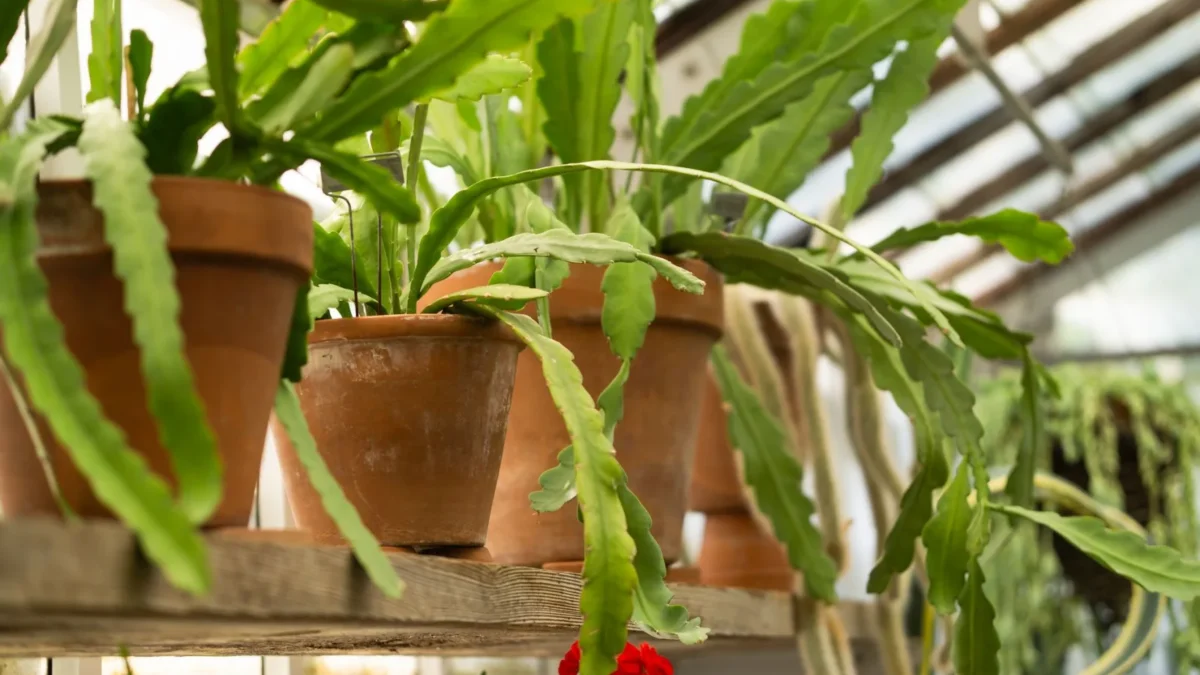
Christmas cactus care is straightforward once you understand what these tropical plants need. Unlike their desert cousins, Christmas cacti are epiphytic rainforest plants that thrive indoors with bright indirect light, consistent moisture, and humidity. This guide covers everything from watering schedules to troubleshooting common issues, so your plant will flourish and bloom reliably each year.
| Botanical name | Schlumbergera |
|---|---|
| Light | Bright indirect or filtered light; full sun in midwinter acceptable; avoid intense direct summer sun |
| Watering | Water when top soil feels dry; keep moist spring-summer, drier fall-winter; reduce watering late winter-spring |
| Humidity | High humidity preferred; mist regularly; place on tray of moistened rocks or gravel-filled saucers |
| Temperature | 70-80°F (21-27°C) spring-summer; 55-65°F (13-18°C) winter; reduce 5°C in autumn to encourage flowering |
| Soil | Well-draining mix: 1 part potting soil, 2 parts peat moss, 1 part perlite or sharp sand |
| Feeding | Monthly during growing season April-September; reduce late winter-spring; use houseplant liquid feed |
| Size | 1-2 feet tall, 1-2 feet spread |
| Difficulty | easy |
| Cats | ✓ non-toxic |
| Dogs | ✓ non-toxic |
Key points
- Water weekly when the top soil feels dry; keep soil moist spring-summer, drier fall-winter
- Provide bright indirect or filtered light; avoid intense direct summer sun
- Maintain temperatures of 70–80°F spring-summer; 55–65°F in winter, with a 5°C drop in autumn to trigger flowering
- Keep humidity high with misting and moistened rock trays
- Use well-draining soil: 1 part potting soil, 2 parts peat moss, 1 part perlite or sharp sand
- Fertilize monthly April–September; reduce in late winter-spring
Light Requirements for Christmas Cactus
Christmas cactus grows best in light shade. In homes, they prefer indirect or filtered light, and an east-facing windowsill is usually ideal.
Full sunlight is beneficial in midwinter, but bright sun during the summer months can make plants look pale and yellow. Unlike desert-dwelling cacti, they dislike full sun or very high temperatures. Too much direct sun, particularly strong afternoon sun, can also stress the plant and trigger anthocyanin production, causing leaves to turn red or purple as a self-protection mechanism.
During winter, give your plant the brightest light available indoors. When warmer months arrive and the sun becomes intense, move it back from south-facing windows or filter the light with a sheer curtain.
Watering Your Christmas Cactus
Water when the top of the soil feels dry to the touch. Water until moisture trickles through the drainage hole, then allow the pot to drain completely. Aim for about once a week during the growing season, though this varies with pot size, soil, humidity, and season.
Growing Season: April to September
Water regularly from April to September, keeping the compost moist but never waterlogged. Keep the soil evenly moist during this period. Soils should receive consistent but moderate moisture—plants will tolerate dry, slightly under-watered conditions, but soils should not be allowed to dry out or become overly moist.
Dormant Period: Fall and Winter
Christmas cactus needs two rest periods each year to encourage flowering. In autumn, from mid-September until the buds start to develop, reduce watering so the top few centimetres of compost dries out between waterings, but never let it dry out entirely. Once you see flower buds, resume regular watering until the flowers fade. After flowering, from late January to late March, reduce watering again. During both rest periods, allow the soil to go quite dry between waterings from fall to spring. The moisture condition should be checked every 2 to 3 weeks.
Do not let the soil become bone dry, but never allow it to remain soggy. Watering should be reduced from late winter to spring.
Humidity and Temperature
Humidity
Christmas cacti require higher humidities and should be placed on a tray of moistened rocks. These tropical plants enjoy a humid atmosphere and should be misted regularly. Humidity can be improved by using gravel-filled saucers to place plants upon and keeping this moist.
If your home is dry, especially in winter with central heating, these simple methods make a real difference. Group plants together to create a more humid microclimate, or place a humidifier nearby.
Temperature
Ideal growth occurs at temperatures between 70° and 80°F during the growing season from April to September. In winter, the cactus does best at temperatures around 55 to 65°F (13 to 18°C).
For flowering, Christmas cacti need a cooler autumn period. Reduce the temperature by about 5°C in autumn to encourage flowering. From late January to late March, reduce the temperature to 12–15°C (55–59°F). This cool rest period is essential for setting flower buds.
Do not let temperatures rise above 90°F once the flower buds are set in the fall. Tropical plants like Christmas cacti prefer warm and stable temperatures; sudden drops or spikes in temperature can lead to purple leaves, so maintain a consistent environment by keeping it away from drafts and extreme temperature changes.
Soil and Repotting
Best container growth typically occurs in a well-drained potting medium containing one part potting soil, two parts peat moss and one part sharp sand or perlite. A standard cactus compost or a loam-based compost such as John Innes No. 2 with added leafmould (or peat substitute) and grit can also help improve drainage.
Repot once a year (or at least every two years) to maintain healthy growth, and this can be done at the end of March, which is the beginning of their growing season. When potting on, choose only a slightly larger container as they like to be snug in a small pot.
If Christmas cactus leaves are falling off, it may be caused by soil that is too dense or compacted; Christmas cactus requires porous, well-drained soil, and if the soil is compacted or doesn’t drain well, it may benefit from repotting in a clean pot with fresh potting soil.
Feeding and Fertilizer
Fertilize plants monthly during the growing season, but reduce fertilization from late winter to spring. During the growing season from April–September, increase the watering and start feeding with a houseplant liquid feed. When new growth starts from the branch tips in late winter or early spring, fertilize monthly through summer.
Over-fertilizing can harm your plant. Too much fertilizer is a cause of Christmas cactus dropping leaves; if you over-fertilize your plant, the leaves begin to die, first turning brown, and then, if the problem is not remedied, they fall off completely. Follow the dosage on your chosen fertilizer and err on the side of restraint.
Pruning and Shaping
The flowers only form on the stem tip, so for more flowers, the plant needs to have more stems, which will grow naturally over time, but you can also encourage them. Pinching back the stem tips in spring promotes branching and creates a fuller, bushier plant with more flowering points.
It is normal for Christmas cacti to drop a few older leaves as they grow and produce new ones, especially after blooming, as this is part of their natural growth cycle.
Propagation
Christmas cactus is easy to propagate from stem cuttings. Twist off 2–3 connected segments and allow them to callus for a day. Let the cut or twisted end dry briefly before planting so the wound is not fresh and wet when it enters the rooting mix; the goal is not to dehydrate the cutting but to avoid putting a fresh wet wound straight into damp mix.
After letting the cuttings callous for two to four days, prepare a lightweight, free-draining soil mix and insert the cutting about a quarter of its length into the soil, ensuring the Y-shaped stem segment is half buried for optimal rooting. Plant each segment so that the soil covers ½” above the node, which is where the new roots will develop.
Place the cuttings in a warm spot with bright, indirect light to encourage rooting, and avoid direct sunlight, which can scorch the cuttings. Refrain from watering the cuttings for the first one to two weeks to avoid over-saturation, as rooting takes about six to eight weeks. Roots form in 1–3 weeks and the cutting is ready to pot on at 3–4 weeks.
For Schlumbergera, the best and fastest method of propagation is directly in the soil. While roots may develop faster in water, you still need to plant them once they develop, and Christmas cacti are delicate and break easily, so the less handling they receive, the better. If using water propagation, change the water every few days to keep it fresh and prevent bacterial growth.
Propagation is best done when the plants are actively growing new leaves in late spring, avoiding periods of flowering.
Common Problems and Solutions
Red or Purple Leaves
Red or purple discoloration in Christmas cactus segments is a stress response triggered by the production of anthocyanin pigments when the plant is under pressure from its environment, essentially as a form of self-protection. Excessive direct sun is the most common reason the Christmas cactus turns red. Move the plant away from intense afternoon sun, especially in summer.
Red or purple-tinged foliage and wilting are also common magnesium deficiency symptoms, a common ailment in Christmas cacti. This occurs mainly during the winter when feeding and watering are restricted, and cold temperatures slow the plant’s nutrient uptake. A magnesium deficiency can be corrected with Epsom salts; it usually helps to provide a supplemental feeding of 1 teaspoon of Epsom salts dissolved in one gallon of water, poured into a spray bottle and spritzed on the tops and undersides of the foliage, reapplied every two weeks until the foliage returns to its original color.
If leaves are turning purple or red and the plant has been regularly fed, the plant may be rootbound or the potting soil may be depleted, preventing the absorption of nutrients. When a Christmas cactus becomes rootbound, its roots outgrow the pot, leading to purple leaves, which restricts nutrient uptake and growth; repotting the cactus in a larger pot with fresh soil will give it room to thrive.
A slight purplish hue to the leaves is normal, but a more noticeable color change may signal poor nutrition. In most cases, red or purple discoloration is reversible once you identify and correct the cause; identify the underlying stressor, correct it, and the plant will gradually return to healthy green over several weeks as new growth comes in, though old segments that turned red will not revert to green.
Leaf Drop
The most frequent reason Christmas cactus leaves fall off is overwatering, which leads to root rot; when the roots sit in soggy soil, they can’t take up oxygen and they start to decay, and as the roots fail, the plant can’t absorb water or nutrients, so it drops its leaves as a survival mechanism. Too much moisture is the biggest culprit for leaf drop and is easy to spot if the shedding is accompanied by yellowing leaves.
Although not quite so common, underwatering can also cause leaves to drop. Christmas cactus leaves fall off when the plant gets too dry for too long; while this cactus prefers slightly moist soil, it doesn’t like to be bone dry for extended periods, and when the plant is severely dehydrated, it will shed leaves to conserve energy and water for its core survival.
If Christmas cactus leaves are falling off, it may be caused by soil that is too dense or compacted; Christmas cactus requires porous, well-drained soil, and if the soil is compacted or doesn’t drain well, it may benefit from repotting in a clean pot with fresh potting soil. In compacted soils, Christmas cactus may develop edema, a condition caused by flooding that is characterized by leaf drop and brown, dry spots on leaves.
Too much heat or cold may also be to blame for Christmas cactus leaves dropping off; Christmas cactus doesn’t appreciate cold temperatures, and as a general rule, the plant prefers temperatures between 70 and 80°F. Bright, indirect light will keep Christmas cactus plants growing, but too much direct sun can scorch their leaves and potentially cause leaf drop as well.
Spider mites and other pests can cause your Christmas cactus to drop leaves as a stress response; keep an eye out for these tiny gatecrashers and be ready with insecticidal soap spray.
Bud Drop
This cactus commonly drops unopened flower buds, which may be induced by an excessive number of buds or a sudden change in temperature, light or other environmental factors, such as drying out of the growing medium. Ensure stable conditions during the flowering period and maintain consistent watering once buds appear.
Lack of Flowers
Lack of flowering is often due to light interrupting the long night period (13 hours) that is required for flowering initiation to occur. Move the plant away from artificial lights in the evening, or ensure it sits in a naturally dark location from dusk to dawn.
Too much warmth and water in autumn can reduce or prevent flowering. To encourage flower bud formation, let the soil dry out thoroughly between waterings in late summer and move your plant to a brighter, cool location, as Christmas cactus need cooler conditions in fall in order to set flower buds.
Root Rot
The major disease is root rot, which can be prevented by avoiding excessive watering. Keep Christmas cactus out of hot midday sun, which can scorch the leaves, and don’t let the compost dry out completely, especially in spring and summer; avoid overwatering too, as the roots can rot in damp compost.
FAQ
Is Christmas cactus toxic to pets?
Christmas cactus is non-toxic to dogs, non-toxic to cats, and non-toxic to horses. The ASPCA rates Christmas cacti as non-toxic to cats and dogs. Unlike many popular holiday plants such as poinsettias, mistletoe, holly berries, or amaryllis, Christmas cactus poses no inherent chemical threat if accidentally ingested.
Can I propagate Christmas cactus in water?
Yes, you can root cuttings in water, and roots form in 1–3 weeks, with the cutting ready to pot on at 3–4 weeks. However, for Schlumbergera, the best and fastest method of propagation is directly in the soil. If using water, change it every few days to prevent bacterial growth and let the cutting callous well to avoid rot.
When is the best time to repot a Christmas cactus?
Repot once a year (or at least every two years) at the end of March, which is the beginning of their growing season. Choose only a slightly larger container as they like to be snug in a small pot.
How much should I water my Christmas cactus?
Water about once a week, or when the top of the soil feels dry to the touch. During the growing season (April–September), keep the soil moist but never waterlogged. In fall and winter, allow the soil to dry out more between waterings.
What temperature do Christmas cacti need to flower?
Christmas cacti thrive in temperatures of 70 to 80°F (21–27°C) during spring and summer, and around 10°F cooler over fall and winter. Reduce the temperature by about 5°C in autumn to encourage flowering, and from late January to late March, maintain temperatures of 12–15°C (55–59°F).
How large does a Christmas cactus grow?
Schlumbergera × buckleyi typically grows 1.00 to 2.00 feet in height and spread. Schlumbergera truncata grows 0.75 to 1.00 feet in height and 1.00 to 2.00 feet in spread.
More about Christmas Cactus
Sources
- How to grow Christmas cactus / RHS Growing Guide
- Schlumbergera truncata – Plant Finder
- My Christmas Cactus Is Dropping Leaves – Reasons For Christmas Cactus Leaves Dropping OffMy Christmas Cactus Is Dropping Leaves – Reasons For Christmas Cactus Leaves Dropping Off
Photo: chickenbunny / Pexels, Pexels