Christmas Cactus Schlumbergera
Why Are My Christmas Cactus Leaves Turning Red or Purple?
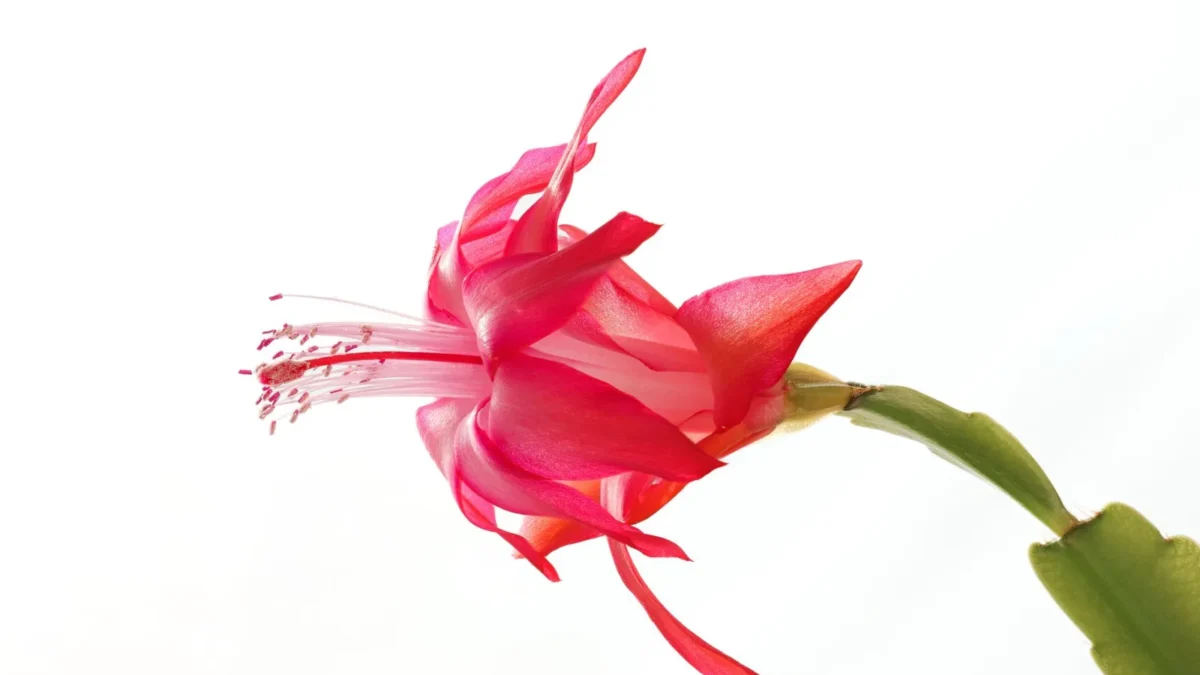
Quick answer: Red or purple leaves on your Christmas cactus are a stress response, most often caused by too much direct sun, but also by magnesium deficiency, cold temperatures, or being rootbound. The discoloration is usually reversible once you fix the underlying problem.
| Botanical name | Schlumbergera |
|---|---|
| Light | Bright indirect or filtered light; full sun in midwinter acceptable; avoid intense direct summer sun |
| Watering | Water when top soil feels dry; keep moist spring-summer, drier fall-winter; reduce watering late winter-spring |
| Humidity | High humidity preferred; mist regularly; place on tray of moistened rocks or gravel-filled saucers |
| Temperature | 70-80°F (21-27°C) spring-summer; 55-65°F (13-18°C) winter; reduce 5°C in autumn to encourage flowering |
| Soil | Well-draining mix: 1 part potting soil, 2 parts peat moss, 1 part perlite or sharp sand |
| Feeding | Monthly during growing season April-September; reduce late winter-spring; use houseplant liquid feed |
| Size | 1-2 feet tall, 1-2 feet spread |
| Difficulty | easy |
| Cats | ✓ non-toxic |
| Dogs | ✓ non-toxic |
| What you see | Likely cause | What to do |
|---|---|---|
| Red or purple leaves, especially in bright windows | Excessive direct sun | Move to bright indirect light; full sun in midwinter is fine, but avoid intense direct summer sun |
| Purple-tinged leaves plus wilting | Magnesium deficiency | Apply Epsom salts spray: 1 teaspoon dissolved in one gallon of water, spritzed on leaf tops and undersides every two weeks until color returns |
| Purple or red leaves despite regular feeding | Rootbound plant or depleted soil | Repot into a larger container with fresh potting soil |
| Purple or red leaves with temperature changes | Cold or warm temperature swings | Keep your plant away from drafts and maintain stable temperatures between 70–80°F during growing season |
| Slight purplish hue only | Normal variation | No action needed—this is natural, but a noticeable change signals poor nutrition |
What causes the red and purple color
When your Christmas cactus produces anthocyanin pigments as a self-protection mechanism, the leaves turn red or purple. This happens when the plant is stressed by its environment.
Excessive direct sun
Direct sunlight, especially strong afternoon sun during summer, is the most common reason for red or purple leaves. Your Christmas cactus naturally grows in the dappled shade of rainforests, so it evolved to prefer indirect or filtered light. Move your plant away from harsh midday sun, but remember that full sun in midwinter is actually beneficial.
Magnesium deficiency
Red or purple foliage combined with wilting signals a magnesium shortage. This occurs mainly in winter when feeding and watering are reduced, and cold temperatures slow nutrient uptake. Spray the affected foliage with a diluted Epsom salt solution—dissolve 1 teaspoon in one gallon of water and mist the tops and undersides of leaves. Reapply every two weeks until color improves.
Being rootbound or depleted soil
If you’ve been feeding regularly but still see purple or red leaves, your plant may be rootbound. When roots outgrow the pot, they can’t absorb nutrients effectively, even if nutrients are present. Repot your Christmas cactus into a slightly larger container with fresh, well-draining potting soil—one part potting soil, two parts peat moss, and one part perlite or sharp sand.
Temperature stress
Sudden temperature drops or spikes trigger purple leaves. Christmas cacti prefer warm, stable conditions between 70–80°F during spring and summer, and around 55–65°F in winter. Keep your plant away from cold drafts and heating vents, and avoid moving it between very different temperature zones.
Will the color come back?
Red or purple discoloration is reversible. Once you identify and correct the stressor, new growth will gradually return to healthy green over several weeks. However, the segments that already turned red won’t revert to green—only new leaves will show the healthy color.
FAQ
Is a slight purple hue normal?
Yes, a subtle purplish tint to the leaves is completely normal, but a more noticeable color change usually signals nutritional stress or environmental pressure.
How do I prevent red or purple leaves?
Provide bright indirect light (not intense summer sun), maintain stable temperatures, water consistently during the growing season from April to September, feed monthly during this period, and keep humidity high by misting regularly or placing your plant on a tray of moistened rocks.
Will my plant recover completely?
Yes, new growth will return to normal color once the stressor is removed, though previously affected segments will stay discolored.
Read the full guide: Christmas Cactus Care: The Complete Guide
More about Christmas Cactus
The same problem in other plants
- Why Are My Croton Leaves Turning Yellow and Falling Off?
- Why Are My Anthurium Leaves Turning Yellow?
- Why Are My African Violet Leaves Turning Yellow?
- Why Are My Parlor Palm Leaves Turning Yellow?