String of Hearts Ceropegia woodii
How to Propagate String of Hearts: Three Easy Methods
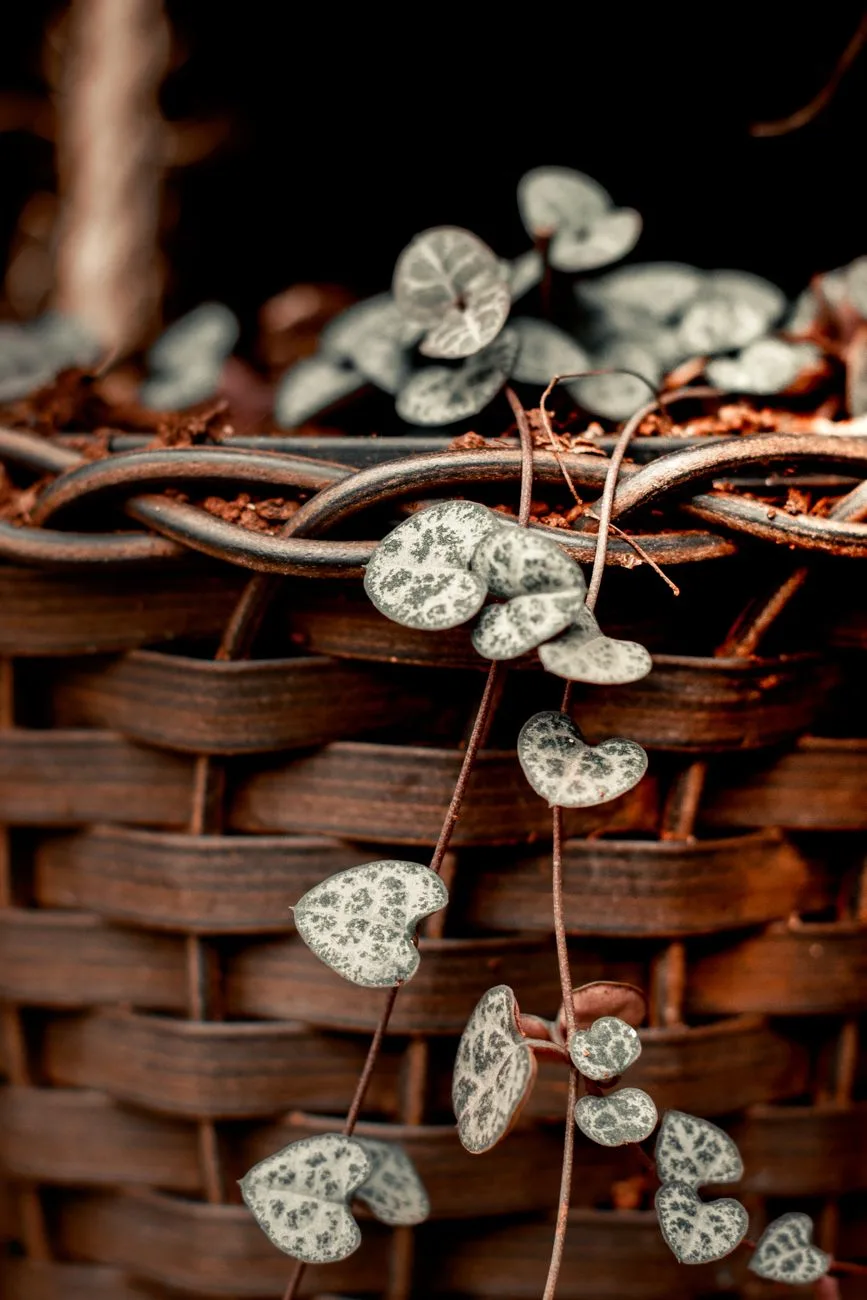
Quick answer: You can propagate string of hearts from stem cuttings in water, in soil, or using the aerial tubers that grow along the vines—water propagation is easiest for beginners and produces roots in 2–4 weeks.
| Botanical name | Ceropegia woodii |
|---|---|
| Light | Bright indirect light, 400-800 footcandles; avoid strong direct sunlight |
| Watering | Water when top 2 inches of soil is dry; every 7-14 days in spring/summer, 14-21 days in fall/winter |
| Humidity | Average household humidity 40-50%; adapts to varying levels |
| Temperature | 60-80°F (15-27°C); tolerates down to 50°F (10°C); protect from frost |
| Soil | Well-draining cactus or succulent mix; loam and sand with excellent drainage |
| Feeding | Half-strength houseplant fertilizer monthly during growth; low nitrogen; none in winter |
| Size | Trailing stems up to 12 feet long |
| Difficulty | easy |
Water Propagation (The Beginner Method)
This is the most popular way to propagate string of hearts and requires almost no equipment. Cut a healthy vine section 10–15 cm long, ensuring it has at least 2–3 pairs of leaves. Remove the bottom pair of leaves to expose the node—this is where roots will form. Place the cutting in a small glass of water so the node is submerged but the leaves stay above the waterline, then set it in bright indirect light and change the water every few days.
Roots typically appear within 2–4 weeks. Once roots are 2–3 cm long, pot up into a well-draining mix.
Soil Propagation
This method skips the water stage and roots directly into soil. Take a stem cutting and allow the cut end to callous for a few hours. Insert the node end into a small pot of moist, well-draining mix—cactus compost with added perlite works well. Keep the soil lightly moist and place in bright indirect light. Roots should establish within 3–5 weeks.
Tuber Propagation (The Natural Method)
String of hearts produces aerial tubers (“beads”) along the vines. These can be used to create new plants by pressing the tuber—preferably still attached to the vine—into the soil of another pot. Keep the growing medium moist but not wet to encourage rooting. Once the tuber is rooted and growing in a few weeks or months, sever it from the original plant.
Common Mistakes to Avoid
Allow cuttings to dry completely between waterings once they’re potted up; overwatering is the main killer. Use only well-draining cactus or succulent mix—regular potting soil stays too wet and leads to rot. Don’t rush to pot up water cuttings; wait until roots are at least 2–3 cm long so they can establish quickly in soil.
FAQ
How long until new growth appears after propagation?
Once rooted cuttings or tubers are potted and placed in bright indirect light, new leaf growth usually emerges within a few weeks as the plant establishes itself.
Can I propagate from a single leaf?
String of hearts propagates most reliably from stem cuttings that include at least one node. Single leaves are far less likely to root successfully, so stick with vine segments.
Does the method affect how fast new plants grow?
Water propagation is faster to roots, but soil propagation often establishes stronger root systems from the start. Tuber propagation is slower but produces a complete new plant naturally and requires less intervention.
Read the full guide: String of Hearts Care: The Complete Guide
More about String of Hearts
The same problem in other plants
- How to Propagate Monstera Adansonii in Water and Soil
- How to Propagate Philodendron Birkin: Step-by-Step Guide
- How to Propagate Hoya Kerrii from Leaves and Cuttings
- How to Propagate Arrowhead Plant: Water and Soil Methods
Sources
Photo: Bruno Abdiel / Pexels, Pexels