Jade Plant Crassula ovata
Jade Plant Care: The Complete Guide
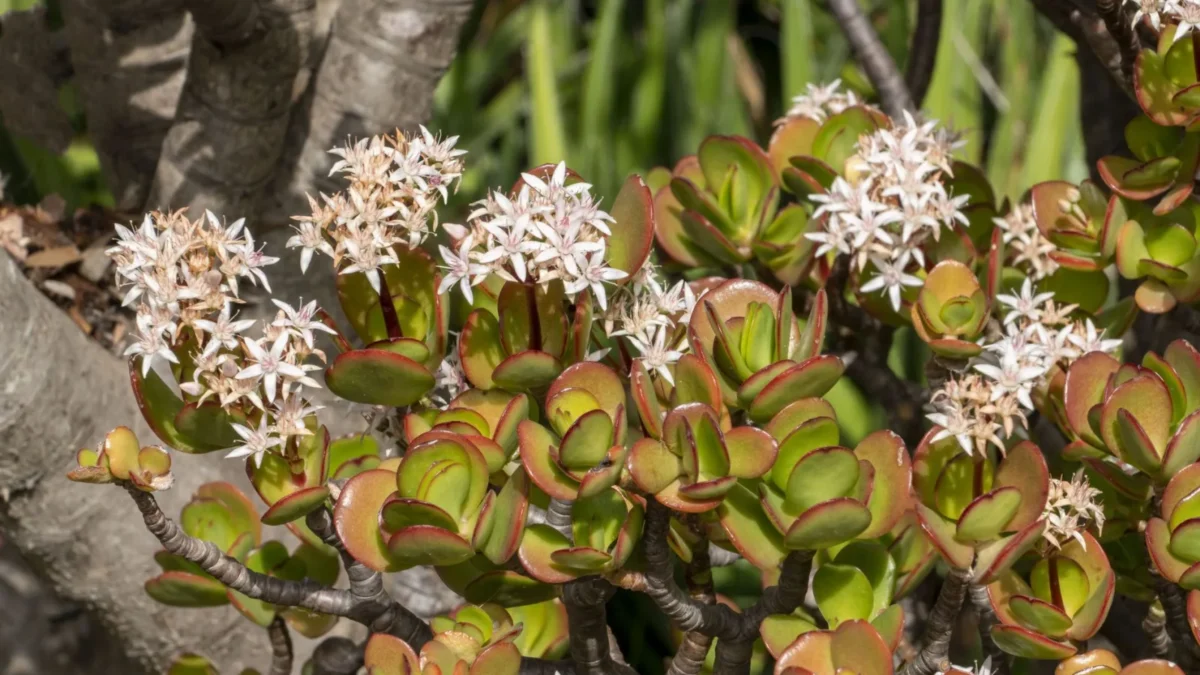
Jade plants are among the easiest houseplants to care for, thriving in most indoor conditions with minimal effort. This guide covers everything you need to know to grow a healthy jade plant indoors, from light and watering to propagation and troubleshooting.
| Botanical name | Crassula ovata |
|---|---|
| Light | 4-6 hours bright indirect light; prefers some afternoon shade |
| Watering | Water when top inch of soil is dry; allow soil to dry between waterings |
| Humidity | Standard household humidity (30-50%); no misting needed |
| Temperature | 65-70°F; can tolerate down to 55°F at night; not frost tolerant |
| Soil | Well-draining succulent/cactus potting mix; slightly acidic pH around 6.0 |
| Feeding | Balanced 20-20-20 at one-quarter strength weekly or controlled-release at season start |
| Size | 18-30 inches tall indoors; can reach 3-6 feet in optimal conditions |
| Difficulty | easy |
| Cats | ⚠️ toxic — Contains bufadienolides; causes vomiting, depression, incoordination |
| Dogs | ⚠️ toxic — Contains bufadienolides; causes vomiting, depression, incoordination |
Key points
- Provide 4–6 hours of bright, indirect light daily; jade plants appreciate afternoon shade
- Water when the top inch of soil is dry, then allow it to dry thoroughly between waterings
- Keep temperatures between 65–70°F; protect from frost below 50°F
- Use well-draining succulent soil with a pH around 6.0
- Overwatering is the leading cause of problems; root rot is nearly always preventable with proper drainage and restraint
- Jade plants are toxic to cats and dogs, causing vomiting, depression, and incoordination
Light Requirements for Jade Plants
Jade plants need bright light but appreciate some afternoon shade. They prefer at least 4–6 hours of bright, indirect sunlight per day. Without sufficient light, the plant develops deep-green leaves and drooping stems as it stretches toward available light sources.
Place your jade plant near a south- or west-facing window where it receives plenty of indirect light throughout the day. If you notice your plant becoming leggy or the leaves losing their vibrant color, move it to a brighter location. Conversely, if the leaves start to look pale or the plant isn’t putting on growth, it may be receiving too much direct sun—slightly shading the afternoon window is ideal.
Watering Your Jade Plant
Jade plants are succulents adapted to arid environments, so they store water in their leaves and stems. Water your jade plant when the top inch of soil is dry; jade plants do best when soil is watered deeply and then allowed to dry thoroughly.
The key to success is restraint. Check the soil moisture with your finger—if the top inch feels dry, water until it drains from the bottom. If the top inch still feels moist, wait a few more days. As a rule, the top two inches should be dry before adding more water; if you are unsure, err on the side of too little rather than too much.
Overwatering is the most common mistake with jade plants. When roots sit in wet soil, they are deprived of oxygen, leading to root rot—the most serious problem these plants face. If you notice leaves becoming soft, wrinkled, or floppy, this often signals depleted water reserves and underwatering.
Humidity and Temperature
Humidity
Jade plants are adapted to dry conditions and require no special humidity management. They thrive in normal household humidity (30–50%); they do not need misting, pebble trays, or humidifiers. In fact, excess humidity around the leaves can encourage fungal problems, so leave your plant as it is.
Temperature
Jade plants prefer average temperatures of 65 to 70 degrees Fahrenheit; at night and in winter, they can handle a cooler environment, down to 55 degrees Fahrenheit. Extreme temperatures—either hot or cold—can cause jade plants to droop; these plants prefer temperatures between 65°F and 75°F. Jade plants are not frost tolerant, so if they’re kept outside, bring them in when the temperature dips to 50 degrees Fahrenheit or below.
Keep your jade plant away from cold drafts, heating vents, and sudden temperature swings, as these stress the plant and trigger wilting.
Soil and Repotting
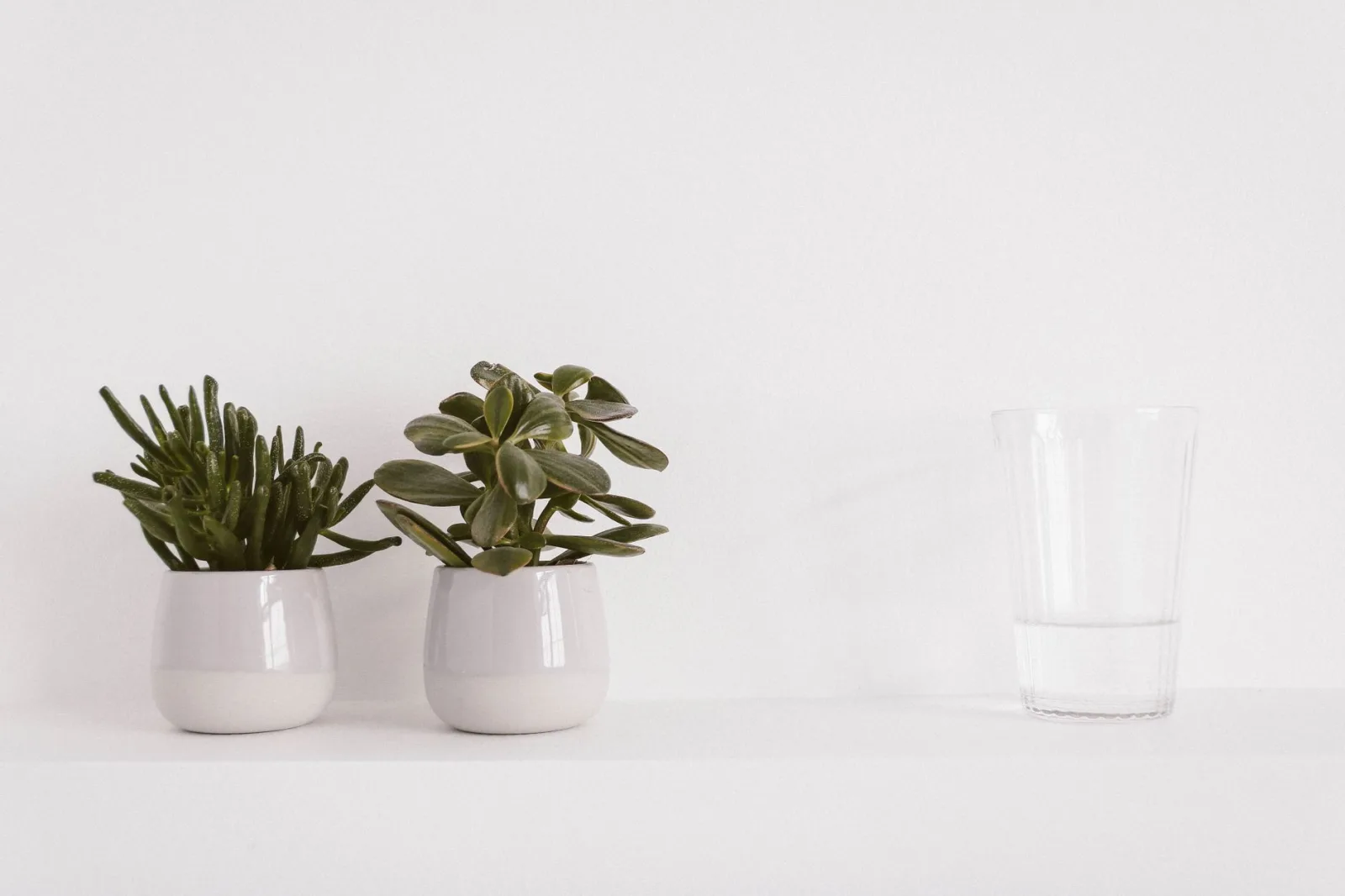
Jade plants need well-draining soil to thrive. Use a potting mix specifically formulated for succulents and cactus plants, and plant in a pot with holes in the bottom for drainage. Jade plants grow best in slightly acidic soil that hovers around 6.0 on the pH scale.
A standard cactus or succulent mix works perfectly. You can also amend regular potting soil with perlite or coarse sand to improve drainage. The pot itself is equally important—always use a container with drainage holes to allow excess water to escape immediately.
Repot your jade plant every 2–3 years or when it becomes root-bound. Spring is the best time to repot. Gently remove the plant from its current pot, loosen the roots, and place it in a slightly larger pot with fresh soil. Water lightly after repotting and wait a week before resuming your normal watering schedule.
Feeding and Fertilizer
Feed jade plants with a controlled-release fertilizer at the beginning of the season or weekly with a weak liquid solution; use a balanced 20-20-20 fertilizer at one-quarter strength on mature plants, and a fertilizer with less nitrogen on young plants.
During the growing season (spring and summer), feed every week or two. In fall and winter, reduce feeding or stop entirely, as the plant’s growth naturally slows. Over-fertilizing is harmful—if too much fertilizer is applied, the salts build up in the soil and damage the roots, causing wilting or leaf drop.
Pruning and Training
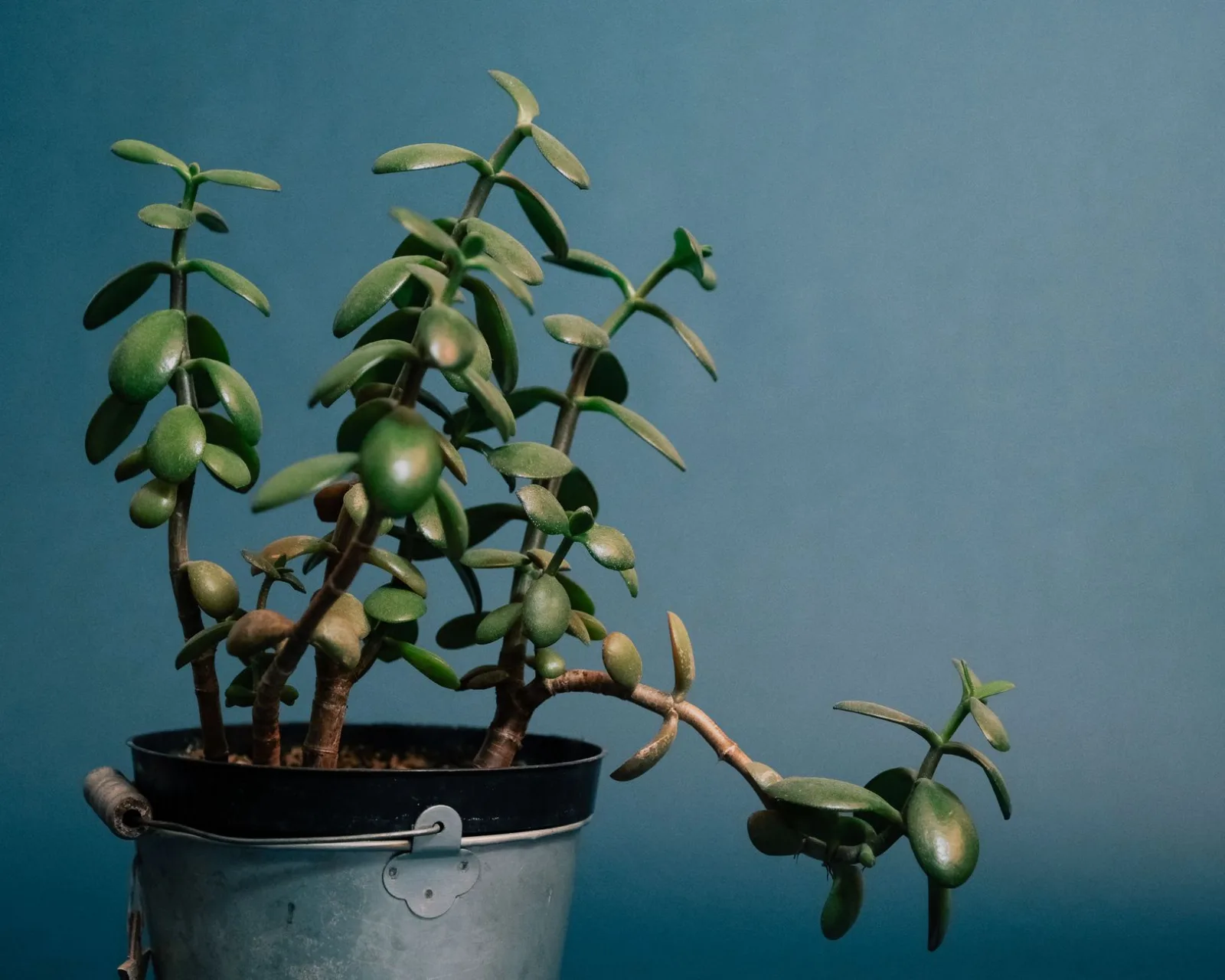
Jade plants naturally grow as compact shrubs with thick, woody stems. Light pruning encourages bushier growth and a more attractive shape. Pinch back growing tips in spring to promote branching, or remove any dead or damaged leaves year-round using clean scissors.
If your plant becomes too tall or leggy, you can cut it back more severely in spring—it will regrow from the remaining stems. Make cuts just above a node (the point where leaves emerge) to encourage new growth at that spot. All pruned material is suitable for propagation, so don’t waste it.
Propagation Methods
Leaf Cuttings
Leaf propagation is simple and rewarding. To take a leaf cutting, simply break off one of the succulent, deep green leaves; no need to cut it away cleanly—this may in fact prevent rooting! Set the leaf aside on a paper towel or newspaper in an area out of direct sunlight to dry for a few days; this allows the broken surface where it was previously attached to the plant to heal and callus over, reducing the risk of rot.
After a few days, place the individual leaves in pots with succulent potting mix, positioning the cutting at a 30 degree angle from the surface of the potting medium, covering the broken end just slightly with the soil. Keep the container in a bright, warm place. After a few weeks, new roots will form on the leaf cuttings; however, a rooted leaf is not yet an independent young plant—reproduction is only considered successful once new shoots have formed on the leaf. Roots should develop over the course of the next two to three weeks; eventually you’ll see little plantlets emerging from the base of the cutting.
Stem Cuttings
Propagation via shoot cuttings is easier and more promising; it is also the faster method. For stem cuttings, each cutting should be between 5 and 10 inches long. Choose a healthy cutting that is free of pests and disease, remove any leaves at the bottom, leaving at least two pairs of leaves at the top, and leave it in a warm area so it can callous over—this takes about a week.
After your cutting has formed a callus over the cut end, insert the cut end of the stem in either a glass of clean water or a rooting substrate; in a few weeks, roots will develop on the stem and you can transplant your jade plant cutting to grow on in its new home.
Best Time to Propagate
You can typically propagate jade plants any time of the year, but for faster rooting, it’s suggested to do it in active growing seasons such as the warmer months of spring and summer; during this period, the warmer temperatures and longer daylight hours help stimulate the growth of roots from cuttings or leaves, ensuring a higher success rate.
Common Problems and Solutions
Root Rot
Root rot from overwatering or poor drainage is the most serious possibility—infected stems wilt before falling off. The issue often starts invisibly beneath the soil, so the best approach is prevention: use a pot with drainage holes, water only when the soil is dry, and use well-draining soil. Root rot in jade plants cannot be seen when it’s still in the early stages affecting only the roots; remove the plant from the pot to inspect the plant. To check for root rot, smell the soil at the drainage hole; a sour, swampy, or sulphurous smell indicates rot is active below the surface.
If you suspect root rot, remove the plant from its pot immediately. Using clean scissors or pruning shears, trim away any black, brown, or mushy roots; be thorough, but gentle, to avoid damaging healthy roots. After trimming, disinfect the remaining healthy roots to prevent further infection; a simple solution of one part bleach to nine parts water can be used; dip the roots briefly in this mixture, then rinse with clean water. Choose a pot with good drainage and fill it with fresh cactus or succulent soil; avoid using old soil, as it may still harbor pathogens. Treat root rot by surgically amputating all rotted tissue, allowing the cut to callus for 7 to 10 days, then replanting the cutting in completely dry gritty substrate; do not water for 7 to 10 days after replanting.
Wilting and Drooping Leaves
Wilting can signal either overwatering or underwatering, so check the soil first. If the soil is soggy, it’s root rot (see above). If the soil is bone-dry and the leaves are soft and wrinkled, the plant needs water. Water thoroughly and allow excess to drain. Extreme temperatures can also cause wilting; ensure your plant stays between 65°F and 75°F and away from drafts.
Leggy Growth and Poor Appearance
Insufficient light is a common cause of leggy growth and drooping leaves, as these plants stretch out to find more sunlight. If your plant looks thin and the leaves are a dark green rather than the typical vibrant green, move it to a brighter location with more indirect light. Over time, the plant will compact and develop better leaf color.
Fertilizer Burn
If a jade plant gets too much fertilizer—either in one application or too much over time—the fertilizer salts build up in the soil and damage the roots; since plant roots absorb moisture for the plant, the jade can wilt or shed leaves if the roots are too damaged to pull enough moisture to support the leaves. Always dilute fertilizer to one-quarter strength and follow the recommended schedule. If you suspect over-fertilization, flush the soil with water to leach out excess salts.
FAQ
How big do jade plants grow indoors?
Jade plants usually grow 18–30 inches tall indoors. In optimal conditions with ideal light, temperature, and care, they can reach 3–6 feet tall, though this is less common in typical home environments.
Is jade plant toxic to pets and people?
Jade plant is toxic to both cats and dogs; clinical signs of ingestion include vomiting, depression, and incoordination. The plant contains bufadienolides (cardiac glycosides). Keep the plant out of reach of pets and children.
What should I do if my pet eats jade plant leaves?
Call your vet or an emergency animal clinic immediately; you can also contact the ASPCA Animal Poison Control Center (available 24/7)—a consultation fee may apply. Do not induce vomiting unless a vet specifically instructs you to; it can make some poisonings worse.
How often should I water my jade plant?
Water when the top inch of soil is dry, which typically means every 2–3 weeks depending on season and light. Always allow the soil to dry thoroughly between waterings. Check the soil before watering—if it’s still moist, wait a few more days. The single biggest preventative of problems is matching the plant’s native rhythm: when the soil is completely dry, water every 2–3 weeks, at least 4–6 hours of direct sun, and a free-draining pot with a working drainage hole.
Can jade plants tolerate low light?
Jade plants can survive in bright indirect light, but inadequate light conditions cause a plant to develop deep-green leaves and drooping stems; the plant is not necessarily unhealthy, but it is not receiving the sunlight necessary for compact growth and red-tinted leaves. For the best appearance and health, provide at least 4–6 hours of bright indirect light daily.
What is the easiest way to propagate a jade plant?
Propagation via shoot cuttings is easier and more promising; it is also the faster method compared to leaf cuttings. Take a stem cutting between 5–10 inches long, let it callus for about a week, then place it in water or moist soil. Roots develop in a few weeks, after which you can pot up the new plant. Spring and summer propagation is fastest due to warmer temperatures and more daylight.
More about Jade Plant
Sources
- Why is my jade plant drooping? 7 common causes and solutions
- Crassula ovata – Plant Finder
- How To Care For Jade Plants
Photo: Marian Florinel Condruz / Pexels, Pexels