Monstera Siltepecana Monstera siltepecana
Monstera Siltepecana Care: The Complete Guide
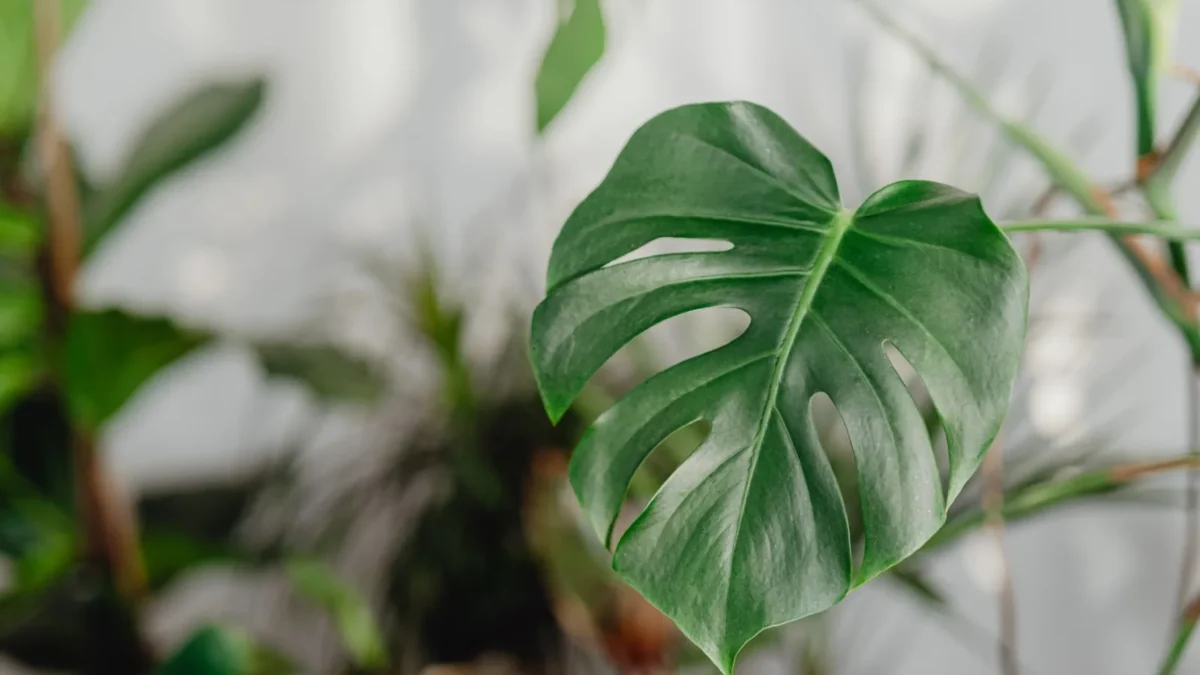
Monstera siltepecana care centers on providing bright indirect light, chunky well-draining soil, and a watering rhythm that lets the top inches dry between soakings. This fast-growing, beginner-friendly climbing aroid from Central America thrives indoors when you master these core principles. This guide covers everything you need to keep your plant healthy, vigorous, and developing the silvery foliage and fenestrated mature leaves it’s known for.
Monstera Siltepecana at a glance
| Botanical name | Monstera siltepecana |
|---|---|
| Light | Bright indirect light, 200–800 foot-candles; 6+ hours daily. Avoid direct sun. |
| Watering | Water when top 2 inches of soil feel dry; every 5–8 days in summer. Never on fixed schedule. |
| Humidity | 60–80% relative humidity; tolerates brief dips to 40% RH |
| Temperature | 65–85°F (18–29°C) |
| Soil | Chunky aroid mix: potting soil/coco coir, orchid bark, perlite, sphagnum moss in equal parts |
| Feeding | Balanced liquid fertilizer monthly during growing season (March–October). Zero fertilizer November–February. |
| Size | Trailing or climbing; 5–8 feet tall, 3–5 feet wide; up to 250 cm with support |
| Difficulty | easy |
Key points
- Bright indirect light for 6+ hours daily at 200–800 foot-candles is essential; low light causes stretching, loss of silver variegation, and stunted growth
- Water only when the top 2 inches of soil feel dry—never on a fixed schedule; typically every 5–8 days in summer at 75–85°F
- Use a chunky aroid mix of equal parts potting soil, orchid bark, perlite, and sphagnum moss for proper drainage
- Maintain 60–80% humidity and temperatures of 65–85°F (18–29°C) for optimal growth and fenestration
- Feed with balanced liquid fertilizer monthly during the growing season (March–October); skip fertilizer entirely November–February
- Provide a moss pole or support to encourage climbing and trigger mature leaf development
Light Requirements for Monstera Siltepecana
Bright indirect light is non-negotiable for healthy Monstera siltepecana care. The plant needs at least 6 hours of bright indirect light daily. Ideally, aim for 200 to 800 foot-candles—roughly the light beneath a sheer curtain a few feet from a south or west-facing window. This intensity supports both vigorous growth and the clear, silvery coloration on juvenile leaves that makes this species so striking.
In its natural habitat, the plant grows under the canopy of larger trees, receiving dappled sunlight, so it is adapted to bright but filtered conditions, not direct rays.
What happens in low light
If light drops below 50 foot-candles, growth stalls, the leaves lose their silver variegation, internodes stretch unnaturally, and the plant will never develop fenestrations. Dull, washed-out silver and stretching beyond 3 inches between nodes both signal insufficient light—even if the plant still looks “green and alive.” Moving the plant to brighter indirect light is the fastest remedy for leggy, pale growth.
Direct sun and grow lights
Direct rays can scorch the leaves, causing brown spots and damage. A little direct sun in the morning or late afternoon shouldn’t be an issue if you acclimate the plant properly to prevent leaf burn. If your space lacks natural light, supplement with a full-spectrum grow light (3000K–4000K color temperature) positioned above the plant for 10 to 12 hours daily. This allows healthy growth even in dim rooms.
Rotation and mature development
Monstera siltepecana grows toward its light source, so rotate the pot every two weeks to encourage even, balanced growth. Remember that like all Monsteras, fenestrations only appear once the plant reaches full maturity. Light alone won’t create holes if the plant hasn’t matured, but light is essential for reaching that stage.
Watering Your Monstera Siltepecana
The most important single rule for monstera siltepecana care is never to water on a fixed schedule; always test the growing medium first. Overwatering is the most common cause of failure in indoor cultivation.
Water when the top 2 inches (5 cm) of soil feel dry to the touch. In summer at temperatures between 75–85°F, this typically means watering every 5–8 days, but always verify by touching the soil rather than relying on calendar dates. The plant prefers a watering rhythm that allows the top inch or two of the growing medium to dry out between waterings, rather than being kept constantly wet.
How to water correctly
Water until it runs from the drainage hole so the whole rootball is wetted. Never leave the pot sitting in run-off—that is how root rot starts. If the soil feels wet or muddy when you test it, delay watering and check again in 24 hours.
Seasonal adjustments
Reduce watering frequency in autumn and winter as growth slows with cooler temperatures and lower light levels. Resume a more regular schedule in spring and summer as active growth resumes. During winter dormancy, water when in growth and keep the soil just moist—not dry, but not soggy.
Humidity and Temperature
Monstera siltepecana thrives with 60–80% relative humidity and ideal temperatures between 65–85°F (18–29°C). While the plant tolerates brief dips to 40% RH, sustained growth and fenestration require humidity in the 60–80% range. Higher humidity supports the plant’s natural climbing habit and promotes the development of larger, fenestrated adult leaves.
To raise humidity, mist the foliage regularly, group plants together, place the pot on a pebble tray filled with water (without letting the pot touch the water), or run a humidifier nearby. These methods help recreate the warm, moist conditions the plant encounters in its native tropical habitat.
Soil and Repotting
A chunky aroid mix is essential for monstera siltepecana care. Combine standard potting soil or coco coir with orchid bark, perlite, and a portion of sphagnum moss in roughly equal parts. This creates the airy, well-draining texture the species prefers. Waterlogged soil causes compaction, which prevents the movement of nutrients and air to the roots.
When repotting, gently tease apart matted roots but don’t wash soil off—the mycorrhizal network is critical for nutrient uptake. After repotting, withhold fertilizer for 4 weeks and reduce watering by 30% to prevent shock.
Feeding and Fertilization
Apply a balanced liquid fertilizer monthly when in growth. Use only a balanced, urea-free liquid fertilizer (such as Dyna-Gro Foliage Pro 9-3-6) diluted to ¼ strength. During the dormant period from November to February, use zero fertilizer. Feeding during dormancy encourages weak growth and depletes stored energy, so skip it entirely over winter.
Pruning and Training
Monstera siltepecana has a trailing or climbing habit and grows 5 to 8 feet tall and 3 to 5 feet wide. With support, it can reach up to 250 cm tall and 100 cm wide. The silver Monstera performs best if planted in a container and allowed to climb on a bamboo or moss pole so that juvenile and adult leaves can develop.
To encourage bushier growth in a trailing plant, pinch or snip off the growing tip of a vine just above a leaf node. This prompts new branching from lower nodes and creates a fuller, more compact shape. Pruning also removes leggy stems that develop in insufficient light.
Propagation Methods
Monstera siltepecana propagates readily from stem cuttings, a reliable and widely used method that allows you to multiply your collection or share cuttings. Each cutting must include at least one node.
Taking and preparing cuttings
Choose a healthy stem segment with at least one node—the swollen point where leaves emerge. Cut 1 inch below the node with sterilized bypass pruners, selecting material with at least one mature node and one aerial root at least 1 cm long. Do not propagate from leaf-only cuttings—they lack meristematic tissue and will never form new stems.
Water propagation (fastest method)
Place the cutting in room-temperature filtered water, submerging only the node and root—not the leaf. Change water every 3 days. Roots appear in 10–21 days. Once roots reach 2–3 inches (typically 2–4 weeks), pot the cutting into pre-moistened aroid mix and keep humidity above 65% for the first 14 days using a clear plastic dome vented twice daily.
Moss propagation (alternative)
Wrap a dampened handful of sphagnum moss around the node and place the cutting in a small, humid propagation container or bag. This method works well if you prefer rooting directly in the medium that the plant will grow in.
Timing and success rates
Spring through summer offer the fastest and most reliable rooting, though propagation is possible year-round in warm indoor conditions. Success rates are high at 75–90% under warm, consistently moist conditions. Rooted cuttings typically establish as independently growing plants within 4 to 6 weeks, with new leaf growth confirming successful establishment.
Common Problems and Solutions
Leggy, stretching growth with pale leaves. Insufficient light causes etiolation. Move the plant to brighter indirect light and prune leggy stems to encourage bushy growth.
No fenestrations or mature leaves. The plant may not be climbing or mature enough to develop holes. Provide a moss pole and bright light to encourage climbing, which triggers adult leaf development.
Yellow or brown leaves with soft, mushy stems. This usually signals overwatering. Check the soil moisture first; if it’s wet, reduce watering frequency and ensure the pot has drainage holes. Root rot from waterlogged soil is difficult to reverse, so prevention through proper watering is critical.
Brown leaf tips or stunted growth. Increase humidity first—then verify your watering rhythm. Low humidity and inconsistent watering often work together to stress the plant.
Wrinkled or droopy leaves. This indicates under-watering. Check if the soil is bone-dry and water thoroughly until it drains from the pot.
FAQ
Is Monstera Siltepecana toxic to pets?
Yes, Monstera siltepecana is toxic to both cats and dogs. All parts of the plant contain insoluble calcium oxalate crystals, with the leaves and stems posing the greatest risk if chewed or ingested. Chewing or ingesting plant material releases these crystals and causes immediate oral irritation, including burning of the mouth and tongue, excessive drooling, difficulty swallowing, and vomiting.
What’s the difference between Monstera siltepecana and Monstera Peru?
Both are climbing aroids in the same family, but they differ in leaf shape and growth habit. Monstera siltepecana develops more elongated, silvery juvenile leaves and smaller adult leaves with fenestrations, while Monstera Peru tends to have broader foliage. Monstera Peru is also generally slower-growing and more compact.
Can Monstera siltepecana grow variegated?
No established variegated form of Monstera siltepecana exists in cultivation. The natural silver sheen of the juvenile leaves is sometimes mistaken for variegation, but this is due to light and pigmentation, not genetic variegation. Ensure you’re providing adequate bright indirect light to maintain the silvery appearance.
How long does it take for fenestrations to appear?
Fenestrations develop only once the plant reaches maturity, which typically takes 1–2 years or longer depending on growing conditions and plant size. Bright indirect light (200–800 foot-candles), high humidity (60–80%), and climbing support all accelerate maturation. Even under ideal conditions, juvenile leaves will never fenestrate—only mature leaves will.
What’s the best support structure for climbing Monstera siltepecana?
A moss pole or bamboo stake works best. The plant naturally climbs and develops larger adult leaves more readily when it has something to grip. A moss pole mimics the aerial roots and natural support the plant encounters in its native forest habitat and encourages the development of fenestrated leaves.
How often should I repot Monstera siltepecana?
Repot only when the plant becomes severely rootbound or the soil breaks down (typically every 12–18 months). Fast growers like Monstera siltepecana can become compacted quickly, but repotting too frequently stresses the plant. After repotting, hold off fertilizer for 4 weeks and reduce watering by 30% to let the plant recover.
More about Monstera Siltepecana
Sources
- Monstera Siltepecana Care: Light, Water, Humidity & Propagation Guide
- Monstera Siltepecana Care Guide
- Monstera Siltepecana Care Guide: Light, Water, Soil & Growth Tips
Photo: https://kaboompics.com/ / Pexels, Pexels