Monstera Siltepecana Monstera siltepecana
What Light Does Monstera Siltepecana Really Need?
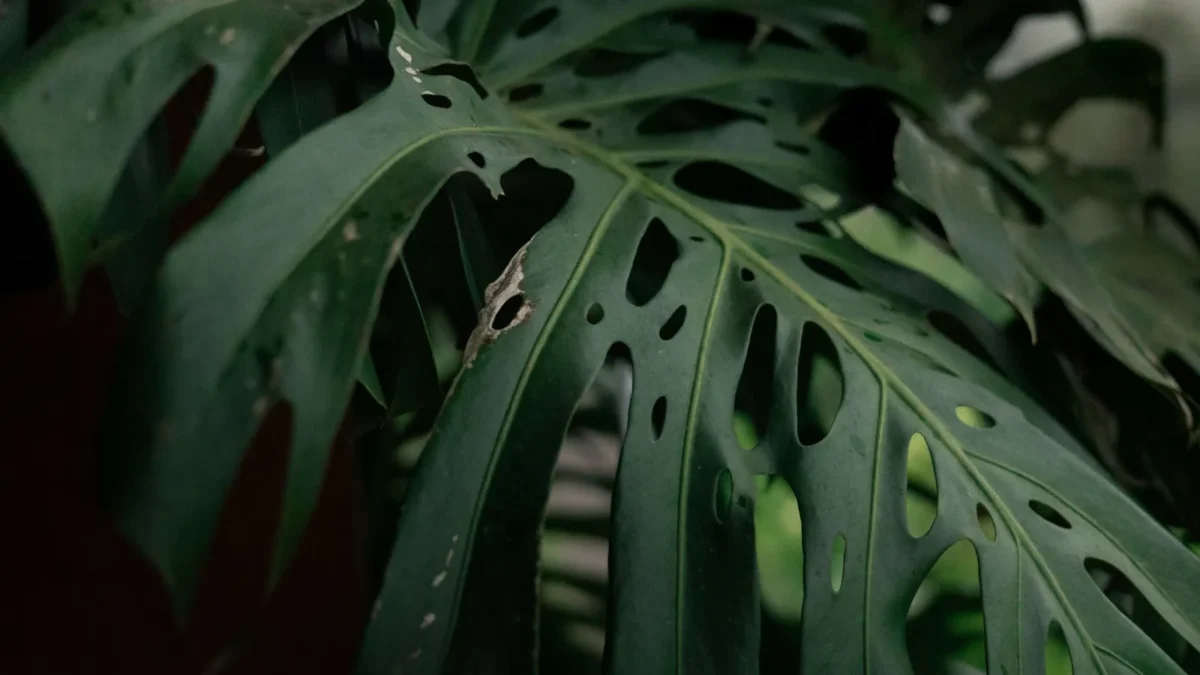
Quick answer: Monstera siltepecana light requirements are bright indirect light at 200–800 foot-candles for at least 6 hours daily. Below 50 foot-candles, growth stalls, leaves lose their silvery sheen, stems stretch between nodes, and fenestration never develops.
Monstera Siltepecana at a glance
| Botanical name | Monstera siltepecana |
|---|---|
| Light | Bright indirect light, 200–800 foot-candles; 6+ hours daily. Avoid direct sun. |
| Watering | Water when top 2 inches of soil feel dry; every 5–8 days in summer. Never on fixed schedule. |
| Humidity | 60–80% relative humidity; tolerates brief dips to 40% RH |
| Temperature | 65–85°F (18–29°C) |
| Soil | Chunky aroid mix: potting soil/coco coir, orchid bark, perlite, sphagnum moss in equal parts |
| Feeding | Balanced liquid fertilizer monthly during growing season (March–October). Zero fertilizer November–February. |
| Size | Trailing or climbing; 5–8 feet tall, 3–5 feet wide; up to 250 cm with support |
| Difficulty | easy |
Ideal Light Levels for Monstera Siltepecana
In nature, Monstera siltepecana grows under the forest canopy, receiving dappled sunlight filtered through larger trees. Indoors, this means positioning your plant where it gets bright, filtered light rather than direct rays. The target is 200–800 foot-candles—this range supports vigorous growth and keeps juvenile leaves displaying their clearest, most silvery coloration.
Monstera siltepecana light needs are steady but not extreme. Six hours minimum daily is the rule. A bright east-facing window, or a spot a few feet from a south-facing window, often works well. Avoid placing it directly in afternoon sun; direct rays can scorch leaves, leaving brown spots and permanent damage. A little morning or late afternoon direct sun is fine if you acclimate the plant gradually first.
Low Light: Where Growth Goes Wrong
The moment light drops below 50 foot-candles, problems emerge—even if your plant still looks green. Growth slows noticeably, the silvery variegation fades to dull green, and stems stretch with large gaps between leaves (a problem called etiolation)., In these conditions, fenestration (the characteristic holes in mature leaves) will never appear.
If you notice leaves losing their shine or stems stretching beyond 3 inches between nodes, light deficiency is the culprit—not health or vigor.
When to Use a Grow Light
If your home lacks consistent bright indirect light, a full-spectrum LED grow light is the practical solution. Use one rated 3000K–4000K colour temperature, positioned above the plant and run for 12 hours daily. This setup supports healthy growth and helps the plant mature properly in a dim room.
Rotation and Growth Direction
Monstera siltepecana naturally grows toward its light source, so one side may become fuller than the other. Rotate the pot every two weeks to encourage even, balanced growth.
FAQ
How do I know if my Monstera siltepecana has enough light?
Leaves should be bright, silvery (on juveniles), and nodes should sit close together—roughly 3 inches or less apart. Vigorous new growth appearing regularly is a sign light is adequate.
Can Monstera siltepecana grow in low light?
It survives in low light but does not thrive. Growth stalls, variegation disappears, and the plant stretches. Move it to brighter indirect light or add a grow light for better results.
Will my plant ever develop fenestrations without bright light?
No. Fenestration only appears when the plant reaches maturity and light levels support vigorous growth. Insufficient light blocks both processes.,
Read the full guide: Monstera Siltepecana Care: The Complete Guide
More about Monstera Siltepecana
The same problem in other plants
- What Light Does Echeveria Need to Thrive?
- Orange Bird of Paradise Light Requirements: Sun, Indoor Placement, and Window Direction
- Fishbone Cactus Light Requirements: Where and How Much?
- What Light Does Alocasia Frydek Need to Thrive?
Sources
- Monstera Siltepecana Care: Light, Water, Humidity & Propagation Guide
- Monstera Siltepecana Care Guide: Light, Water, Soil & Growth Tips
- The Ultimate Monstera Siltepecana Care Guide
Photo: Dante Muñoz / Pexels, Pexels