Orange Bird of Paradise Strelitzia reginae
Orange Bird of Paradise Care: The Complete Growing Guide
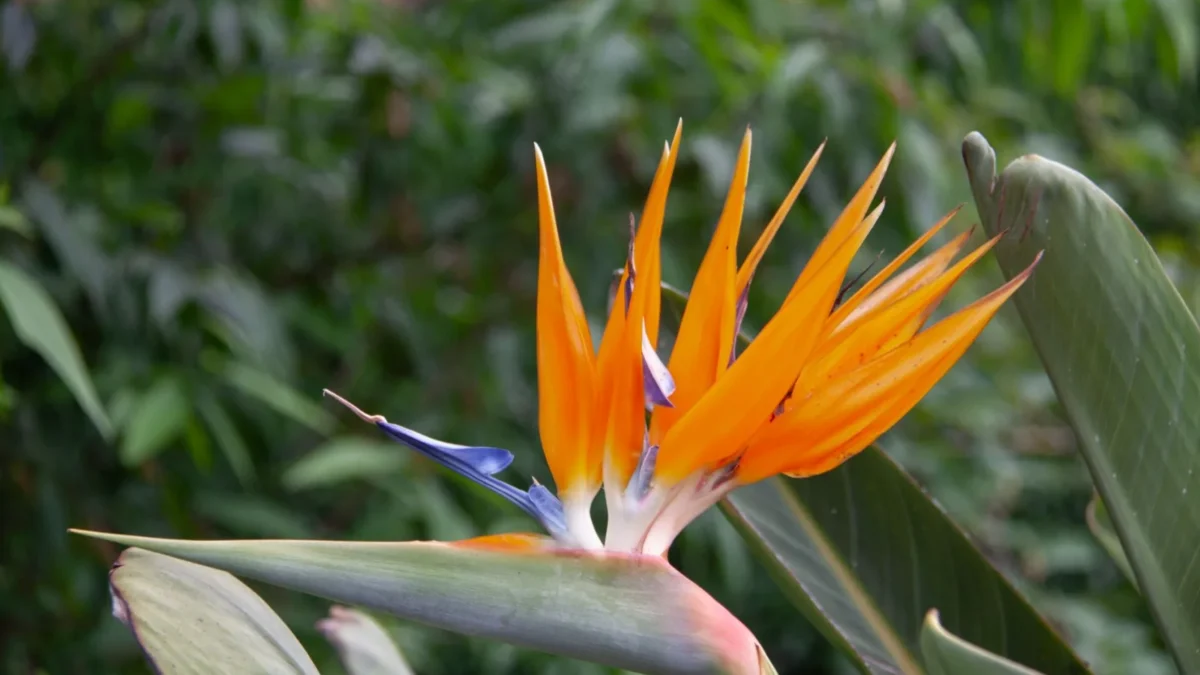
The Orange Bird of Paradise (Strelitzia reginae) is easier to grow than many other tropical plants—it will thrive indoors with the right conditions and produce spectacular orange and blue flowers that justify the effort. This guide covers everything you need to know about orange bird of paradise care, from choosing the right location to troubleshooting common problems.
Orange Bird of Paradise at a glance
| Botanical name | Strelitzia reginae |
|---|---|
| Light | Full south or southwest window; at least 4-6 hours direct sunlight daily; shade from hot sun under glass |
| Watering | Weekly in spring and summer; every 10-14 days in fall; every 2-3 weeks in winter; water when top 2 inches of soil are dr |
| Humidity | 50-60% ideal; tolerates normal indoor humidity 30-50% |
| Temperature | 18-27°C (65-80°F) preferred; minimum 10-12°C (50-54°F) |
| Soil | Loam-based, peat-free compost with added grit for drainage |
| Feeding | Balanced liquid fertilizer monthly during growth |
| Size | 1-1.5 m tall; 0.5-1 m wide |
| Difficulty | moderate |
Key points
- Requires a full south or southwest-facing window with 4–6 hours of direct sunlight daily; insufficient light is the main reason mature plants don’t bloom
- Water weekly in spring and summer, every 10–14 days in fall, and every 2–3 weeks in winter; always check that the top 2 inches of soil are dry first
- Prefers 18–27°C (65–80°F) and 50–60% humidity, but tolerates normal indoor humidity well
- Grows to 1–1.5 metres tall and 0.5–1 metre wide; needs repotting every two years but flowers better slightly pot-bound
- Plants usually take 3–5 years to mature and flower reliably; they need substantial size, adequate light, and regular feeding
- Toxic to dogs, cats, and horses if ingested, particularly the seeds and flowers
Light Requirements for Orange Bird of Paradise
Light is the single most critical factor for growing healthy Orange Bird of Paradise indoors. The species requires nearly full sun in summer and as much light as possible in winter to bloom. A south-facing or southwest-facing window with clear, unobstructed exposure is the minimum for reliable blooming. Your plant needs at least 4–6 hours of direct sunlight daily.
North or east windows typically provide insufficient light for flowering, though the plant will grow attractively as a foliage specimen. If you must use a less ideal location, accept that blooming will be difficult or impossible indoors.
When growing under glass, provide full light and shade from hot sun during the hottest part of the day. Intense midday sun through a window can scorch leaves, so if you notice leaf damage during peak summer heat, filter harsh afternoon rays with a sheer curtain.
Moving your plant outdoors for summer improves flowering potential significantly. If you do this, acclimate it gradually to outdoor light over a week or two to prevent sunburn. Bring it back indoors well before temperatures drop in autumn.
Watering Your Orange Bird of Paradise
Water roughly weekly in spring and summer, every 10–14 days in fall, and every 2–3 weeks in winter—but always check the soil first. The key is to water deeply until it drains from the bottom, then wait until the top 2 inches are dry before watering again.
Strelitzia has thick, fleshy roots that rot readily if the pot never gets a real dry-down between waterings. Never leave the pot standing in a full saucer of water. Overwatering during the slower winter months is the most common way this plant develops root rot indoors.
In winter, water sparingly. At the same time, ventilate the space when temperatures exceed 20°C to prevent moisture from lingering around the roots in cool conditions.
Soil, Feeding, and Repotting
Grow your plant in loam-based, peat-free compost with added grit for drainage. This combination ensures the roots have room to breathe and excess moisture drains away quickly.
During the growing season (spring and summer), apply a balanced liquid fertiliser monthly. Balanced fertilisers have equal or similar ratios of nitrogen, phosphorus, and potassium (for example, 10-10-10), which suits Strelitzia well. Stop fertilising in autumn and don’t feed in winter.
Top dress annually and repot every second year. However, your plant will generally flower better if kept slightly pot-bound. This means you don’t need to rush it into a much larger pot each time—go up only one size (perhaps 2 cm or so in diameter) when you do repot.
How to Get Your Orange Bird of Paradise to Bloom
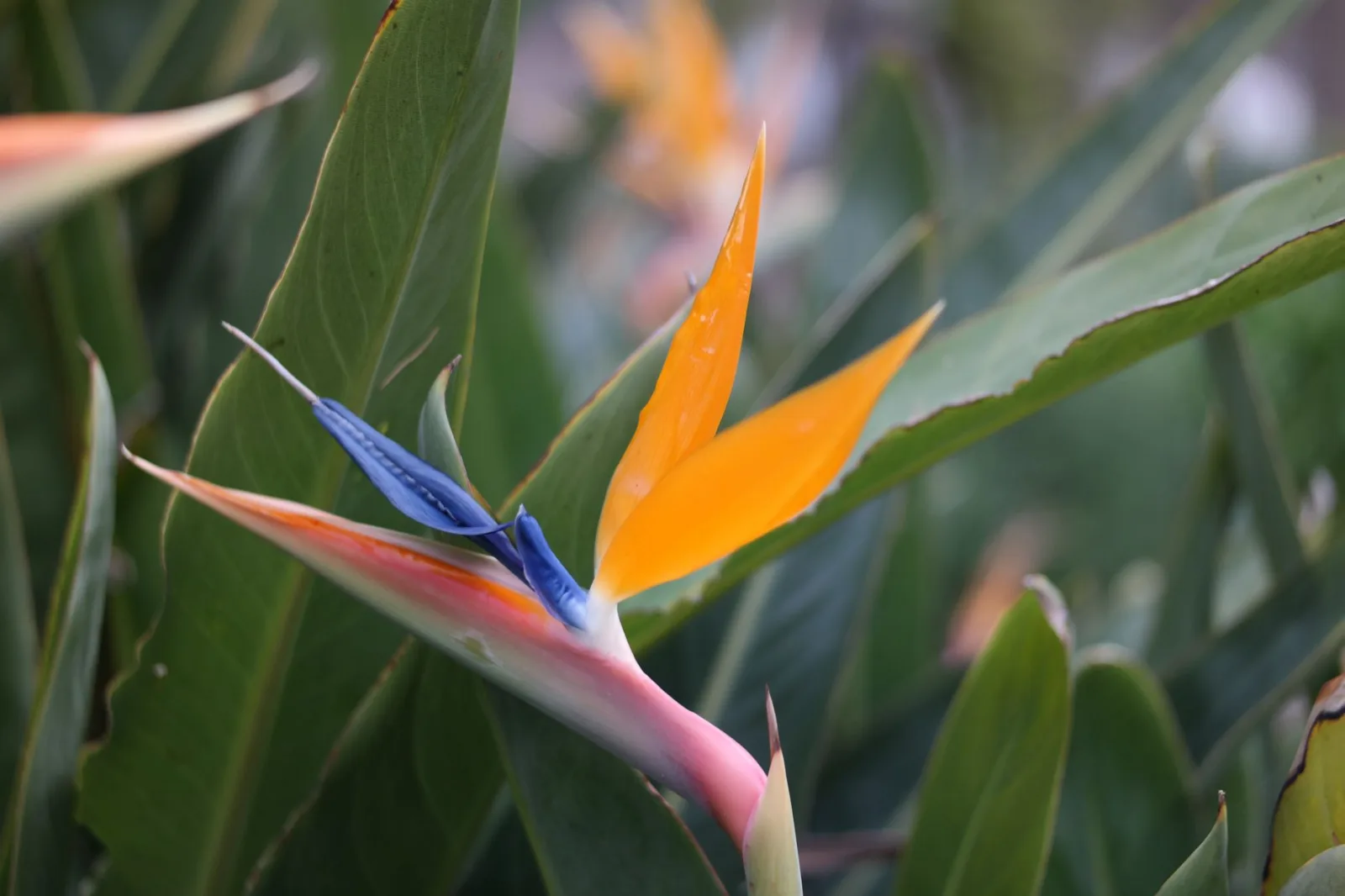
Flowering is difficult indoors because the plant requires very high light intensity (at least 4–6 hours of direct sun daily) and maturity (usually 3–5 years old). Without intense and prolonged light, Strelitzia reginae will never flower.
Most container-grown Strelitzia reginae begin flowering reliably at age 3–5 years, provided they receive sufficient light, appropriate feeding, and seasonal temperature cues. If your plant is younger than this, patience is your main tool. Keep it in the brightest possible location and feed monthly during growth.
One of the most common reasons mature Strelitzia do not bloom well is insufficient light. Review your placement honestly: if your plant is not in a full south or southwest window for most of the day, blooming will be inconsistent or absent. Moving it closer to a window or adding supplementary grow lights can help.
Ensure the plant also receives adequate feeding during growth (monthly balanced fertiliser) and avoid keeping it too warm year-round; seasonal temperature variation (cooler in winter) can help trigger flowering. Keeping the plant slightly pot-bound also supports blooming over excessive vegetative growth.
Common Leaf Problems: Curling, Discoloration, and Spots
Curling and discolored leaves typically indicate the plant is thirsty, the humidity is too low, or the plant is suffering from heat stress. Check the soil: if the top 2–3 inches are dry, give it a thorough soak. If the soil is moist, the issue is likely low humidity or exposure to a hot HVAC vent. Curling is a natural defence against water loss—it concentrates moisture in the remaining leaf area. Make sure humidity is at least 50%, and ideally higher.
Brown, crispy edges are typically a sign of burn from chemicals in tap water (like chlorine or fluoride) or extremely low humidity. Increasing ambient humidity with a humidifier or pebble tray can prevent further browning. If chemical buildup is the issue, switch to filtered or rainwater, flush the soil with plain water, and trim the affected tissue.
Leaf spots may appear as yellow or brown markings on the foliage. These are often caused by low humidity, mineral or fluoride buildup from tap water, or underwatering. Trim brown tissue, switch to filtered or rain water, flush the soil with plain water, and raise humidity if it is below about 30%.
Pests and Diseases
Strelitzia is susceptible to scale insects, mealybugs, and aphids, particularly on new growth and flower stalks. Monitor your plant regularly, especially during the growing season when pests are most active.
These pests can be controlled through applications of insecticidal soap or horticultural oils, such as neem oil, applied directly to affected areas, often combined with manual removal or washing the leaves with water. Isolate any infested plant from your other houseplants until you’ve cleared the problem.
Root rot, caused by Pythium or Fusarium fungi, is the most common disease problem indoors. It results from overwatering or poor drainage. The best prevention is proper watering technique (wait for the top 2 inches to dry between waterings) and well-draining soil. If root rot has set in, reduce watering immediately, improve drainage by repotting into fresh compost, and remove any blackened roots if repotting is necessary.
Propagating Orange Bird of Paradise
Propagation is straightforward: divide rooted suckers in spring. The easiest way is to separate established pups—young plants that emerge around the base of the main stem—and pot them up individually. Each sucker should have several leaves and some roots already attached. Plant them in the same loam-based, peat-free compost you use for the parent plant and keep them warm and lightly moist until they establish.
Size and Growth Rate
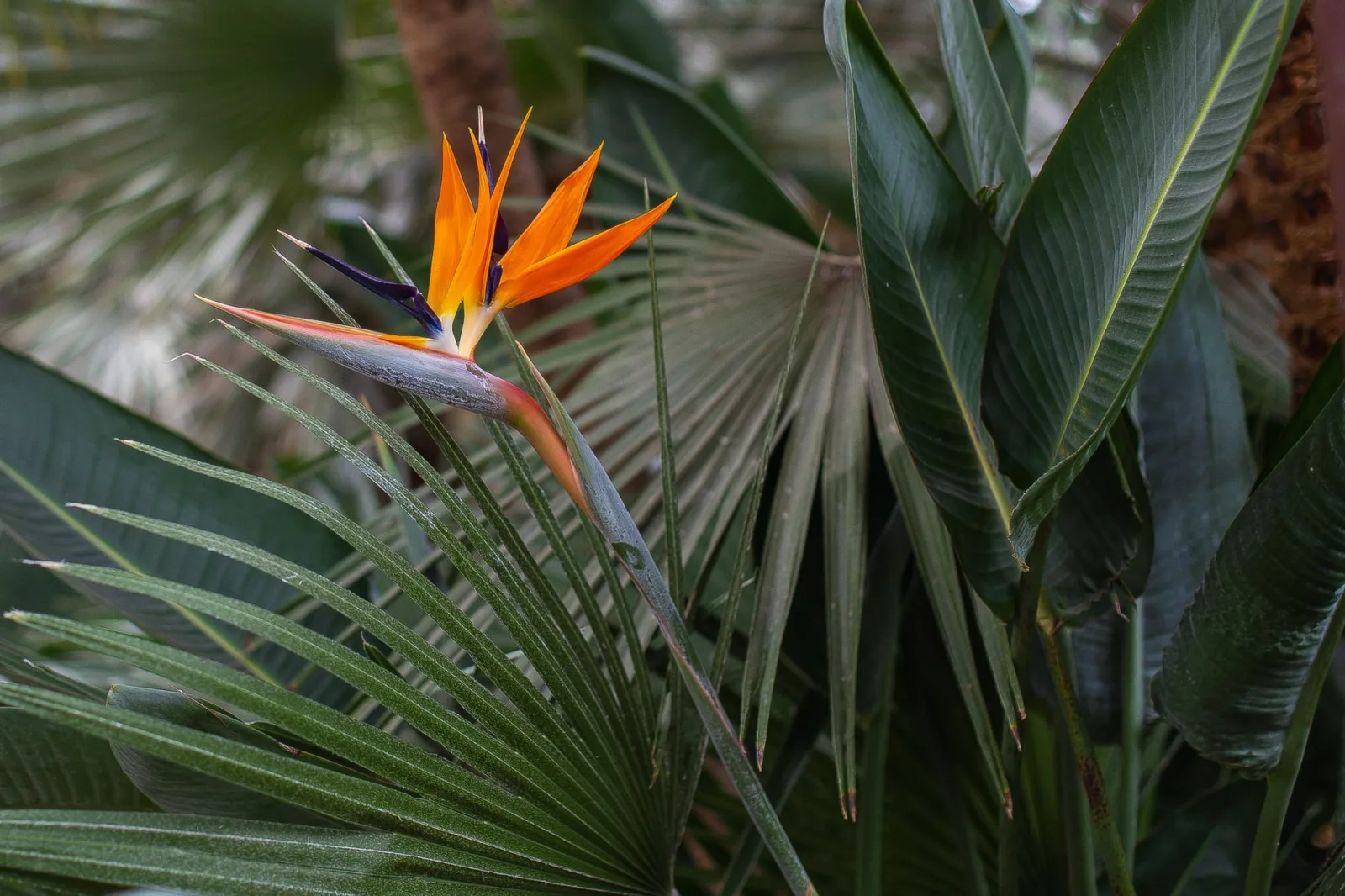
Strelitzia reginae grows to 1–1.5 metres (3–5 feet) tall and 0.5–1 metre (1½–3 feet) wide in a container. With big paddle-shaped leaves on long stiff stalks and spectacular orange and blue flowers, it will eventually become a substantial specimen.
It grows vigorously if it has the right conditions, particularly plenty of light and consistent feeding during the growing season. Expect fairly rapid growth once the plant is established and receiving adequate light.
Temperature and Humidity
Bird of paradise does best at 18–27°C (65–80°F) and 50–60% humidity. The good news: Strelitzia tolerates normal indoor humidity (30–50%) better than most tropical plants, making it an ideal houseplant for average homes.
Temperatures should never go below 10–12°C (50–54°F), though the plant can tolerate temperatures as low as 55°F (13°C). Avoid placing it near cold windows in winter or in draughty spots. Keep it away from hot air vents and sudden temperature swings, which cause stress and leaf damage.
Pet Safety
The ASPCA lists Strelitzia reginae as toxic to dogs, cats, and horses. The toxins are gastrointestinal irritants called strelitzine and related alkaloids, causing mild nausea, vomiting, and drowsiness. The flowers and seeds are the most concentrated source.
Position your plant where curious pets cannot chew on the leaves or access fallen seeds and flowers. If your pet ingests plant material, contact your veterinary surgeon or poison control.
FAQ
Why isn’t my Orange Bird of Paradise flowering?
The most common reason is insufficient light. Your plant needs a south or southwest-facing window with at least 4–6 hours of direct sunlight daily. Additionally, plants usually need to be a substantial size and 3–5 years old before they flower reliably.
Can I grow Orange Bird of Paradise outdoors?
Yes, though it performs best when moved outside for the summer and brought back indoors before temperatures drop. Be careful to acclimate it gradually to stronger outdoor light to prevent sunburn.
How often should I water in winter?
Water every 2–3 weeks in winter, checking that the top 2 inches of soil are dry first. Overwatering in winter is the leading cause of root rot, so err on the side of caution.
What humidity does it need?
Bird of paradise does best at 50–60% humidity, but it tolerates normal indoor humidity (30–50%) better than most tropical plants. If you notice curling leaves, try raising humidity with a humidifier or pebble tray.
Is it safe to have around dogs and cats?
No. It is toxic to dogs, cats, and horses; the flowers and seeds are the most concentrated source. Keep the plant out of reach of pets.
How often should I repot?
Repot every second year, but remember that the plant flowers better if kept slightly pot-bound. You don’t need to increase the pot size dramatically each time.
More about Orange Bird of Paradise
Sources
- Strelitzia reginae
- Bird of Paradise Care: How to Get Strelitzia to Bloom
- Bird of Paradise, Strelitzia reginae
Photo: Antonino Giangrasso / Pexels, Pexels