Echeveria Echeveria
When to Repot Echeveria: Timing and Steps for Success
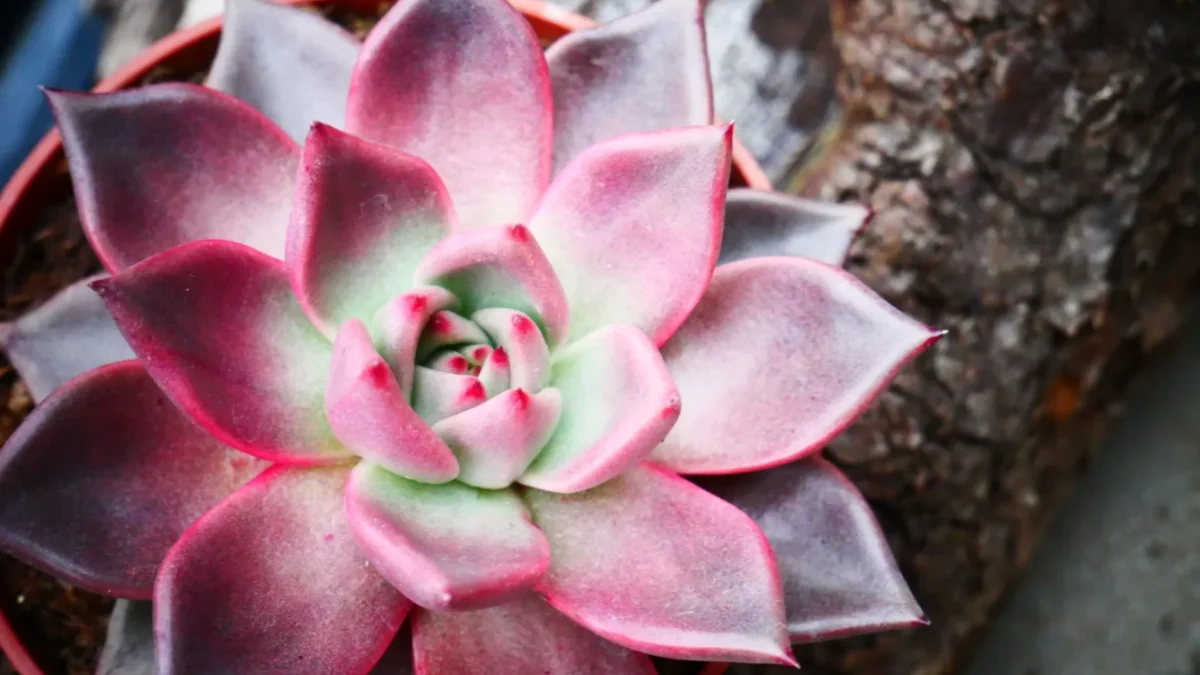
Quick answer: Repot your echeveria in spring when it enters its active growing season. Plan to do this at least once every two years, though once yearly is better for stronger growth.
| Botanical name | Echeveria |
|---|---|
| Light | Bright indirect light; at least 4-6 hours daily; south or east-facing window |
| Watering | Water when soil approaches dryness; every 10-14 days summer, 28-35 days winter; never leave sitting in water |
| Humidity | 30-50%; avoid humid areas like bathrooms; humidity above 60% not ideal |
| Temperature | 65-80°F spring and summer, slightly cooler in winter; avoid below 45°F |
| Soil | Peat-free cactus compost or 1 part potting soil, 1 part perlite, 1 part coarse sand; well-draining |
| Feeding | Dilute, low-nitrogen fertilizer fortnightly during late spring and summer; not required |
| Size | 2-6 inches across in rosette form on short stems |
| Difficulty | easy |
| Cats | ✓ non-toxic |
| Dogs | ✓ non-toxic |
Best Time to Repot Echeveria
Spring is the ideal window for repotting. Your echeveria will recover faster and establish new roots as the growing season picks up, rather than struggling through it in winter dormancy.
Aim to repot at least once every two years at minimum. Many growers find yearly repotting keeps their plants healthier and prevents them from becoming rootbound too quickly. If you notice roots circling the pot’s edge or growth slowing despite good light and water, that’s your sign to move up a size.
How to Repot Without Damaging Your Echeveria
-
Prepare by drying the soil first. Before you start, make sure the soil is completely dry. This makes the root ball slide out cleanly and reduces stress on the delicate roots.
-
Choose the right soil mix. Use peat-free cactus compost, which is gritty and sharp-draining. Alternatively, mix 1 part potting soil, 1 part perlite, and 1 part coarse sand for identical results.
-
Plant at the same depth. Place your echeveria at exactly the same depth it was growing before—no deeper, no shallower. Firm the potting mix gently around the roots.
-
Wait before watering. This is crucial: hold off on watering for a full week after repotting. This waiting period lets any small root damage callus over and dramatically reduces the risk of rot, which is the leading killer of succulents after repotting.
-
Use a pot with drainage holes. Make sure your new container has plenty of drainage holes. Water will escape freely, and excess won’t pool at the roots—the core of preventing rot.
FAQ
What size pot should I move to?
Move up just one size larger than the current pot. Echeveria rosettes stay compact at 2–6 inches across, so a jump of an inch or two in diameter is plenty. Too much extra soil holds moisture your plant doesn’t need.
Can I repot outside of spring?
Spring is best, but if your plant is severely rootbound or showing signs of distress, you can repot in summer. Avoid repotting in autumn or winter when growth slows and the plant is less able to recover.
The same problem in other plants
- When to Repot Your Snake Plant: Signs and Timing
- When to Repot Pothos: Signs and Timing Guide
- How to Repot Burro's Tail: A Step-by-Step Guide
- When and How to Repot Your Hoya Carnosa
Sources
- How to Grow and Care for Echeveria – World of Succulents
- Echeveria Care Guide: Grow Healthy Succulent Plants at Home
- Echeveria / RHS Plant Guide
Photo: Carina Volke-Grunewald / Pexels, Pexels