Pothos Epipremnum aureum
When to Repot Pothos: Signs and Timing Guide
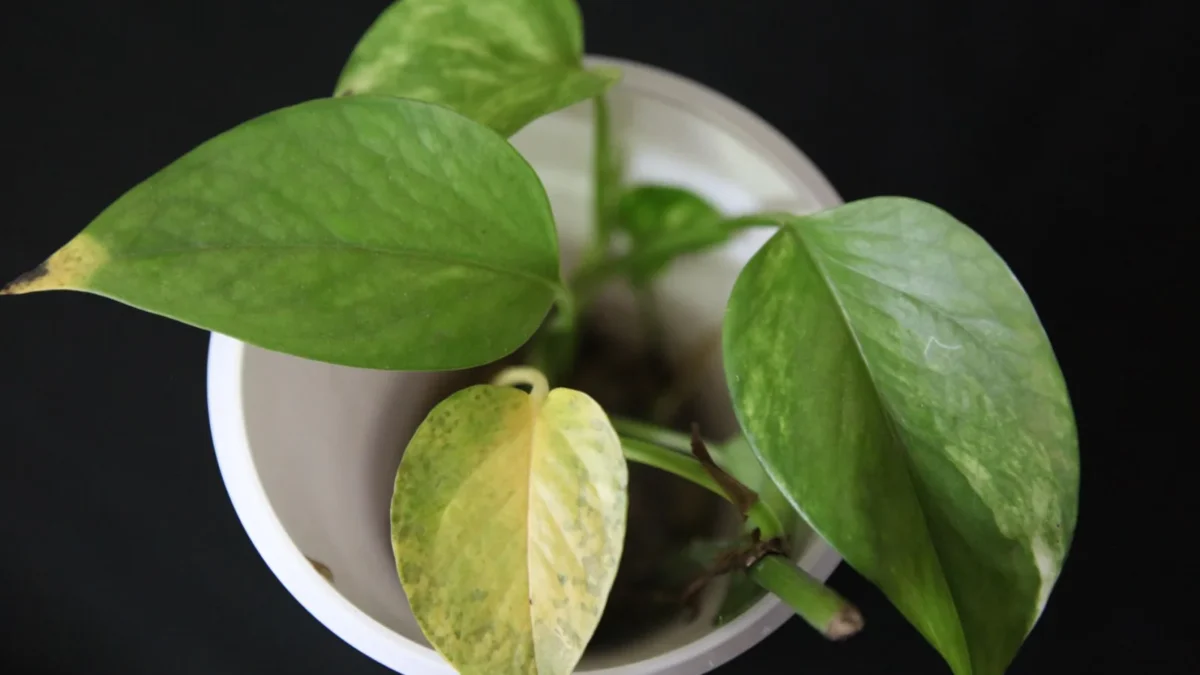
Quick answer: When to repot pothos depends on growth, nutrient levels, and soil condition. Most pothos need repotting every two to three years to refresh the soil and prevent nutrient deficiencies. Watch for roots poking through drainage holes, soil that dries too quickly, yellowing leaves from nutrient loss, or stunted growth—these are your main signals that repotting time has come.
| Botanical name | Epipremnum aureum |
|---|---|
| Light | Bright indirect light; tolerates low light but variegation fades and growth slows |
| Watering | Water when top 1-2 inches of soil feels dry; every 7-14 days average |
| Humidity | Moderate to high humidity, above 40%; mist leaves or use humidifier if dry |
| Temperature | 60-85°F (15-29°C) |
| Soil | Well-draining mix: orchid bark, perlite, peat, or coco coir; moist but not soggy |
| Feeding | Balanced water-soluble fertilizer every 2-3 months during spring and summer |
| Size | Trailing vine; mature leaves to 30 inches long with deep lobes |
| Difficulty | easy |
| Cats | ⚠️ toxic — Insoluble calcium oxalates cause oral irritation, burning, drooling, vomiting |
| Dogs | ⚠️ toxic — Insoluble calcium oxalates cause oral irritation, burning, drooling, vomiting |
Signs Your Pothos Needs Repotting
Roots circling the bottom of the pot or visibly crowded in the soil are the clearest sign. Soil that dries out much faster than usual—within a day or two instead of the typical 7–14 days—means roots have filled the pot and there’s little room for moisture retention.
Nutrient deficiencies are another indicator, especially in older plants. If your pothos hasn’t been repotted for several years, it becomes prone to losing essential nutrients like nitrogen, iron, and magnesium. Yellowing on older leaves suggests nitrogen deficiency, yellow leaf edges indicate potassium issues, and yellowing between the veins points to magnesium loss. Stunted growth despite good light and regular feeding can also signal that nutrients in the old soil are depleted.
Overwatering damage is a reason to repot immediately. If your pothos has yellowing leaves and you’ve been watering correctly, overwatering may have caused root rot. Healthy roots are pale or tan; roots affected by rot appear black and feel mushy. The best way to save a waterlogged pothos is to repot it in fresh, well-draining soil mix.
Best Timing to Repot Pothos
Repot during spring or summer when your pothos is actively growing. Growth slows significantly in winter, so the plant recovers more slowly from the stress of repotting. Avoid repotting in autumn or winter unless the plant is in immediate danger from root rot.
Choose a container only slightly larger than the current one—just an inch or two wider. Use a well-draining mix of orchid bark, perlite, peat, or coco coir to mimic the plant’s natural environment and prevent compaction. Water the plant the day before repotting to reduce transplant shock.
Repotting Pothos Cuttings and Propagations
When you’ve rooted pothos cuttings in water, timing matters. Transfer the cutting to soil when roots are 1 to 2 inches (3–5 cm) long. Roots longer than 8 to 10 cm have adapted to water conditions and can struggle to transition to soil. Plant the rooted cutting in a container with well-draining potting soil, keeping the soil moist for 1–2 weeks, then follow your normal watering routine.
If you’re rooting cuttings directly in soil, plant them so that 2–3 of the bottom nodes are buried in moistened soil. Nodes are the small brown bumps where leaves attach—they’re essential because without at least one node per cutting, roots cannot form.
FAQ
Can you repot pothos in winter?
It’s best to avoid repotting in winter since growth slows dramatically and the plant recovers slowly from transplanting. Repot in spring or summer unless the plant is suffering from root rot, in which case act immediately regardless of season.
How often should you fertilize after repotting?
Use balanced, water-soluble fertilizer every 2–3 months during spring and summer. After repotting with fresh soil, you can usually wait a few weeks before fertilizing since new potting mix contains nutrients.
The same problem in other plants
- When to Repot Your Snake Plant: Signs and Timing
- When Should You Repot Echeveria?
- How to Repot Burro's Tail: A Step-by-Step Guide
- When and How to Repot Your Hoya Carnosa
Sources
- How to Propagate Pothos in Water
- Why Pothos Leaves Are Turning Yellow + Fixes that WORK
- Why Are My Pothos Leaves Turning Yellow & Best Fixes
Photo: Massoudi Mohamed / Pexels, Pexels