Bunny Ears Cactus Opuntia microdasys
Bunny Ears Cactus Care: The Complete Growing Guide
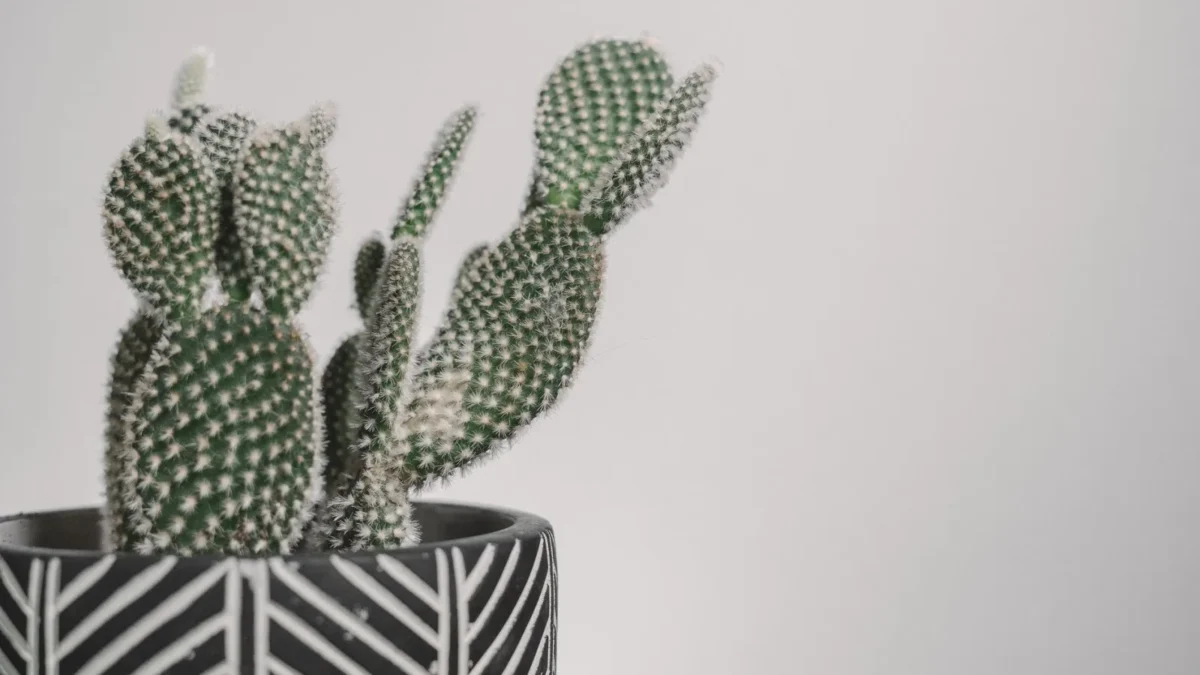
Bunny Ears Cactus (Opuntia microdasys) is one of the easiest succulents to grow indoors, making it perfect for beginners and experienced plant lovers alike. This guide covers everything you need to know about bunny ears cactus care, from light and watering to propagation and pest management.
| Botanical name | Opuntia microdasys |
|---|---|
| Light | Full light; minimum 6 hours direct sunlight daily |
| Watering | Water every 1-2 weeks spring/summer; allow soil to dry completely between waterings; reduce to once every 4-6 weeks in w |
| Humidity | Below 40%; prefers dry air |
| Temperature | 70-100°F (21-38°C) growing season; 50-65°F (10-18°C) winter; avoid below 40°F (4°C) |
| Soil | Sharply-draining cactus compost; loam-based with sharp sand or perlite/pumice blend |
| Feeding | Balanced liquid fertilizer 3-4 times during spring, summer, early autumn; withhold in winter |
| Size | 40-60 cm tall; occasionally up to 2-3 feet tall, 4-6 feet wide |
| Difficulty | easy |
| Cats | ✓ non-toxic |
| Dogs | ✓ non-toxic |
Key points
- Needs at least 6 hours of direct sunlight daily in a south-facing window
- Water every 1–2 weeks during growing season; let soil dry completely between waterings
- Prefers sharply-draining cactus mix with sand or perlite
- Thrives in dry air below 40% humidity and temperatures of 70–100°F (21–38°C)
- Not toxic to pets, but barbed glochids cause painful physical irritation if handled carelessly
- Reaches 40–60 cm tall indoors, occasionally taller, with pads 6–15 cm long
Light Requirements for Bunny Ears Cactus
Bunny Ears Cactus demands strong light to thrive. Provide at least 6 hours of direct sunlight daily. A south-facing window is your best choice for indoor cultivation.
During winter, the plant tolerates partial sun, but spring through autumn should receive full light whenever possible. Without adequate light, pads become weak, pale, and prone to drooping.
Watering Schedule and Techniques
Growing Season (Spring, Summer, Early Autumn)
Water every 1–2 weeks during active growth, checking soil moisture before each watering. The key is simple: allow the top inch of soil to dry completely between waterings before watering again.
Drought tolerance is built into this plant’s structure—the pads store water, so it tolerates dry spells far better than wet soil. Always water the soil directly and avoid splashing the pads, as standing water invites fungal problems.
Winter Dormancy
In the dormant winter months, reduce watering dramatically to once every 4–6 weeks. Many growers withhold water almost entirely during winter. Resume regular watering in early spring as growth resumes.
Watering Tips
Adjust your schedule to soil moisture, not the calendar. If you’re uncertain whether to water, wait a few more days—overwatering kills far more bunny ears cacti than underwatering.
Soil and Repotting Guide
Sharp drainage is non-negotiable. Grow this cactus in sharply-draining, peat-free, loam-based compost with added sharp sand, or use a proprietary peat-free cactus compost.
A reliable homemade blend uses 1 part potting soil, 1 part coarse sand, and 1 part perlite or pumice. Dense potting soils stay wet too long and create the conditions for root rot and fungal disease.
Repot every 3–4 years in spring; the plant tolerates being rootbound and actually prefers it. Use a pot with drainage holes and slightly larger than the current pot.
Humidity and Temperature Needs
Humidity
Bunny Ears Cactus thrives in dry air with humidity below 40%. This makes it ideal for homes with central heating and air conditioning. Most indoor homes naturally fall into this range, so humidity is rarely a problem.
Growing Season Temperature
Provide warm conditions during spring, summer, and early autumn: 70–100°F (21–38°C). Ideally, give your plant warm days around 75–95°F with cooler nights around 50–70°F for optimal growth.
Winter Dormancy Temperature
Starting in late fall, keep the plant between 50–65°F (10–18°C), away from central heating vents. This cool winter rest is essential for healthy flowering the following year. During this period, the pads often turn a light gray color—this is normal.
Avoid temperatures below 40°F (4°C), as prolonged exposure causes permanent damage or death. Protect the plant from cold drafts by moving it away from windows or exterior doors where cold air seeps in.
Feeding and Fertilizing
Apply a balanced liquid fertilizer 3–4 times during the growing period: spring, summer, and early autumn. Follow the product’s recommended dilution rate.
Withhold both water and fertilizer during winter dormancy. The plant enters a rest phase and doesn’t need feeding.
Pruning and Maintenance
Bunny Ears Cactus requires minimal pruning. Remove dust from the pads with a soft brush to keep the areolas (clusters where glochids emerge) clear.
Always wear thick gloves or use tongs when handling the plant—never touch bare skin to the pads. The barbed glochids detach easily on contact and are nearly invisible once embedded in skin.
Propagation Methods
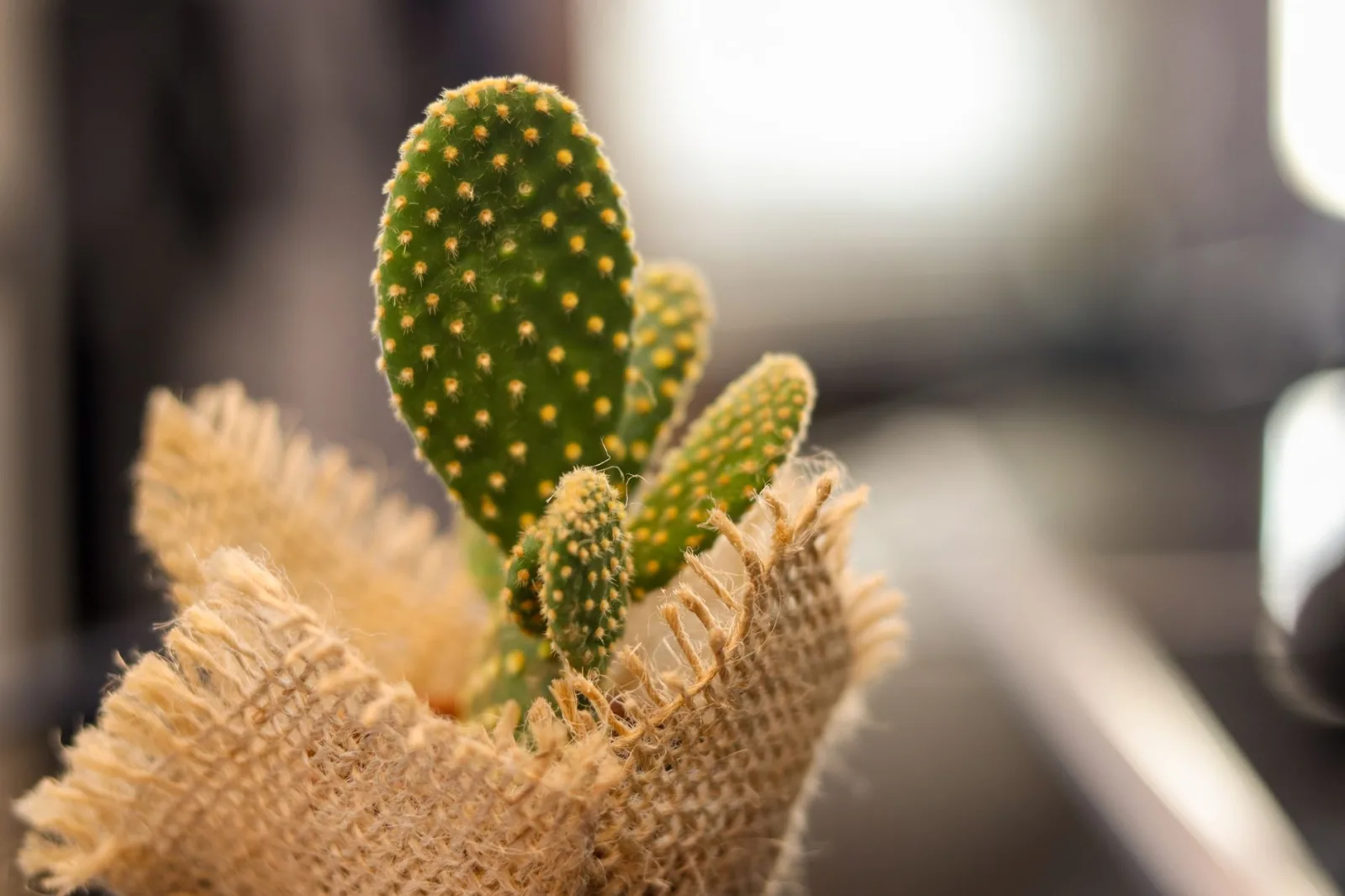
Propagation is straightforward and one of the most rewarding aspects of growing bunny ears cactus.
Timing
Begin in spring or early summer to give pad cuttings plenty of warm, sunny months to root and establish.
Selecting Pads
Look for mature, firm pads free of blemishes or disease signs. Opt for pads at least six months old—these root most successfully. Larger pads around 2–4 inches long are ideal because they store more energy, resulting in faster rooting.
Removing the Pad
Using tongs or thick gloves, twist or cut a pad at the joint where it connects to the parent plant. Handle segments with folded newspaper to avoid touching spines.
Callusing
Let the cut end dry and form a callus for 3–5 days in a dry, shaded spot. Some sources recommend 7–10 days for complete drying. Never plant before the callus forms—this invites rot.
Planting
Insert the calloused end about half an inch into dry cactus mix. Do not water for the first 2 weeks.
After 2 weeks, begin shallow watering when the topsoil dries completely. Roots develop in 3–4 weeks. By 6–8 weeks you should feel resistance when you gently wiggle the pad.
New Growth
The original pad won’t grow larger, but new pads sprout from the top once the plant establishes. Once new pads are fully developed, they too will produce additional pads.
Common Problems and Solutions
Drooping or Soft Pads
Both overwatering and underwatering cause drooping. Check the soil first: if it’s wet, stop watering immediately and allow it to dry completely. If bone dry and pads look shriveled, give a thorough soak.
Dropping pads can also signal insufficient sunlight—move the plant closer to a window. Ensure it receives at least 6 hours of direct sun daily. Cold shock is another cause; keep the plant in a stable environment between 70–100°F (21–38°C).
Root Rot
Symptoms include pads yellowing from the base, lower pads turning mushy, and sour-smelling soil. Root rot occurs from overwatering or soil that stays wet too long.
Stop watering immediately and allow the soil to dry completely. If severely affected, remove the plant from its pot, trim away any black, mushy roots, and repot in fresh, well-draining cactus mix.
Cold Damage
Cold damage occurs when temperatures fall below 50°F (10°C), with severe damage around freezing. Pads may turn dark green or black, with soft, mushy spots indicating ice crystal damage. Dried, shriveled pads indicate dehydration after a freeze.
Relocate the plant to a warm spot immediately—a sunny windowsill is ideal. Ensure the temperature stays consistently above 50°F (10°C).
Mealybugs
Mealybugs are small, soft-bodied insects that feed on sap, weakening the plant and causing secondary infections. Treat affected plants with mild insecticidal soap.
Root mealybugs appear as white powdery clusters on the rootball, invisible until you unpot. Wash the roots thoroughly, repot in fresh dry mix, and withhold water for two weeks.
Spider Mites
Spider mites cause fine webbing between pads in warm, dry air. Treat with mild horticultural soap, being careful to avoid the glochid tufts (the clusters of barbed hairs).
Pet Safety and Toxicity
Bunny Ears Cactus is non-toxic to both dogs and cats according to the ASPCA Animal Poison Control Center. However, toxicity is not the issue—the glochids are.
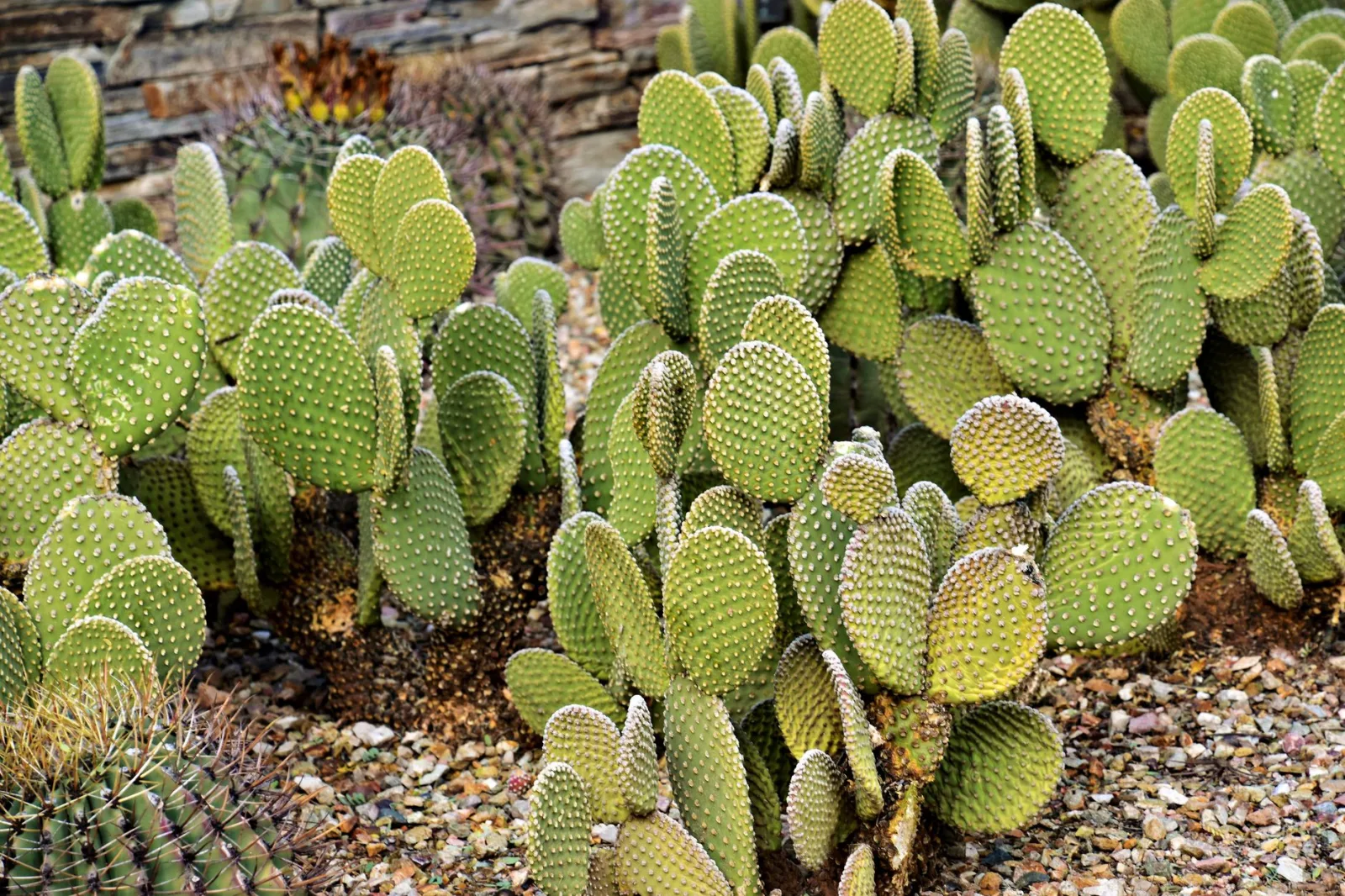
The plant has numerous white or yellow glochids 2–3 mm long in dense clusters. These barbed, hair-fine bristles are thinner than human hair and detach in large numbers on the slightest touch.
In cats, these tiny spines easily embed in the skin, mouth, or eyes, causing irritation and potential injury. In dogs, chewing on the plant causes symptoms including drooling, pawing at the mouth, and vomiting. Immediate veterinary care is crucial, and treatment involves removing the glochids and managing any gastrointestinal distress.
Keep this plant well out of reach of pets and children. If glochids do embed in human skin, use tweezers or adhesive tape to gently remove them, wash with soap and water, and apply an over-the-counter anti-itch cream if needed.
FAQ
How often should I water my Bunny Ears Cactus?
Water every 1–2 weeks during spring and summer, allowing the soil to dry completely between waterings. In winter, reduce to once every 4–6 weeks. Always check that the top inch of soil is dry before watering.
What size does Bunny Ears Cactus grow to?
Indoors, the plant typically grows 40–60 cm tall, occasionally reaching up to 2–3 feet tall and 4–6 feet wide.
How much light does this cactus need?
Provide full light at all times, with a minimum of 6 hours of direct sunlight daily. A south-facing window is ideal for indoor growers.
Is Bunny Ears Cactus toxic to pets?
The plant itself is non-toxic to dogs and cats, but the glochids (barbed hair-like spines) cause physical irritation if they embed in skin, mouth, or eyes. Keep it out of reach of pets and children.
What soil should I use?
Use sharply-draining, peat-free, loam-based compost with added sharp sand or a proprietary cactus mix. A homemade blend of 1 part potting soil, 1 part coarse sand, and 1 part perlite or pumice also works well.
How do I propagate Bunny Ears Cactus?
Remove a mature pad in spring or early summer using tongs. Let the cut end callus for 3–5 days in a dry spot, then insert it half an inch into dry cactus mix without watering for 2 weeks. Roots develop in 3–4 weeks.
More about Bunny Ears Cactus
Sources
- Opuntia microdasys
- Opuntia Microdasys: The Peter Rabbit of Cacti – Epic Gardening
- Opuntia microdasys: The Golden-Haired Beauty of the Cactus World
Photo: Scott Webb / Pexels, Pexels