Bunny Ears Cactus Opuntia microdasys
How to Propagate Bunny Ears Cactus: Step-by-Step Guide
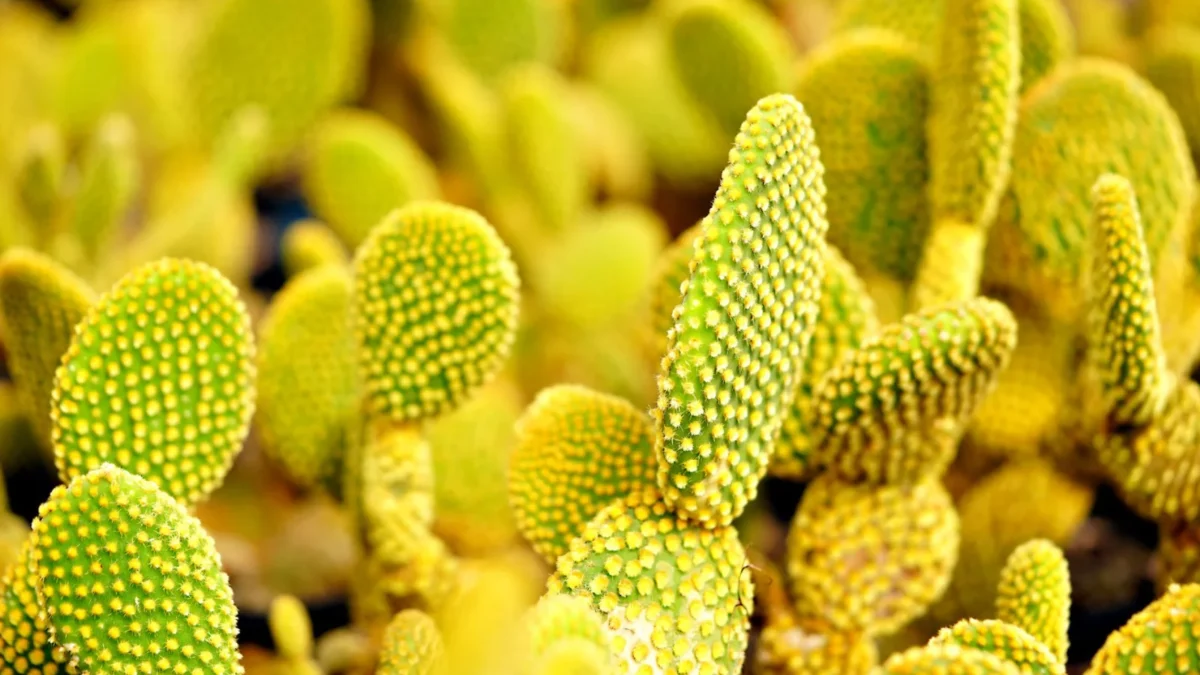
Quick answer: Bunny ears cactus propagates easily from individual pads taken in spring or early summer. Twist off a mature pad, let it callus for 7–10 days in a dry spot, then insert the cut end about half an inch into dry cactus mix without watering for the first 2 weeks. Roots develop in 3 to 4 weeks, and new pads will sprout once the plant is established.
| Botanical name | Opuntia microdasys |
|---|---|
| Light | Full light; minimum 6 hours direct sunlight daily |
| Watering | Water every 1-2 weeks spring/summer; allow soil to dry completely between waterings; reduce to once every 4-6 weeks in w |
| Humidity | Below 40%; prefers dry air |
| Temperature | 70-100°F (21-38°C) growing season; 50-65°F (10-18°C) winter; avoid below 40°F (4°C) |
| Soil | Sharply-draining cactus compost; loam-based with sharp sand or perlite/pumice blend |
| Feeding | Balanced liquid fertilizer 3-4 times during spring, summer, early autumn; withhold in winter |
| Size | 40-60 cm tall; occasionally up to 2-3 feet tall, 4-6 feet wide |
| Difficulty | easy |
| Cats | ✓ non-toxic |
| Dogs | ✓ non-toxic |
Bunny Ears Cactus Propagation Method
Pad propagation is the only method you need. Each fallen or harvested pad can become a complete new plant. The process is simple because these pads are naturally designed to store energy and regenerate.
Timing and Pad Selection
Begin in spring or early summer. This gives your cuttings warm, sunny months to develop roots and establish themselves before winter dormancy.
Choose mature pads that are firm and free of blemishes or disease. Select pads at least six months old—these root most reliably. Larger pads, around 2 to 4 inches long, are preferable because they store more energy and root faster.
Step-by-Step Propagation
-
Remove the pad safely. Using tongs or thick gloves, twist or cut a pad at the joint where it connects to the parent plant. Handle segments with folded newspaper to avoid touching the glochids (hair-like barbed spines).
-
Let it callus. Place the cut end in a dry, shaded spot for 7–10 days. The cut surface must dry out completely before it touches soil; planting before this stage invites rot.
-
Plant in dry soil. Insert the calloused end about half an inch into dry cactus mix. Do not water for the first 2 weeks. This prevents rot while the pad adjusts to soil contact.
-
Water carefully. After the first 2 weeks, water thoroughly once, then water again only when the topsoil is completely dry—roughly once a week.
What to Expect and Timeline
Roots develop in 3 to 4 weeks. By 6–8 weeks, you should feel resistance when you gently wiggle the pad, confirming roots are established.
The original pad won’t grow larger. Instead, new pads will begin to sprout from the top as the plant becomes established, and those new pads will then generate additional pads.
Common Propagation Mistakes
Watering too soon: Many people water immediately after planting. Don’t—this causes rot. Wait the full 2 weeks with no water, then water sparingly as soil dries.
Using unhealed pads: Planting before the cut has calloused for a week invites fungal rot. Patience here is essential.
Poor soil drainage: Use sharply-draining cactus compost, not regular potting soil. Dense soil holds moisture too long and creates rot conditions.
Wrong season: Starting propagation in autumn or winter means slow growth or failure. Spring and early summer provide the warmth and daylight new plants need.
FAQ
Can I propagate from a single segment?
Yes. A single mature pad of 2–4 inches long is enough to create a new plant. Larger pads establish faster because they store more energy.
How often should I water propagating pads?
Not at all for the first 2 weeks. After that, water only when the topsoil dries completely, roughly once a week. These pads are drought-tolerant; overwatering kills them faster than underwatering.
Do I need special soil for rooting?
Yes—use sharply-draining cactus compost. A blend of 1 part potting soil, 1 part coarse sand, and 1 part perlite or pumice works perfectly. Regular potting soil stays wet too long and causes rot.
Read the full guide: Bunny Ears Cactus Care: The Complete Guide
More about Bunny Ears Cactus
The same problem in other plants
- How to Propagate Rattlesnake Plant: Complete Guide
- How to Propagate Purple Shamrock: Water and Soil Methods
- How to Propagate Burro's Tail From Stem Cuttings
- How to Propagate Corn Plant in Soil and Water
Sources
Photo: hartono subagio / Pexels, Pexels