Purple Shamrock Oxalis triangularis
How Do You Care for a Purple Shamrock: Complete Growing Guide
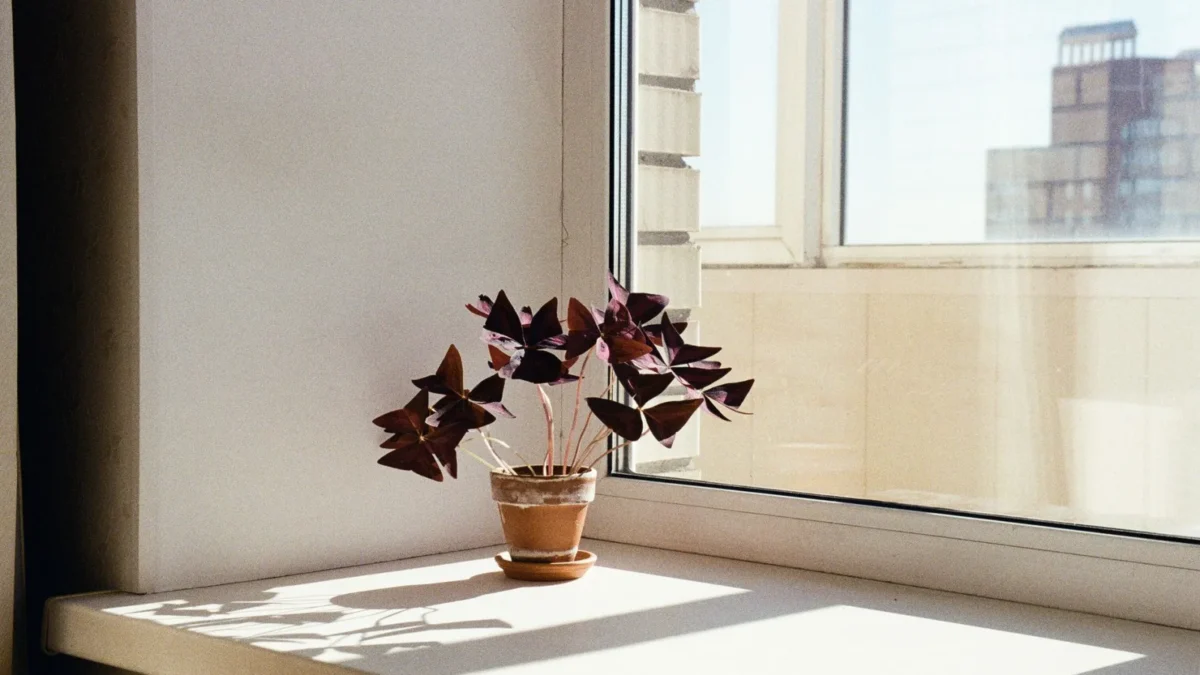
Purple shamrock (Oxalis triangularis) is an easy houseplant to grow, and the good news is that how you care for a purple shamrock follows a straightforward routine: bright indirect light, consistent but not wet soil, average humidity, and cool temperatures between 60–75°F. The one catch is recognizing its natural dormancy as rest, not death—but once you understand that, this plant becomes genuinely rewarding.
| Botanical name | Oxalis triangularis |
|---|---|
| Light | Bright indirect light; avoid direct sun which causes leaf burn; low light causes leggy growth |
| Watering | Spring-summer: water when top inch of soil is dry. Fall-winter: water every 2-3 weeks. Never overwater; drainage essenti |
| Humidity | Average household humidity; 40-60% preferred |
| Temperature | 60-75°F (15-24°C); avoid temps below 50°F or above 85°F |
| Soil | Well-draining sandy or humus-rich soil; equal parts loam, leaf mould, grit; perlite amendment recommended |
| Feeding | Spring-summer only: balanced fertilizer every 2-3 weeks; do not fertilize during dormancy |
| Size | 1.5 ft tall with 2 ft spread at maturity |
| Difficulty | easy |
Key points
– Place your purple shamrock in bright indirect light near a window; a few hours of full sun daily keeps leaves deep purple, but direct midday sun can burn them
– Water when the top inch of soil feels dry during spring and summer; in fall and winter, water only every 2–3 weeks during dormancy
– Always use well-draining soil with perlite and a pot with drainage holes; overwatering causes root rot, the most serious problem this plant faces
– Fertilize every 2–3 weeks only during the growing season (spring–summer); stop feeding during dormancy
– Division of corms is the only reliable propagation method; the best time is right after the foliage dies back
– This plant is toxic to cats and dogs due to oxalic acid content; keep pots away from curious pets
Light Requirements for Purple Shamrock
Purple shamrock thrives in bright, indirect light. A spot near a window with filtered sunlight is ideal—this is where the plant shows its best colour and compact growth.
The relationship between light and leaf colour is one of the plant’s charming features. Several hours of full sun each day will help the plant’s leaves maintain their deep purple color. However, harsh midday sun may soften the deep purple colour, while low light can make stems stretch. This means you want brightness without intensity: morning sun through a sheer curtain, or a bright spot a few feet from a south-facing window, works perfectly.
Too much direct sun can cause the leaves to burn. Too little light creates a different problem: the plant becomes leggy with weak, elongated stems and sparse foliage. If you notice leaves staying half-folded all day and the plant getting leggy, move it closer to a light source.
Watering Your Purple Shamrock
Watering is where most purple shamrock owners stumble—not because it’s complicated, but because the plant’s dormancy cycle confuses people into overwatering. The rhythm changes seasonally.
Spring and Summer Watering
During the growing seasons of spring through summer, water when the top inch of soil feels dry. You can check this easily by sticking your finger into the soil; if the top inch or so feels dry to the touch, apply water until it runs from the pot’s bottom drain holes. In a pot with good drainage, that usually means watering every four to seven days depending on humidity, pot size, and temperature.
Fall and Winter Watering
During the dormant season of fall and winter, water about every two to three weeks. This is the critical difference. Many people treat dormancy as a problem, continuing to water at the active-growth schedule. This is a mistake: continuing to water a fully dormant plant at the active-growth schedule is the primary cause of tuber rot, which is the most serious and often fatal problem this plant faces.
Drainage and Water Quality
The plant cannot tolerate overly wet soils; it is critical that the plant is in a container with a drain hole and is not overwatered. Drainage is not a preference—it is a non-negotiable requirement.
Room-temperature filtered, distilled, or rainwater is preferred, as this plant can be somewhat sensitive to the chlorine, fluoride, and mineral salts found in hard tap water, which may cause leaf tip browning over time.
Humidity and Temperature Needs
Purple shamrock appreciates average household humidity (40–60%), temperatures between 60–75°F (15–24°C). The plant prefers cool temperatures (below 75°F during the day, 15–25°F cooler at night).
Temperature extremes are stressful. If the area where the plant is located gets too warm, 75°F (24°C) or more, you may need to relocate the plant to a cooler window. Temperature shock (especially below 50°F or above 85°F) is one of the root causes of drooping.
Average household humidity suits this plant well; you don’t need a humidifier or misting routine. Position it away from heating vents and cold draughts for stable conditions.
Soil and Repotting Guide
Soil is fundamental to success. Grow in well-drained, sandy or humus-rich soil, or in a mixture of equal parts loam, leaf mould and grit. Well-draining, lightweight mix with perlite amendment is essential; avoid moisture-retention mixes.
If you’re mixing your own, combine one part loam, one part leaf mould, and one part grit or perlite. This gives the roots excellent drainage while holding just enough moisture during the growing season.
When to Repot
Repotting every one to two years refreshes the soil and gives the spreading rhizomes room to multiply. The best time to repot is in spring, as new growth begins, or right after the dormancy period ends. At maturity, your plant will reach 1.5′ tall with a 2′ spread.
Feeding and Fertilizer
Only feed your Purple Shamrock while it is actively growing in spring through summer; fertilize every two to three weeks. A balanced fertilizer works well—there’s no need for anything specialized.
Do not fertilize during dormancy. When the plant is resting and its foliage is gone, it needs no food, only minimal water and patience. Feeding a dormant plant wastes fertilizer and can stress the plant.
Pruning and Maintenance
Purple shamrock doesn’t need heavy pruning. Deadheading spent flower stems is beneficial but not essential; removing faded flower stalks at the base prevents the plant from directing energy into seed production and encourages the development of new flower stalks.
One natural behavior to expect: the leaves fold down at night, when disturbed, and when in harsh sunlight. This is normal and not a sign of distress. The plant’s triangular leaves also fold in response to dim light or nightfall, opening again in bright daylight.
Propagation Methods
Propagating Purple Shamrock is satisfying because it works almost every time; the plant multiplies its corms naturally, so you just separate them.
Corm Division (The Reliable Method)
Division of the corms is the only reliable propagation method for home growers; unlike many houseplants, it does not root from stem or leaf cuttings, and seed propagation is rarely practical for home growers; division is simple, produces immediate results, and is the only method needed.
The best time to divide is during or immediately after the dormancy period, when the foliage has died back and the corms are accessible without disturbing active growth.
How to divide:
- Unpot the plant and brush off the soil to expose clusters of small, oval, scaly corms.
- Pull clusters apart with your fingers. Even single small bulbs will sprout.
- Plant 5–10 bulbs together for a fuller look, pointed ends up, with about an inch of soil above them.
- Water lightly and place in bright indirect light; keep the soil barely moist.
- The first green-pink shoots appear within 2–3 weeks.
Shoots typically emerge within 2 to 4 weeks of planting Oxalis triangularis corms at the correct 1 to 1.5 inch depth with adequate warmth and light.
Stem and Leaf Cuttings (Alternative)
While corm division is most reliable, you can also try cuttings. Select a healthy stem or leaf section from an actively growing plant; make a clean cut using sterilized scissors; place the cutting in water or lightly moist soil; provide bright indirect light; maintain consistent moisture until roots develop.
If rooting in water: place the cutting in a clean jar filled with water; keep leaves above the water line to prevent decay; change water regularly to maintain freshness; place the jar in bright indirect light.
Common Problems and Solutions
Drooping Leaves
Drooping has several causes. Underwatering shows up as dramatically drooping leaves and dry crispy tips; good news: a thorough watering usually plumps it back within hours. Overwatering, by contrast, creates mushy, soft, drooping leaves with a sour soil smell and yellow foliage; this indicates root rot is developing. Temperature shock (especially below 50°F or above 85°F) also causes drooping. Check the soil moisture first, then review your temperature and light placement.
Yellowing Leaves and Leaf Drop
Yellowing and sudden defoliation during spring or summer usually signals overwatering or poor drainage. Yellowing leaves are an early warning of root trouble. However, if all the foliage yellows and drops together, your plant may be entering its natural dormancy period—which is normal and not a crisis.
Leggy Growth and Loss of Colour
If stems stretch and leaves lose their deep purple colour, the plant isn’t getting enough light. Move it closer to a bright window. If colour fades despite good light and the leaves soften, harsh midday sun may be the cause; filter the light with a sheer curtain.
Natural Dormancy (Not a Problem)
Every few months, often triggered by summer heat, Oxalis triangularis naturally sheds its foliage: the leaves flop, brown, and die back until the pot looks dead. This is called its natural dormancy period. Do not water your oxalis at all during this dormancy stage; all it will do is sit in the soil and increase the risk of root rot on the resting root tubers; you can only start watering the plant just a bit when new sprouts start coming up.
It is normal for Purple Shamrock to enter a dormancy period once or twice a year, during which the foliage yellows and dies back; simply reduce watering and allow the rhizomes to rest before growth resumes. Place the pot in a cool spot with minimal water and wait—typically 4–8 weeks later, new shoots emerge.
Pet Safety: Is Purple Shamrock Toxic?
Purple shamrock is toxic to both cats and dogs. Oxalis triangularis is listed as toxic to cats by the ASPCA due to its oxalic acid content; ingestion can cause vomiting, excessive drooling, and in cases of large consumption, potential kidney effects. The same applies to dogs.
All parts contain soluble calcium oxalates; the ASPCA lists shamrock (Oxalis species) as toxic to dogs, cats, and horses, with possible vomiting and kidney effects if eaten.
The Practical Risk
The practical risk is reduced because the leaves taste very sour and bitter, which deters most pets after an initial taste. A curious pet that nibbles a leaf usually gets away with mouth irritation, drooling, and an upset stomach. Soluble oxalates can affect the kidneys, which is mainly a concern for animals that graze — a cat that takes a single bite is in far less danger than a dog or rabbit that works through a whole potful.
Safety Tips
Keep pots off floor-level spots curious pets can reach. If your pet eats more than a leaf or two, contact your veterinarian. When in doubt, call your veterinarian or the ASPCA Animal Poison Control Center at (888) 426-4435.
FAQ
What is the best light for a purple shamrock?
Bright indirect light near a window is ideal. Several hours of full sun daily keeps leaves deep purple, but avoid harsh midday direct sun, which can burn the leaves.
How often should I water a purple shamrock?
During spring and summer, water when the top inch of soil feels dry—typically every 4–7 days. During fall and winter dormancy, water only every 2–3 weeks.
Why is my purple shamrock drooping and yellow?
Yellowing and drooping usually indicate overwatering or poor drainage, leading to root problems. Check that the soil is not soggy and the pot has drainage holes. If foliage drops all at once but the plant is otherwise healthy, it may be entering natural dormancy.
Can I propagate purple shamrock from cuttings?
Corm division is the most reliable method and produces shoots within 2–4 weeks. Cuttings can be rooted in water or soil, though they’re slower and less certain than division.
Is purple shamrock toxic to pets?
Yes, it is toxic to cats and dogs due to oxalic acid. A single leaf causes mild mouth irritation and drooling; larger amounts can cause vomiting and kidney effects. Keep pots away from pets and call a vet if your pet eats more than a leaf or two.
What is the temperature range for purple shamrock?
Keep temperatures between 60–75°F (15–24°C). Avoid temperatures below 50°F or above 85°F.
More about Purple Shamrock
Sources
- Oxalis Triangularis Care
- Purple Shamrock (Oxalis triangularis) Care Guide: Growing, Watering & Propagation Tips🌟 – Healthy Houseplants
- Purple Shamrock Care Guide – Light, Watering & Dormancy Explained
Photo: Elena Golovchenko / Pexels, Pexels