Purple Shamrock Oxalis triangularis
How to Propagate Purple Shamrock: Corm Division for Best Results
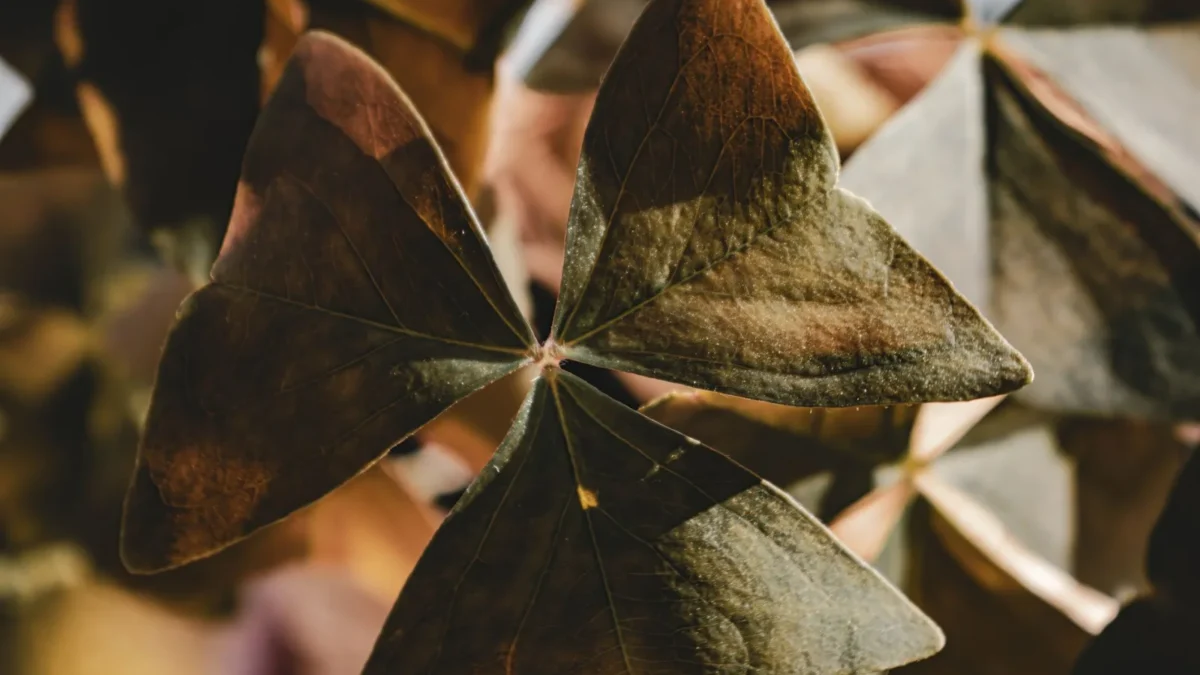
Quick answer: Purple shamrock propagates best through corm division—separating the small bulbs at the base of the plant. This is the only reliable propagation method for home growers, and it works almost every time because the plant naturally multiplies its corms.
| Botanical name | Oxalis triangularis |
|---|---|
| Light | Bright indirect light; avoid direct sun which causes leaf burn; low light causes leggy growth |
| Watering | Spring-summer: water when top inch of soil is dry. Fall-winter: water every 2-3 weeks. Never overwater; drainage essenti |
| Humidity | Average household humidity; 40-60% preferred |
| Temperature | 60-75°F (15-24°C); avoid temps below 50°F or above 85°F |
| Soil | Well-draining sandy or humus-rich soil; equal parts loam, leaf mould, grit; perlite amendment recommended |
| Feeding | Spring-summer only: balanced fertilizer every 2-3 weeks; do not fertilize during dormancy |
| Size | 1.5 ft tall with 2 ft spread at maturity |
| Difficulty | easy |
Why Corm Division Works Best
Unlike many houseplants, purple shamrock does not root reliably from stem or leaf cuttings, and seed propagation is rarely practical for home growers. Division is simple, produces immediate results, and is the only method you need. The plant naturally produces small bulb-like structures called corms that sit underground and are ready to be separated and replanted.
How to Divide and Plant Purple Shamrock Corms
The best time to divide is during or immediately after the dormancy period, when the foliage has died back and the corms are accessible without disturbing active growth.
- Unpot the plant and brush off the soil to expose clusters of small, oval, scaly corms.
- Pull clusters apart with your fingers; even single small bulbs will sprout.
- Plant 5–10 bulbs together for a fuller look, with pointed ends up and about an inch of soil above them. Use well-draining, sandy or humus-rich soil—equal parts loam, leaf mould and grit works well.
- Water lightly and place in bright indirect light.
- Keep the soil barely moist while shoots emerge.
What to expect: The first green-pink shoots appear within 2–3 weeks. Shoots typically emerge within 2 to 4 weeks when corms are planted at the correct depth with adequate warmth and light.
Common Mistakes to Avoid
The most serious mistake is continuing to water during dormancy. When the plant naturally sheds its foliage every few months, resist the urge to water at the active-growth schedule. Sitting in wet soil during rest causes corm rot, which is often fatal.
During the growing season after corms sprout, water when the top inch of soil feels dry. During the dormant season of fall and winter, water about every two to three weeks. Overwatering is the most common cause of trouble overall.
Keep newly divided corms in bright indirect light and temperatures between 60–75°F (15–24°C). Too much direct sun can cause leaf burn; too little light may lead to leggy growth.
FAQ
Can I propagate purple shamrock from cuttings?
Stem and leaf cuttings do not root reliably for this plant, so corm division is the method to use. Cuttings are not recommended for home propagation.
How many corms should I plant together?
Plant 5–10 bulbs together for a fuller look. Even single small bulbs will sprout, but grouping them gives faster, bushier results.
When do I start watering new corms?
Water lightly after planting and keep the soil barely moist until shoots emerge. Once green-pink shoots appear within 2–3 weeks, switch to the regular growing-season schedule: water when the top inch of soil is dry.
Read the full guide: Purple Shamrock Care: The Complete Guide
More about Purple Shamrock
The same problem in other plants
- How to Propagate Norfolk Island Pine from Cuttings and Seeds
- How to Propagate Rex Begonia from Leaf Cuttings
- How to Propagate Rattlesnake Plant: Complete Guide
- How to Propagate Burro's Tail From Stem Cuttings