Purple Shamrock Oxalis triangularis
Why Is My Purple Shamrock Drooping? Causes and How to Revive It
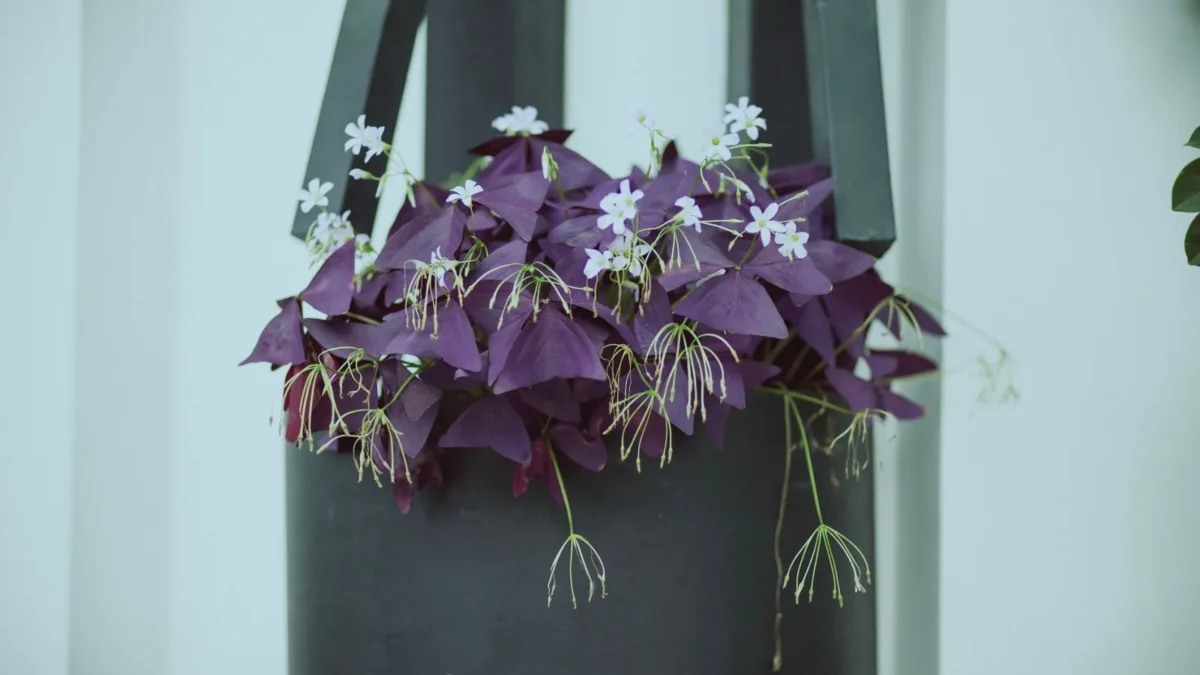
Quick answer: Purple shamrock droops most often from overwatering or poor drainage, but also from underwatering, low light, temperature extremes, or natural dormancy. Check your soil moisture and growing conditions first—most causes are easily reversed once you identify what’s wrong.
| Botanical name | Oxalis triangularis |
|---|---|
| Light | Bright indirect light; avoid direct sun which causes leaf burn; low light causes leggy growth |
| Watering | Spring-summer: water when top inch of soil is dry. Fall-winter: water every 2-3 weeks. Never overwater; drainage essenti |
| Humidity | Average household humidity; 40-60% preferred |
| Temperature | 60-75°F (15-24°C); avoid temps below 50°F or above 85°F |
| Soil | Well-draining sandy or humus-rich soil; equal parts loam, leaf mould, grit; perlite amendment recommended |
| Feeding | Spring-summer only: balanced fertilizer every 2-3 weeks; do not fertilize during dormancy |
| Size | 1.5 ft tall with 2 ft spread at maturity |
| Difficulty | easy |
| What you see | Likely cause | What to do |
|---|---|---|
| Yellowing leaves, sudden collapse of many stems, mushy bases, sour soil smell | Overwatering and root rot | Repot into fresh, well-draining soil; let soil dry between waterings; ensure pot has drainage holes |
| Dramatically drooping leaves with dry, crispy tips | Underwatering | Water thoroughly until it drains from the bottom; recovery usually happens within hours |
| All foliage yellows and dies back completely | Natural dormancy (normal, not a problem) | Stop watering almost entirely; water only every 2–3 weeks; new growth returns in weeks |
| Leggy growth, half-folded leaves even in daytime | Low light | Move to bright indirect light near a window; avoid direct sun which causes leaf burn |
| Sudden drooping or wilting | Temperature shock (below 50°F or above 85°F) | Move plant to a location with temperatures between 60–75°F (15–24°C) |
How to tell what’s causing drooping
The key is checking soil moisture and recognizing natural dormancy as rest, not death. Stick your finger into the soil about an inch deep—if it feels soggy or smells sour, overwatering is the culprit. If it’s bone dry and the leaves feel papery, the plant needs water urgently. If the entire pot looks dead with no green shoots and the soil is barely moist, your plant is likely dormant, not dying—this is completely normal behaviour.
Low light causes leaves to stay half-folded during the day and stems to stretch toward the window. Temperature stress happens when the plant sits near cold drafts, heating vents, or in rooms consistently above 75°F (24°C).
How to fix drooping Purple Shamrock
Overwatering: This is the most serious problem because it leads to root rot. Repot the plant into fresh, well-draining soil immediately—use a mix of equal parts loam, leaf mould, and grit. Make sure the pot has drainage holes. Going forward, water only when the top inch of soil feels dry during spring and summer. In fall and winter, water every 2–3 weeks.
Underwatering: Water thoroughly until water runs from the drainage holes. The good news is the plant usually plumps back within hours.
Natural dormancy: During dormancy, stop watering almost entirely—water only every 2–3 weeks and let the plant rest. Do not panic; it’s normal for your Purple Shamrock to shed all its foliage and look dead every few months. New growth returns on its own once the corms finish resting.
Low light: Move your plant to bright indirect light near a window with filtered sunlight. Avoid direct sun, which causes leaf burn.
Temperature stress: Keep the plant in a location with temperatures between 60–75°F (15–24°C). If your room gets warmer than 75°F, move it to a cooler window.
Prevent drooping going forward
The most important step is ensuring your pot drains well and you never leave the plant sitting in water. Check soil moisture weekly by touching the top inch—this simple habit catches problems before drooping starts. Water moderately and consistently; allow the top inch to dry out between waterings, then water thoroughly. Provide bright indirect light and keep temperatures steady between 60–75°F. Most of all, remember that dormancy is normal—when leaves yellow and die back, simply reduce watering and trust the plant to recover on its own.
Read the full guide: Purple Shamrock Care: The Complete Guide
More about Purple Shamrock
The same problem in other plants
- Why Are My Alocasia Frydek Leaves Drooping?
- Why Are My Caladium Leaves Drooping? How to Revive Them
- Why Is My Venus Flytrap Droopy and Wilting?
- Why Are My Watermelon Peperomia Leaves Drooping?