Money Tree Pachira aquatica
Money Tree Care: The Complete Guide
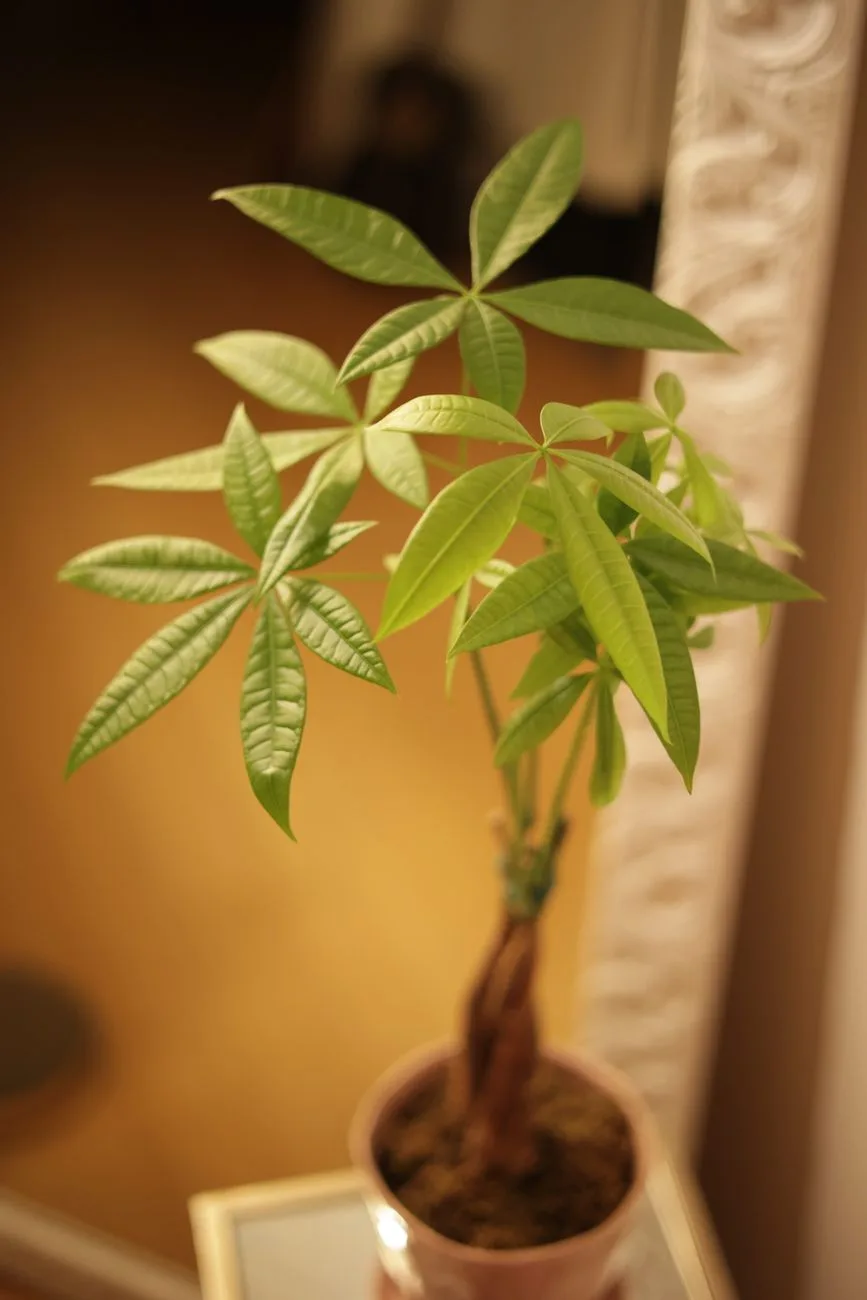
The Money Tree (Pachira aquatica) is one of the easiest houseplants to grow, making it ideal for beginners and experienced plant lovers alike. This guide covers everything you need to know about money tree care—from watering schedules to solving common problems—so your plant stays healthy and vibrant year-round.
| Botanical name | Pachira aquatica |
|---|---|
| Light | bright indirect light; tolerates partial shade; avoid direct sun 10am-3pm |
| Watering | water when top 2-3 inches of soil completely dry; every 1-2 weeks spring/summer; every 3-5 weeks fall/winter |
| Humidity | around 50% humidity; at least 50% to thrive; use pebble tray, humidifier, or misting |
| Temperature | 65-90°F (18-32°C); avoid cold drafts |
| Soil | well-draining; neutral to acidic pH; peat, perlite, sand mix |
| Feeding | balanced liquid fertilizer every 4-6 weeks spring/summer at half-strength; every 2-3 months fall/winter |
| Size | up to 1.5m in pot; reaches 20m in tropical habitat |
| Difficulty | easy |
| Cats | ✓ non-toxic |
| Dogs | ✓ non-toxic |
Key points
– Water only when the top 2–3 inches of soil are completely dry, typically every 1–2 weeks in spring and summer
– Grow in bright indirect light; avoid direct sun between 10 a.m. and 3 p.m., which causes rapid leaf scorch
– Maintain at least 50% humidity using a pebble tray, humidifier, or misting
– Keep temperatures between 65–90°F and away from cold drafts
– Feed with balanced liquid fertilizer at half-strength every 4–6 weeks during growing season
– Non-toxic to cats and dogs
Light Requirements for Money Trees
Money trees should be grown indoors in bright light or partial shade. They thrive when positioned near an east- or west-facing window where they receive plenty of indirect light throughout the day.
Direct sunlight—especially between 10 a.m. and 3 p.m.—causes rapid leaf scorch. Pale yellow or bleached patches appear first at leaf margins, then spread inward. Within days, affected leaves may crisp, curl, or drop entirely. If your plant shows these signs, move it away from the direct rays immediately.
If your Money Tree looks weak or grows slowly, low light may be the issue. Move it closer to a window or supplement with a grow light positioned a few feet away.
Watering Your Money Tree Indoors
Water your money tree only when the top 2–3 inches of soil are completely dry. This typically means watering every 1–2 weeks in spring and summer, and every 3–5 weeks in fall and winter.
Never follow a calendar schedule. Always test soil moisture first using your finger, a wooden chopstick, or a calibrated moisture meter. The timing is not fixed; it depends entirely on light exposure, pot size and material, indoor humidity, ambient temperature, and soil composition.
When the top inch of soil feels dry, use a watering can to thoroughly water your Money Tree until excess moisture drains from the bottom of the pot. Don’t forget to empty the saucer afterward—Money Trees don’t like sitting in soggy soil, which can lead to root rot.
Adjusting for Seasons
Winter calls for reduced watering frequency as money trees become dormant. Water only once every 2–3 weeks during the colder months, allowing the plant to rest and preventing root rot from oversaturated soil.
Humidity and Temperature Needs
Money trees are native to the tropical regions of Central and South America, meaning they appreciate moisture in the air. The humidity level should be at least 50% for them to thrive. Money trees like around 50 percent humidity, so it’s a good idea to increase the humidity around the plant by placing it on a pebble tray filled with water, setting a humidifier nearby, or misting the leaves regularly.
Without sufficient moisture in the atmosphere, money tree leaves close their stomata to prevent water loss. If not corrected, the leaves may curl and die.
For best results, keep temperatures between 65 and 90 degrees Fahrenheit. Avoid placing the houseplants near drafts, such as by exterior doors or heating and cooling vents. Cold drafts can lead to curling and browning.
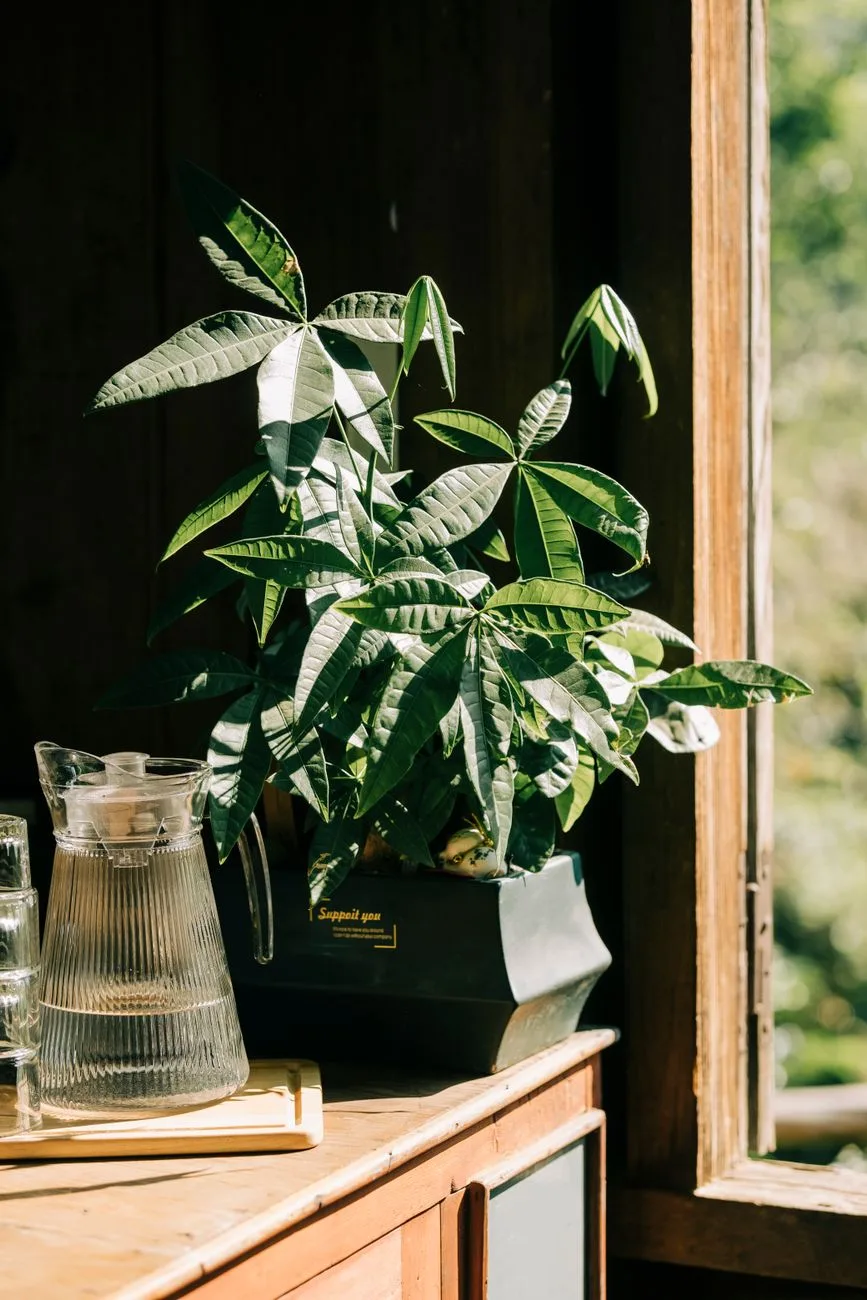
Soil and Repotting Guide
Soil should be well-draining with neutral to acidic pH. A well-draining potting mix is essential—combine peat, perlite, and sand in proportions that suit your watering habits and environment. Good drainage is critical; dense, compacted soil leads to root rot and yellowing leaves.
Repot your Money Tree every 2–3 years or when it becomes root-bound. Choose a pot only slightly larger than the current one, with adequate drainage holes. Spring is the best time to repot, when the plant is actively growing.
Feeding and Fertilizer Schedule
Feed your Money Tree with a balanced liquid fertilizer every 4–6 weeks during the growing season (spring and summer). Use a half-strength solution to avoid over-fertilizing. Reduce feeding to once every 2–3 months during fall and winter.
A lack of essential nutrients, particularly nitrogen, can cause yellowing leaves. Regular feeding during the active growing season keeps your plant healthy and encourages new growth.
Pruning and Training Your Money Tree
Cut back shoots as necessary to control size, in spring. Money trees can reach 20 meters in their tropical home, but are unlikely to exceed 1.5 meters in a pot. Light pruning encourages branching and creates a fuller, more attractive shape. Remove any dead or yellowing leaves at the base of the plant.
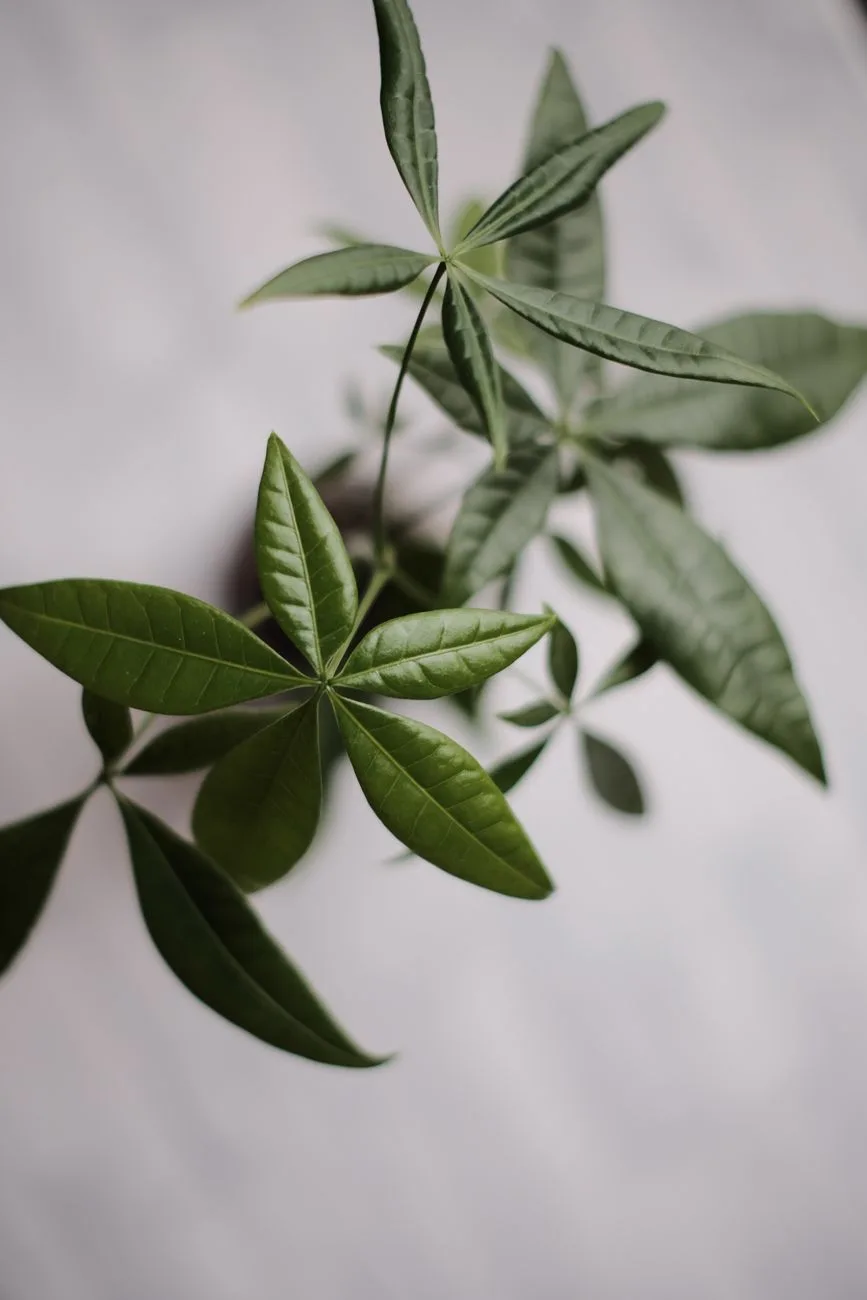
Propagating Money Trees from Cuttings
Try propagating a money tree by taking stem cuttings in the spring or summer when the plant is growing. Propagation is straightforward and gives you new plants to share or expand your collection.
Step-by-Step Propagation
Using sterilized pruning shears or a sharp knife, cut a stem about 4–5 inches long with a few leaf nodes. Choose a stem cutting with at least two nodes—these are the points where leaves emerge from the stem.
Trim off the lower leaves, leaving a few at the top to prevent them from rotting in the water. Fill a clean glass or jar with water and submerge the bottom nodes of the cutting. Place the container in a well-lit area away from direct sunlight.
Change the water every Sunday (or whenever it looks cloudy) to replenish oxygen. You can expect to see the first new roots on your Money Tree cuttings in approximately 3–4 weeks.
Once roots are established, dip the cut end in rooting hormone (optional) and plant it in money tree-appropriate potting soil. Keep the cutting’s soil moist but not too wet for about a month, which is how long it usually takes new roots to form.
Conditions for Success
Keep it warm—65–75°F (18–24°C) is ideal. Avoid drafty spots like near doors or AC vents, or cold windowsills. Temperature is the biggest variable for success; root initiation stalls significantly if temperatures drop below 65°F (18°C). The ideal range for enzymatic activity is 70–80°F (21–27°C).
While the plant tolerates lower humidity, keeping ambient humidity between 50–70% reduces transpiration stress on the cutting while it lacks roots.
Common Problems and Solutions
Yellow Leaves
The most common cause of a Money Tree developing yellow leaves is overwatering. Look for generalized yellow leaves, particularly affecting the lower leaves, and wilting of the plant, despite the soil being wet. You may also detect a rotting smell from the soil if overwatering has resulted in root rot.
Ensure you are watering only when the top 1–2 inches of soil are dry. Insert a finger into the soil to check moisture levels or use a moisture meter for more precision.
Underwatering causes leaves to turn pale yellow and crispy. The plant becomes dehydrated and loses turgor pressure. A lack of essential nutrients, particularly nitrogen, can also cause yellowing leaves. Low light is among the causes of yellowing. If lower leaves turn yellow, this is normal and makes way for new growth.
Curling Leaves
Money tree curling leaves is most often caused by underwatering or letting it dry too long. Underwatering will cause cupping of your money tree leaves; since the plant lacks adequate water to keep the leaves turgid and healthy, money tree leaves will curl inwards.
Cold drafts can lead to curling and browning. If humidity drops below 40%, the impact on money tree leaves is slow and noticeable. Most pests—aphids, mealybugs, spider mites, and thrips—often attack money trees. Most pests feed on the sap of the plant and absorb all the nutrients out of the plant, causing a nutrition deficiency that results in curling leaves.
Root Rot
Root rot is usually caused by overwatering or a substrate that doesn’t drain properly. If the root ball gives off an unpleasant odor and the roots look black and mushy, the plant is in danger. Visible symptoms include general weakness, drooping leaves, and a soft stem. Allow the soil to dry out more between waterings, repot into fresh, well-draining soil, and trim away any blackened roots with sterile scissors.
FAQ
Is Money Tree toxic to pets?
Money Tree is non-toxic to dogs, non-toxic to cats, and non-toxic to horses. There are no toxic principles in the plant.
What if my pet eats Money Tree leaves?
Clinical signs if ingested include nausea, vomiting and loose stool. However, a cat or dog that eats a lot of any plant can still get an upset stomach.
How often should I water my Money Tree?
Water only when the top 2–3 inches of soil are completely dry, typically every 1–2 weeks in spring and summer, and every 3–5 weeks in fall and winter. Always check moisture levels first rather than following a fixed schedule.
Can Money Trees grow outdoors?
Money trees are tropical plants that thrive indoors in bright indirect light or partial shade. They can be moved outdoors in warm months if protected from direct midday sun, but they prefer consistent indoor conditions.
How big do Money Trees get in pots?
Money trees can reach 20 meters in their tropical habitat, but are unlikely to exceed 1.5 meters in a pot. Pruning in spring helps control their size and encourages a fuller shape.
How long does it take Money Tree cuttings to root?
You can expect to see the first new roots on your Money Tree cuttings in approximately 3–4 weeks. Temperature is the biggest variable for success; keep cuttings in warm conditions (65–75°F) away from drafts for best results.
More about Money Tree
Sources
- Money Tree Care 101: This Plant Care Routine is Ideal for Newbie Plant Parents – Bob Vila
- How Often to Water Money Tree Plant: A Science-Backed Guide
- Pachira aquatica
Photo: Loft of SAX / Pexels, Pexels