Money Tree Pachira aquatica
Why Are My Money Tree Leaves Curling
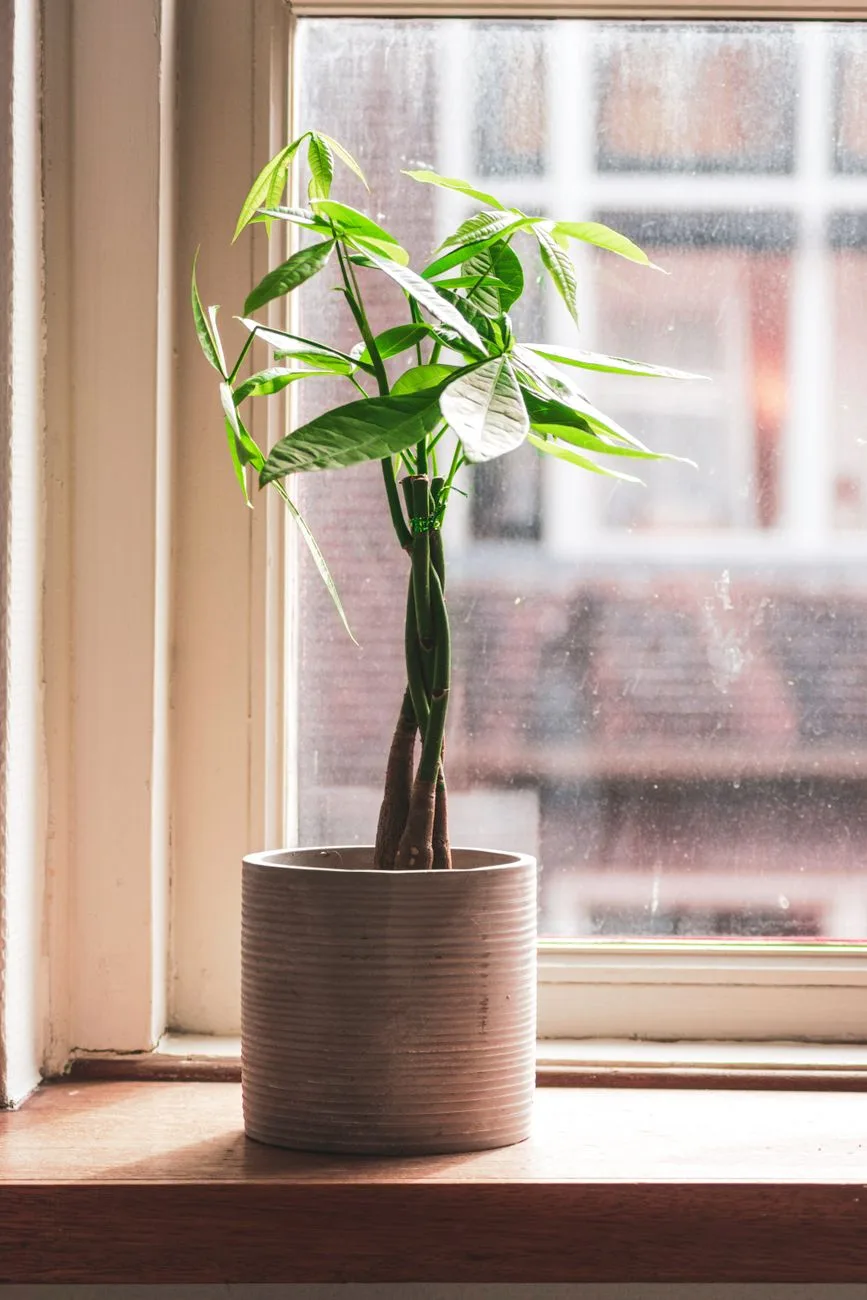
Quick answer: Why are my money tree leaves curling? Most often due to underwatering or letting the soil dry too long. Low humidity, cold drafts, and pest damage can also cause curling. The good news is that once you identify the cause, your plant usually recovers quickly.
| Botanical name | Pachira aquatica |
|---|---|
| Light | bright indirect light; tolerates partial shade; avoid direct sun 10am-3pm |
| Watering | water when top 2-3 inches of soil completely dry; every 1-2 weeks spring/summer; every 3-5 weeks fall/winter |
| Humidity | around 50% humidity; at least 50% to thrive; use pebble tray, humidifier, or misting |
| Temperature | 65-90°F (18-32°C); avoid cold drafts |
| Soil | well-draining; neutral to acidic pH; peat, perlite, sand mix |
| Feeding | balanced liquid fertilizer every 4-6 weeks spring/summer at half-strength; every 2-3 months fall/winter |
| Size | up to 1.5m in pot; reaches 20m in tropical habitat |
| Difficulty | easy |
| Cats | ✓ non-toxic |
| Dogs | ✓ non-toxic |
What Causes Money Tree Leaves to Curl
| What you see | Likely cause | What to do |
|---|---|---|
| Leaves curl inward, feel papery and dry | Underwatering | Water when top 2–3 inches of soil are completely dry; typically every 1–2 weeks spring/summer, every 3–5 weeks fall/winter |
| Slow curling over weeks, leaves look dull | Low humidity (below 50%) | Increase humidity with a pebble tray, humidifier, or regular misting |
| Curling and browning of leaf edges | Cold drafts | Move plant away from doors, vents, and cold windows |
| Curling with yellow spots or webbing | Pest damage (aphids, spider mites, mealybugs, thrips) | Inspect undersides of leaves; spray with insecticidal soap if pests found |
| Rapid yellowing and bleached patches, then curling | Direct sun 10 a.m.–3 p.m. | Move to bright indirect light; avoid midday direct sun |
Underwatering
Underwatering is the most common reason money tree leaves curl. When your plant lacks adequate water, leaves lose turgor pressure and curl inward as the plant tries to conserve moisture.
To fix this, check your soil before watering every time. Insert your finger 2–3 inches into the soil—if it feels dry, water thoroughly until excess drains from the pot. Never follow a watering schedule; pot size, light, humidity, temperature, and soil all affect how fast your plant dries out.
Low Humidity
Money trees are native to tropical rainforests and need around 50% humidity to thrive. Without sufficient moisture in the air, your plant closes its leaf pores (stomata) to prevent water loss. If humidity stays below 50% for extended periods, leaves curl and may die.
Increase humidity by placing your pot on a pebble tray filled with water, running a humidifier nearby, or misting the leaves regularly. Even small changes make a difference.
Cold Drafts
Keep your money tree away from exterior doors, heating vents, and air conditioning units. Temperature swings and drafts stress the plant and cause leaves to curl and brown. Aim to keep your plant between 65°F and 90°F.
Pest Damage
Aphids, mealybugs, spider mites, and thrips feed on your plant’s sap and drain its nutrients. This nutritional stress causes leaves to curl. Check the undersides of leaves for tiny insects, webbing, or sticky residue. If you find pests, treat promptly with insecticidal soap.
Direct Midday Sun
While money trees need bright light, direct sun between 10 a.m. and 3 p.m. burns the leaves. Pale yellow or bleached patches appear first at leaf edges, then the leaves crisp, curl, and drop. Move your plant to bright indirect light or a spot with morning sun only.
How to Prevent Curling Leaves
Maintain consistent watering by checking soil moisture before every watering session rather than following a schedule. Keep humidity at least 50% with a pebble tray or humidifier. Position your plant in bright, indirect light away from midday sun and cold drafts. Check leaves regularly for pests so you catch infestations early. With these basics in place, your money tree will stay healthy and curl-free.
Read the full guide: Money Tree Care: The Complete Guide
More about Money Tree
The same problem in other plants
- Why Are My Hoya Kerrii Leaves Curling?
- Why Are My Prayer Plant Leaves Curling? Causes and Fixes
- Why Are My Bird of Paradise Leaves Curling?
- Why Are My Chinese Money Plant Leaves Curling?