Pothos Epipremnum aureum
Pothos Care: The Complete Guide to Growing Healthy Indoor Plants
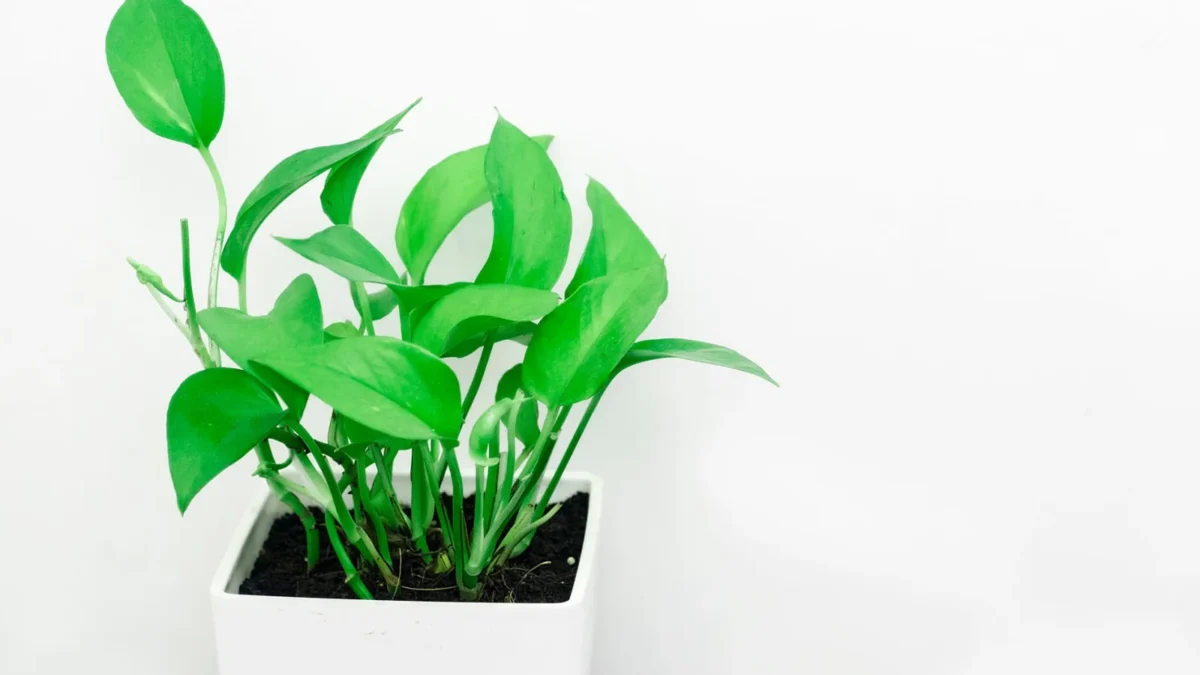
Pothos care is straightforward enough for beginners yet rewarding for experienced plant lovers. This trailing vine thrives indoors with minimal fuss, forgiving missed waterings and tolerating a range of conditions. Understanding the essentials—light, water, humidity, and soil—is all you need to keep your pothos healthy and vibrant year-round.
| Botanical name | Epipremnum aureum |
|---|---|
| Light | Bright indirect light; tolerates low light but variegation fades and growth slows |
| Watering | Water when top 1-2 inches of soil feels dry; every 7-14 days average |
| Humidity | Moderate to high humidity, above 40%; mist leaves or use humidifier if dry |
| Temperature | 60-85°F (15-29°C) |
| Soil | Well-draining mix: orchid bark, perlite, peat, or coco coir; moist but not soggy |
| Feeding | Balanced water-soluble fertilizer every 2-3 months during spring and summer |
| Size | Trailing vine; mature leaves to 30 inches long with deep lobes |
| Difficulty | easy |
| Cats | ⚠️ toxic — Insoluble calcium oxalates cause oral irritation, burning, drooling, vomiting |
| Dogs | ⚠️ toxic — Insoluble calcium oxalates cause oral irritation, burning, drooling, vomiting |
Key points
– Water when the top 1-2 inches of soil feels dry, typically every 7-14 days, but check soil moisture rather than following a fixed schedule
– Pothos prefers bright, indirect light but tolerates low light; variegation fades and growth slows in dim conditions
– Keep humidity above 40% and temperature between 60-85°F for best results
– Use well-draining soil and fertilize every 2-3 months during spring and summer
– All parts of the plant are toxic to cats and dogs; keep it away from pets
Light Requirements for Pothos
Pothos prefers bright, indirect light but can tolerate low-light conditions. In a dim office corner at 500 lux, your plant will survive, but variegation fades and growth slows dramatically. Bright, indirect light brings out full variegation and fast growth, so a spot near a window with filtered light is ideal.
Avoid direct midday sun through glass, which can scorch pale variegated leaves. If your pothos is looking pale or stretched, it’s likely not getting enough light. Move it closer to a window or use a grow light to encourage bushier, more vibrant growth.
Watering Your Pothos Plant
Proper watering is the most important aspect of pothos care indoors. Rather than following a rigid schedule, check your soil moisture: when the top 1-2 inches of soil feels dry to the touch, water your pothos. This typically means watering every 7 to 14 days on average, though the exact frequency depends on your home’s temperature, humidity, and light levels.
Seasonal Watering Adjustments
Watering needs change throughout the year. During summer, when your pothos experiences heat and extended daylight, water more frequently—often 1 to 2 times per week. In winter, when growth slows significantly, reduce watering to once every 10-14 days.
Check soil moisture 1-2 times per week, and water only when the top 2-3 inches or about 40-50% of the soil has dried. Pothos is forgiving: leaves droop dramatically when thirsty and recover within hours once watered.
How to Tell If You’re Overwatering or Underwatering
Overwatering and underwatering produce different symptoms. Overwatering causes yellowing leaves and black stems, while underwatering causes wilting and a dry potting mix. Always check soil moisture before watering and err on the side of underwatering rather than overwatering.
Humidity and Temperature
Pothos is a tropical vine at heart. It prefers moderate to high humidity, generally above 40%. While pothos does well in average home humidity levels, it thrives in higher humidity; if your home is dry, consider misting the leaves or placing a humidifier nearby.
When indoor air turns dry—especially during winter with the heater running or in summer with the air conditioning—leaves curl inward to reduce water loss. Low humidity below 40% relative humidity can trigger this protective curling in under 48 hours. To increase humidity, mist the leaves regularly, place a humidifier nearby, or group your pothos with other plants to create a microclimate with higher humidity.
Maintain temperatures between 60°F and 85°F (15-29°C). Avoid cold drafts and sudden temperature swings, which stress the plant.
Soil and Repotting
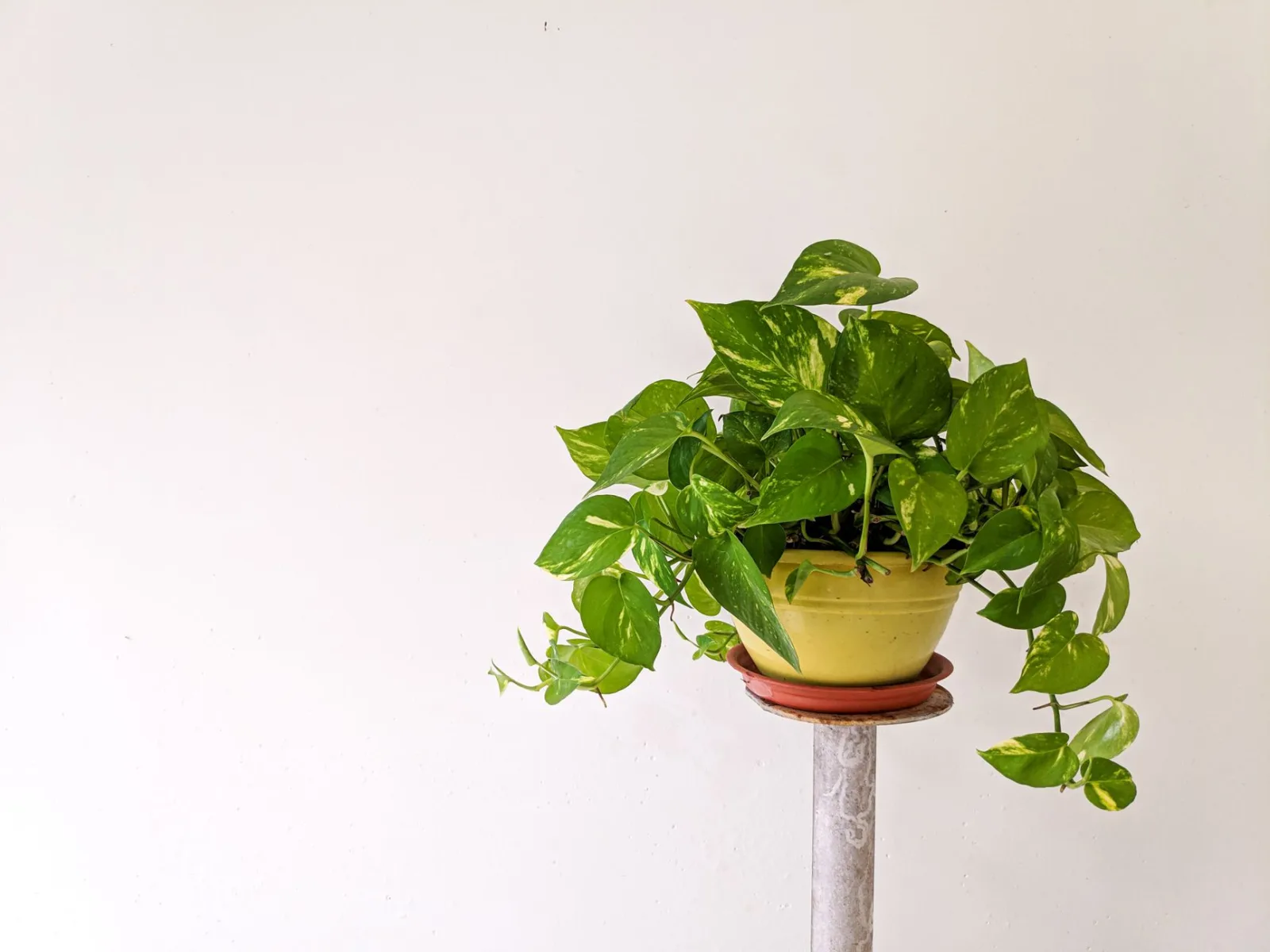
Pothos thrives in a well-draining mix that mimics its natural environment. Use orchid bark, perlite, peat, or coco coir, or a combination of these. The soil should remain moist but not soggy to prevent root rot.
Repot your pothos every two to three years to refresh the soil and give roots room to grow. When repotting, choose a container with drainage holes and use fresh, well-draining potting mix. As your pothos matures, it becomes a trailing vine with leaves that can reach up to 30 inches long with deep lobes.
Fertilizing Your Pothos
Fertilize your pothos with a balanced, water-soluble fertilizer every 2-3 months during the growing season—spring and summer. Reduce feeding in fall and winter when growth slows.
If you’ve had your pothos for several years without repotting, nutrient deficiencies can develop. Nitrogen deficiency starts with yellowing on older leaves, potassium deficiency causes yellow edges, magnesium deficiency leads to yellowing between the veins, and iron deficiency shows up on younger leaves. Regular fertilizing combined with repotting every 2-3 years keeps your plant well-fed and healthy.
Pruning and Training
Regular pruning encourages fuller, bushier growth and helps you maintain the desired shape and size. Trim back any leggy vines—long, thin stems with sparse leaves—to promote branching and a more compact plant. Pruning is also an excellent opportunity to propagate new plants from your cuttings.
Propagating Pothos
Pothos propagation is simple and reliable, making it easy to create new plants or share with friends.
Water Propagation
- Take a healthy stem cutting 4-6 inches long with 2-4 leaves. Make your cut straight across, just below a node.
- Remove the leaves a few inches above the cut.
- Place the cutting in a jar filled with room temperature water; the node should be below the water line.
- Position the jar in a bright spot with indirect light and change the water every few days.
- Under good conditions—a warm room (18°C or above), bright indirect light, and regular water changes—root nubs typically appear within 1-2 weeks. Roots will fully develop within 2-4 weeks.
- Once roots are 3-5 cm long, transfer the cutting to soil. Roots longer than 8-10 cm have adapted to water and may struggle to transition to soil.
Soil Propagation
- Prepare a clean container with well-draining, pre-moistened potting mix and create a hole with a pencil.
- Take a 4-6 inch cutting with 2-4 leaves and make a straight cut just below a node.
- Place the cutting so that 2-3 of the bottom nodes are tucked into the soil.
- Place the pot in indirect sunlight and keep the soil moist for 1-2 weeks.
Why Nodes Matter
Nodes are the small brown bumps or ridges on the stem where leaves attach. Nodes are essential: without at least one node per cutting, the cutting cannot produce roots, regardless of how long it sits in water. A leaf alone will not root—you need nodes to propagate successfully.
Common Problems and Solutions
Yellow Leaves
Yellow leaves are the most common pothos problem. Overwatering is the primary cause and the most dangerous if left untreated. When soil stays constantly wet, roots switch from aerobic respiration to anaerobic fermentation, producing far less energy and toxic byproducts. As root cells die, the plant loses the ability to absorb water and nutrients, and leaves yellow. On a yellowing pothos, unhealthy roots appear black and feel mushy. The best way to save a yellowing pothos from overwatering is to repot the plant in fresh, well-drained soil.
Yellow leaves can also indicate too much direct sunlight or nutrient deficiencies. Too much shade slows growth; too much sun causes leaves to lose their vibrancy. Move pothos to bright, indirect light to correct this. Finally, yellow leaves may simply be part of the plant’s natural life cycle. Note that once leaves turn yellow from overwatering, nutrient deficiencies, or environmental stress, they typically cannot revert to green.
Curling Leaves
Curling leaves can signal three different problems. Dry, crumbly soil means the plant is curling to conserve moisture. Underwatering dehydrates roots, making it difficult to pass nutrients and moisture to the leaves. If underwatered, start watering immediately and consider deep watering.
Curling leaves with moist soil signal overwatering, not drought. When soil is waterlogged, roots suffocate and cannot pass moisture to other plant parts. If overwatered, stop watering and let the soil dry.
Low humidity also causes curling. Below 40% relative humidity, leaves curl inward to reduce water loss. Mist the leaves regularly, use a humidifier, or group plants together to increase humidity.
Pest Infestations
Spider mites, scale, and mealybugs can attack pothos. These sap-sucking insects extract fluids from plant cells, causing yellowing leaves and a mottled yellow pattern. Inspect your plant regularly and treat infestations promptly with appropriate insecticidal soap or neem oil.
Fungal and Bacterial Issues
Watch for fungal leaf spot and botrytis, especially in humid conditions. Ensure good air circulation and avoid wetting foliage to prevent these diseases. Roots may rot in poorly drained soils, so always use well-draining potting mix and allow the top of the soil to dry between waterings.
FAQ
How often should I water pothos?
Water when the top 1-2 inches of soil feels dry to the touch, typically every 7-14 days. Check soil moisture 1-2 times per week rather than following a fixed schedule, as watering needs vary with season and conditions.
Can pothos tolerate low light?
Yes, pothos can tolerate low-light conditions, but variegation fades and growth slows dramatically. For vibrant, fast growth, provide bright, indirect light.
Is pothos toxic to pets?
Yes, pothos is toxic to both dogs and cats. All parts of the plant—flowers, fruits, leaves, roots, seeds, and stems—are toxic. The plant contains insoluble calcium oxalate raphides, which cause oral irritation, intense burning of the mouth, tongue and lips, excessive drooling, vomiting, and difficulty swallowing. Keep pothos out of reach of pets.
Why are my pothos leaves drooping?
Drooping leaves usually indicate underwatering. Check if the soil is dry; if so, water immediately. Pothos leaves droop dramatically when thirsty but recover within hours once watered. If the soil is moist, low humidity or overwatering may be the cause.
How long does pothos propagation take?
Root nubs typically develop within 1-2 weeks under good conditions with a warm room (18°C or above), bright indirect light, and regular water changes. Full roots develop within 2-4 weeks, at which point you can transfer water-rooted cuttings to soil.
More about Pothos
Sources
- Epipremnum aureum (Golden Pothos) – Plant Care 101
- Epipremnum aureum – Plant Finder
- Pothos (Epipremnum aureum): Care, Varieties & Toxicity Guide
Photo: Faraz Ahmad / Pexels, Pexels