Snake Plant Dracaena trifasciata
Why Isn’t Your Snake Plant Not Growing and How to Encourage Growth
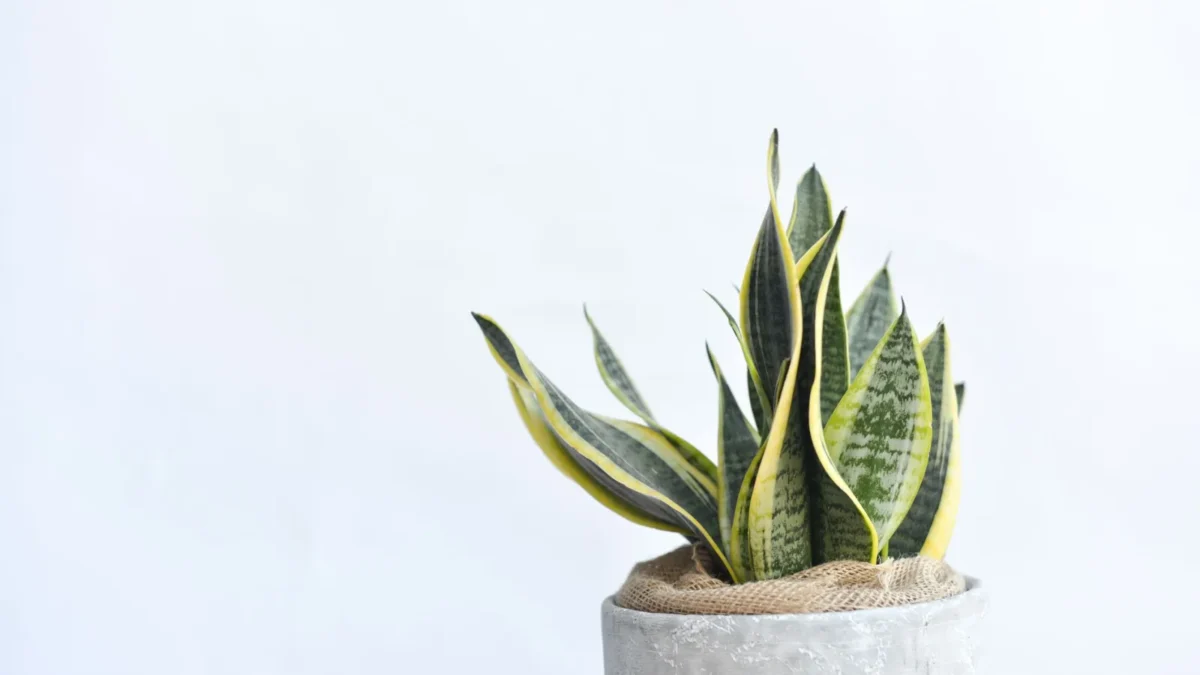
Quick answer: Your snake plant isn’t growing because of too much or too little water, insufficient light, low temperatures, or poor soil drainage. Snake plants grow slowly by nature, but they respond well to brighter light, proper watering, and warm conditions.
| Botanical name | Dracaena trifasciata |
|---|---|
| Light | Moderate to bright indirect light; tolerates low light; 2-6 hours direct sun |
| Watering | Water when soil is 100% dry; every 2-4 weeks spring/summer, 6-8 weeks winter |
| Humidity | Average room humidity is ideal; no misting needed |
| Temperature | Thrives 70-90°F (21-32°C); tolerates around 50°F |
| Soil | Well-draining potting mix; potting soil, perlite, and sand mixture |
| Feeding | Once every two months during summer/growing periods; 2-3 times yearly |
| Difficulty | easy |
| Cats | ⚠️ toxic — Saponins cause nausea, vomiting, diarrhea in cats |
| Dogs | ⚠️ toxic — Saponins cause nausea, vomiting, diarrhea in cats |
Overwatering is the main growth killer
The single biggest reason why your snake plant is not growing is overwatering. Too much water damages the roots before you see it happen—by the time yellowing leaves appear, the root system has already suffered.
Snake plants need water only when the soil is completely dry. In spring and summer, that’s every 2 to 4 weeks; in winter, every 6 to 8 weeks. Waterlogged roots can’t absorb nutrients or move water up to the leaves, so growth stalls even though the soil looks moist.
If you suspect overwatering, check the roots. Healthy roots are yellow or white; rotting roots are dark brown and feel mushy when touched. Once you’ve confirmed root rot, repot the plant into fresh, well-draining soil—a mixture of potting soil, perlite, and sand works well. Let the soil dry out completely between waterings, and your plant should recover.
One detail many growers miss: don’t let water pool in the center where the leaves form a cup. This traps moisture and leads to rot from the inside out.
Light drives growth—but your plant might be too dim or too bright
Snake plants thrive in moderate to bright indirect light. If your plant is in a dimly lit corner, it isn’t growing because there’s too little energy for it to put into new leaves. Move it closer to a window with filtered light.
Optimal placement is near an east or west-facing window. You want 2 to 6 hours of direct sun daily. Too much direct sun—especially from south-facing windows—can burn leaves and slow growth as a stress response. If you notice pale or bleached patches on leaves, shield your plant with sheer curtains or move it a few feet away from the window.
Temperature and soil matter more than you’d think
Snake plants thrive in temperatures between 70°F and 90°F (21–32°C). If your plant sits near a heating vent or cold draft, temperature swings stress it and stall growth. Even brief exposure to cold around 50°F won’t kill your plant, but growth slows dramatically. Move it away from drafts and heating vents and growth usually picks up.
Soil that holds water will also stop growth in its tracks. Use loose, well-draining potting mix only. Regular potting soil alone compacts and stays wet too long. That mixture of potting soil, perlite, and sand gives roots the air they need.
Fertilizer helps, but not much
Snake plants need very little feeding. Once every two months during the growing season (spring and summer) is plenty. Overfertilizing actually harms roots and can burn leaves, making growth worse. If your plant has the basics right—proper water, light, and temperature—it will grow steadily without much food.
FAQ
Why is my snake plant not growing but not dying?
Your plant is probably just growing very slowly, which is normal for snake plants. It may also be in low light, underwatered, or in soil that doesn’t drain well. Check that it gets moderate to bright indirect light and that you’re watering only when the soil is completely dry.
Why is my snake plant not growing new leaves?
Insufficient light is usually the cause. Move it nearer a window with bright, filtered light. If leaves aren’t appearing despite good light, the plant may need warmer temperatures—aim for 70–90°F—or the soil may be too wet, damaging roots and preventing new growth.
Why is my snake plant not growing straight up?
This is often a sign of uneven light. The plant leans or grows sideways toward its light source. Rotate the pot a quarter turn every week or two so the plant grows evenly, or move it to a spot with more balanced, brighter light from multiple directions.
The same problem in other plants
- Why Your Amaryllis Isn't Growing and How to Encourage Growth
- Why Is My ZZ Plant Not Growing? How to Encourage New Growth
- Why Is My Monstera Not Growing New Leaves with Holes?
- Why Is My Anthurium Clarinervium Not Growing?
Sources
- Snake Plant Care – How to Grow Dracaena trifasciata – Soltech
- Dracaena trifasciata (Golden Birds Nest, Good Luck Plant, Mother-in-law's Tongue, Snake Plant)
- Snake Plant Watering: How Often to Water & Saving Mushy Roots
Photo: Rosa Stone / Pexels, Pexels