African Violet Saintpaulia
African Violet Care: The Complete Guide to Growing Healthy Plants Indoors
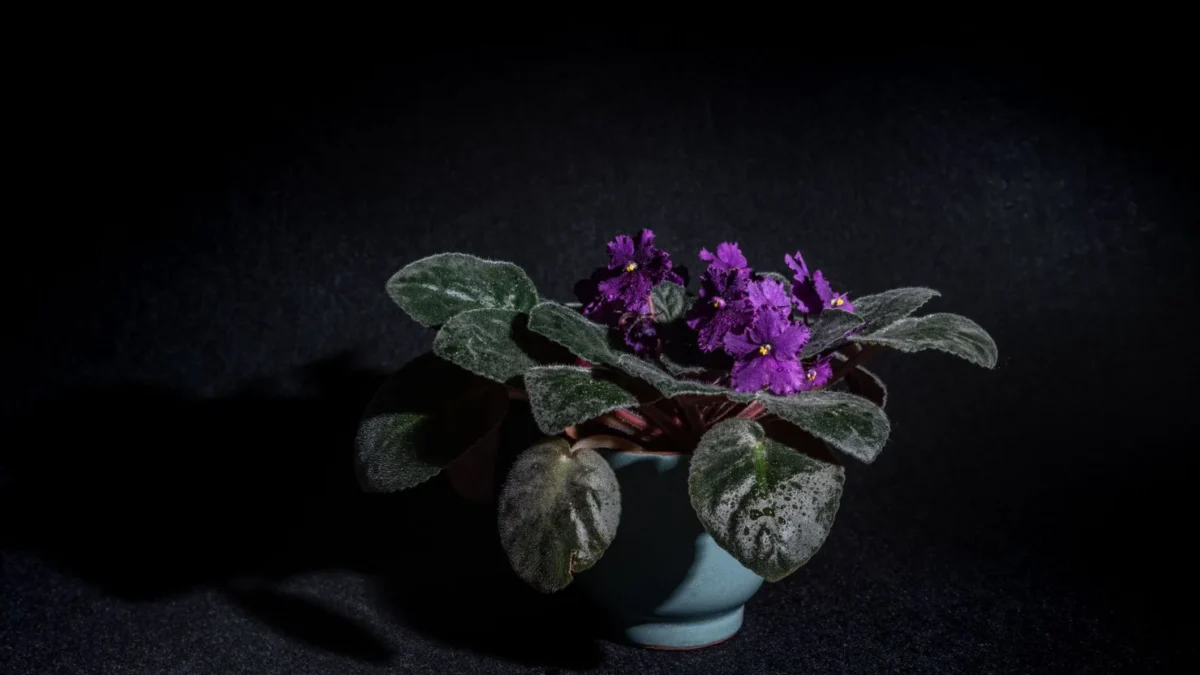
African violet care is straightforward once you understand what these plants need: bright indirect light, careful watering, and the right humidity level. This guide walks you through everything required to keep your African violets thriving and flowering reliably.
| Botanical name | Saintpaulia |
|---|---|
| Light | Bright indirect light; 14-16 hours daily for flowering; avoid direct midday sun |
| Watering | Keep soil evenly moist like a well-wrung-out sponge; water when top soil is dry; drain saucers after 1 hour |
| Humidity | 40-60% humidity; use pebble trays; avoid misting fuzzy leaves |
| Temperature | 60°F at night; 80-85°F during day; avoid cold drafts and temperatures below 60°F |
| Soil | Soilless mix: 3 parts peat moss, 2 parts vermiculite, 1 part perlite, plus lime |
| Feeding | Dilute balanced fertilizer (20-20-20) at each watering; high phosphate-potash during heavy bloom |
| Size | Standard: 8-16 inches wide; miniature/semi-miniature under 8 inches; large over 16 inches |
| Difficulty | easy |
| Cats | ✓ non-toxic |
| Dogs | ✓ non-toxic |
Key points:
– Provide 14-16 hours of bright indirect light daily and 8 hours of darkness to trigger flowering
– Keep soil evenly moist like a well-wrung-out sponge; water the soil only, never the leaves
– Maintain 40-60% humidity using pebble trays rather than misting
– Use a soilless mix of 3 parts peat moss, 2 parts vermiculite, and 1 part perlite with lime
– Feed with a balanced 20-20-20 fertilizer at each watering
– African violets are non-toxic to cats and dogs, making them safe for any pet household
Light Requirements for African Violets
African violets need good light but direct sunlight is not necessary. North or east-facing windows are ideal because they provide gentle, consistent light without the harshness of midday and afternoon sun.
For reliable flowering, your plant needs at least 14-16 hours of light daily, combined with 8-10 hours of darkness. This dark period is essential—although light triggers the production of florigen (the flowering hormone), the actual bloom cycle requires those hours of darkness.
If natural light is limited, fluorescent or LED grow lights work well alone or to supplement what your windows provide. Place lights 6-12 inches above the plant and keep them on a consistent schedule. Too little light causes African violets to stretch toward available light and produce few or no flowers.
Watering Your African Violet Correctly
Proper watering is crucial because excessive water is one of the major problems in African violet care. The goal is to keep the soil evenly moist—like a well-wrung-out sponge—rather than wet or dry.
Water when just the top of the soil feels dry, but before it becomes hard and crusty or the plant wilts. You want to allow the soil to dry slightly between waterings, but never let it dry out completely.
Always water the soil directly and keep the foliage dry. Use tepid water and avoid splashing leaves, as cold water causes leaf-spotting. If you water from above, be careful to aim for the base of the plant.
After watering, drain any standing water from the saucer within one hour. This prevents roots from sitting in water, which leads to rot—the most common reason African violets die.
In the growing season, water more frequently as needed. In winter, water sparingly as the compost dries more slowly.
Humidity and Temperature Needs
African violets thrive at humidity levels between 40-60%. The easiest way to achieve this is to place your plant on a saucer filled with pebbles and water, making sure the pot sits on the pebbles and does not touch the water directly. Grouping plants together also helps conserve humidity around them.
Do not mist the fuzzy leaves of African violets, even with tepid water. Misting can promote rot and fungal issues.
Temperature stability matters more than achieving a specific warmth. The ideal range is around 60°F at night and 80-85°F during the day. African violets adjust well to the warm temperatures and dry air of typical homes. Avoid cold drafts and sudden temperature drops, which stress the plant and can cause yellowing leaves and slow growth.
Soil and Repotting African Violets
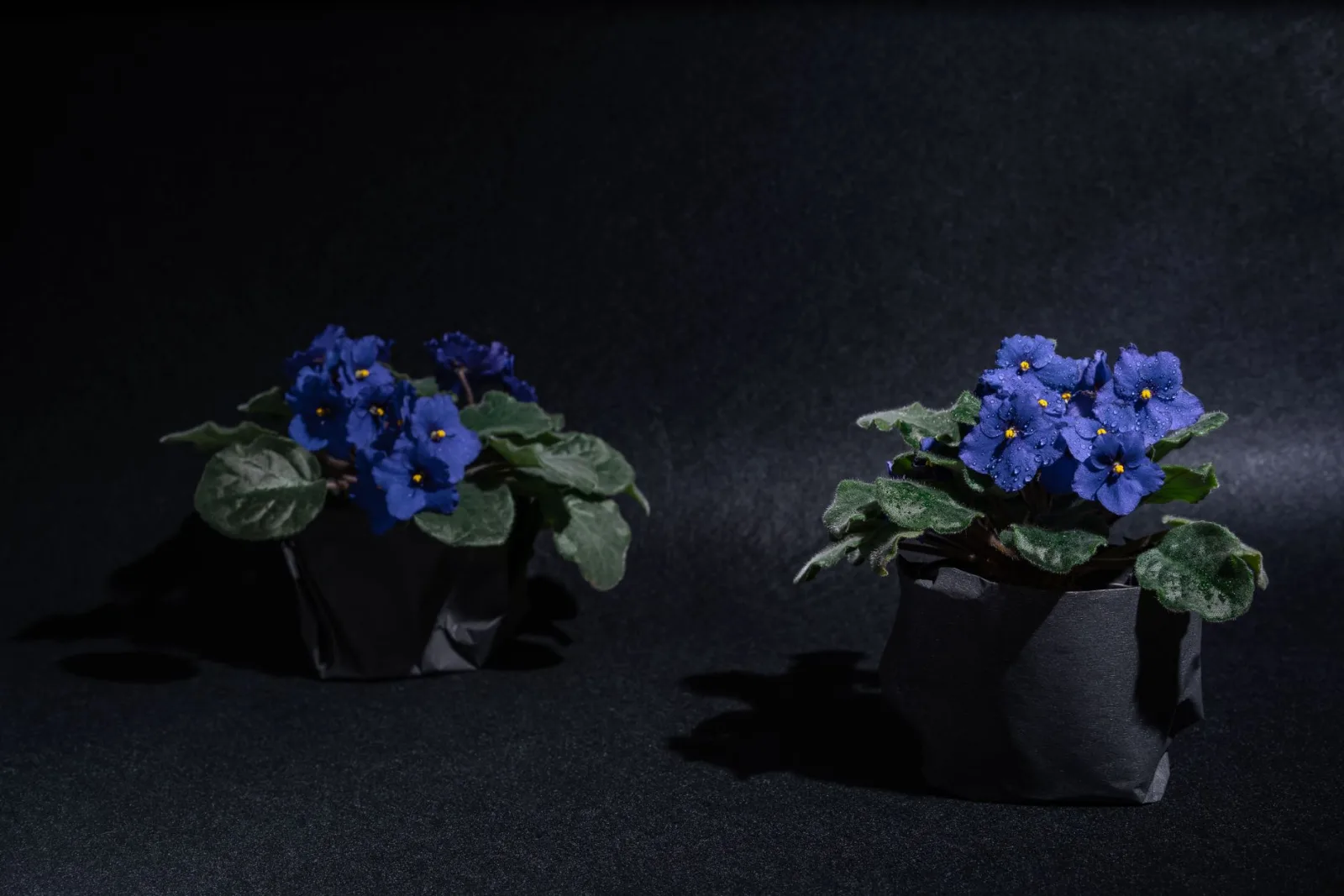
African violets need a soilless, free-draining mix. The ideal formula is 3 parts sphagnum peat moss, 2 parts vermiculite, and 1 part perlite, with lime added to balance the acidity of the peat moss. This mix holds moisture without becoming waterlogged.
When potting, set the plant so that the crown sits just above the soil surface and press the soil firmly around it. Good drainage is essential because standing water on the surface can cause decay at the crown.
African violets seldom need pots larger than 4 inches in diameter. Overpotting—using a container that’s too large—leads to excess moisture around the roots and can trigger yellowing and poor blooming. Repot only when the plant has outgrown its current pot or when soil needs refreshing due to salt buildup.
Over time, fertilizer salts and other chemicals accumulate in soil. At high levels, leaf tips and edges turn yellow or brown and slowly die. Refreshing the soil every 12-18 months prevents this issue.
Feeding and Fertilizing
Most African violet growers feed at every watering using a dilute fertilizer solution. A standard balanced formula such as 20-20-20 is adequate for most growing conditions.
During periods of heavy bloom, switch to a high phosphate-potash fertilizer to support flower production. This adjustment encourages larger, more abundant flowers.
Pruning and Maintenance
African violets require minimal pruning. Remove any yellowing or damaged leaves at their base to maintain plant appearance and prevent disease. Pinch off spent flowers to encourage continued blooming throughout the year.
Propagating African Violets
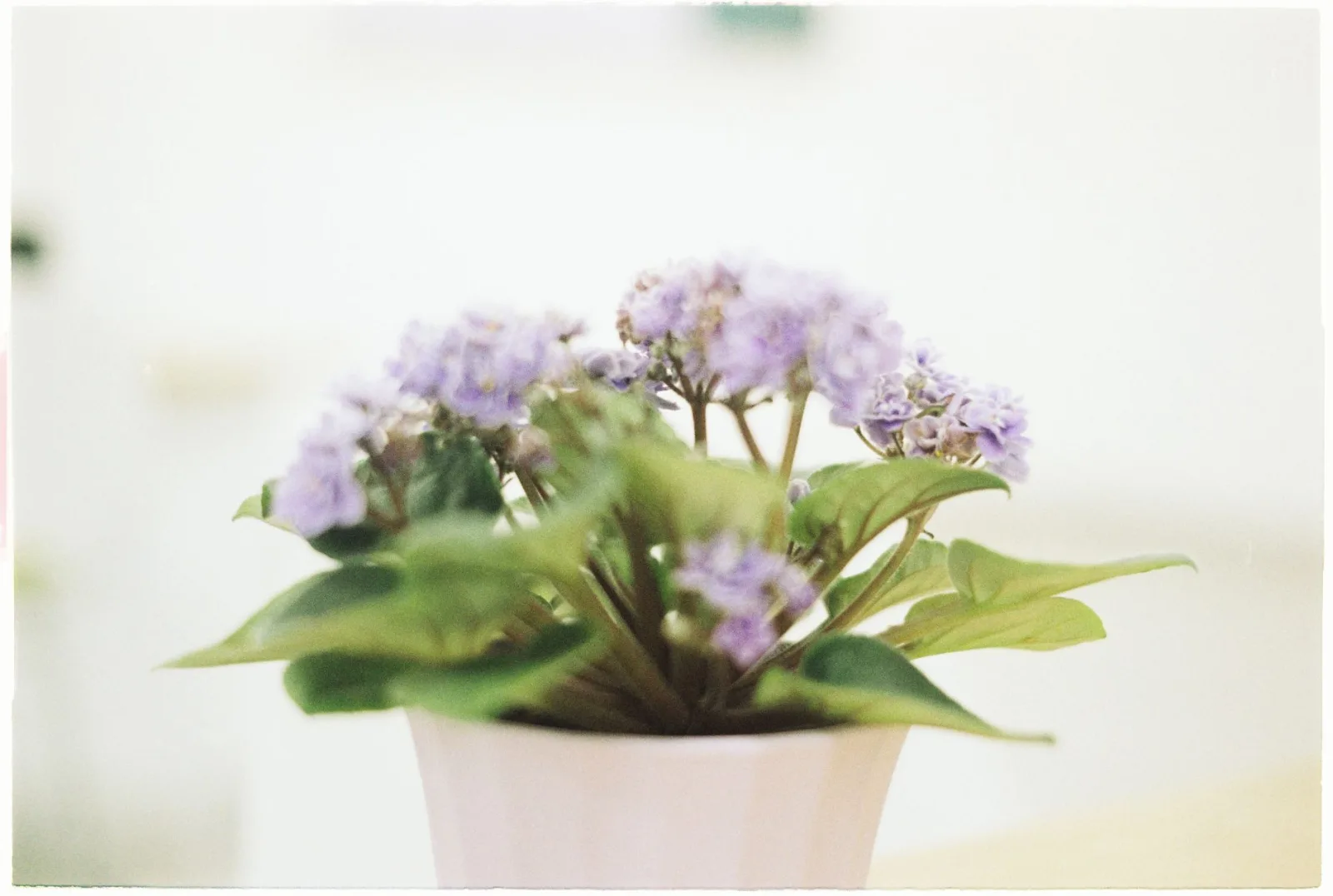
African violets are easy to grow from leaf cuttings, making them ideal for expanding your collection. Spring is the best time to propagate.
Here’s how to propagate from leaf cuttings:
- Choose a leaf that is almost full size and remove it with the stalk attached.
- Fill small pots with free-draining compost.
- Insert the leaf stalk into the compost so the base of the leaf just touches the surface.
- Place pots in a propagator or cover with a clear plastic bag to maintain moisture.
- Provide bright but not direct light and keep the temperature around 65°F.
- Water about twice a week—avoid overwatering, as leaf cuttings are prone to rotting if the compost is too wet.
- Remove any decaying leaves promptly to prevent grey mould problems.
- New plants should form at the base of the leaf in four to five weeks.
Note that development of plantlets slows at low temperatures, so maintaining warmth speeds the process.
Why Your African Violet Isn’t Blooming
The biggest challenge with African violets indoors is providing enough light. Flowering requires more light than foliage growth alone, and too little sunlight prevents blooming altogether.
Even when light is adequate, other factors affect flowering. Watering problems—either too much or too little—reduce the root system, and plants often sacrifice flowers to survive. Overwatering is the most common culprit, leading to root rot that severely limits the plant’s ability to flower.
Cold temperatures slow growth and blooming. Ensure your plant stays in the 60-85°F range and avoid drafts.
Fortunately, most modern African violets bloom throughout the year with minimal effort once their basic needs are met.
Common Problems and Solutions
Root or Crown Rot
Excessive watering is the main cause. Plants with overwatering develop dull, light green or yellowing leaves and may drop older leaves. Prevent this by watering carefully, ensuring the soil drains freely, and removing standing water from saucers within one hour. If rot has begun, repot the plant into fresh, dry soil.
Yellowing Leaves
Yellowing appears for several reasons. Too much or too little water, overpotting, insufficient light, cold temperatures, or drafts all cause this problem. Assess your watering schedule first, then check light and temperature conditions. If edges yellow or brown due to salt buildup in the soil, refresh the potting mix.
Nutrient Deficiencies
Yellow patches along leaf edges indicate potassium deficiency. Small, hard, yellowish leaves near the center with few flowers suggest nitrogen deficiency. Both are corrected by consistent feeding with a balanced fertilizer at each watering.
Leaf Spotting
Cold water splashed on leaves causes brown spotting and damage. Always water with tepid water and direct it to the soil, never the foliage.
Mould and Rot
Wetting the fuzzy leaves or allowing moisture to sit on the crown promotes fungal problems that can kill the plant. Keep leaves dry and ensure good air circulation around the base of the plant.
FAQ
How often should I water my African violet?
Water when the top of the soil is dry but before it becomes hard or the plant wilts. This typically means watering every 5-7 days depending on your home’s heat and humidity, but always check the soil first rather than watering on a fixed schedule.
Can I mist my African violet to increase humidity?
No, do not mist the fuzzy leaves of African violets. Instead, use a pebble tray or group plants together to raise humidity naturally without wetting the foliage.
What size pot does my African violet need?
African violets seldom need pots larger than 4 inches in diameter. A small pot with good drainage is better than a large one, which leads to overwatering and poor growth.
How long does it take to grow a new African violet from a leaf cutting?
New plants form at the base of a leaf cutting in four to five weeks when kept in the right conditions: bright light (not direct), warmth around 65°F, and moist but not soggy compost.
Is African violet toxic to cats and dogs?
No, African violet is non-toxic to both cats and dogs. You can safely grow this plant in any pet household without concern.
What is the ideal temperature for African violets?
The best range is about 60°F at night and 80-85°F during the day. Maintain this range as consistently as possible and avoid cold drafts.
More about African Violet
Sources
Photo: Mikhail Nilov / Pexels, Pexels