African Violet Saintpaulia
Why Isn’t Your African Violet Not Blooming? Causes and Solutions
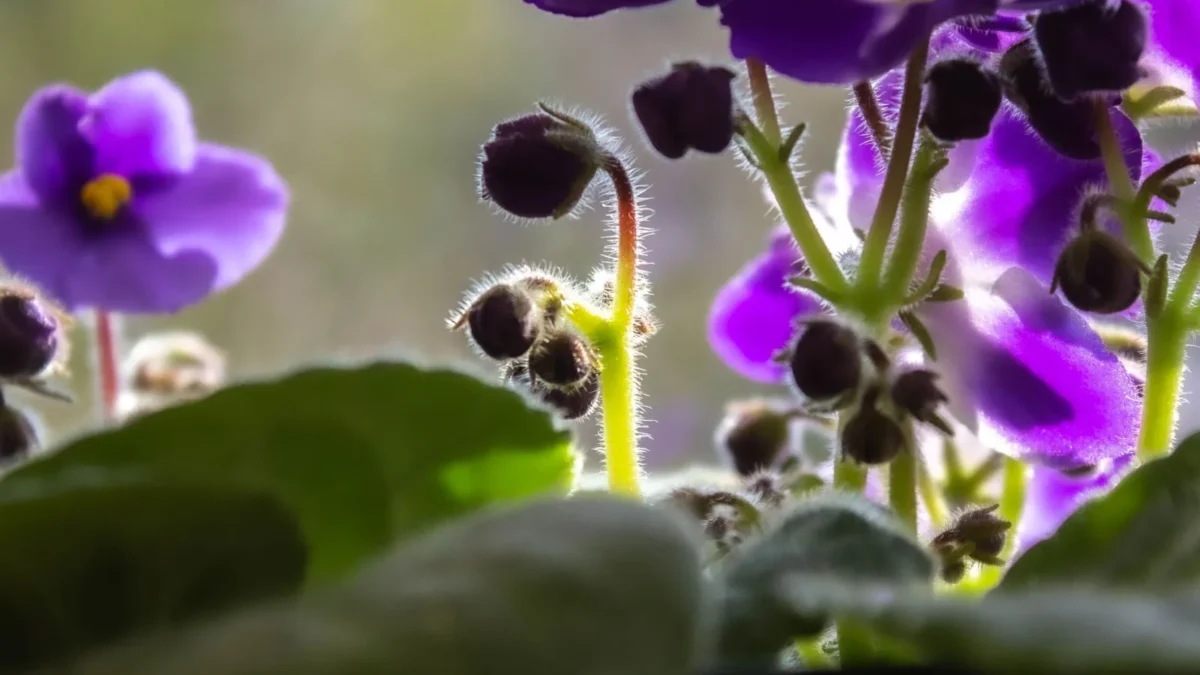
Quick answer: Your African violet is not blooming most likely because it doesn’t have enough light, is being watered incorrectly, or the temperature is too cold. African violets need bright, indirect light and at least 14-16 hours daily to flower reliably.
| Botanical name | Saintpaulia |
|---|---|
| Light | Bright indirect light; 14-16 hours daily for flowering; avoid direct midday sun |
| Watering | Keep soil evenly moist like a well-wrung-out sponge; water when top soil is dry; drain saucers after 1 hour |
| Humidity | 40-60% humidity; use pebble trays; avoid misting fuzzy leaves |
| Temperature | 60°F at night; 80-85°F during day; avoid cold drafts and temperatures below 60°F |
| Soil | Soilless mix: 3 parts peat moss, 2 parts vermiculite, 1 part perlite, plus lime |
| Feeding | Dilute balanced fertilizer (20-20-20) at each watering; high phosphate-potash during heavy bloom |
| Size | Standard: 8-16 inches wide; miniature/semi-miniature under 8 inches; large over 16 inches |
| Difficulty | easy |
| Cats | ✓ non-toxic |
| Dogs | ✓ non-toxic |
Light: The Main Reason Your African Violet Won’t Bloom
Insufficient light is the most common cause of poor flowering. African violets that stretch for light and produce few or no flowers are telling you they’re not getting enough brightness. Flowering requires more light than simply keeping the plant alive—it’s a bigger energy demand.
Place your African violet in a bright, indirect spot near a north- or east-facing window. These directions provide ideal light without harsh midday sun that can scorch the leaves. If natural light is limited, use fluorescent or LED grow lights positioned 6-12 inches above the plant.
Your plant also needs darkness to bloom. African violets require 14-16 hours of light daily, but equally important is 8 hours of uninterrupted darkness. During darkness, the plant produces florigen, a flowering hormone that triggers blooms when light returns.
Watering and Root Health
Both too much and too little water prevent flowering. When roots are damaged by rot or drought, the plant sacrifices flowers to survive.
Overwatering is a major culprit. Keep the soil feeling like a well-wrung-out sponge—evenly moist but not soggy. Water when just the top of the soil is dry. After watering, empty any water that sits in the saucer within 1 hour.
In winter, water sparingly as the soil dries between waterings. During the growing season (spring and summer), water more freely but still allow the surface to dry slightly before the next watering.
Always use tepid water to avoid leaf spotting. Water the soil directly; avoid wetting the leaves, which can cause rot and mold.
Temperature and Humidity
Keep your African violet between 60°F at night and 80–85°F during the day. Cool temperatures slow growth and flowering, and avoid cold drafts or sudden temperature drops.
Maintain humidity at 40–60%. Use a saucer of pebbles with water beneath the pot—place the pot on the pebbles so it doesn’t sit in water. Do not mist the fuzzy leaves, as this promotes spotting and decay.
Fertilizer During Heavy Bloom
Use a balanced, dilute fertilizer (20-20-20) at each watering for general feeding. During periods of heavy bloom, switch to a high phosphate-potash fertilizer to support more flowers.
FAQ
How can I keep African violets blooming?
Provide 14–16 hours of bright, indirect light daily with 8 hours of darkness, maintain consistent temperatures of 60–85°F, keep soil evenly moist like a wrung-out sponge, and feed with balanced fertilizer at each watering—switching to high phosphate-potash during flowering.
How often should I water my African violet?
Water when the top soil is dry, keeping the soil evenly moist but never soggy. Empty saucers after 1 hour to prevent root rot. In winter, water more sparingly as the soil dries.
Read the full guide: African Violet Care: The Complete Guide
More about African Violet
The same problem in other plants
- Why Isn't Your Kalanchoe Flowering and How to Fix It
- Why Is My Bromeliad Flower Turning Brown and Losing Color?
- Why Is My Anthurium Not Flowering?
Sources
- Visit us on the Web: www.gardeninghelp.org African Violets History
- Why Isn't My African Violet Flowering?
- Extension Logo
Photo: Eftodii Aurelia / Pexels, Pexels