African Violet Saintpaulia
Why Are My African Violet Leaves Turning Yellow?
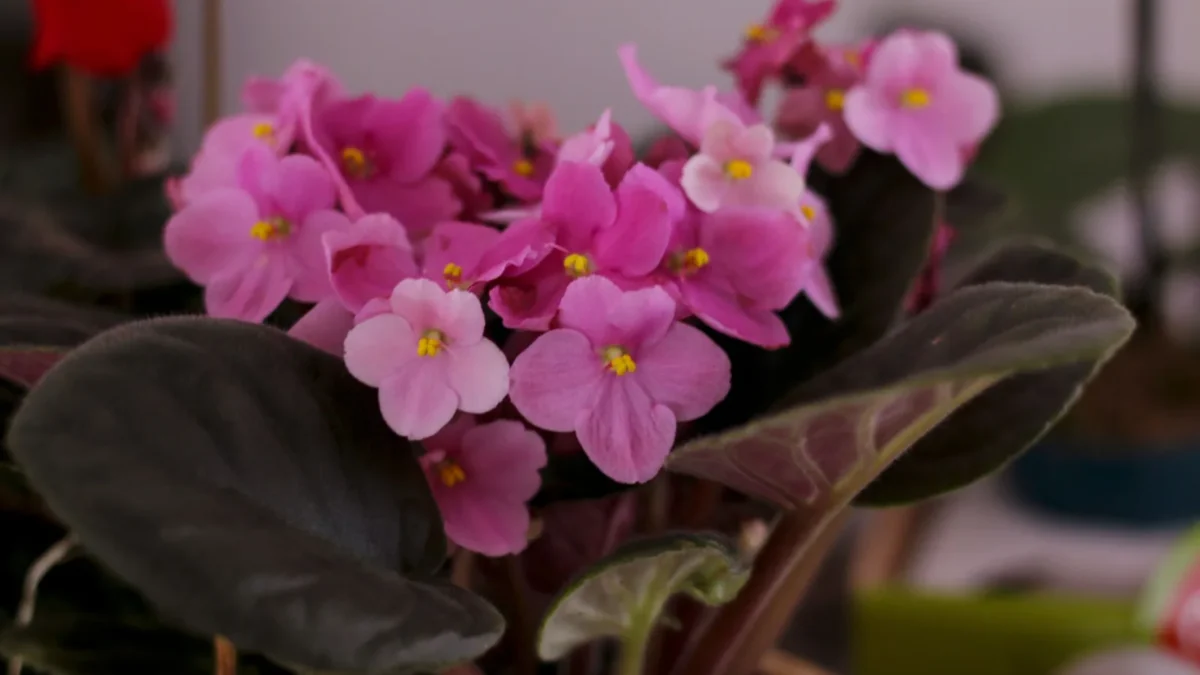
Quick answer: Yellow African violet leaves usually mean overwatering, cold temperatures, poor light, or nutrient deficiencies. Check your watering routine first—most yellowing comes from keeping the soil too wet. Look at the pattern of yellow to identify the exact cause, then adjust conditions accordingly.
| Botanical name | Saintpaulia |
|---|---|
| Light | Bright indirect light; 14-16 hours daily for flowering; avoid direct midday sun |
| Watering | Keep soil evenly moist like a well-wrung-out sponge; water when top soil is dry; drain saucers after 1 hour |
| Humidity | 40-60% humidity; use pebble trays; avoid misting fuzzy leaves |
| Temperature | 60°F at night; 80-85°F during day; avoid cold drafts and temperatures below 60°F |
| Soil | Soilless mix: 3 parts peat moss, 2 parts vermiculite, 1 part perlite, plus lime |
| Feeding | Dilute balanced fertilizer (20-20-20) at each watering; high phosphate-potash during heavy bloom |
| Size | Standard: 8-16 inches wide; miniature/semi-miniature under 8 inches; large over 16 inches |
| Difficulty | easy |
| Cats | ✓ non-toxic |
| Dogs | ✓ non-toxic |
| What you see | Likely cause | What to do |
|---|---|---|
| Dull, light green or yellow leaves with older leaves dropping | Overwatering or root rot | Let soil dry slightly between waterings; water only when top is dry; drain saucers after 1 hour |
| Yellow patches along leaf edges | Potassium deficiency | Switch to high phosphate-potash fertilizer during heavy bloom |
| Small, hard, yellowish leaves near the centre with few flowers | Nitrogen deficiency | Use a balanced 20-20-20 fertilizer diluted at each watering |
| Yellow leaf tips or edges slowly dying | Salt buildup in soil | Repot into fresh soil; water with tepid water to avoid splash |
| Yellowing in large numbers across the plant | Cold temperature, drafts, low light, or overpotting | Check temperature stays 60°F at night and 80-85°F by day; provide bright indirect light; use pot no larger than 4 inches |
Most common reason: overwatering
The biggest culprit behind yellowing African violet leaves is excessive watering. African violets don’t like soggy roots. Keep the soil feeling like a well-wrung-out sponge—evenly moist but not waterlogged. Water only when the top of the soil is dry, but before it becomes hard or the plant wilts. If water sits in the bottom saucer longer than 1 hour after watering, drain it off; otherwise roots start to rot. Let the plant dry slightly between waterings rather than staying constantly wet.
Overwatered plants develop dull, light green or yellowing leaves, and often drop older leaves as the roots weaken. If you suspect root rot, repot the plant into fresh soilless mix made from 3 parts peat moss, 2 parts vermiculite, and 1 part perlite with lime added.
Nutrient deficiencies
Yellow patches along the leaf edges indicate potassium deficiency, while small, hard, yellowish leaves near the centre of the plant with few flowers signal nitrogen deficiency. Feed your plant consistently: use a dilute balanced fertilizer (20-20-20) at each watering for general care. During periods of heavy bloom, switch to a high phosphate-potash fertilizer to support flowering and prevent yellowing.
Cold, light, and other causes
Yellowing can also stem from temperatures below 60°F, sudden temperature drops, cold drafts, too little light, or pots that are too large. Keep your African violet between 60°F at night and 80-85°F during the day. Place it where it receives bright, indirect light—north or east-facing windows are ideal and better than direct midday or afternoon sun. Use a pot no larger than 4 inches in diameter; overpotting stresses the plant.
Salt and chemical buildup from water and fertilizer can also turn leaf tips and edges yellow or brown. If this happens, water with tepid water from above and avoid splashing the leaves, which causes spotting. Repot into fresh soil if the buildup is severe.
How to prevent yellowing
Water carefully with tepid water when the top soil is dry. Ensure bright indirect light for at least 14-16 hours daily if you want the plant to flower. Provide 8-10 hours of darkness each night. Feed consistently with diluted balanced fertilizer. Keep the plant away from cold drafts and windows where temperatures drop below 60°F at night. Check the pot size and repot only when necessary into appropriately sized containers with well-draining soilless mix.
Read the full guide: African Violet Care: The Complete Guide
More about African Violet
The same problem in other plants
- Why Is My Philodendron Birkin Turning Yellow?
- Why Are My Croton Leaves Turning Yellow and Falling Off?
- Why Are My Anthurium Leaves Turning Yellow?
- Why Are My Christmas Cactus Leaves Turning Red or Purple?
Sources
- Saintpaulia ionantha – Plant Finder
- Visit us on the Web: www.gardeninghelp.org African Violets History
- Problems Common to Many Indoor Plants
Photo: Marcelo Joaquim / Pexels, Pexels