Burro's Tail Sedum morganianum
Burro’s Tail Care: The Complete Growing Guide
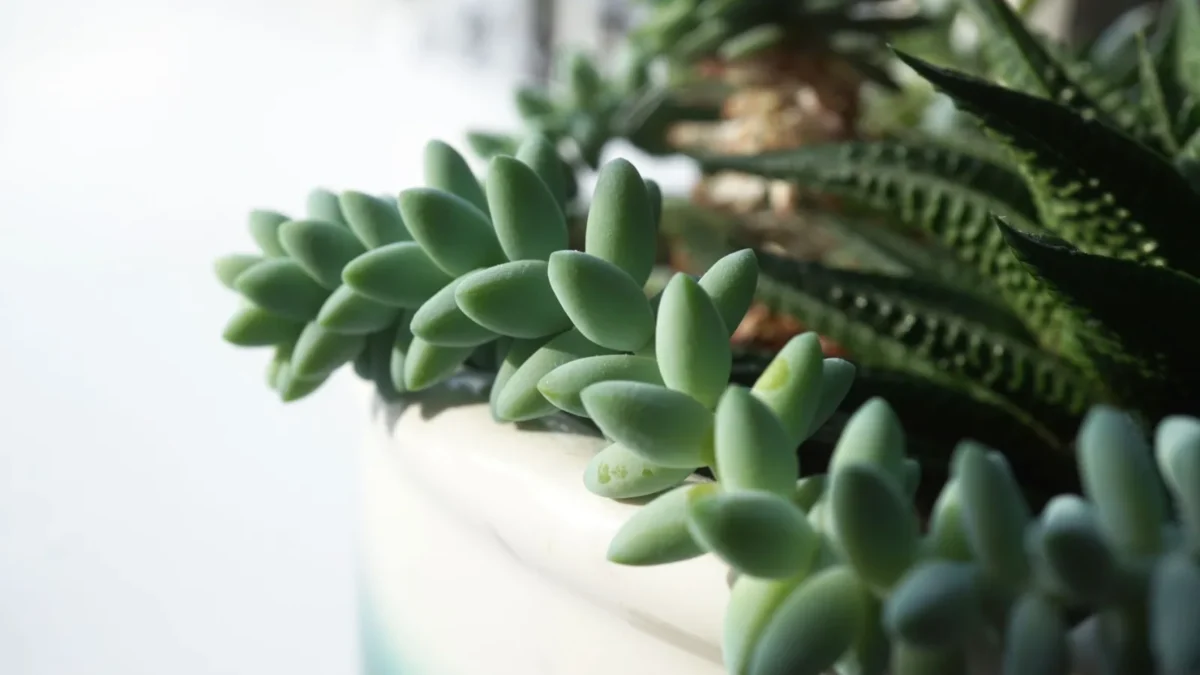
Burro’s tail is a popular trailing succulent that brings a touch of elegance to any space with its fleshy blue-green leaves and dangling stems. This slow-growing plant is remarkably forgiving and requires minimal maintenance, making it ideal for plant enthusiasts at any level. Understanding the fundamentals of burro’s tail care—particularly watering, light, and humidity—will set you up for success with this visually striking plant.
| Botanical name | Sedum morganianum |
|---|---|
| Light | Medium to high light; full sun south or west-facing |
| Watering | Spring/summer: water when soil completely dry, every 2-3 weeks; winter: once a month or less |
| Humidity | 30-50%; avoid high humidity and ensure good airflow |
| Temperature | 60-80°F (15-27°C); not frost-tolerant below 50°F (10°C) |
| Soil | Cactus or succulent potting mix with perlite, sand, or pumice for drainage |
| Feeding | Three feedings during spring and summer; none in winter |
| Size | Trailing stems up to 60 cm (24 in) long |
| Difficulty | easy |
Key points
- Water thoroughly when soil is completely dry; every 2-3 weeks in spring and summer, once a month or less in winter
- Provide medium to high light in a south or west-facing position for best results
- Keep humidity between 30-50% with good airflow; avoid bathrooms and humid spaces
- Use well-draining cactus or succulent soil mix with perlite, sand, or pumice
- Feed only three times during spring and summer; skip fertilizer entirely in winter
- The plant naturally loses leaves when touched—this is normal adaptation from its cliff-dwelling origins
Light Requirements for Burro’s Tail
Burro’s tail thrives in medium to high light and requires a full sun position with a south or west-facing aspect. This orientation ensures the plant receives the intensity it needs to maintain its compact, healthy form and vibrant leaf color.
If your burro’s tail develops pale, stretched stems with dropping leaves, it’s a sign of insufficient light known as etiolation. Move the plant to a brighter location right away. Conversely, too much direct sunlight can scorch the leaves and cause them to fall off dramatically. If you notice brown, damaged leaves, consider providing partial shade, particularly during the hottest parts of the day in summer.
Watering Schedule and Techniques
Proper watering is the most critical aspect of burro’s tail care. During the growing season in spring and summer, water thoroughly when the soil is completely dry, usually every 2-3 weeks. In winter, reduce watering frequency to once a month or less.
The soak and dry method works best: allow the soil to dry out completely between waterings. To check if your plant needs water without guessing, gently squeeze a lower leaf near the base; if it feels firm like a grape, the plant is well-hydrated and should not be watered.
Proper watering technique
When you do water, always aim for the soil rather than the leaves. Getting leaves wet can cause them to rot or drop prematurely. Pour slowly and thoroughly until water drains from the bottom of the pot, then allow the pot to drain completely. Never let the plant sit in standing water.
Common watering mistakes
Overwatering is the primary cause of problems in burro’s tail. Watering when the soil is still damp from the previous watering leads to leaf loss. If leaves turn very soft and plump, they’re literally filling with water—reduce watering frequency immediately and check that the drainage hole isn’t blocked.
Underwatering, though less common, also causes problems. A plant left dry too long drains its stored reserves, resulting in wrinkled, shriveling leaves with brown tips that eventually drop. If you’ve neglected watering, recover carefully: slowly reintroduce water rather than drowning the plant, as sudden changes can shock it and cause more leaf loss. Water lightly once a day for a week to bring the plant back to normal.
Humidity and Temperature Needs
Burro’s tail prefers a relative humidity of 30-50%. This is drier than most indoor spaces, which actually works in your favor: the plant does not tolerate high humidity and requires plenty of airflow. Avoid placing it in bathrooms or other humid areas. If air circulation is poor, consider placing a small fan nearby to promote gentle movement around the foliage.
The ideal temperature range is 60-80°F (15-27°C). The plant actually prefers the cooler end of this range, around 65-75°F (18-24°C). Burro’s tail is not frost-tolerant, so if grown outdoors, bring it inside once temperatures drop below 50°F (10°C). Sudden temperature drops can shock the plant, leading to droopy stems and leaf loss, so protect it from cold drafts and heaters.
Soil and Repotting Guide
Use a cactus or succulent potting mix enriched with perlite, sand, or pumice to promote drainage and prevent waterlogging. Under glass, you can also use peat-free, loam-based compost with added horticultural grit. Drainage is non-negotiable—waterlogged soil leads to root rot, one of the most damaging conditions for this plant.
When and how to repot
Repot burro’s tail every couple of years in spring or summer when the plant is actively growing. Choose a pot only 1-2 inches larger in diameter than the current one. Larger pots retain too much moisture.
Handle the plant extremely gently during repotting—its leaves detach at the slightest touch. Consider tipping the container on its side and sliding the plant out to minimize stress and leaf loss.
When the soil is dry, remove the plant and inspect the roots. Remove any rotted or blackened roots, then place the plant in its new pot with well-draining soil. Keep the plant dry for a week after repotting, then water lightly to support root recovery while preventing rot.
Feeding Your Burro’s Tail
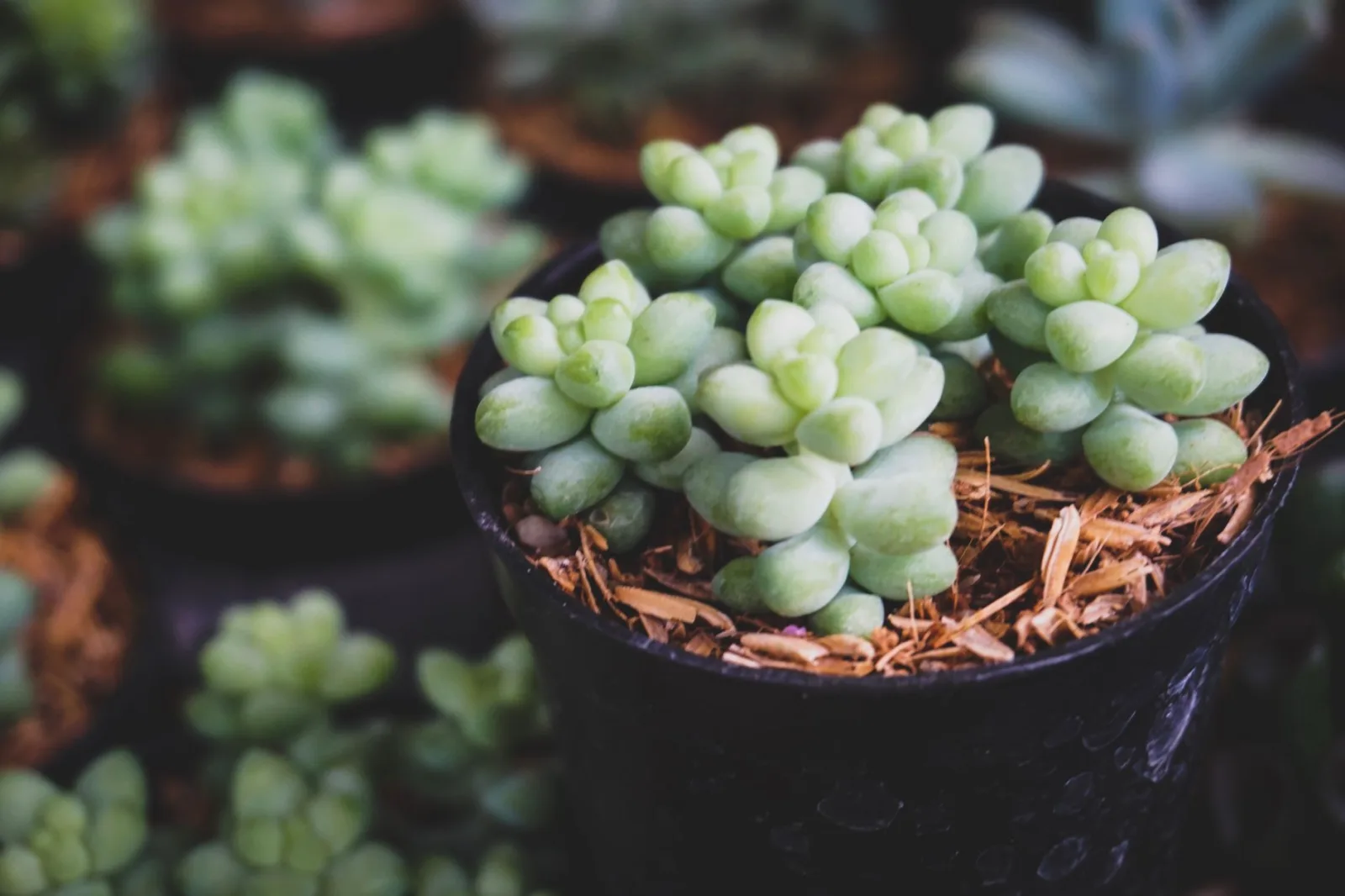
Burro’s tail is a low-maintenance plant that doesn’t need much fertilizer. Three feedings during the growing season—starting in spring and ending in mid to late summer—are usually sufficient. No fertilization is needed during winter. Use a diluted succulent or cactus fertilizer according to package directions, and apply only when the soil is moist to avoid fertilizer burn.
Pruning and Maintenance
Burro’s tail requires minimal pruning. The plant’s leaves naturally detach at the slightest touch—this is an evolutionary adaptation from its native Mexican cliff faces and steep slopes. When sections break off or leaves get knocked loose, they tumble downhill, land in crevices, and root to form new colonies. This natural trait means some leaf drop is completely normal.
To minimize unwanted leaf loss, place the plant where nothing can brush past it during daily activities. Avoid frequent moving or handling unless necessary. If the plant becomes overgrown or too long for your space, you can trim stems back using clean clippers, but this isn’t essential for the plant’s health.
Propagation Methods
Burro’s tail is exceptionally easy to propagate, making it a rewarding project for beginners. The best time to propagate is during the active growth cycle in late spring and early summer.
Propagating from stem cuttings
- Use clean clippers or a similar tool to cut stems to your desired length.
- Peel off the leaves at the bottom of the stem and let the stems heal and form calluses. Depending on your climate, this can take from one day to two weeks.
- Fill a new pot with well-draining soil to approximately one-quarter inch below the top rim. Create a hole using a pencil or chopstick and insert the cutting into it.
- Place the propagated plant in bright light but out of direct or full sun.
- Keep the stems and soil dry for one to three days, then water the mix every five to seven days depending on your climate. Water lightly so the soil is moist, not saturated.
- Roots should establish within 2-4 weeks, with new growth appearing within 6-8 weeks.
Propagating from individual leaves
Individual leaves that naturally fall off can also be propagated. Let each leaf dry for a few days, then place it on moist soil in a bright, warm location. Keep the soil lightly moist and wait for roots and new growth to emerge—this takes longer than stem propagation but works surprisingly well.
Common Problems and Solutions
Overwatering and soft leaves
Overwatering causes leaves to turn yellow or translucent, while stems become soft and mushy. Reduce watering frequency immediately, ensure the drainage hole isn’t blocked, and allow the soil to dry out between waterings. In severe cases, take healthy cuttings to propagate new plants from scratch.
Root rot
Root rot occurs when roots remain saturated for an extended period or the plant isn’t repotted with fresh soil regularly. This damages the plant and causes leaves to fall off more easily. The plant may also be susceptible to fungal and bacterial crown and root rots. Prevention is key: always use well-draining soil, water only when soil is dry, and ensure pots have drainage holes. If root rot has begun, repot the plant into fresh soil and remove affected roots.
Underwatering and wrinkled leaves
Underwatering causes wrinkled, puckered leaves that have lost their plumpness. Increase watering frequency slightly, ensuring you water thoroughly when the soil is dry. Recover gradually if the plant has been very dry for a long time.
Pests
Mealybugs, spider mites, aphids, scale insects, and vine weevil can infest burro’s tail. Check the undersides of leaves and stems regularly for small insects, sticky residue, or webbing. Remove pests with a soft cloth or cotton swab dipped in rubbing alcohol, or spray with an insecticidal soap if the infestation is severe. Repeat treatment every few days until pests are gone.
Leaf drop from repotting
Repotting is stressful for the plant’s roots and can cause temporary leaf drop as it adjusts to its new environment. Handle the plant gently during repotting and minimize leaf disturbance by tipping the pot to the side rather than lifting the plant out by hand. After repotting, avoid moving the plant for at least a week.
Sun scorch
Too much intense direct sunlight scorches leaves, causing them to fall off. If you see brown, papery patches on leaves, move the plant to a location with bright light but some afternoon shade. This is particularly important in hot climates.
FAQ
Is burro’s tail toxic to pets?
No. Burro’s tail is non-toxic to both cats and dogs according to the ASPCA. It contains no saponins, alkaloids, or mechanical irritants. The bigger concern is the fragile leaf attachment—curious pets dislodge leaves easily, though the leaves themselves won’t harm them.
Why are the leaves falling off my burro’s tail?
Leaves fall off for several reasons: overwatering (the most common cause), underwatering, low light, sun scorch, pests, temperature shock, or simply being touched or brushed. Check your watering schedule first, then assess light conditions and temperature stability. Inspect for pests if other causes don’t apply.
How often should I water my burro’s tail?
In spring and summer, water every 2-3 weeks when the soil is completely dry. In winter, water once a month or less. Always use the soak and dry method—never water until the soil has dried out completely from the previous watering.
Can I propagate burro’s tail from individual leaves?
Yes. Individual leaves that fall off naturally can be propagated, though stem cuttings propagate faster and more reliably. Let leaves dry for several days, then place them on moist succulent soil in bright light. Keep the soil lightly moist and wait for roots and new growth to appear.
What’s the best light condition for burro’s tail?
The plant thrives in medium to high light in a south or west-facing position with full sun. Indoors, place it on a bright south or west-facing windowsill. If the plant develops pale, stretched stems, it needs more light; if leaves develop brown patches and fall off, it’s getting too much direct sun, so provide partial shade.
Does burro’s tail need humidity?
No. Burro’s tail prefers low to moderate humidity of 30-50% and actually dislikes high-humidity environments. Avoid bathrooms and other humid areas, and ensure good air circulation around the plant.
More about Burro's Tail
Sources
- Burro's Tail (Sedum morganianum): Care, Watering & How It Differs from Sedum burrito
- Burro's Tail (Sedum morganianum) Care Guide: A Trailing Succulent Beauty 🌟 – Healthy Houseplants
- Burro's Tail Care Guide: How to Grow the Donkey Tail Succulent
Photo: Nancy Zjaba / Pexels, Pexels