Burro's Tail Sedum morganianum
Is Burro’s Tail Toxic to Cats and Dogs?
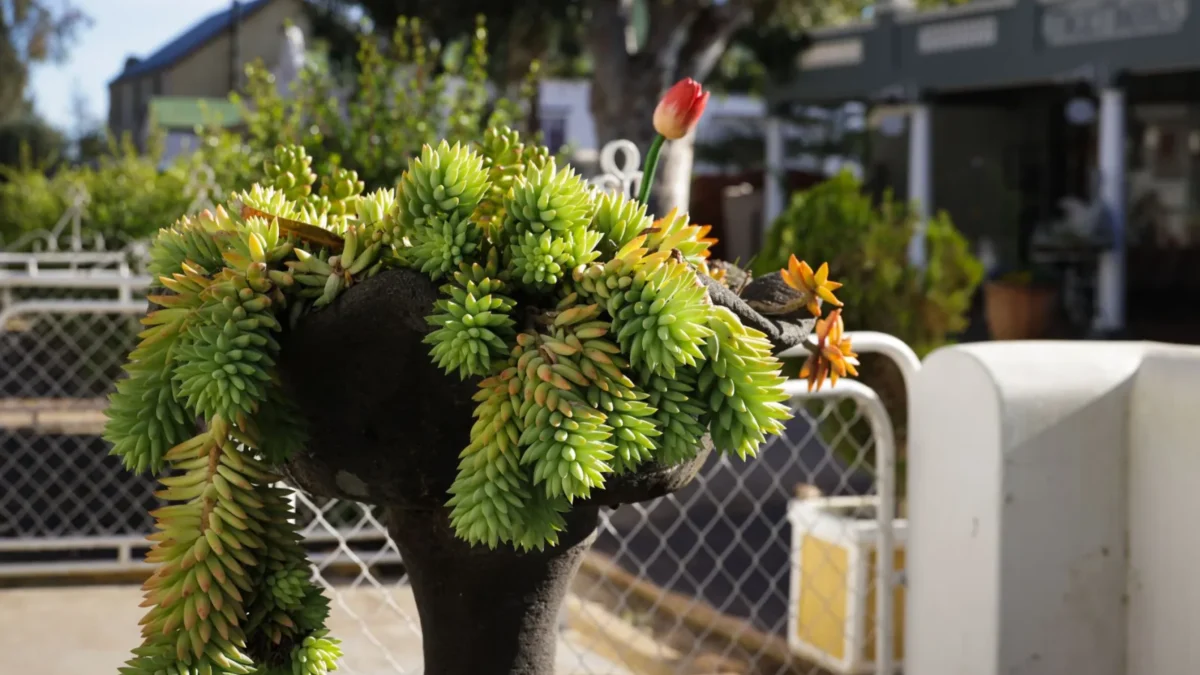
Quick answer: Burro’s tail (Sedum morganianum) is not toxic to cats or dogs. The plant contains no saponins, alkaloids, or mechanical irritants. However, the real pet hazard is the fragile leaf attachment—curious pets dislodge leaves easily.
| Botanical name | Sedum morganianum |
|---|---|
| Light | Medium to high light; full sun south or west-facing |
| Watering | Spring/summer: water when soil completely dry, every 2-3 weeks; winter: once a month or less |
| Humidity | 30-50%; avoid high humidity and ensure good airflow |
| Temperature | 60-80°F (15-27°C); not frost-tolerant below 50°F (10°C) |
| Soil | Cactus or succulent potting mix with perlite, sand, or pumice for drainage |
| Feeding | Three feedings during spring and summer; none in winter |
| Size | Trailing stems up to 60 cm (24 in) long |
| Difficulty | easy |
Why Burro’s Tail Is Safe for Pets
According to trusted sources such as the ASPCA, burro’s tail is categorized as safe for both cats and dogs. This makes it a good choice if you have furry companions at home and want a trailing succulent that won’t cause poisoning if nibbled.
The plant’s leaves are fleshy and blue-green, and they detach at the slightest touch—not because of toxins, but because of how the plant is designed. In its native habitat in southern Mexico and Honduras, this adaptation helps the plant spread: when leaves or stems break off, they tumble downhill, land in crevices, and root to form new colonies.
The Real Concern: Leaf Drop and Pets
While burro’s tail is not toxic, the bigger pet hazard is that your cat or dog may dislodge leaves during play or investigation. If your pet chews the plant, they won’t be poisoned, but they may ingest loose leaves or stems. Monitor your pet for any unusual behavior, but toxicity from the plant itself is not a concern.
To minimize leaf loss around curious pets, place your burro’s tail somewhere they cannot brush past it easily—a high shelf or hanging basket works well. This protects both your pet’s safety and the plant’s appearance.
FAQ
Is burro’s tail toxic to dogs?
No, burro’s tail is not toxic to dogs. The ASPCA lists it as safe for canine consumption, though loose leaves may be a choking hazard or cause mild digestive upset if eaten in large quantities.
Is burro’s tail toxic to cats?
No, burro’s tail is not toxic to cats. It is safe for feline consumption and contains no harmful compounds.
What should I do if my pet ate burro’s tail leaves?
Since the plant is non-toxic, ingestion is unlikely to cause poisoning. However, if your pet shows signs of unusual behavior, vomiting, or digestive upset, contact your veterinarian to rule out other causes.
Read the full guide: Burro's Tail Care: The Complete Guide
More about Burro's Tail
The same problem in other plants
- Is Rex Begonia Toxic to Cats and Dogs?
- Is Norfolk Island Pine Toxic to Cats and Dogs?
- Is Purple Shamrock Toxic to Cats and Dogs?
- Is Bunny Ears Cactus Toxic to Cats and Dogs?
Sources
- Burro's Tail (Sedum morganianum): Care, Watering & How It Differs from Sedum burrito
- Sedum morganianum
- Burro's Tail Care Guide: How to Grow the Donkey Tail Succulent
Photo: Magda Ehlers / Pexels, Pexels