Burro's Tail Sedum morganianum
Why Are My Burro’s Tail Leaves Falling Off
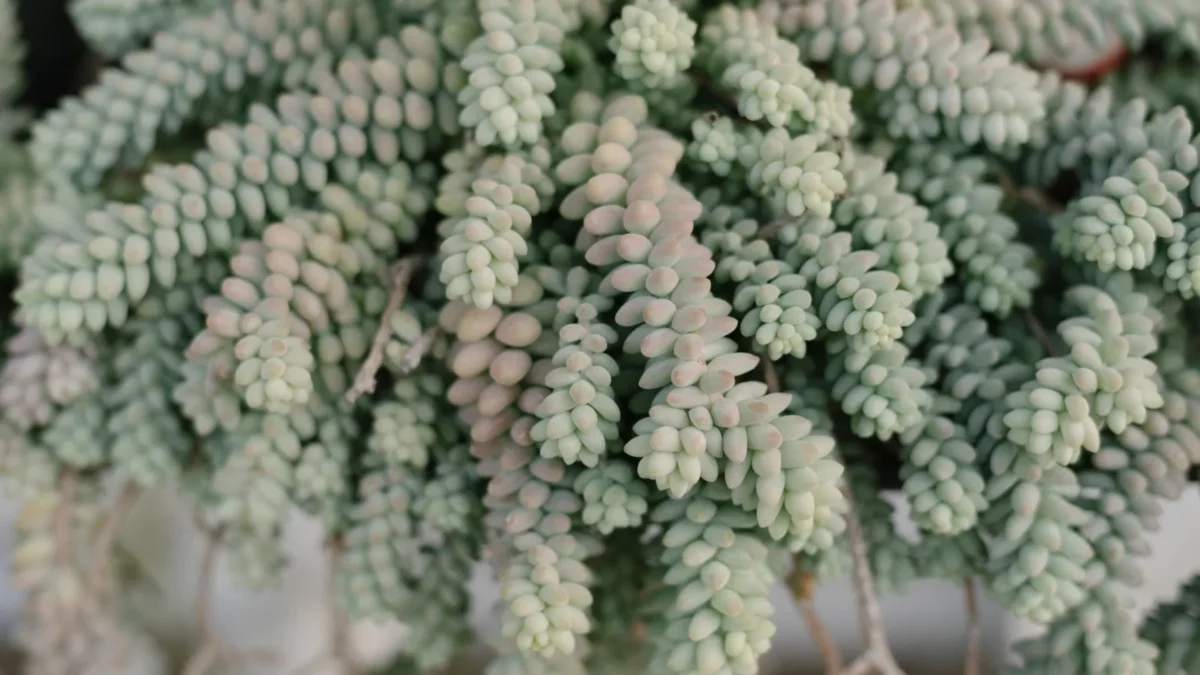
Quick answer: Burro’s tail succulent leaves falling off is usually caused by overwatering, but also happens from low light, temperature drops, pests, or rough handling. The plant’s leaves are naturally fragile by design—they detach easily because in their native Mexican habitat, fallen leaves root and spread the plant. Fix it by adjusting watering, improving light, and handling the plant gently.
| Botanical name | Sedum morganianum |
|---|---|
| Light | Medium to high light; full sun south or west-facing |
| Watering | Spring/summer: water when soil completely dry, every 2-3 weeks; winter: once a month or less |
| Humidity | 30-50%; avoid high humidity and ensure good airflow |
| Temperature | 60-80°F (15-27°C); not frost-tolerant below 50°F (10°C) |
| Soil | Cactus or succulent potting mix with perlite, sand, or pumice for drainage |
| Feeding | Three feedings during spring and summer; none in winter |
| Size | Trailing stems up to 60 cm (24 in) long |
| Difficulty | easy |
| What you see | Likely cause | What to do |
|---|---|---|
| Soft, plump, yellow or translucent leaves; mushy stems | Overwatering | Reduce watering frequency; let soil dry completely between waterings; check drainage hole is clear |
| Wrinkled, shriveled leaves with brown tips | Underwatering | Water a little each day for a week to slowly rehydrate; don’t drench suddenly |
| Pale, stretched stems; leaves drop | Low light | Move plant to a brighter spot with medium to high light; a south or west-facing position works best |
| Leaves scorch and drop; stems discolored | Too much direct sun | Move to partial shade |
| Droopy stems; leaves fall after temperature shift | Cold exposure or temperature shock | Keep plant between 60–80°F (15–27°C); bring indoors if outdoor temps drop below 50°F (10°C) |
| Sticky residue, webbing, or tiny insects on stems | Pests (mealybugs, spider mites, aphids) | Isolate plant; spray with insecticidal soap or neem oil |
How to fix overwatering
Overwatering is the most common cause of burro’s tail succulent leaves falling off. If you water when the soil is still damp from the last watering, you’re overwatering. Root rot can develop, making leaves detach even more easily.
To fix it, reduce watering to when the soil is completely dry. Test by gently squeezing a lower leaf near the base—if it feels firm like a grape, the plant is hydrated and doesn’t need water yet. Make sure the drainage hole isn’t blocked. In spring and summer, water every 2–3 weeks. In winter, water once a month or less.
How to fix underwatering
If the plant dries out too long, leaves wrinkle, shrivel, and thin before dropping. Don’t panic—reintroduce water gradually. Give a little water once a day for a week rather than soaking the plant suddenly, as shock causes more leaf loss.
Light and temperature issues
Low light causes pale, stretched stems with dropped leaves. Move the plant to a brighter location—it thrives in medium to high light. Too much direct sun also scorches leaves and causes them to fall. Partial shade is better if your spot gets intense afternoon rays.
Temperature stress also triggers leaf drop. Keep the plant between 60–80°F (15–27°C). If you grow it outdoors, bring it inside when temperatures drop below 50°F (10°C).
Gentle handling and humidity
Burro’s tail leaves detach at the slightest touch because they’re naturally designed to—loose leaves tumble down rocky cliffs in Mexico and Honduras and root to form new plants. When repotting or moving the plant, handle it very gently. Tip the container on its side and slide the plant out rather than lifting it, to avoid unnecessary stress.
Keep humidity between 30–50%. Avoid high-humidity areas like bathrooms and ensure good airflow.
Pests
Mealybugs, spider mites, and aphids can infest burro’s tail and cause leaf drop. Isolate the plant and treat with insecticidal soap or neem oil.
Read the full guide: Burro's Tail Care: The Complete Guide
More about Burro's Tail
The same problem in other plants
- Why Is My Ti Plant Losing Leaves?
- Why Is My Rex Begonia Dropping Leaves?
- Why Is My Aluminum Plant Losing Leaves? Stop the Leaf Drop Now
- Why Are My Bunny Ears Cactus Leaves Falling Off?
Sources
- Burro's Tail (Sedum morganianum) Care Guide: A Trailing Succulent Beauty 🌟 – Healthy Houseplants
- Burro's Tail Care Guide: How to Grow the Donkey Tail Succulent
- How to Care for Burro’s Tail (Sedum morganianum) – Living House
Photo: Alina Skazka / Pexels, Pexels