Calathea Goeppertia
Calathea Care: The Complete Guide to Growing Healthy Plants Indoors
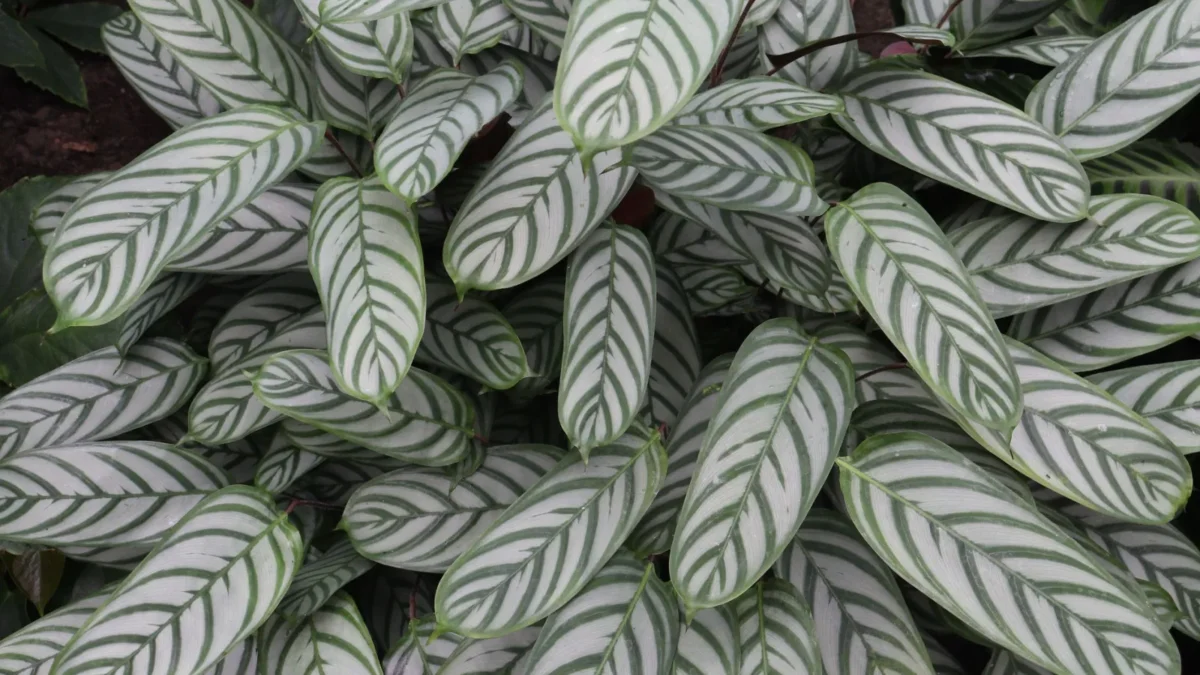
Calathea plants, now classified under the genus Goeppertia and belonging to the Marantaceae family, are tropical houseplants prized for their striking patterned foliage and relatively easy care requirements. With the right conditions—bright indirect light, consistent moisture, and high humidity—you’ll find that calathea care is straightforward and rewarding. This guide covers everything you need to know to grow a healthy, thriving calathea indoors.
| Botanical name | Goeppertia |
|---|---|
| Light | Bright indirect light; east-facing windowsill ideal; avoid direct sunlight |
| Watering | Keep soil evenly moist during growing season; allow top 2 inches to dry slightly before watering; reduce in winter |
| Humidity | High humidity 40-60% relative; mist regularly or use pebble tray with water |
| Temperature | 16–21°C (61–70°F); avoid drafts and temperature fluctuations |
| Soil | Free-draining, moisture-retentive, peat-free compost with potting grit |
| Feeding | Balanced liquid fertilizer applied monthly during growing season |
| Size | Height 1–2 feet; spread 0.75–1 foot |
| Difficulty | easy |
Key points
– Place your calathea in bright indirect light on an east-facing windowsill; direct sun will scorch the leaves
– Water when the top 2 inches of soil start to dry out, keeping the soil evenly moist but never soggy during the growing season
– Maintain high humidity of 40–60% relative humidity and temperatures of 16–21°C (61–70°F) to prevent leaf curl
– Use peat-free, free-draining compost mixed with potting grit and apply balanced liquid fertiliser monthly during the growing season
– Division every 2–3 years in spring is the only reliable propagation method
– Calathea is non-toxic to cats and dogs
Light Requirements for Calathea
Calatheas need bright but indirect light to thrive. An east-facing windowsill is ideal, or you can place one behind frosted glass in a bathroom. Direct sunlight in summer will scorch the leaves, so keep your plant out of the path of hot afternoon rays. Plants may also be sited in part shade to shade locations if necessary.
If your calathea shows slow growth or pale leaves, it may need more light. Move it closer to a window (but still out of direct sun) or rotate it weekly to ensure all sides receive equal brightness.
Watering Your Calathea: Frequency and Best Practices
Calathea care indoors depends heavily on getting the watering right. Keep the compost evenly moist during the growing season; reduce watering in winter but do not let the plant dry out completely.
Before watering, check the soil moisture with your finger. The key is to make sure the soil starts to dry out a little, not a lot, before you water again. This means watering when the top 2 inches of soil feel dry to the touch. These plants like their soil consistently moist, not soaking wet and not dried out.
If you overwater, empty the catch tray immediately and stop watering until the top 2 inches of soil has dried out. Overwatering causes yellow wilting leaves, stem rot, and severely stunted growth. On the other hand, dry soil stresses the plant and causes yellow leaves with a papery texture.
Watering from the bottom until the soil is completely saturated can help resolve underwatering within a few hours.
Humidity and Temperature Needs
These plants enjoy high levels of humidity. According to the University of Florida/IFAS Extension, indoor calatheas perform best when relative humidity stays between 40% and 60%. Many growers find the steamy bathroom is an ideal location, or you can mist regularly or place the plant on a saucer of damp pebbles.
Keep plants at 16–21°C (61–70°F) and avoid temperature fluctuations by positioning them away from draughts and direct sources of heat, such as fires and radiators. Calatheas are tropical and dislike sudden temperature change; a cold draught from a window or door causes leaves to curl as a stress response. Even brief exposure to drafts from windows, doors, HVAC vents, or ceiling fans can trigger stress, and a 10°F (5.5°C) drop below 60°F (15.5°C) triggers immediate leaf curl.
Low humidity is responsible for more cases of calathea leaf curl than any other single cause, particularly during winter. If humidity falls well below 40%, improve conditions using a humidifier. Yellowing leaves with browning edges can also indicate humidity that is too low.
Soil and Repotting Guidelines
Calatheas need free-draining, moisture-retentive soil. Use peat-free compost—either buy a houseplant compost mix or make your own using multi-purpose compost mixed with around 10% potting grit by volume.
Repot your calathea every few years once the clump has filled the pot. Do this in spring or summer, choosing a pot that’s just one or two sizes larger than the rootball.
If root rot has developed due to overwatering, gently pull the plant out of its pot and examine the roots. Trim away any dark, mushy roots right away, then allow the soil to dry out partially before watering again. For severe rot, repot into fresh soil to save the remaining roots.
Feeding and Fertilizer Schedule
Calatheas benefit from regular feeding during their active growing season. Apply a balanced liquid fertiliser monthly. Stop feeding in winter when growth slows.
Yellowing of the entire leaf surface starting with older leaves first is a sign of nitrogen deficiency. To fix a nutrient deficiency, apply a 1-inch thick top dress containing 50% worm castings and 50% organic potting soil mix, and water thoroughly.
Pruning and Maintenance
Calathea care indoors includes basic pruning. Cut away dead leaves as necessary. This keeps the plant looking neat and allows it to direct energy toward healthy new growth.
Beyond removing dead foliage, calatheas require minimal pruning. Remove any yellowed or brown-edged leaves to maintain the plant’s appearance and reduce the risk of disease.
Propagating Calathea
Unlike many houseplants, calatheas cannot be propagated from leaf cuttings or stem cuttings. They lack the necessary tissue to regenerate roots and shoots from cuttings. The only reliable, proven method is division during active growth from spring to early summer, performed on mature specimens with visible rhizomes and at least two healthy leaf clusters per division.
Root division should be performed every 2–3 years, ideally in late spring (April–June), when the plant is entering its active growth phase and can recover quickly.
How to divide your calathea
- Water the plant lightly a few hours before starting to ease removal from the pot.
- Gently remove the entire root ball and shake off excess soil to expose the rhizomes.
- Identify natural divisions where multiple stalks emerge with their own roots.
- Carefully separate these clumps by hand or use a clean blade if needed.
- Pot each section in fresh soil, keeping the original depth.
Each division should have at least 2–3 stems with leaves and a healthy portion of roots. Success hinges on preserving intact root-rhizome junctions, minimizing root disturbance, and maintaining high humidity and warm, stable temperatures of 70–80°F for 3–4 weeks post-division.
Common Problems and Solutions
Yellowing leaves
Yellow leaves stem from several causes. Overwatering causes yellow wilting leaves. Empty the catch tray and stop watering until the top 2 inches of soil has dried out. Low humidity can also cause yellowing with browning edges—improve conditions using a humidifier if humidity falls well below 40%. Nitrogen deficiency causes yellowing of the entire leaf surface starting with older leaves first; apply a top dress containing 50% worm castings and 50% organic potting soil mix and water thoroughly.
Leaf curl
Leaf curl in calatheas most often results from underwatering. Severely dehydrated plants curl their leaves inward to retain as much moisture as possible. Water the soil deeply or water from the bottom until completely saturated; this should resolve the problem within a few hours. Low humidity is responsible for more cases of leaf curl than any other single cause. Keep humidity between 40% and 60% relative humidity through misting or using a pebble tray filled with water. To get your calathea’s leaves to unfurl, check humidity and keep it above 60–65% through misting or using a pebble tray. Also move the plant to a spot with stable warmth (ideally 18–24°C) away from draughty windows, exterior doors, and cold glass.
Root rot and stem rot
Root rot develops from persistent overwatering. If the top layer of soil is moist and the plant shows mushy leaves and stems, the issue is overwatering; leave the soil to dry out completely or repot into fresh soil to save the roots. Gently pull the plant from its pot, trim away any dark, mushy roots, and repot into fresh soil.
Poor leaf development
Overwatering can cause poor leaf development and stunted growth. Check that you’re allowing the top 2 inches of soil to dry slightly between waterings and that water is draining freely from the pot. Make sure your pot has drainage holes and you’re using well-draining soil.
FAQ
Is Calathea toxic to pets?
No, calathea is not toxic to cats or dogs. The ASPCA lists Calathea (Calathea spp.) as non-toxic to cats, dogs, and horses.
What if my cat or dog chews the leaves?
While chewing leaves may cause mild stomach upset, it does not cause serious poisoning. The fibrous leaves are hard to digest and might cause mild, temporary stomach upset like vomiting or diarrhea, but these symptoms normally go away on their own in a few hours.
How big does a Calathea grow?
Calatheas typically grow to a height of 1–2 feet with a spread of 0.75–1 foot. This makes them ideal for shelves, tables, and medium-sized plant stands.
Are Calatheas easy to grow?
Yes—these are easy-to-grow houseplants. With proper light, humidity, and watering, even beginners can successfully care for a calathea indoors.
What should I do if my Calathea’s humidity is too low in winter?
Plants need high humidity which can be difficult to provide in winter. Consider growing your calathea in a humidified room or in an indoor greenhouse if winter air in your home is very dry. Misting and pebble trays also help boost humidity.
When should I repot my Calathea?
Repot your calathea every few years once the clump has filled the pot, doing this in spring or summer. Choose a pot that’s just one or two sizes larger than the rootball to avoid waterlogging the soil.