Chinese Evergreen Aglaonema
Chinese Evergreen Care: The Complete Guide
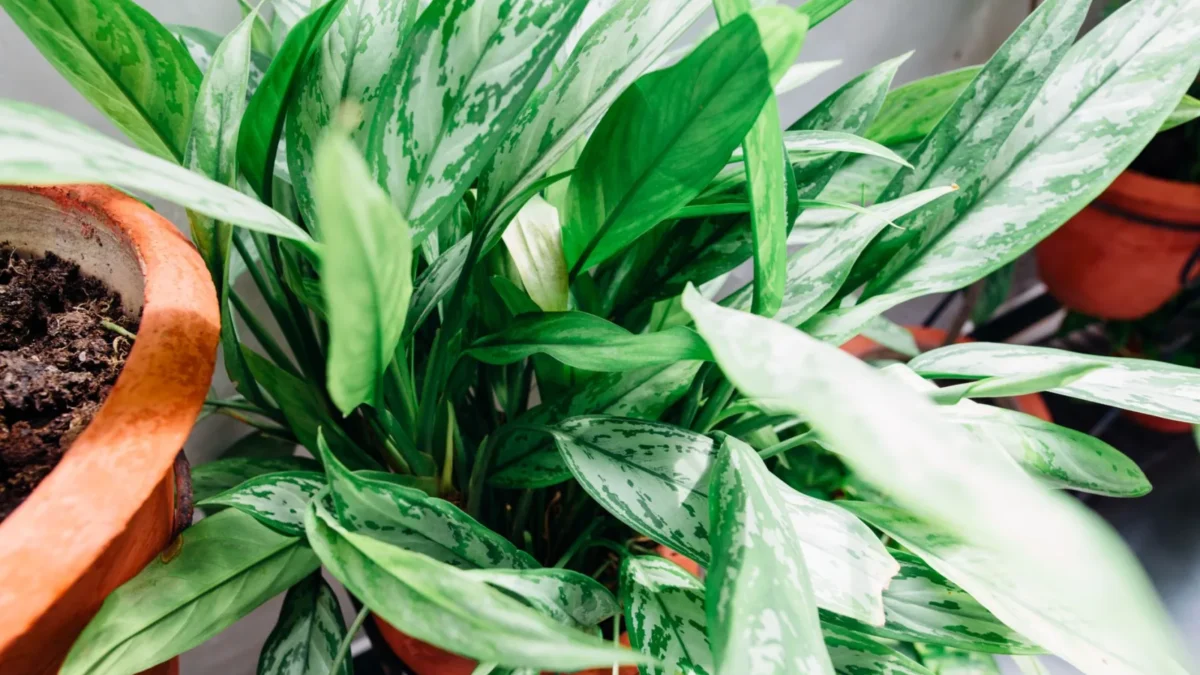
Chinese Evergreen care is straightforward once you understand the basics—this resilient houseplant tolerates low light and irregular watering better than most, making it ideal for busy plant lovers and beginners. In this guide, you’ll learn exactly how to water, light, and feed your Chinese Evergreen indoors, plus how to spot and fix common problems before they escalate.
| Botanical name | Aglaonema |
|---|---|
| Light | Bright, filtered indirect light; avoid direct sun which scorches foliage |
| Watering | When top 1-2 inches of soil feel dry; every 7-14 days spring/summer, every 2-4 weeks fall/winter |
| Humidity | High humidity; 50-60% preferred; place on tray of moist gravel |
| Temperature | 65-80°F; minimum 60°F in winter; avoid cold drafts |
| Soil | Well-draining, peat-free houseplant compost or peaty potting mixture |
| Feeding | Balanced liquid fertilizer monthly during growing season (spring to autumn) |
| Size | 0.5-1 m tall; 20 inches typical height |
| Difficulty | easy |
| Cats | ⚠️ toxic — Insoluble calcium oxalates; oral irritation, drooling, swelling, vomiting |
| Dogs | ⚠️ toxic — Insoluble calcium oxalates; oral irritation, drooling, swelling, vomiting |
Key points
- Water when the top 1–2 inches of soil feel dry; typically every 7–14 days in spring and summer, every 2–4 weeks in fall and winter
- Bright, filtered indirect light is essential; direct sun scorches leaves
- Maintain 50–60% humidity by placing the pot on a tray of moist gravel
- Keep temperatures between 65–80°F and never below 60°F
- Use peat-free or peaty potting compost with good drainage
- The plant is toxic to cats and dogs—keep it out of reach
Light Requirements for Chinese Evergreen
Chinese Evergreen thrives in bright, filtered indirect light. Position the plant in a north or east-facing window, or use a sheer curtain to filter intense afternoon sun from west-facing windows. This plant adapts to lower light conditions—one of its greatest strengths—but insufficient light prevents chlorophyll production and causes yellowing leaves.
Direct sun is the enemy: it scorches the foliage and turns leaves yellow. Avoid placing your plant where harsh rays hit the leaves during peak hours. If you notice scorched patches appearing, move the pot back from the window immediately.
Watering Your Chinese Evergreen Indoors
How Often to Water
Water your Chinese Evergreen only when the top 1–2 inches of soil feel dry to the touch. In spring and summer, this typically means watering every 7–14 days. During fall and winter, reduce frequency to every 2–4 weeks and allow some drying between applications.
Frequency varies significantly depending on your environment, not just the season. In a humid apartment with steady air conditioning, you may water only every 18–22 days. On a sunny, breezy balcony in late spring, the same plant might need water every 5–6 days. Always check the soil before watering rather than following a fixed schedule.
Proper Watering Technique
Water deeply but only once—until water flows freely from the drainage holes. Then discard excess water from the saucer within 15 minutes to prevent root rot. Use room-temperature water between 65–75°F; cold water shocks the roots and slows growth, while hot water risks thermal damage.
Use your finger, a moisture meter, or a wooden skewer to verify dryness before watering. Never water on a hunch or schedule. If the soil is severely dry and hydrophobic (water channels straight through without soaking in), use the bottom-watering method: place the pot in a basin of lukewarm water for 20–30 minutes to rehydrate the entire root zone.
Common Watering Mistakes
Overwatering is the number one cause of decline in Chinese Evergreen, leading to yellowing leaves, mushy stems, and fatal root rot. The plant is moderately drought-tolerant and very forgiving of irregular watering—overwatering is far more damaging than underwatering. Soggy soil depletes oxygen around the roots, triggering anaerobic bacteria that degrade root tissue, turning roots brown-black and preventing nutrient uptake.
Underwatering causes the soil to dry completely. Without adequate moisture, cells lose turgor pressure and the plant cannot absorb nutrients, resulting in yellowing and drying leaves. The fix is immediate: water thoroughly, and the plant typically recovers within hours to a day.
Humidity and Temperature Needs
Humidity
Chinese Evergreen is a tropical plant that thrives in humidity levels of 50 to 60 percent. Provide high humidity by placing the container on a tray of moist gravel or pebbles. This simple setup creates a humid microclimate around the foliage without waterlogging the roots. Misting alone is insufficient—it raises ambient humidity briefly but does nothing for root health or cellular hydration, and won’t solve drooping or yellowing.
Temperature
Aglaonemas prefer average room temperatures between 65–80°F. Maintain a minimum winter temperature of 60°F. Cold drafts below 60°F cause rapid tissue damage in the plant’s tropical foliage; the plant droops suddenly, and affected leaves may yellow or develop water-soaked patches within a day or two of exposure. Avoid placing your plant near air conditioning vents, open windows in winter, or heating radiators, as temperature fluctuations stress the plant.
Soil and Repotting Guide
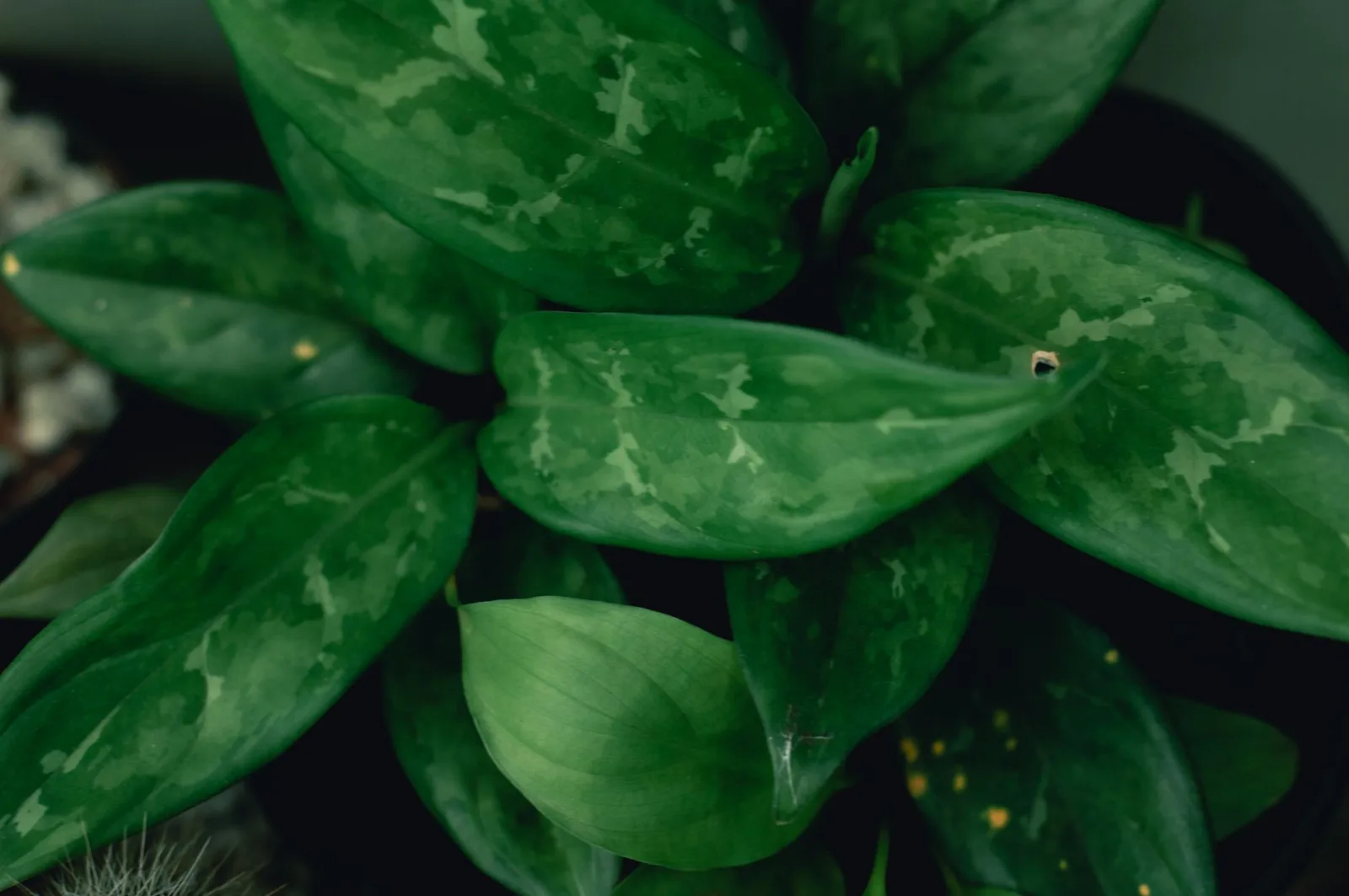
Grow your Chinese Evergreen in well-drained, peat-free houseplant compost or a peaty potting mixture. Good drainage is critical; poor drainage leads directly to root rot, the most common killer of this plant.
Repot every two to three years, or when the plant outgrows its current pot. Choose a container that’s one size larger and has excellent drainage holes. Spring is the ideal time to repot, as the plant enters its active growing season. Use fresh potting soil to refresh depleted nutrients and improve aeration.
Feeding and Fertilizing
Apply a balanced liquid fertilizer monthly during the growing season (spring to autumn). Dilute to half strength if using a concentrated product, or follow the label instructions for a pre-mixed houseplant formula. Skip fertilizer entirely during fall and winter when growth slows naturally.
Specific nutrient deficiencies show distinct symptoms. Nitrogen deficiency yellows older leaves, while iron deficiency causes yellowing between leaf veins (interveinal chlorosis). Potassium deficiency turns leaf edges bright yellow while the inner leaf stays green, appearing first on older leaves. Magnesium deficiency shows as yellow patches between the veins of older leaves. Monthly balanced feeding prevents these issues.
Pruning and Shaping
No pruning is required for Chinese Evergreen. The plant naturally maintains a compact, upright form and rarely becomes leggy or overgrown indoors. If a stem becomes damaged or you want to propagate new plants, simply take cuttings (see Propagation Methods below). Never prune drooping leaves immediately—they often rehydrate and regain firmness if the root system is viable.
Propagation Methods
Stem Cuttings in Water
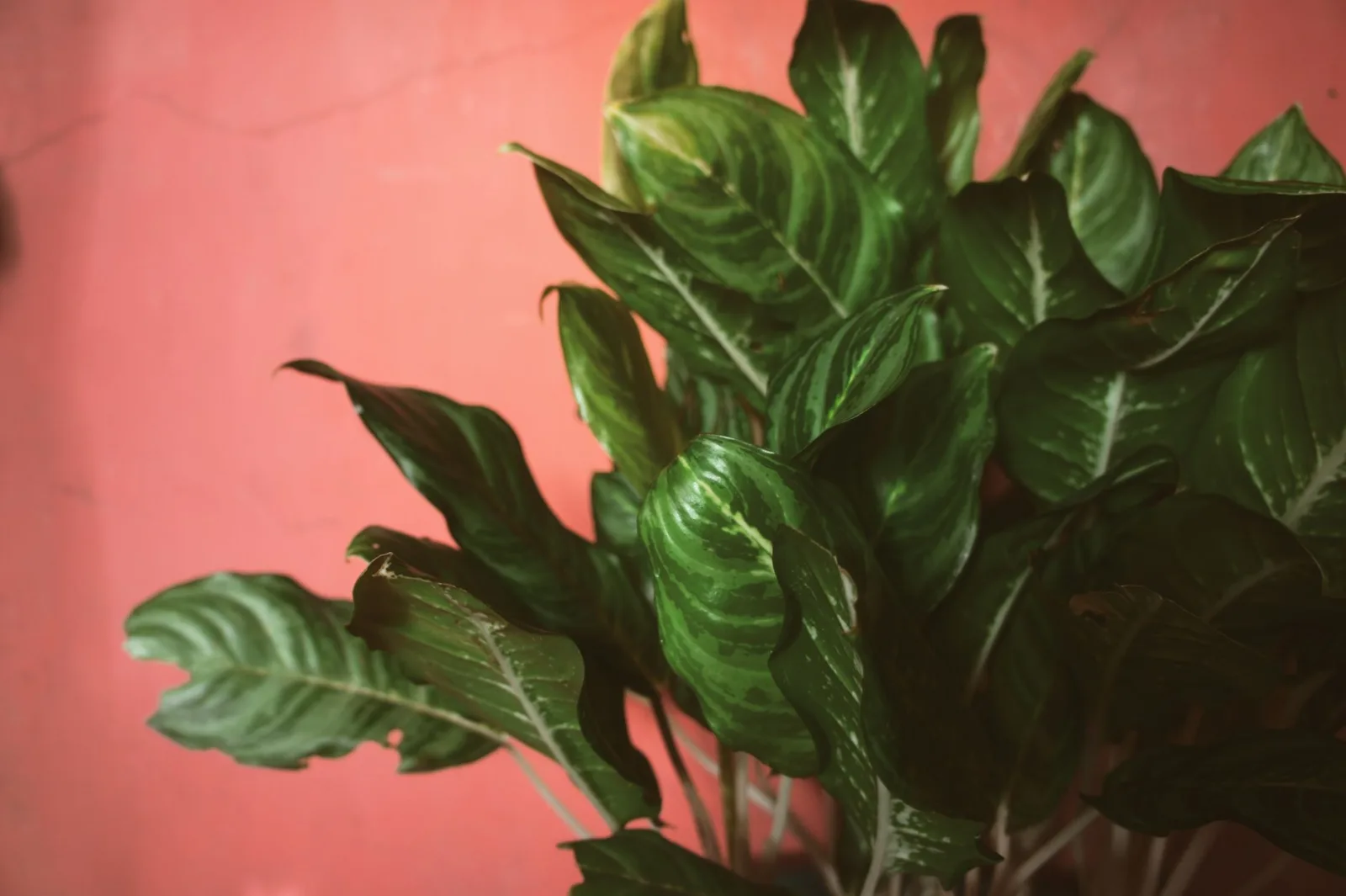
Aglaonema propagates easily from stem cuttings with at least one node. Water propagation works reliably for most growers.
- Snip a healthy 4–6 inch stem cutting just above a node.
- Cut 1 inch below the node at a 45° angle.
- Remove the lowest leaf so the node is bare.
- Dip the cut end in rooting hormone (optional but recommended for reliable rooting).
- Place the cutting in a jar of room-temperature filtered or distilled water, submerging the bare node and keeping leaves above water.
- Change water every 5–7 days.
- Roots typically begin to form in 2–4 weeks. Once roots reach about 2 inches, transplant to soil or continue growing in water indefinitely.
Stem Cuttings in Soil
Propagating in soil offers the highest survival rates.
- Follow steps 1–4 above for preparing the cutting.
- Layer a new pot with fresh, well-draining potting soil mix, leaving at least an inch of space between the soil surface and the pot’s rim.
- Gently push the cutting into the soil and pat the surrounding soil to remove air gaps.
- New roots should develop in a few weeks with appropriate care.
Division
You can also propagate by separating basal shoots with 3 or 4 leaves, ideally with roots attached, during spring.
Critical Mistake to Avoid
No node = no roots, ever. Always include at least one node (the point where leaves emerge from the stem) when taking cuttings. Without a node, the cutting cannot develop roots.
Common Problems and Solutions
Yellowing Leaves
The most common cause of yellowing is improper soil moisture, particularly overwatering. Saturated soil leaves roots unable to access oxygen; without oxygen, roots rot and cannot take up water and nutrients. Check the soil moisture first—if it’s soggy, reduce watering frequency and improve drainage. Other causes include insufficient light (which prevents chlorophyll production), direct sun scorching (which turns leaves yellow), and nutrient deficiencies (nitrogen, iron, potassium, or magnesium). Adjust light, watering, or feeding based on which symptoms you observe.
Drooping or Wilting Leaves
In over 90% of cases, drooping stems result from chronic overwatering combined with low light, leading to oxygen-deprived roots. Correct soil moisture and relocate the plant to bright, indirect light; upright leaf posture begins recovering within 48 hours, with full structural rebound taking 5–12 days depending on severity.
Underwatering is simpler and more fixable. Dry soil, a very light pot, and brown leaf tips all signal dehydration. Water thoroughly, using the bottom-watering method for severely dry soil, and recovery is typically complete within hours to a day.
Cold exposure below 60°F also causes sudden drooping. If the plant has been near an open window or air conditioning vent during cold weather, move it to a warmer location immediately.
Root Rot
Overwatering and poor drainage account for 68% of root rot cases. Healthy roots are firm and white or light tan; affected roots are dark, mushy, or foul-smelling. If root rot is severe, remove the plant from its pot, trim away blackened roots with sterile scissors, repot in fresh, dry potting soil, and water lightly. Reduce watering frequency and ensure the pot has drainage holes.
Mealybugs
Chinese Evergreen may be susceptible to mealybugs infesting the leaf axils. Inspect the undersides of leaves and where stems meet leaves for clusters of white, cottony insects. Remove by hand with a cotton swab dipped in rubbing alcohol, or use an insecticidal soap spray following label directions. Repeat every 5–7 days until infestation clears.
FAQ
Is Chinese Evergreen Toxic to Pets?
Yes—Chinese Evergreen is toxic to both cats and dogs. The toxic principle is insoluble calcium oxalates. Chewing or swallowing any part of the plant releases needle-like raphides that embed in the mouth and throat, producing immediate burning, drooling, and often vomiting. Clinical signs include oral irritation, pain and swelling of the mouth, tongue and lips, excessive drooling, vomiting, and difficulty swallowing. The effects can manifest immediately or up to two hours after exposure. Keep the plant completely out of reach of cats and dogs.
What Should I Do If My Cat or Dog Eats Chinese Evergreen?
Call your vet immediately. If you cannot reach one, contact the ASPCA Animal Poison Control Center at (888) 426-4435 in the US, or Animal PoisonLine at 01202 509 000 in the UK. The reaction is painful but usually confined to the mouth and gut; serious airway swelling is rare but warrants emergency care.
How Tall Does Chinese Evergreen Grow?
Chinese Evergreen typically grows to 20 inches tall. Ultimate height is 0.5–1 metre with an ultimate spread of 0.1–0.5 metres, making it a compact houseplant suited to shelves, desks, and side tables.
How Often Should I Repot My Chinese Evergreen?
Repot every two to three years, or when the plant outgrows its current pot. Choose a pot one size larger with excellent drainage.
Why Are My Chinese Evergreen Leaves Brown on the Edges?
Brown tips or edges are often due to low humidity, poor water quality, or inconsistent watering. Increase humidity by placing the pot on a tray of moist gravel, use filtered or distilled water if your tap water is hard, and water more consistently—checking soil dryness before each watering rather than skipping or overdoing it.
Can I Propagate Chinese Evergreen from a Single Leaf?
No—cuttings must include at least one node (the point where leaves emerge from the stem). A single leaf cannot develop roots and will not propagate. Always take 4–6 inch stem cuttings that include at least one node.