Snake Plant Dracaena trifasciata
How to Propagate Snake Plant: Water, Soil, and Leaf Cuttings
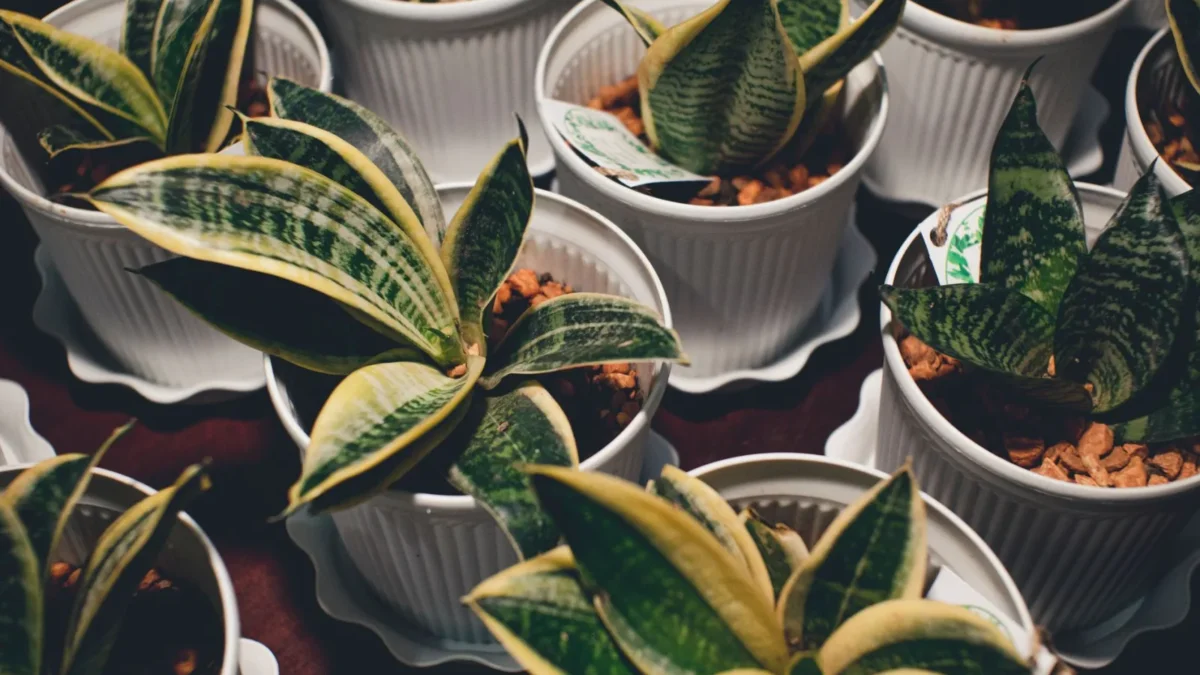
Quick answer: You can propagate snake plant three ways: from leaf cuttings in water or soil (4–8 weeks for roots), from stem sections planted upright in soil, or by dividing pups from the mother plant (fastest method). Division creates new plants instantly, while leaf and stem cuttings take several weeks to establish roots.
| Botanical name | Dracaena trifasciata |
|---|---|
| Light | Moderate to bright indirect light; tolerates low light; 2-6 hours direct sun |
| Watering | Water when soil is 100% dry; every 2-4 weeks spring/summer, 6-8 weeks winter |
| Humidity | Average room humidity is ideal; no misting needed |
| Temperature | Thrives 70-90°F (21-32°C); tolerates around 50°F |
| Soil | Well-draining potting mix; potting soil, perlite, and sand mixture |
| Feeding | Once every two months during summer/growing periods; 2-3 times yearly |
| Difficulty | easy |
| Cats | ⚠️ toxic — Saponins cause nausea, vomiting, diarrhea in cats |
| Dogs | ⚠️ toxic — Saponins cause nausea, vomiting, diarrhea in cats |
Three ways to propagate snake plant
The best method depends on what material you have and how quickly you want results. Division of pups is fastest and safest; leaf cuttings work well but need patience; and stem cuttings are a reliable middle ground.
How to propagate snake plant from leaf cuttings in water
- Cut off a single healthy leaf near the soil line
- Submerge the bottom 25% of the cutting in water
- Keep the pot in a room with bright indirect sunlight
- Replace the water weekly to prevent rot and provide oxygen to the leaves
- Expect new root growth at the base of the cutting in about two months
This method works well but takes longer than soil propagation. Leaf cuttings usually take 4–8 weeks before roots are established.
How to propagate snake plant from leaf cuttings in soil
- Cut off a single leaf near the soil line
- Snip the leaf into pieces about 2 inches long
- Let the cuttings callus for a couple of days—a callus is a soft, dry, whitish tissue that forms over the cut surface
- Plant sections upright in well-draining succulent or cactus soil with the cut end down
- Wait 4–8 weeks for roots to establish
Use soil that drains well; a mixture of regular potting soil, perlite, and sand works well. Keep the soil dry between waterings—snake plants prefer drying out completely, so don’t overwater your cuttings.
How to propagate snake plant from pups (fastest method)
Division is the fastest and safest way to propagate snake plant. It creates new plants instantly.
- Remove the mother plant from its pot and gently brush away soil to expose the base
- Locate the pups—they have their own small root system attached via a rhizome (a horizontal underground stem)
- Separate pups when they are at least one-third the size of the mother plant or when the pot becomes crowded and roots push through drainage holes
- Alternatively, slice the root ball into sections using a sharp, sterilized knife; ensure each portion has at least three rhizomes, a snake plant pup, or a leafy top
- Plant each division in well-draining soil and water lightly
Since the pups already have their own roots, they establish far faster than leaf or stem cuttings.
Common mistakes to avoid
Overwatering is the biggest risk during propagation. Snake plant cuttings and divisions rot easily in soggy soil. Let the soil dry out completely between waterings, just as you would with a mature plant. If you’re propagating in water, replace it weekly to keep it fresh and prevent rot. Don’t use oversized pots—choose containers that suit the size of your new plants.
Is snake plant toxic to pets?
Yes, snake plant is toxic to both cats and dogs. It contains saponins, which cause nausea, vomiting, and diarrhea. The toxicity is generally mild and not fatal, but keep propagated plants away from pets. If your pet ingests snake plant, contact your veterinarian or the ASPCA Poison Control at (888) 426-4435.
Read the full guide: Snake Plant Care: The Complete Guide
More about Snake Plant
The same problem in other plants
- How to Propagate Spider Plant Babies in Water or Soil
- How to Propagate Fiddle Leaf Fig from Cuttings
- How to Propagate a ZZ Plant: Step-by-Step Methods
- How to Propagate Pothos: Water and Soil Methods
Sources
- How to Propagate a Snake Plant (4 Easy Methods: Water, Soil, Division & Pups)
- Toxic and Non-toxic Plants: Snake Plant
- Learn How to Propagate a Snake Plant: 4 Proven Methods
Photo: Nothing Ahead / Pexels, Pexels