Snake Plant Dracaena trifasciata
Why Are My Snake Plant Leaves Turning Yellow?
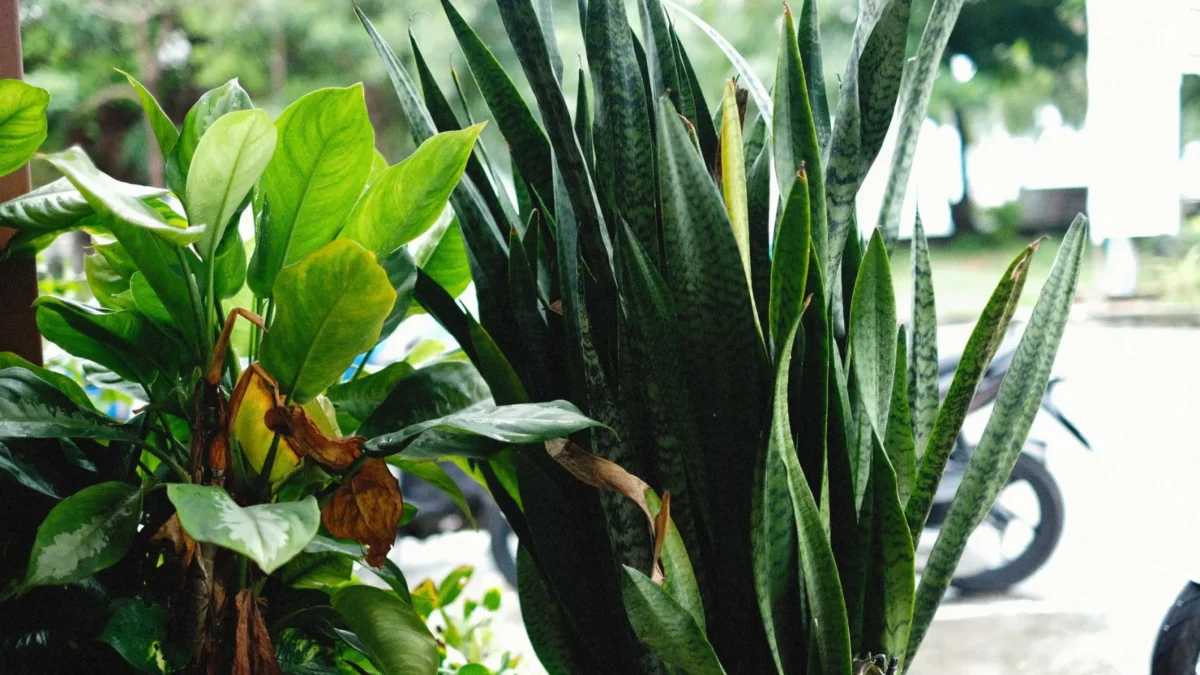
Quick answer: Yellowing leaves in a snake plant are most often caused by overwatering or poor drainage. Check the soil moisture and roots immediately; if the roots are soft and dark, root rot from waterlogged soil is the problem. Reduce watering frequency and repot into fresh, well-draining soil. Other causes include low light or sun damage, but yellowing from overwatering is the most common reason your snake plant leaves are turning yellow.
| Botanical name | Dracaena trifasciata |
|---|---|
| Light | Moderate to bright indirect light; tolerates low light; 2-6 hours direct sun |
| Watering | Water when soil is 100% dry; every 2-4 weeks spring/summer, 6-8 weeks winter |
| Humidity | Average room humidity is ideal; no misting needed |
| Temperature | Thrives 70-90°F (21-32°C); tolerates around 50°F |
| Soil | Well-draining potting mix; potting soil, perlite, and sand mixture |
| Feeding | Once every two months during summer/growing periods; 2-3 times yearly |
| Difficulty | easy |
| Cats | ⚠️ toxic — Saponins cause nausea, vomiting, diarrhea in cats |
| Dogs | ⚠️ toxic — Saponins cause nausea, vomiting, diarrhea in cats |
What’s causing your snake plant to turn yellow?
| What you see | Likely cause | What to do |
|---|---|---|
| Yellow leaves starting at base; soft, mushy texture; wet soil | Overwatering or poor drainage | Reduce watering frequency; repot into well-draining mix; let soil dry fully between waterings |
| Yellow leaves with firm texture; pale appearance | Low light conditions | Move plant closer to a window with indirect sunlight |
| Bleached or pale patches on leaf surface | Too much direct sun | Reduce direct sunlight exposure; use sheer curtains to filter rays |
| Yellowing with no obvious pattern | Root rot (from overwatering) | Remove plant, inspect roots, trim dark/mushy parts, repot in fresh soil |
Overwatering: The main culprit
Yellowing leaves are often the first visible sign of an overwatered snake plant. Here’s what happens: when the soil stays too wet, the roots can’t function properly. Water sits around the roots, suffocating them and preventing the plant from moving water and nutrients up to the leaves, even though the soil is soaking.
The yellowing typically starts at the base of leaves where they emerge from the soil and progresses upward. You might notice a general pale appearance before leaves turn distinctly yellow, or you could wake up one day to find several leaves have yellowed suddenly once the damage reaches a critical point.
To confirm overwatering, check the leaf texture: properly watered leaves feel firm and almost rigid, but yellowing leaves from overwatering feel soft or waterlogged. If you gently squeeze a yellowing leaf and it feels mushy or releases moisture, overwatering is definitely the culprit.
Next, inspect the roots. Remove your plant from its container and look at the roots underneath the soil surface. Healthy roots are yellow or white in color. Rotting roots have dark brownish parts; if you touch them, the decaying roots will feel soft and mushy.
How to fix it
-
Stop overwatering immediately. Water only when the potting soil is 100% dry from the top of the container to the very bottom. In spring and summer, this means watering every 2 to 4 weeks. In winter, wait every 6 to 8 weeks.
-
Repot with fresh soil. Place the plant in a container with a well-draining potting mix. A mixture of regular potting soil, perlite, and sand works well. Make sure the pot has adequate drainage holes in the bottom.
-
Trim damaged roots if necessary. If roots are severely rotted, carefully remove the plant and trim away any dark, mushy portions before repotting.
Low light or sun damage
Don’t confuse overwatering yellow with the yellowing that develops from too little water or too much direct sun, which typically appears as bleached or pale patches on leaf surfaces rather than yellowing from the base.
Snake plants thrive in moderate to bright indirect light. They tolerate low light but perform best near east or west-facing windows. If your plant is in a dimly lit corner, move it closer to a window with filtered light.
Direct sunlight can be too intense and damage leaves. If your snake plant sits right in front of a south-facing window without filtering, shield it by placing it a few feet away or using sheer curtains or blinds for filtering.
Preventing yellowing in the future
The key is consistent, cautious watering. Let the soil dry out fully between waterings—this is essential because snake plants are succulents and store water in their leaves. Overwatering damages the roots far more than underwatering ever will.
Use well-draining soil and ensure your pot has drainage holes. Check that water doesn’t pool in the center of the leaves, where they form a cup at their base. This can lead to rot.
Read the full guide: Snake Plant Care: The Complete Guide
The same problem in other plants
Sources
- 5 Symptoms of Overwatered Snake Plants
- Snake Plant Care – How to Grow Dracaena trifasciata – Soltech
- Snake Plant Watering: How Often to Water & Saving Mushy Roots
Photo: Alexey Demidov / Pexels, Pexels