Moth Orchid Phalaenopsis
Why Are My Moth Orchid Leaves Turning Yellow
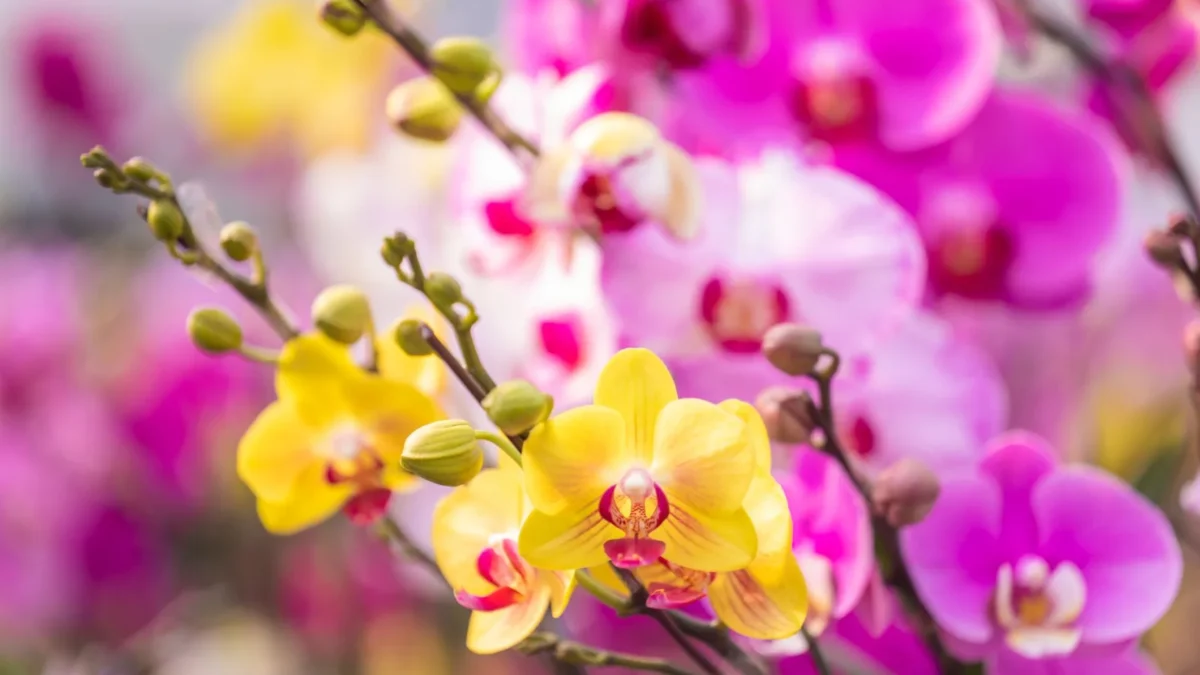
Quick answer: Moth orchid leaves turn yellow most often from overwatering and root rot, but also from poor light, cold temperatures, low humidity, or normal leaf shedding at the bottom. Check your roots and growing conditions to identify and fix the cause.
| Botanical name | Phalaenopsis |
|---|---|
| Light | Indirect light; bright light in winter; avoid direct sun |
| Watering | Every 7-10 days spring/summer, 12-18 days fall/winter when medium nearly dry |
| Humidity | 50% or higher; use pebble tray if needed |
| Temperature | 60-80°F day, 60s°F night; keep above 50°F |
| Soil | Bark-based orchid compost; medium grade bark with charcoal and perlite |
| Feeding | Balanced orchid fertilizer 20-20-20 at half strength weekly; quarter strength in winter |
| Size | 15 cm-1 m height; 20-30 cm width |
| Difficulty | easy |
| Cats | ✓ non-toxic |
| Dogs | ✓ non-toxic |
| What you see | Likely cause | What to do |
|---|---|---|
| Yellow leaves throughout; droopy stems | Overwatering and root rot | Repot in fresh bark compost; water only every 7–10 days spring/summer, 12–18 days fall/winter |
| Yellow leaves with brown spots; white patches | Sunburn from direct light | Move to indirect light or protect with a sheer curtain |
| Bottom 2–3 leaves yellow; rest healthy | Natural shedding | No action needed; this is normal |
| Yellow leaves; plant exposed to cold | Low temperature stress | Keep plant above 50°F; ideal range is 60–80°F during day, 60s°F at night |
| Yellowing after repotting | Roots drying out or disease | Ensure bark compost stays moist; check for root rot (mushy, brown roots) |
| Yellow leaves; last fertilized months ago | Nutrient deficiency | Fertilize weekly at half strength with balanced 20-20-20 orchid fertilizer |
Overwatering and root rot
Too much water is the most common cause of yellowing leaves on a moth orchid. When roots sit in soggy compost, they rot, and damaged roots can no longer absorb and transport water and nutrients—so leaves turn yellow and wilt.
Check your roots: if they’re mushy, brown, and hollow instead of firm and green or silvery, root rot has begun. The plant may feel droopy.
Fix it: Repot immediately into fresh bark-based orchid compost. Water only when the medium is nearly dry—typically every 7–10 days in spring and summer, every 12–18 days in fall and winter. To verify, check root color: silvery-green roots mean dry; bright green means still moist. Always drench thoroughly until water flows from the drainage holes, then discard all excess from the saucer within 15 minutes. Never let the pot sit in standing water.
Light and temperature stress
Yellowing leaves can also result from too much or too little light, or cold temperatures.
Moth orchids prefer indirect light. In winter, place them in bright light to encourage flowering, ideally on an east- or west-facing windowsill. If exposed to direct sun, leaves may develop white patches with dark brown spots surrounded by yellow—sunburn can happen very rapidly. If leaves are dark green, the plant isn’t getting enough light.
Cold temperatures also cause yellowing. Keep your orchid above 50°F; it thrives in daytime temperatures between 70–80°F and nighttime temperatures in the 60s°F.
Fix it: Move the plant to a location with bright, indirect light, protected by a sheer curtain if needed. Keep it away from cold drafts or windows in winter.
Low humidity and deficiency
Moth orchids prefer humidity of 50% or higher. If your home is drier, place the pot on a shallow tray of pebbles with water on the bottom—but keep the pot’s base above the waterline to prevent root rot.
Yellowing can also indicate a fertilizer deficiency. Fertilize weekly at half strength with a balanced 20-20-20 orchid fertilizer; in winter, use quarter strength. Once a month, flush the pot thoroughly with clear water to prevent salt buildup.
Normal leaf shedding
Moth orchids naturally shed the bottom two or three leaves each year. If only the lowest leaves are yellow, this is normal and needs no action. Yellow leaves higher up or on the crown suggest a more serious problem.
FAQ
Why is my moth orchid stem turning yellow?
Stem or crown rot causes yellowing on stems and upper leaves; this usually follows overwatering. Check roots immediately and repot if you find rot.
Why are my moth orchid leaves droopy and yellow?
Overwatering causes drooping and yellowing together. Less commonly, underwatering causes drooping too. Check root color to tell which: mushy roots mean you’ve overwatered; shriveled roots mean you’ve underwatered.
Read the full guide: Moth Orchid Care: The Complete Guide
More about Moth Orchid
The same problem in other plants
- Why Are My Dracaena Marginata Leaves Turning Yellow?
- Why Are My Peperomia Leaves Turning Yellow?
- Why Are My Hoya Carnosa Leaves Turning Yellow?
- Why Are My Aloe Vera Leaves Turning Yellow?
Sources
- missouribotanicalgarden.org
- How to Water Orchids Phalaenopsis: Timing, Technique & Troubleshooting
- 6 Reasons Your Orchid Leaves Are Turning Yellow, and How to Save Your Plant
Photo: Ruandom Zhong / Pexels, Pexels