Parlor Palm Chamaedorea elegans
Parlor Palm Care: The Complete Growing Guide
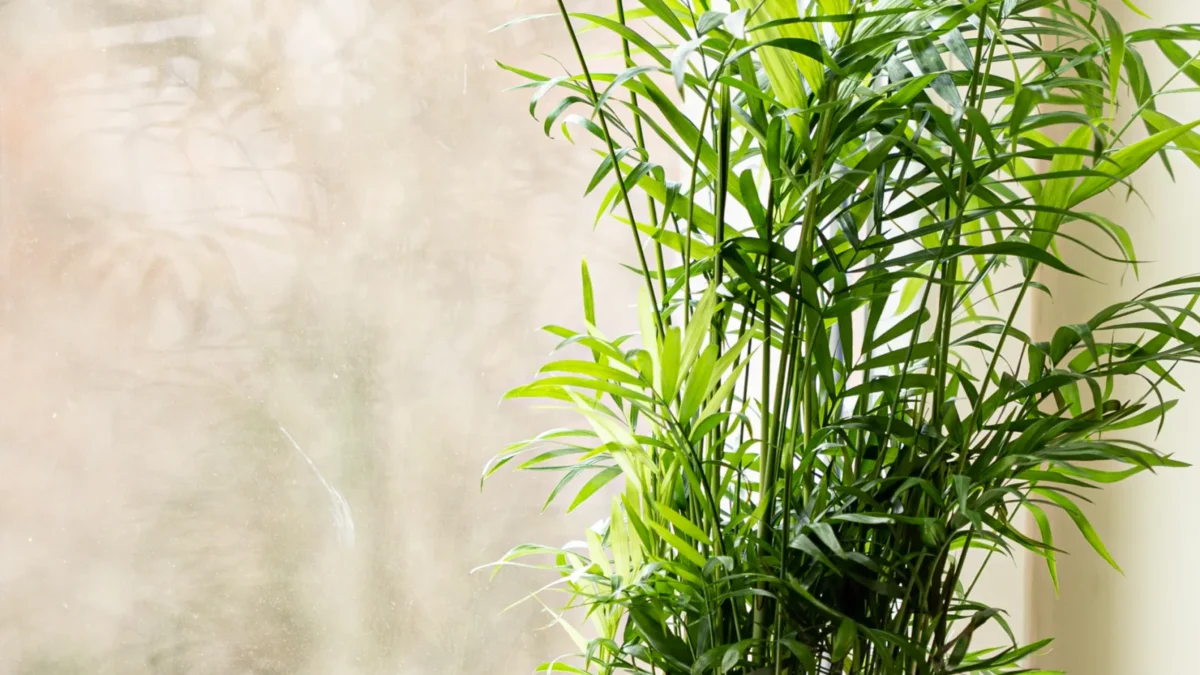
Parlor palm care is straightforward—this tropical beauty from Central America thrives indoors with minimal fuss, making it perfect for beginners and experienced plant lovers alike. The parlor palm (Chamaedorea elegans) tolerates low light and infrequent watering while rewarding consistent care with lush, attractive foliage. You’ll learn everything needed to keep your plant healthy, from watering schedules to solving common problems.
| Botanical name | Chamaedorea elegans |
|---|---|
| Light | Bright filtered light; tolerates low light but prefers bright indirect light |
| Watering | Water when top inch of soil is dry; every 1-2 weeks; less often in winter |
| Humidity | Tolerates low humidity; prefers 40-50% relative humidity; mist in very dry environments |
| Temperature | 65-80°F (18-27°C); minimum winter night 61°F (16°C); avoid cold drafts |
| Soil | Peaty soil-based potting mix; 2 parts peat moss and 1 part sharp sand |
| Feeding | Balanced water-soluble fertilizer diluted to half strength monthly during growing season |
| Size | Usually 4 feet tall indoors; slow-growing; compact form |
| Difficulty | easy |
Key points:
– Water when the top inch of soil is dry—typically every 1–2 weeks, less in winter
– Bright filtered light is best, though the plant tolerates lower light
– Thrives at 65–80°F (18–27°C) with a winter minimum of 61°F (16°C)
– Use peaty, soil-based potting mix and fertilize monthly during growing season
– Propagate by division in spring or early summer for best results
– Safe for cats and dogs—no toxic compounds
Light Requirements for Parlor Palms
Best growth occurs in bright filtered light. This means positioning your plant near a window where it receives indirect sunlight throughout the day. An east-facing or north-facing window works well in most homes.
The good news: your parlor palm tolerates low light levels, making it suitable for offices, bathrooms, or corners without direct sun exposure. However, it won’t thrive in permanently dim conditions. If your plant receives insufficient light, growth will slow, and the foliage may look sparse. Conversely, too much direct sunlight can scorch the leaves and cause yellowing. If all leaves turn yellow, your plant is likely getting too much direct sun—move it to a spot with filtered light.
Watering Your Parlor Palm Correctly
Water about every 1 to 2 weeks, when the top inch of soil is dry. The key is checking the soil before watering rather than watering on a fixed schedule.
To check soil moisture, insert your finger into the top three inches of soil. If the soil feels dry, water thoroughly. If you detect any moisture, skip watering. Water thoroughly when the top inch feels dry to the touch, providing a slow, steady stream until water emerges from the drainage holes.
Watering frequency varies with season and conditions:
- Summer: Every 5–7 days when daytime temperatures regularly exceed 75°F (24°C) and humidity is below 40%
- Spring and fall: Every 7–10 days
- Winter: Once every 2–3 weeks
In cooler rooms below 60°F (15°C) with higher humidity, soil may stay moist for 10–14 days, allowing longer intervals between watering. Remember: watering needs vary depending on temperature, humidity, light, and soil type, so pay attention to soil moisture rather than following a strict calendar.
The plant prefers evenly moist soil but must never sit in soggy conditions, which cause root rot. In winter, reduce watering frequency as growth slows.
Humidity and Temperature Needs
Your parlor palm tolerates low humidity and will survive in average household air, but it thrives with 40–50% relative humidity. These palms enjoy average household humidity levels but appreciate additional moisture in very dry environments. If the air in your home is particularly dry—common in winter or air-conditioned spaces—consider misting the fronds or placing the pot on a pebble tray filled with water. Regular misting also helps prevent spider mites, which thrive in dry conditions.
Keep temperatures between 65–80°F (18–27°C) for optimal growth. The plant doesn’t tolerate cold drafts or sudden temperature changes well, so keep it away from heating vents, air conditioners, and cold windows. A minimum winter night temperature of 61°F (16°C) is required.
Soil and Repotting
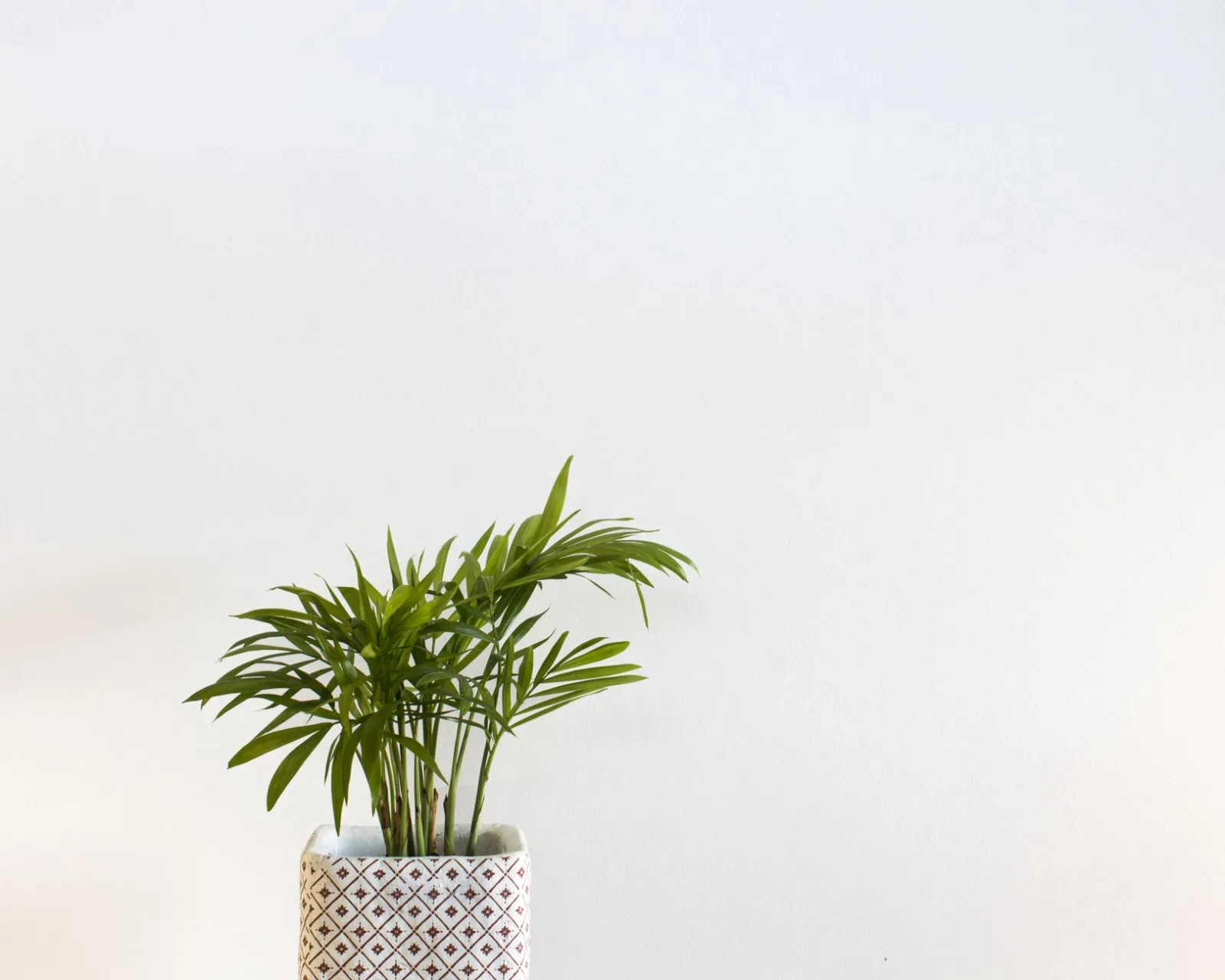
Use a peaty, soil-based potting mix. A good homemade recipe is 2 parts peat moss-based potting mix and 1 part sharp sand. This combination provides the drainage and aeration the plant needs while retaining some moisture.
Repot your parlor palm every 2–3 years or when roots begin growing out of the drainage holes. The best time to repot is spring, only when the roots have filled the pot. When repotting, use fresh potting mix and choose a container only slightly larger than the current one—oversized pots can lead to overwatering issues.
Feeding and Fertilizing
Party palms are light feeders. Feed with a balanced, water-soluble fertilizer diluted to half strength once a month during the growing season (spring and summer). Alternatively, use a slow-release solid fertilizer in spring.
Stop fertilizing in winter when growth slows naturally. Regular feeding is important because palms require balanced fertilizer with enough potassium (K) and magnesium (Mg) to maintain health. Magnesium deficiency is a common issue in palms, manifesting as marginal yellowing of the oldest leaves that gradually progresses to younger foliage.
Pruning and Maintenance
Do not prune unless removing an entire frond or stem. Simply remove only the brown and yellow leaves as soon as they appear using sharp scissors. This redirects the plant’s energy to new growth. Yellowing of the lowest leaves is normal as they age.
Brown leaf tips can be caused by dry air or tap water containing fluoride. To address this, increase humidity around the palm if air is too dry, and use distilled or rainwater instead of tap water.
Dull leaves that have lost their shine often indicate insufficient humidity—regular misting will help restore their appearance.
Propagation Methods
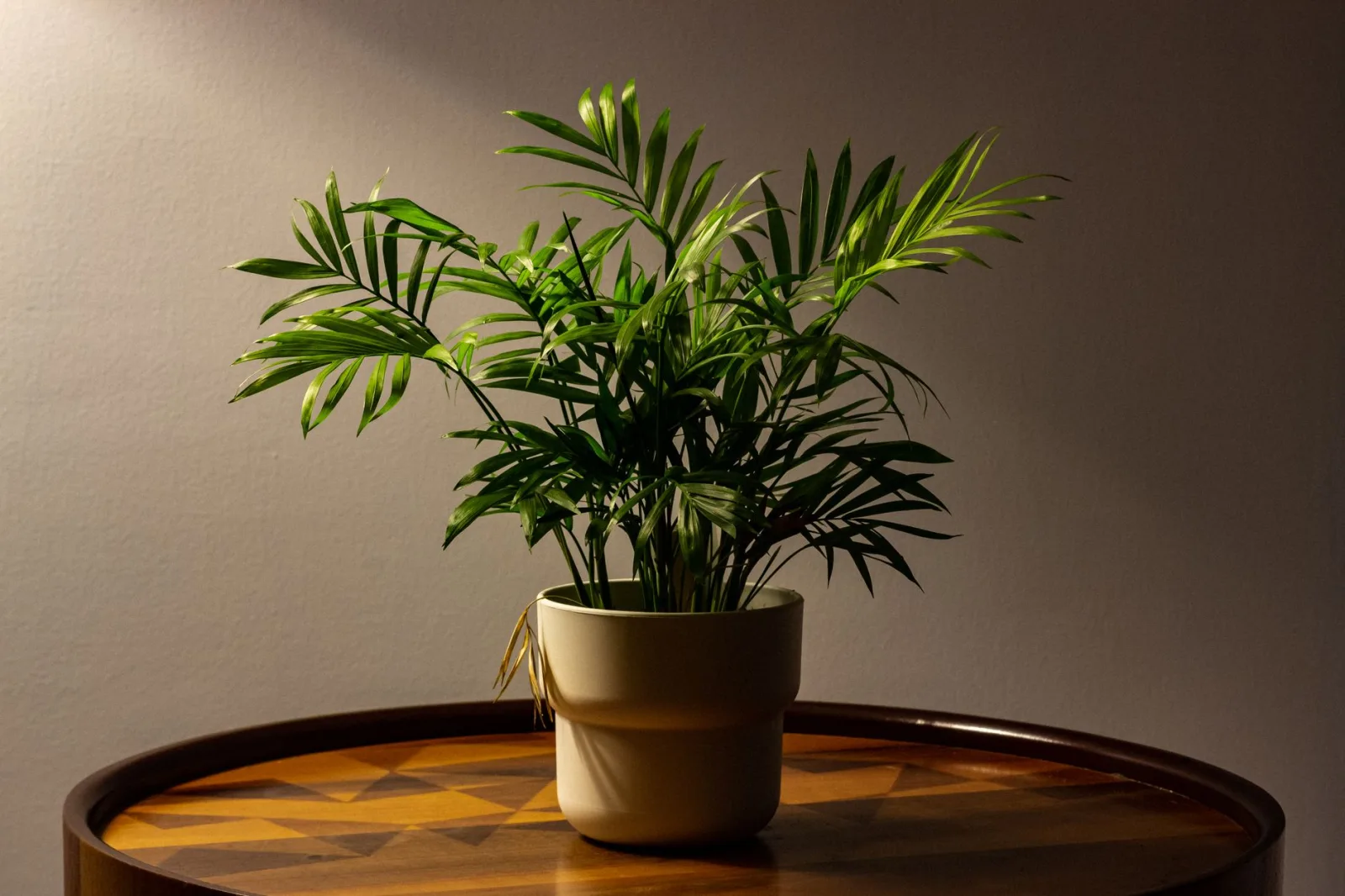
Party palms are best propagated through division of established clumps rather than from cuttings, which cannot root. The two main methods are seed germination and separation of established clumps.
Division (Recommended Method)
The best time to propagate is during spring or early summer, when the plant is in active growth. Division is reliable with success rates of 80–90% if done correctly.
- Choose a healthy, mature plant with multiple stems.
- Water the plant thoroughly a day before division to reduce stress.
- Carefully remove the plant from its pot and gently separate the root ball, identifying natural divisions between stems.
- Using a clean knife or scissors, carefully cut through the roots to separate sections, keeping as many roots intact as possible for each division.
- Ensure each division has a good root system and at least 2–3 stems.
- Pot each division in fresh, well-draining potting mix, water lightly, and place in a warm, humid area with indirect light.
- Maintain consistent moisture but avoid overwatering; new growth should appear in 4–6 weeks.
Complete establishment and robust growth can take several months, though divisions may show signs of growth within a few weeks. It may take 1–2 years for new plants to reach substantial size.
Seed Propagation
Seed propagation is slower and more challenging than division. Clean any fruit pulp off the seed and soak it in warm water for 24–48 hours to soften the coat and improve germination. Press seed into free-draining mix so the top is barely covered, and keep it at 24–29°C (75–84°F) with steady moisture—bottom heat helps significantly.
Germination takes roughly 1–3 months and is erratic. Keep humidity high and do not let the mix dry out. Expect the full timeline from seed to a small mature-looking plant to be a year or more.
Common Problems and Solutions
Yellow Leaves
Yellow leaves can result from several causes. Overwatering is the most common culprit—when roots sit in waterlogged soil, they rot, causing yellowing, wilting, and eventually plant decline. To remedy this, reduce watering frequency, ensure proper drainage, and avoid using pots without drainage holes.
Underwatering also causes yellowing as the plant struggles to get enough water. Look for crispy leaf tips, drooping leaves, and yellowing as signs of distress. Increase watering frequency, check soil moisture regularly, and water thoroughly to ensure proper hydration.
Too much direct sunlight yellows leaves—move the plant to a filtered-light location. Widespread yellow leaves can also signal underwatering.
Nitrogen deficiency causes overall yellowing of leaves and stunted growth. Magnesium deficiency manifests as marginal yellowing of the oldest leaves, with this progression gradually moving upwards to younger leaves. Regular fertilizing with balanced fertilizer containing potassium and magnesium addresses these nutrient issues.
Spider mites cause yellowing and speckling of fronds; severe infestations produce webbing and leaf loss. Regular misting and foliage cleaning prevent or treat spider mites. Treat infestations with blasts of water, miticides, insecticidal sprays, or superior horticultural oil spray to suffocate mites.
Brown Leaf Spots
Leaf spot causes circular or elongated reddish-brown or black spots on fronds, often with a yellow halo, making them easy to identify. Keep the fronds as dry as possible and avoid overhead watering to prevent this fungal issue. Copper-based fungicides stop leaf spots effectively.
Mealybugs
Mealybugs feed on plant sap and excrete honeydew, causing leaf yellowing, stunted growth, or plant dieback. Treat infestations promptly using miticides or insecticidal sprays.
Moist Soil Issues
If your plant receives harsh direct sunlight, consider moving it to a location where light is filtered.
Pet Safety: Is Parlor Palm Toxic to Cats and Dogs?
The parlor palm is completely safe for cats and dogs. The ASPCA lists Chamaedorea elegans as non-toxic to both cats and dogs. There is no identified toxic compound in this species linked to documented poisoning in cats or dogs.
You can keep a parlor palm in a home with pets without worrying about accidental nibbling causing serious harm. However, like any non-food plant material, eating very large amounts could cause mild gastrointestinal upset, though no specific toxin is involved.
FAQ
How often should I water my parlor palm?
Water every 1–2 weeks when the top inch of soil is dry. Frequency varies with season: every 5–7 days in summer heat, every 7–10 days in spring and fall, and once every 2–3 weeks in winter. Always check soil moisture before watering rather than following a strict schedule.
What light does a parlor palm need?
Bright filtered light is best for growth. The plant tolerates lower light conditions but thrives with bright indirect light and will become leggy or slow-growing in dim environments.
How big does a parlor palm get?
Indoors, parlor palms usually grow to 4 feet tall and are slow-growing with a compact form, needing little space.
Can I propagate a parlor palm from a cutting?
No—parlor palms cannot be propagated from cuttings because a severed frond or stem will never root. Division of established clumps or seed propagation are the only options.
Is parlor palm toxic to pets?
No, parlor palm is non-toxic to cats, dogs, and horses per the ASPCA. There are no identified toxic compounds, and no documented poisonings in cats or dogs.
When should I repot my parlor palm?
Repot every 2–3 years or when roots start growing out of the drainage holes, preferably in spring.