Rex Begonia Begonia rex
Rex Begonia Care: The Complete Guide
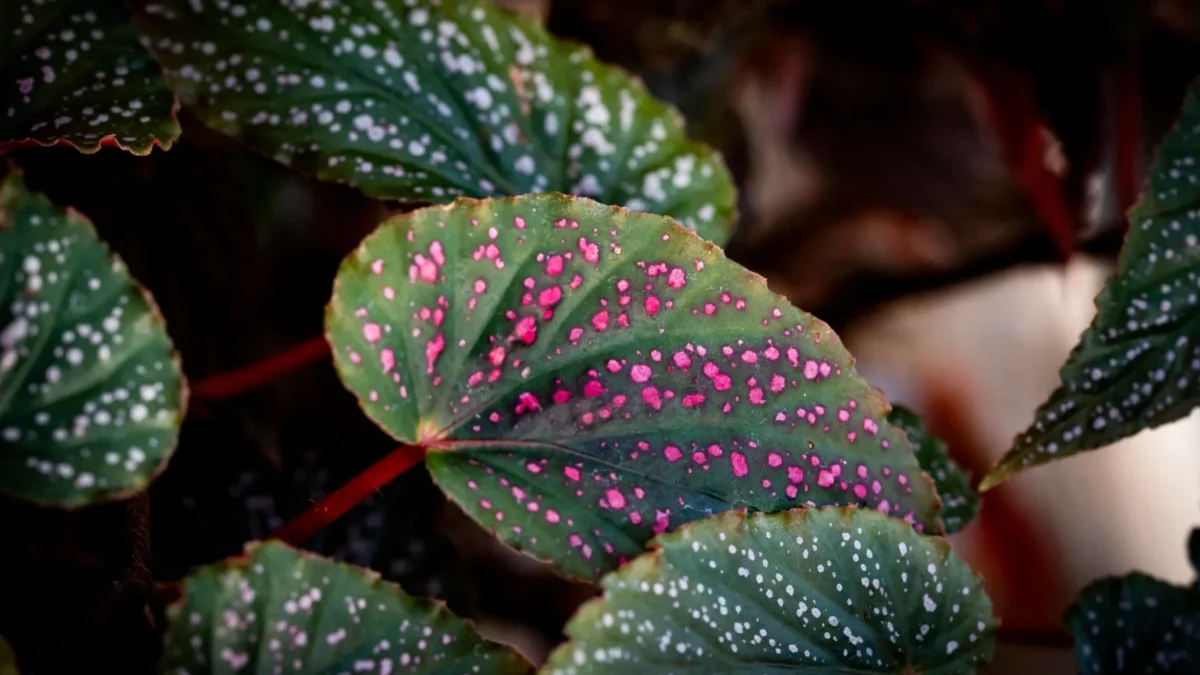
Rex begonias are among the most striking houseplants, prized for their dramatic, patterned leaves in jewel tones and metallic shades. However, they’re also demanding plants that reward careful attention to their specific needs. This guide covers everything you need to know about rex begonia care indoors, from creating the right light and humidity conditions to solving common problems and propagating new plants.
| Botanical name | Begonia rex |
|---|---|
| Light | Bright indirect light; 1,500-2,200 foot-candles; avoid direct hot sun |
| Watering | Water when top 2-3 cm soil feels dry; every 5-8 days spring/summer, 10-14 days winter |
| Humidity | 50-70% relative humidity; avoid misting leaves directly |
| Temperature | 60-75°F; day ~70°F, night ~60°F; avoid sudden fluctuations |
| Soil | Porous planting mix in shallow pot; avoid heavy dense soil |
| Feeding | Every two weeks May-September with high potassium plant food |
| Size | 1.00-1.50 feet height and spread |
| Difficulty | demanding |
| Cats | ⚠️ toxic — Soluble calcium oxalates cause vomiting and salivation |
| Dogs | ⚠️ toxic — Soluble calcium oxalates cause vomiting and salivation |
Key points
- Provide bright indirect light at 1,500–2,200 foot-candles without direct hot sun
- Water when the top 2–3 cm of soil feels dry; every 5–8 days spring/summer, 10–14 days in winter
- Maintain 50–70% relative humidity; avoid misting leaves directly
- Keep temperatures steady between 60–75°F with ideal day/night split around 70°F/60°F
- Use a porous, well-draining soil mix in a shallow pot
- Feed every two weeks May–September with high potassium fertilizer
Light Requirements for Rex Begonias
Rex begonias thrive in bright, indirect light at an intensity of 1,500 to 2,200 foot-candles for most varieties. The key is providing plenty of light without putting the plants in direct, hot sun. Direct sun exposure stresses the leaves and causes burning that looks like dryness or low humidity.
Position your rex begonia near an east-facing or north-facing window where it receives consistent bright light without harsh afternoon rays. A south or west-facing window can work if you filter the sunlight through a sheer curtain. Spring morning sun or filtered sunlight may be acceptable in mild areas. If your plant begins to look pale or the leaf colours fade, it’s likely not receiving enough light—move it closer to a window or consider supplemental grow lights.
Watering Schedule and Techniques
Rex begonias have fine, delicate root systems that are very sensitive to moisture levels and do not like to sit in soggy soil, which can lead to root rot, but also don’t want to dry out completely. The correct watering approach balances these opposing needs.
How often to water
Water when the top 2 to 3 cm of soil feels dry—roughly every 5 to 8 days in spring and summer, stretching to about 10 to 14 days in winter. However, exact timing depends on pot size, soil mix, humidity, and temperature, so always check the soil rather than watering on a calendar.
Watering techniques
Always water the soil directly; use a narrow spouted watering can and keep the stream away from the leaves and the rhizome. Bottom watering works beautifully for rex begonias and prevents crown rot. After watering, wait about 15 minutes and then empty any excess water that has collected in the saucer; never let your begonia sit in a pool of standing water.
The temperature of the water matters; using room-temperature water is much gentler on the plant’s system than ice-cold water straight from the tap, as sudden temperature shocks can cause the plant to drop leaves or experience stress.
Overwatering damage
Overwatering causes brown leaf tips, particularly affecting young leaves, and can also result in older leaves turning brown, becoming dry, and dropping from the plant. Overwatering is one of the main reasons behind begonia rex problems, often leading to sudden plant collapse.
Humidity and Temperature Needs
Humidity requirements
Rex begonias require high humidity—roughly 50–70% relative humidity indoors. Winter heating often drops rooms to 25–35% and crisps leaf edges within weeks. Low humidity is one of the strongest causes of crispy rex begonia leaves indoors.
Begonia rex prefers stable room humidity around 50–60% without direct contact with water on the foliage; many begonia rex problems, especially leaf spots and damage, often begin with wet leaves caused by frequent misting. Do not mist rex leaves to fix dry air.
Instead, create a humidity tray to provide a moist environment and prolong the rate of drying soil; hose the foliage down from time to time to hydrate the leaves and keep dust levels down. A humidity tray is simply a shallow dish filled with pebbles and water, placed beneath your pot so the plant sits above the water without touching it.
Temperature control
These plants thrive in a steady indoor temperature range between 60°F and 75°F, and while they enjoy warmth, they are highly sensitive to sudden fluctuations. They require a day temperature around 70°F and night temperature around 60°F. Avoid placing your begonia directly in the path of air conditioning vents or forced-air heaters, as these drafts not only cause temperature stress but can also rapidly dry out the foliage, leading to leaf drop.
Cold is the fastest way to damage a rex begonia; a single night near a drafty window in winter can cause every leaf to drop overnight, and while the rhizome may survive, recovery takes months.
Soil and Repotting Guidelines
Rex begonias require a porous planting mix in a shallow pot. Standard potting soil can sometimes be too heavy and dense for a rex begonia. Choose a mix that’s designed for begonias or African violets, or create your own by combining regular potting soil with perlite or orchid bark to improve drainage. A shallow pot is important because rex begonias have rhizomes that prefer not to be buried deeply.
When repotting, only move up one pot size at a time. Use fresh, porous soil and water gently after repotting. Spring is the ideal time to repot, as the plant begins its active growing season.
Feeding and Fertilizer
Feed established plants every two weeks from May to September with a high potassium plant food. High potassium fertilizers support strong foliage and healthy leaf development. Reduce feeding in autumn and stop entirely over winter when the plant slows down or enters dormancy.
Always dilute fertilizer to half strength to avoid burning the delicate roots. Apply fertilizer to moist soil, not dry soil.
Pruning and Maintenance
Since rex begonias are grown for their foliage, the inconspicuous flowers are best removed. This redirects the plant’s energy into leaf production rather than flowering.
Remove any dead or damaged leaves by cutting them off at the base with clean, sterilised scissors. This keeps the plant looking tidy and reduces the risk of pests or disease.
These plants sometimes take a “winter nap”—as the days get shorter and temperatures drop, your rex begonia might stop producing new leaves, or it may even drop a few of its older ones. Additionally, rex begonias often drop leaves in the winter as they enter a natural dormancy period; as long as the rhizome is firm, the plant is usually fine. If your plant looks like it is slowing down, simply reduce your watering.
Common Problems and Solutions
Crispy or brown leaf tips
Dry brown edges are often caused by low humidity, dry soil, or mineral buildup. Low humidity, inconsistent watering, direct sun, or mineral buildup can cause crispy leaves. Check soil moisture; it should be slightly dry before watering again. Increase humidity using a pebble tray or grouping plants together. If mineral buildup is the culprit, switch to distilled water or let tap water sit overnight to allow chlorine to evaporate. Begonias do best when humidity is kept above 40%, and they can develop brown leaf tips when conditions are too arid.
Dropping leaves
Dropping leaves is often caused by extreme drafts or a significant watering error (either bone dry or soaking wet). Move your plant away from vents and heaters, maintain consistent watering, and avoid sudden temperature changes. Keep the plant in a warm, stable location away from windows on cold winter nights.
General care reminder
Remember that rex begonias are not easy care plants and are mainly grown indoors. They reward patient growers who provide stable conditions and attention to detail.
Propagation Methods
You can propagate rex begonias by seed, leaf cuttings or sections of rhizome. Leaf cuttings are the most popular method for home growers.
Water propagation from leaf cuttings
Cut a healthy leaf with its full stem attached. Put the stem in a small jar or glass of clean, room-temperature water, ensuring the leaf itself is not touching the water, as this can lead to decay. Change the water every few days to keep it clear and oxygenated.
In a few weeks, you should see white roots beginning to grow from the bottom of the stem. For water cuttings, roots should be at least 1 to 2 inches long and beginning to branch before potting up. Once roots have developed sufficiently, pot the cutting into moist, porous soil mix and care for it as you would an established plant.
Vein propagation in soil
Lay a healthy leaf flat on a clean cutting board, cut the leaf into V-shaped wedges, and ensure each wedge includes a piece of a major vein that runs back to the center of the leaf. Using a sterilised blade, make small horizontal cuts (about half an inch long) across the major veins, spacing these slits a few inches apart—4 to 6 slits on a large leaf are plenty.
Place the leaf pieces on moist, porous soil in a shallow tray. Place the container in a warm spot with bright, indirect light and cover it with a plastic bag or lid to keep the air moist. New plantlets should emerge from the cut veins within 4–6 weeks. Once they’re large enough to handle, pot them individually.
Pet Safety
Begonia rex is toxic to dogs and cats, with soluble calcium oxalates as the toxic principle, causing vomiting and salivation in both species. The most toxic part is underground. The toxic principle is soluble calcium oxalates, most concentrated in the underground rhizome.
Keep rex begonias out of reach of cats and dogs. If your pet ingests any part of the plant, contact your veterinarian or an animal poison control centre immediately. Insoluble oxalates cause mild to moderate burning of the mouth and lips on chewing, with drooling and difficulty swallowing.
FAQ
How big do rex begonias grow?
Rex begonias grow to a height of 1.00 to 1.50 feet with a similar spread of 1.00 to 1.50 feet. They’re compact plants that work well on shelves, desks, or display tables.
Can I propagate rex begonias from leaves?
Yes, rex begonias propagate readily from leaf cuttings using either water propagation or soil propagation. Both methods work well, though water propagation is often easier for beginners because you can monitor root development directly.
Why does my rex begonia keep dropping leaves in winter?
Rex begonias often drop leaves in winter as they enter a natural dormancy period; as long as the rhizome is firm, the plant is usually fine. Reduce watering during this time and avoid moving the plant or exposing it to cold drafts.
What’s the best way to water a rex begonia?
Bottom watering works beautifully for rex begonias and prevents crown rot, or water the soil directly with a narrow spouted watering can, keeping water away from the leaves and rhizome. Always use room-temperature water and empty excess water from the saucer after 15 minutes.
How do I increase humidity without misting?
Create a humidity tray by filling a shallow dish with pebbles and water, then place your pot on top so the plant sits above the water without touching it. You can also group plants together to create a more humid microclimate, or use a room humidifier during dry months.
Is rex begonia difficult to care for?
Rex begonias are not easy care plants and are mainly grown indoors. They require attention to light, humidity, temperature, and watering, but beginners can succeed with patience and by following these guidelines carefully.
More about Rex Begonia
Sources
- Rex Begonia Care Indoors: Tips for Stunning Foliage
- Begonia rex-cultorum – Plant Finder
- Rex Begonia Care for Beginners
Photo: Jason Nelson / Pexels, Pexels