Rex Begonia Begonia rex
How to Propagate Rex Begonia from Leaf Cuttings
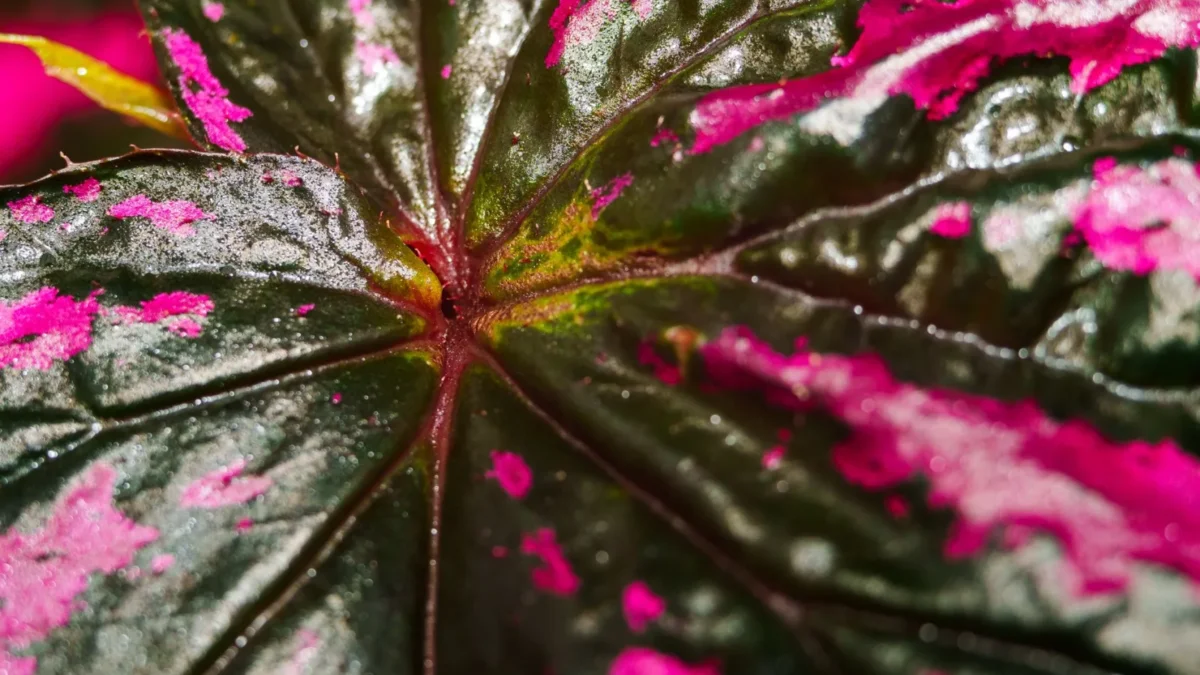
Quick answer: You can propagate rex begonia from individual leaves using water, moss, or soil. The easiest method for beginners is the water propagation technique, where you place a leaf stem in clean water and wait for roots to form before potting up.
| Botanical name | Begonia rex |
|---|---|
| Light | Bright indirect light; 1,500-2,200 foot-candles; avoid direct hot sun |
| Watering | Water when top 2-3 cm soil feels dry; every 5-8 days spring/summer, 10-14 days winter |
| Humidity | 50-70% relative humidity; avoid misting leaves directly |
| Temperature | 60-75°F; day ~70°F, night ~60°F; avoid sudden fluctuations |
| Soil | Porous planting mix in shallow pot; avoid heavy dense soil |
| Feeding | Every two weeks May-September with high potassium plant food |
| Size | 1.00-1.50 feet height and spread |
| Difficulty | demanding |
| Cats | ⚠️ toxic — Soluble calcium oxalates cause vomiting and salivation |
| Dogs | ⚠️ toxic — Soluble calcium oxalates cause vomiting and salivation |
Water propagation method
This is the simplest way to propagate rex begonia and lets you watch progress clearly.
- Cut a healthy leaf with its full stem attached.
- Put the stem in a small jar or glass of clean, room-temperature water, ensuring the leaf itself is not touching the water, as this can lead to decay.
- Change the water every few days to keep it clear and oxygenated.
- In a few weeks, you should see white roots beginning to grow from the bottom of the stem.
- Once roots are at least 1 to 2 inches long and beginning to branch, pot up the cutting into a porous planting mix in a shallow pot.
Keep the propagation jar in a warm spot with bright, indirect light at 1,500 to 2,200 foot-candles. The young plants will be fragile at first, so maintain 50–70% relative humidity and avoid temperature swings.
Leaf vein cutting method (moss or soil)
For faster results with multiple plantlets from a single leaf, use the vein-cutting technique.
- Lay a healthy leaf flat on a clean cutting board, cut the leaf into V-shaped wedges, and ensure each wedge includes a piece of a major vein that runs back to the center of the leaf.
- Using a sterilized blade, make small horizontal cuts (about half an inch long) across the major veins, spacing these slits a few inches apart—4 to 6 slits on a large leaf are plenty.
- Place the leaf pieces vein-side down on moist moss or porous soil mix in a shallow tray.
- Place the container in a warm spot with bright, indirect light and cover it with a plastic bag or lid to keep the air moist.
Small plantlets will emerge from the cut veins within 4–6 weeks. Once they develop their own tiny leaves and roots, pot them individually.
Common mistakes to avoid
The biggest risk is keeping conditions too wet, which causes decay before roots form. Ensure the leaf itself is not touching the water in the jar, and change the water every few days. For moss or soil methods, maintain moisture without waterlogging—the medium should feel damp like a wrung-out sponge.
Low humidity is another problem. Young propagations need 50–70% relative humidity to survive; a clear plastic cover over your propagation tray helps dramatically. Remove it briefly every few days for air exchange.
FAQ
How long does rex begonia propagation take?
Water cuttings typically show roots within 2–4 weeks. Vein cuttings take 4–6 weeks to produce visible plantlets. Once potted, expect new foliage growth within another 3–4 weeks under good conditions.
Can I propagate rex begonia from a leaf without a stem?
Leaf cuttings work best as V-shaped wedges that include a piece of a major vein running back to the center, rather than leafless segments. The vein tissue is essential for sprouting new growth.
Why is my water propagation rotting?
The leaf blade must not touch the water—only the stem should be submerged. Change the water every few days to prevent bacterial buildup, and ensure your jar is clean and filled with room-temperature water.
Read the full guide: Rex Begonia Care: The Complete Guide
More about Rex Begonia
The same problem in other plants
- How to Propagate Philodendron Micans: The Easiest Methods
- How to Propagate Satin Pothos in Water and Soil
- How to Propagate Norfolk Island Pine from Cuttings and Seeds
- How to Propagate Rattlesnake Plant: Complete Guide
Sources
- How to Propagate a Rex Begonia: Easy Step-by-Step Guide
- Begonia rex
- Low Humidity on Begonia Rex: Causes, Checks & Fixes
Photo: Masood Aslami / Pexels, Pexels