Rex Begonia Begonia rex
Why Are My Rex Begonia Leaves Turning Brown
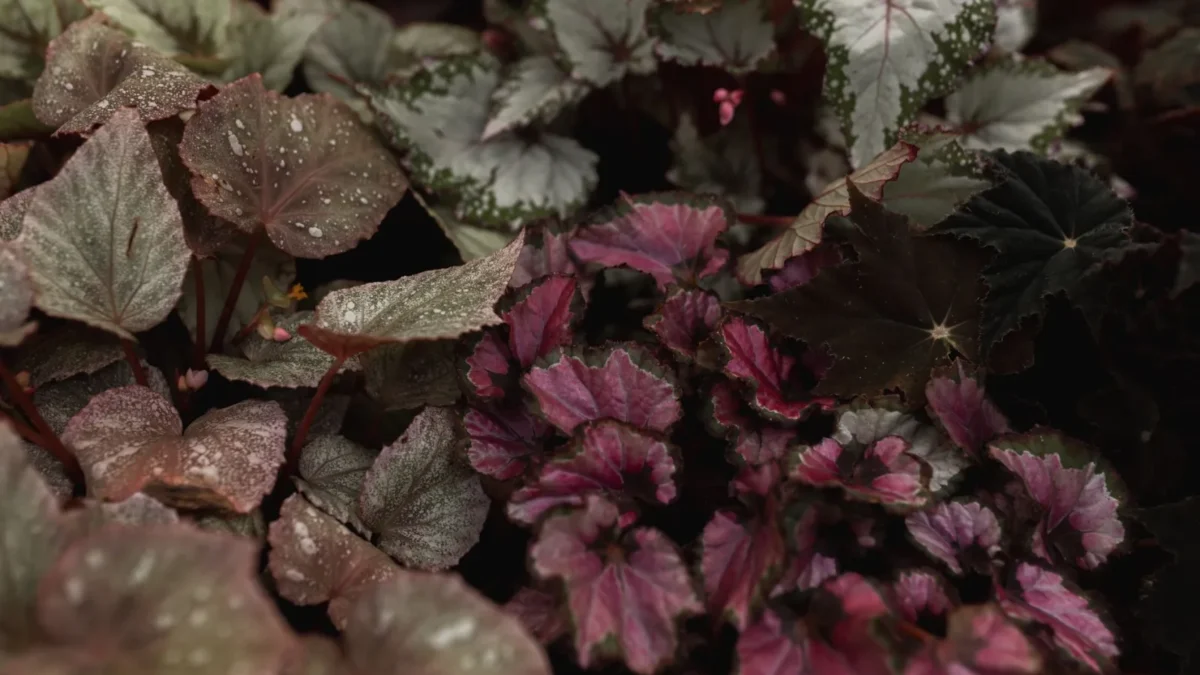
Quick answer: Rex begonia leaves turn brown mainly from overwatering, low humidity, or mineral deposits on the leaf edges. Check your watering habit and humidity level first, then adjust accordingly.
| Botanical name | Begonia rex |
|---|---|
| Light | Bright indirect light; 1,500-2,200 foot-candles; avoid direct hot sun |
| Watering | Water when top 2-3 cm soil feels dry; every 5-8 days spring/summer, 10-14 days winter |
| Humidity | 50-70% relative humidity; avoid misting leaves directly |
| Temperature | 60-75°F; day ~70°F, night ~60°F; avoid sudden fluctuations |
| Soil | Porous planting mix in shallow pot; avoid heavy dense soil |
| Feeding | Every two weeks May-September with high potassium plant food |
| Size | 1.00-1.50 feet height and spread |
| Difficulty | demanding |
| Cats | ⚠️ toxic — Soluble calcium oxalates cause vomiting and salivation |
| Dogs | ⚠️ toxic — Soluble calcium oxalates cause vomiting and salivation |
| What you see | Likely cause | What to do |
|---|---|---|
| Brown tips and edges, crispy feel | Low humidity | Increase humidity to 50–70% with a humidity tray; avoid misting leaves |
| Brown spots, soft stems, wilting | Overwatering | Let soil dry out slightly; water only when top 2–3 cm feels dry |
| Brown crusty edges, white deposits | Mineral buildup in water or soil | Use room-temperature water; refresh potting mix if heavily salted |
| Brown patches in center of leaves | Direct sun exposure | Move plant to bright indirect light away from hot sun |
| Sudden leaf drop with browning | Temperature shock or drafts | Keep away from vents and heating sources |
Low humidity is the strongest culprit
Winter heating and dry indoor air are the main problem in most homes. Winter heating often drops rooms to 25–35% humidity, which crisps leaf edges within weeks. Your rex begonia needs roughly 50–70% relative humidity indoors.
The simplest fix is a humidity tray: place your pot on a shallow tray filled with pebbles and water, keeping the pot above the waterline. You can also hose the foliage down from time to time to hydrate the leaves and keep dust levels down. However, do not mist rex leaves directly, as wet foliage invites fungal problems.
Overwatering causes brown tips on young leaves
Overwatering causes brown leaf tips, particularly on young leaves, and can also result in older leaves turning brown, becoming dry, and dropping. Rex begonias have delicate root systems very sensitive to moisture and do not like to sit in soggy soil, which leads to root rot.
Water when the top 2–3 cm of soil feels dry—roughly every 5 to 8 days in spring and summer, stretching to 10 to 14 days in winter. After watering, empty any excess water in the saucer; never let your begonia sit in standing water. Bottom watering works beautifully for rex begonias and prevents crown rot.
Mineral deposits and direct sun
Dry brown edges are often caused by low humidity, dry soil, or mineral buildup. Hard tap water leaves white crusty deposits on leaf edges. Use room-temperature water, which is gentler than ice-cold water straight from the tap.
Direct sun or mineral buildup can cause crispy leaves. Rex begonias do well in bright, indirect light at 1,500 to 2,200 foot-candles, but provide plenty of light without putting plants in direct, hot sun.
FAQ
Can I mist my rex begonia to fix brown leaves?
Do not mist rex leaves. Many begonia rex problems, especially leaf spots and damage, often begin with wet leaves caused by frequent misting.
Will my rex begonia recover from brown leaves?
Leaves that are already brown will not turn green again, but removing them encourages new growth once you fix the underlying cause—humidity, watering, or light.
Are brown leaves a sign my plant will die?
Not necessarily. Rex begonias are demanding plants, but browning is usually fixable. Keep the conditions steady and the plant will produce fresh foliage.
Read the full guide: Rex Begonia Care: The Complete Guide
More about Rex Begonia
The same problem in other plants
- Why Are My Venus Flytrap Leaves Turning Black?
- Why Are My Ficus Audrey Leaves Turning Brown and Falling Off?
- Why Are My Satin Pothos Leaves Turning Black or Brown?
- Why Are My Norfolk Island Pine Leaves Turning Brown?
Sources
- Rex Begonia Crispy Leaves: Why Edges Dry Out and How to Fix Them
- Begonia rex-cultorum – Plant Finder
- How to Care for Begonia Rex Plant: Complete Growing Guide
Photo: Matheus Bertelli / Pexels, Pexels