String of Turtles Peperomia prostrata
String of Turtles Care: The Complete Growing Guide
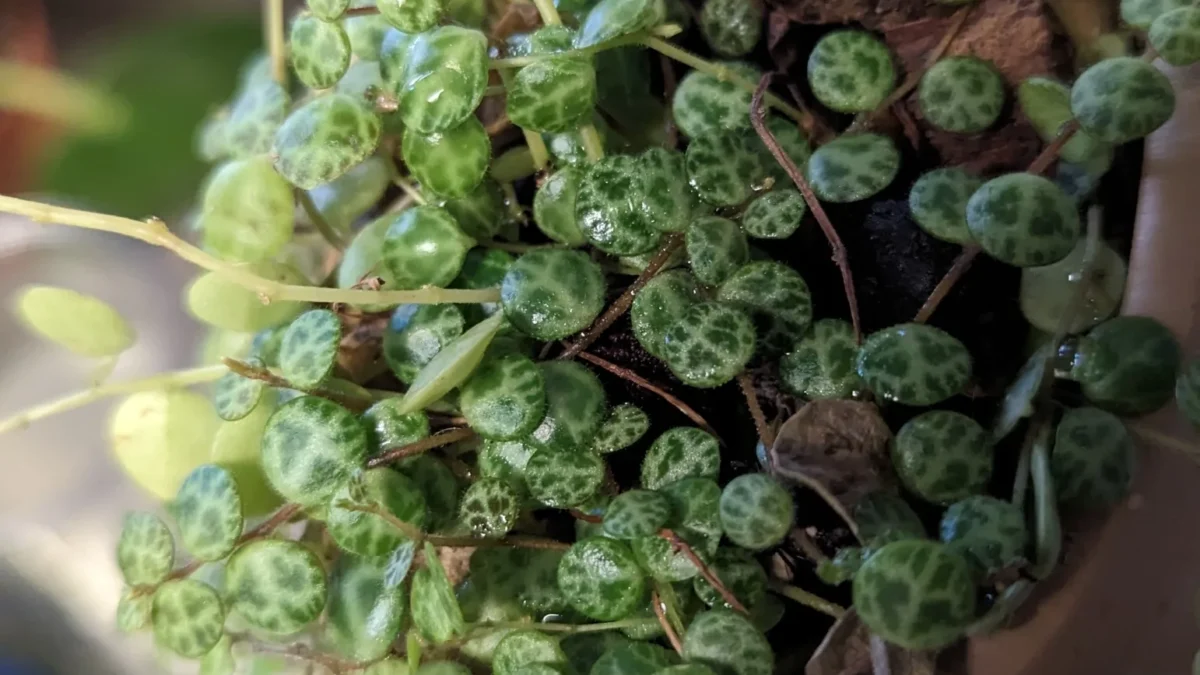
String of Turtles care is straightforward once you understand this plant’s preference for bright light, careful watering, and well-draining soil. This guide covers everything you need to grow healthy String of Turtles indoors, from a first trailing succulent to an expanding collection.
| Botanical name | Peperomia prostrata |
|---|---|
| Light | Bright indirect light in growth; full light in winter; avoid direct summer sun |
| Watering | Water when top 1 inch of soil is dry; moderate summer, sparse winter |
| Humidity | Prefers humid air; adapts to lower household humidity |
| Temperature | 18–30°C (65–86°F); keep above 10°C (50°F) |
| Soil | 50% peat/coco coir + 50% perlite/sand/pumice; loose, airy, slightly acidic pH 6.0-6.5 |
| Feeding | Balanced liquid fertilizer monthly spring to summer; dilute to half or quarter strength |
| Size | 0.1–0.5 m height and width |
| Difficulty | easy |
Key points
- Keep in bright indirect light during growth; shift to full light in winter but avoid direct summer sun to prevent leaf scorch
- Water when the top inch of soil feels dry; the plant prefers to dry out between waterings rather than stay wet
- Use a 50/50 mix of peat or coco coir with perlite, sand, or pumice to prevent root rot
- Feed monthly spring to summer with balanced fertilizer diluted to half or quarter strength
- Leaf drop and yellow leaves almost always mean overwatering; the plant is drought-tolerant and forgiving of occasional neglect
- String of Turtles is non-toxic to both cats and dogs
Light Requirements for String of Turtles
String of Turtles grows best in bright indirect light while actively growing. In winter, move the plant into full light as daylight decreases. Direct sun during summer months will scorch the leaves, so keep it away from south-facing windows during peak heat.
A bright bathroom or north-facing windowsill works well year-round. If the stems stretch out and leaves space out along the vine, your plant isn’t getting enough light—move it closer to a window.
Watering Your String of Turtles
The number one mistake with String of Turtles is overwatering. Water moderately in summer and sparingly in winter, using tepid, soft water where possible.
Let the top 1 inch of soil dry before watering again. This simple check prevents the wet conditions that cause root rot. Peperomias are prone to root rot in persistently damp soil, so erring toward drier conditions is always safer.
The plant’s thick, succulent-like leaves store water, making it drought-tolerant, so underwatering is far less risky than keeping it wet. With a well-draining soil mix, expect to water around twice a week in summer and once a week during cooler months, though frequency varies by your home’s temperature and humidity.
A quick check: gently squeeze a leaf. If it feels firm and doesn’t give, hold off watering. Bottom watering is highly recommended to avoid wetting the foliage, which can rot in the dense mat of leaves on top of the soil.
Humidity
Peperomias prefer humid air like you’d find in a steamy bathroom, but they adapt well to the lower humidity in most homes. You don’t need to mist or use a humidifier.
Soil and Repotting Needs
Use a mix of 50% high-quality peat or coco coir and 50% drainage material (perlite, coarse sand, or pumice). The soil must be loose, airy, and slightly acidic with a pH of 6.0–6.5. This structure is critical—dense, heavy soil stays wet and causes root problems.
If you’re repotting, spring is the best time to refresh the soil or move the plant up a size. Repot every 2–3 years or when the plant becomes pot-bound. Since String of Turtles is a slow grower and doesn’t get large, it can go a good while without repotting. Move up just one pot size so excess soil doesn’t stay wet around the roots. Frequent repotting or handling can lead to leaf drop and stem breakage, so avoid disturbing the plant unless necessary.
Fertilizing and Feeding
Apply a balanced liquid fertilizer monthly from spring to summer. Use a balanced, water-soluble fertilizer (such as 10–10–10) diluted to half or quarter strength. Don’t fertilize in autumn or winter when the plant’s growth naturally slows.
Overfertilizing can encourage soft growth and pest problems, so stick to the diluted rate and don’t exceed monthly applications during the growing season.
Propagating String of Turtles
String of Turtles propagates readily from cuttings, making it easy to grow new plants or share with friends.
Water propagation
Choose a healthy stem and cut a 3–4 inch section just below a leaf node. Remove the lower leaves, leaving 2–3 at the top.
Place the cutting in a jar of room-temperature filtered or distilled water, submerging the bare node and keeping leaves above water. Use distilled or filtered water to avoid chemicals that might harm the cutting.
Change the water every 5–7 days. After week 2, add a drop of liquid kelp fertilizer at 1/10 strength for faster rooting. Water cuttings can take anywhere from a few weeks to 2 months—this plant roots slower in water than most.
Once roots reach about 1–2 inches long, transfer them to soil, handling them gently to avoid damaging the delicate roots.
Soil propagation
Take 4–6 inch cuttings, removing the bottom leaves. Optionally dip the cut end in rooting hormone.
Lay your cuttings on top of the well-draining potting mix, gently pressing them down so the nodes are in contact with soil. Water lightly and place in bright, indirect light. Soil cuttings take 3–4 weeks to establish.
String of Turtles roots are unusually thin and fragile, so handle them gently when potting up to avoid snapping them.
Temperature Requirements
Peperomias thrive in temperatures of 18–30°C (65–86°F). Keep the plant always above 10°C (50°F).
Leaf drop almost always indicates overwatering or cold exposure below 50°F. Exposure to temperatures below 10°C causes rapid tissue collapse and leaf drop. Avoid placing the plant near cold windows, drafty doors, or air conditioning vents in summer.
Common Problems: Leaf Drop, Yellow Leaves, and Brown Tips
Leaf drop
Leaf drop is typically caused by overwatering (root rot) or cold drafts. Check the base of fallen leaves: if they feel soft, mushy, or look slightly translucent, overwatering is the culprit. Adjust your watering schedule and let the soil dry more between waterings. If the plant feels cold to the touch or sits in a cold spot, move it to a warmer location.
Yellow leaves
Yellowing leaves often indicate the plant is being kept too wet. Waterlogged soil leads to root rot, which causes leaves to turn yellow. If you haven’t been fertilizing, nutrient deficiencies can also cause yellowing, which fertilization during the growing season will resolve. Too much light, especially full sun, can bleach the foliage, washing out the darker green and marked patterns.
Brown tips
Brown tips can result from mineral buildup in tap water, low humidity, or slightly dry conditions. If the rest of the foliage is healthy, brown tips alone are cosmetic and nothing to worry about. Switch to filtered or distilled water if you use tap water regularly.
Pests and Diseases
Root rot
Root rot results from overwatering, leading to brown, mushy roots and wilted leaves. Prevent it by ensuring good drainage and letting soil partially dry between waterings. Signs include a limp plant despite moist soil, stems turning black or mushy at the base, leaves dropping easily, and a musty smell. If root rot develops, repot the plant in fresh, well-draining soil and trim any affected roots. Reduce watering frequency and provide adequate light to help the roots recover.
Edema
When potting mix stays wet for too long, the plant develops edema—raised bumps or protrusions on the leaves. These wilted, scab-like bumps indicate overwatering. Improve drainage, let the soil dry more between waterings, and avoid wetting the foliage.
Mealybugs
String of Turtles are relatively pest-free, but mealybugs can appear as fuzzy white stuff on stems or the undersides of leaves. Overwatering and over-fertilizing create conditions that favor mealybugs. Treat by reducing watering, cutting back fertilizer, and removing affected leaves. For heavy infestations, spray with insecticidal soap diluted according to package directions, focusing on stems and leaf undersides.
Pet Safety: Is String of Turtles Toxic to Cats and Dogs?
String of Turtles is not toxic to animals. The ASPCA lists this species (as Trailing Peperomia) as non-toxic to both cats and dogs, with no toxic principle or clinical signs noted. It’s safe to grow in homes with pets, though curious animals may still nibble on dangling stems out of play rather than toxicity concerns.
More about String of Turtles
Sources
- String of Turtles (Peperomia prostrata) Plant Care: What to Know – Healthy Houseplants
- Peperomia / RHS Plant Guide
- Peperomia prostrata hort.
Photo: nikokin / iNaturalist, CC BY 4.0